• Skip to main content
  • Skip to header right navigation
  • Skip to site footer

My Cradock

My Cradock

Cradock News Classifieds and Directory

  • Home
  • About
  • Accommodation
  • Business
  • Events
  • Free Business Advert
  • Submit News
You are here: Home / Archives for Alan

Alan

22 June 2013 by Alan

Tanzania Voted Best Country for African Safaris

Over 1,000 safari travelers and industry experts participated in the largest survey of its kind to reveal the best safari country of Africa. The results are in and Tanzania came out the clear winner. SafariBookings.com, an online marketplace for African safari tours, conducted a two-year-long study, gathering reviews from more than 1,000 safari-goers and reputable …

Over 1,000 safari travelers and industry experts participated in the largest survey of its kind to reveal the best safari country of Africa. The results are in and Tanzania came out the clear winner.

SafariBookings.com, an online marketplace for African safari tours, conducted a two-year-long study, gathering reviews from more than 1,000 safari-goers and reputable industry experts to see which African country is best for African safaris. With a score of 4.8 out of 5 stars, Tanzania took the spotlight as the clear winner, beating Botswana by about a tenth of a point. Rounding up the top five were Kenya, Zambia and South Africa.

The study was based on 2,305 reviews from safari travelers and 756 reviews from industry experts, most of whom are reputable guidebook writers working for Lonely Planet, Rough Guides, Frommer’s, Bradt and Footprint. Over half of the safari travelers have undertaken multiple safaris and have a good idea about what’s offered. This secures the fact Tanzania deserves this top spot.

2013-06-18-TASEmigration080041.jpg
Annual Wildebeest Migration, Serengeti National Park

The key reason that Tanzania was rated the best is because it is home to two of the most famous safari destinations in the world, the Serengeti National Park and the Ngorongoro Crater. Both parks offer stunning scenery and some of the best wildlife viewing in the world. Serengeti National Park is primarily known for the annual migration of over 2.5 million wildebeest and zebra. The Ngorongoro Crater is a popular safari destination, because the wildlife viewing in its immense volcanic caldera is superb throughout the year and sightings of game species such as lion, hippo and rhino are almost guaranteed.

While the Serengeti and Ngorongoro are located in the Tanzania’s northern circuit, there are equally impressive safari parks in the country’s western and southern circuits. In the less visited western circuit are Gombe and Mahale Mountains national parks, both excellent parks to see chimpanzees. Katavi National Park is known for its abundance of large mammals such as hippos and buffalos.

2013-06-18-Tanzania12110609.jpg
Chimpanzee, Mahale Mountains National Park

In the southern circuit, there is Ruaha National Park and Mikumi National Park, where safari travelers are sure to see large predators. Finally, there is Selous Game Reserve, one of the largest protected areas in the world. It features boat safaris where sightings of crocodiles and hippos are common.

The study broke down the best time to visit Tanzania by “monthly user ratings.” Overall, every month of the year received above four stars in terms of an excellent travel month. This came as a surprise. The afternoon rains (which are typical for the wet season) seldom interfere with a safari, so that reason wouldn’t be suspect for a low rating, but wildlife viewing in the southern and western parks is not as rewarding during the wet season. On the other hand, most northern parks offer excellent wildlife viewing year-round.

For the full report, including the ratings of the other safari countries and Tanzania’s major parks, please visit http://www.safaribookings.com/blog/2/

Photographs by Ariadne van Zandbergen / Africaimagelibrary.com


Category: NewsTag: africa, karoo, safari
22 June 2013 by Alan

Autoblog goes on an African safari, Subaru-Style

While the ostrich may not typify classical beauty, neither does the average Subaru. No matter which way you slice it, the ostrich is a funny looking bird. Some may call it ugly, but I wouldn’t go quite that far – ostrich feathers have long been prized for their opulence and beauty, and there isn’t a …

2014 Subaru Forester XT in South Africa with ostriches

While the ostrich may not typify classical beauty, neither does the average Subaru.

No matter which way you slice it, the ostrich is a funny looking bird. Some may call it ugly, but I wouldn’t go quite that far – ostrich feathers have long been prized for their opulence and beauty, and there isn’t a prosperous designer in all of Paris who eschews the occasional use of some brightly hued ostrich leather. Its long neck is gangly, its peaked eyes make it look a bit… intellectually impaired, and its body appears to be suspended on twigs. It’s an offbeat amalgam of shapes, and it’s nothing if not unique in the animal kingdom.

While the ostrich may not typify classical beauty, neither does the average Subaru. From bug-eyed headlights to tacked-on scoops and wings that would look more appropriate on a home-built aircraft, the Subaru of days past is known for going its own way in the styling department. With its most recent models, including this 2014 Forester, though, the automaker has seemingly gone out of its way to style a machine that’s less of an acquired taste than many Subies of yore.

Gone is the hood-mounted air intake that had become a signature element of turbocharged Foresters, and in its place is a somewhat more complicated plastic lattice of ductwork affixed to the bottom of the hood that routes cool air to the still-top-mounted intercooler. It’s a design specifically intended to tone down the Forester’s previously unique appearance and to improve aerodynamics, but I’d be lying if I didn’t admit to kinda missing the scoop. Fortunately, turbocharged Forester XT models still have some interesting lines, most notably on either side of the lower fascia and front bumper, where catfish-like gills (or are they reminiscent of an ostrich beak’s offbeat overbite?) add some flair to the base model’s otherwise staid features.

2014 Subaru Forester XT side profile
2014 Subaru Forester XT front view2014 Subaru Forester XT

The Forester never missed a beat, providing plenty of surefootedness when the going got tough.

Just as Subaru put the Forester on a bit of a makeover, the feathers from traditional South African wild Cape Ostriches weren’t considered pretty enough for use in ladies hats in the late 1800s. This led to selective breeding and the introduction of the walking-feather-duster known as the South African Black Ostrich, which is said to have some of the most attractive plumes in the world.

Moving past aesthetics brings us to some other typical Subaru traits, such as the well-known benefits of its all-wheel drive. After all, power – in the case of the Forester XT, a stout 250 horsepower and 258 pound-feet of torque scratch and claw at the tarmac below as the driver hits the gas – is nothing if it can’t be turned into forward momentum. There may not be another automaker in the world with as much expertise in the all-wheel-drive passenger car arena, and that know-how pays dividends when encountering less-than-ideal surfaces. I climbed two dirt-road mountain passes in the Forester in South Africa, traveled across mud, sand and rocks through sparsely populated lands and even crossed a river on a ferry powered by three men with harnesses and some ropes. The Forester never missed a beat, providing plenty of surefootedness when the going got tough. Or when the tough are sitting back on a floating platform carried on the clearly much tougher backs of much tougher men.

The ostrich, too, is properly adapted to South Africa’s diverse terrain. Boasting a top running speed that can crest 40 miles per hour, the ostrich is the fastest bird in the world. In fact, it’s the world’s swiftest bipedal animal, bar none. It uses half as much energy as a human does when running, thanks to some particularly springy tendons in its legs, and can maintain speeds of 30 miles per hour for as long as necessary, allowing it to wear down its predatory combatants. Where the rubber meets the road, as it were, lies one extremely large talon on a toe that measures a full seven inches in length. This toe and claw combination grab at the ground to maximize traction, allowing the ostrich to put down all its prodigious power – powerful enough that a single ostrich kick can disgorge a lion or, indeed, a human.

2014 Subaru Forester XT through a mud puddle2014 Subaru Forester XT badge
2014 Subaru Forester XT on water ferry in South Africa2014 Subaru Forester XT water crossing in South Africa

It all has to do with how the ostrich and the Subaru carry their mass.

Speed will do neither the ostrich nor the Forester any good if it’s slow to change direction. Fortunately, both the animal and the ‘ute are well suited for the challenge, and it all has to do with how they carry their mass. Two factors come into play here: mass centralization and the center of gravity.

Picture an ostrich’s body, and pay attention to where its weight – as much as 350 pounds – is carried: right in the middle. Think of it this way: a 20-pound bowling ball is much easier to twist, spin or otherwise cause to change direction than a 20-pound barbell with its weight at the ends. And, unlike most other birds, the ostrich has legs made with solid (as opposed to hollow) bones, putting much more weight below its body than on top.

Subaru has a long and storied history of following similar principles in the design of its cars, particularly in keeping its mass as low to the ground as possible and therefore ensuring a low center of gravity. Like a cone placed big-end down, the Subaru Forester’s low center of gravity keeps it stable and makes it less likely to tip, and that’s the chief reason why the automaker continues to defy convention by using a boxer engine. With its cylinders, crankshaft, oil and even the engine block itself kept as deep inside and low down as possible, Subaru’s latest 2.0-liter turbocharged four-cylinder engine is the beating heart that makes the Forester more fun to drive than most of its rivals in the crossover kingdom. It’s also worth noting that the continuously variable transmission used in the Forester XT may be the best iteration of its ilk I’ve ever sampled.

2014 Subaru Forester XT in Cape Town South Africa
Driving a 2014 Subaru Forester XT in South Africa2014 Subaru Forester XT and Sexy Scones2014 Subaru Forester XT action

It’s at this point that I’ll grant you the acknowledgement that the South African ostrich has pretty much nothing to do with cars, so I’ll stop regaling you with ruminations of our fine feathered friends. With that admission out of the way, even if you still don’t buy the correlation between Mother Nature’s most offbeat bird and Japan’s most offbeat automaker, I at least hope you’ve learned something after dutifully reading through these thousand or so words, if not about South Africa or the Subaru Forester, then surely the Struthio camelus var. domesticus (there, bet’cha you didn’t know that).

There’s one more tie that binds the two-legged bird with the four-wheeled automobile. South African folklore holds that the introduction of the Ford Model T, which was assembled and sold in South Africa using knockdown kits manufactured in Canada, is partly to blame for the rapid retraction of the ostrich feather industry. Ostrich feather sales peaked in 1913 before collapsing in 1914 as stylish ladies found it darn nigh impossible to keep a heavily feathered hat on their heads once an automobile got up to cruising speed, leading to the introduction of less outlandishly styled headwear.

Feathered hats, unlike ostriches themselves, can indeed take flight. Such issues, I might add, wouldn’t exist in the Subaru Forester, which has plenty of headroom, isn’t drafty and isn’t available as a convertible.

Category: NewsTag: africa, karoo, safari
20 June 2013 by Alan

Tanzania rated the best safari country of Africa

Africa Tanzania rated the best safari country of Africa Theodore Koumelis – 19 June 2013, 13:30 A survey of more than 1,000 safari travelers and industry experts concluded that Tanzania is rated the best African country for safari holidays. <!– Lorel ipsum . Philippe Chereque, Amadeus, . . 41 ..- –> THE NETHERLANDS – SafariBookings.com, …

Africa

Tanzania rated the best safari country of Africa

Theodore Koumelis – 19 June 2013, 13:30

A survey of more than 1,000 safari travelers and industry experts concluded that Tanzania is rated the best African country for safari holidays.

<!–

Lorel ipsum

    alt text

  • . Philippe Chereque, Amadeus, .

  • . 41 ..-

–>

THE NETHERLANDS – SafariBookings.com, an online marketplace for African safari tours, published a comprehensive analysis of 3,061 reviews on safari destinations in the continent. The reviews, completed by safari tourists and experts from all over the globe, voted Tanzania as the top destination for safaris, giving the country a total rating of 4.8 out of five stars.   

Besides more than 2,300 reviews from safari-clients, the study included 756 expert reviews from reputable guidebook authors working for Lonely Planet, Rough Guides, Frommer’s, Bradt and Footprint. Each of the experts visited more than an average of 40 safari parks and over half of the safari tourists have been on multiple safaris. This is further proof of the conclusion that Tanzania deserves this top position. Rounding out the top five were Botswana, Kenya, Zambia and South Africa.

Tanzania scored highly, in part, to its excellent wildlife viewing, the possibility to extend a safari holiday with beach-time on tropical Zanzibar Island, the easy access from abroad, the political stability and relative safety.

Tanzania’s premier park is Serengeti National Park. It is home to the annual “Wildebeest Migration” where over 2.5 million wildebeest and zebra migrate between Tanzania and Kenya. The migration has been featured in many wildlife documentaries and especially the scenes where vast herds of wildebeest cross the crocodile infested rivers are world-famous. With a remarkable score of 4.91 out of 5 stars the Serengeti was ranked as the top safari park of Africa.

The analysis also broke down the average user rating by month. The general consensus is that Tanzania is best visited during the dry season from June to October. Therefore it was quite surprising to see that all months received consistent high ratings. Most parks in the north offer great wildlife viewing year-round, but the southern and western parks are best visited during the dry season. The fact the northern parks receive most visitors by far probably played a big role in the consistent high ratings.

For the full report, including the ratings of the other safari countries and Tanzania’s major parks, please visit http://www.safaribookings.com/blog/2/

Category: NewsTag: africa, karoo, safari
20 June 2013 by Alan

Taking a walk on the wild side with a ‘city and safari’ trip to South Africa

Every silent, creeping step on the dusty terrain feels like we’re dicing with death. We’ve abandoned the safety of the safari jeep in search of rare white lions and the ranger’s tracking signal has revealed they’re a little too close for comfort. We stop in our tracks as our ranger points out the lioness and …

Every silent, creeping step on the dusty terrain feels like we’re dicing with death. We’ve abandoned the safety of the safari jeep in search of rare white lions and the ranger’s tracking signal has revealed they’re a little too close for comfort. We stop in our tracks as our ranger points out the lioness and her male cubs, grazing on a kill.

Then they spot us. Two inquisitive furballs curiously peek through the overgrown grass, while the female lion gazes at us as we marvel at the family scene that feels like something straight out of a David Attenborough documentary.

It’s hard to believe this exchange with one of the world’s most endangered animals in a breathtaking wilderness is just a three-hour drive from the bustling bars, shops and restaurants of Cape Town.

Boasting the ‘Big Five’ – lions elephants, Cape buffalo, leopards and rhinos –  Sanbona Wildlife Reserve is one of the largest privately owned wildlife parks in the Western Cape, where animals roam freely on 54,000 hectares.

The location makes it a perfect option for a ‘Safari and City’ two-centre stay. It’s a getaway of extreme contrasts, but it’s one that’s entirely possible in five action-packed days.

On arrival at Sanbona, we drop our cases and dash to the jeep for an evening game drive that catches the last of the South African sun.

The first moment I see an animal is unforgettable. I spy a glimpse of tough grey skin between the bushes – a huge lone hippo chomping on grass for supper. Then we spot two young bull elephants play-fighting.

We’re so caught up in the action that we’re startled to see another elephant, so close to our open-top jeep you can see every crease in its weathered skin.

Gathering at the Gondwana Lodge that night, drinking local wine under the stars, I can’t believe how much I’ve already seen, and I don’t think I’ve ever been so excited about a 5am wake-up call.

Overlooking Bellair Dam, with endless views of the vast plains, my luxurious lodge is pure serenity.

While the animals can, and do, roam freely on the reserve, the lodge is enclosed by electrical fences so it’s unlikely a hippo is going to try to join you for a dip in the pool. In their territory, it’s a different story.

We regularly hop out of the jeep to seek wildlife on foot and experience the landscape with the game ranger who identifies fascinating plants, insects and tracking marks that provide vital clues to animals’ whereabouts.


View gallery

  • “
  • “
  • “
  • “
  • “
  • “

View gallery


With predators lurking, these up-close exhilarating walks require single line formations, keeping a beady eye, and staying close to the ranger. There are a few beads of sweat in the group when the wind changes and a group of rhinos catch our scent and start pointing their horns in our direction.

It’s sad to think that numbers of these beautiful creatures are falling due to the ongoing poaching crisis. Last year alone, 668 rhinos were killed in South Africa (a rise from 448 in 2011), according to official figures from their government.

Monitoring the animals is vital for protecting them, and all key species in the park are fitted with tracking devices making them easier to ‘spot’. But despite a strong signal on the ranger’s antenna we spend more than an hour hunting for a five-year-old female cheetah, akin to finding a needle in a desert haystack.

We eventually locate her sitting under a tree, camouflaged amid rocks. We watch her yawn and sleep, and she watches us back. Thanks to a full belly, she barely looks disturbed.

But it’s during our search that I really appreciate the full scope of what a safari offers – I listen to the cheery squawks of the Hadeda Ibis bird, follow baboons’ human-like footprints and peek into huge aardvark holes.

Wildlife manager Paul Vorster tells me: “People are overly obsessed with ticking off the Big Five. Seeing the high-profile species is a bonus but it’s important to take in the smaller things in the environment – the things that make the whole system work.”

Dragging my heels as I leave Sanbona, we embark on the 270km drive to Cape Town. It takes almost an hour to navigate the reserve’s bumpy gravel roads but we spot a rhino en route and it’s not long until tusks are swapped for tarmac and the smooth drive to the city.

There’s plenty to keep you entertained along Route 60 and 62 besides the dramatic mountain ranges. Street sellers touting boxes of fruit and extravagant feather dusters line the roads, and it’s possible to spot ostrich and wildebeest along the way. We also stop off at wine and brandy distilleries (all in the interests of research, you understand).

On arrival in Cape Town, I’m in awe of the view from the dizzy heights of my Taj hotel room facing Table Mountain. The city’s famous landmark was voted one of the New Seven Wonders of Nature, and it’s well worth making the journey to the top for spectacular 360-degree views of the city. Visit between 2pm and 4pm when there’s usually a lull in visitors and queues.

After sunrise starts and safari itineraries, I was keen to explore the city at a slower pace. A whistlestop city guide was a great way to take in the highlights.

In less than two hours we explored trendy Long Street, packed with restaurants and bars, took colourful pictures of the flower sellers in Adderley Street and enjoyed a history lesson at Government Gardens, which served as a vegetable garden during the spice trade in the 1600s.

My favourite spot was Bo-Kaap, formerly known as the Malay Quarter, with romantic cobbled streets and rows of rainbow-coloured houses.

But I couldn’t go home without one last wildlife fix. An hour’s train ride from Cape Town – or a 45-minute drive  – Boulders Beach in picturesque Simon’s Town is home to an endangered land-based colony of African penguins. Some are nesting, waddling around the beach, while others are pecking and playing with one another, not remotely phased by the flock of tourists who watch from a designated viewing platform.

I leave with a smile on my face.

As I look back on my snapshots of sun-bathing penguins and white lion cubs alongside scenes of cosmopolitan Cape Town, I’m practically purring like a big cat on the plane home.

FACTFILE

Lisa Haynes stayed at Sanbona Wildlife Reserve, where prices start at £255 a head per night (children go half price). Visit www.sanbona.com

Taj Cape Town offers doubles from £95 per night. Visit www.tajhotels.com

Air France has three weekly flights from the UK to Cape Town via Paris Charles de Gaulle. Fares are from £697 return including taxes. Visit www.airfrance.co.uk or call 0871 6633 777.

Category: NewsTag: africa, karoo, safari
20 June 2013 by Alan

Obama: When a president goes on safari

2013-06-14 13:43 Video Africa prepares for Obama’s visit 2013-05-22 11:40 Preparations are underway for US president Barack Obama’s trip to Africa next month.WATCH Cape Town – Bushwhacking if you’re US President Barack Obama is no mean feat. It takes planning and serious security detail. To safeguard the world’s most powerful leader would entail retaining the …

2013-06-14 13:43

Video

Africa prepares for Obama’s visit

2013-05-22 11:40


Preparations are underway for US president Barack Obama’s trip to Africa next month.WATCH

Cape Town – Bushwhacking if you’re US President Barack Obama is no mean feat. It takes planning and serious security detail.

To safeguard the world’s most powerful leader would entail retaining the services of a counter-assault team carrying sniper rifles with high caliber rounds “that could neutralize cheetahs, lions or other animals if they became a threat,” according to a planning document obtained by  the Washington Post.

Obama, who is headed to Africa from June 26 to July 3 with a stopover in South Africa, was planning to take a safari in Tanzania with his family. However, this has been shelved in favour of a trip to local tourist attraction and World Cultural Heritage Site, Robben Island, instead.

First lady, Michelle Obama and her daughters, have tasted a bit of Africa’s amazing wildlife though, when they stayed at Madikwe Game Reserve in North West.

Obama will spend two nights in Johannesburg and one in Cape Town.

According to official US documents his Africa trip price tag is estimated to be $60 to $100 million (about R989-million at R9.89/$), must have something to do with the 56 vehicles being brought over for the trip, including limousines
for the president and first lady, a specialized communications vehicle
for secure telephone and video connections, a truck that jams radio
frequencies around the presidential motorcade, a fully loaded ambulance
that can handle biological or chemical contaminants and a truck for
X-ray equipment. Did we mention there will be a floating hospital off our coastline? This is the US President after all, so you can’t be too careful.

The Washington Post reports hundreds of US agents have already been sent to Senegal, South Africa and Tanzania. If you’ve spotted more people wearing dark glass or any other stereotype that goes with being a secret agent, now you know why.

Apart from Robben Island, which is on their itinerary, we’ve been thinking of an array of activities we’d add to their itinerary if we could.  How about a trip up Table Mountain, meandering alongthe winelands, and if they had a little more time in the country, a visit to Thula Thula Game Reserve in KZN, where the late Lawrence Anthony managed to make a herd of rogue elephants feel at home and thrive?

What would your Obama itinerary suggestions be? Tell us in the comment section below, send us your ideas to info@news24travel.com, share your thoughts on our Facebook page or send us a Tweet!

Baggage handler causes R63m plane damage

Category: NewsTag: africa, karoo, safari
20 June 2013 by Alan

Donate $5, Possibly Win a $40000 South African Safari

Every five dollars donated buys a pair of eye glasses for someone in need and provides entry into Phelophepa’s sweepstakes for an all-expenses-paid trip for 2 to South Africa, including 4 nights at the exclusive One and Only Hotel in Cape Town, 3 nights in the Devonvale Golf Wine Estate, a 3-night safari at the …

Every five dollars donated buys a pair of eye glasses for someone in need and provides entry into Phelophepa’s sweepstakes for an all-expenses-paid trip for 2 to South Africa, including 4 nights at the exclusive One and Only Hotel in Cape Town, 3 nights in the Devonvale Golf Wine Estate, a 3-night safari at the private Simbambili Safari Lodge, 2 nights in the historic Cradle of Life Bio-Park, and 1 day Onboard the Train of Hope.

Want to up your chance of winning the big prize? Donate more money for more entries!

To learn more about Phelophepa Train of Hope and enter the sweepstakes, visit trainofhope.org.

[Photo: trainofhope.org]

Category: NewsTag: africa, karoo, safari
18 June 2013 by Alan

Mahmoud Ahmadinejad’s African Safari Joseph Hammond

When Mahmoud Ahmadinejad stepped on to the tarmac in Accra, the capital of Ghana, some wondered if the April trip would be his last visit abroad as the leader of Iran. Ghana wrapped up a broader tour of Africa that included stops in Niger and Benin. The fact that Ahmadinejad would even visit Ghana, a …

When Mahmoud Ahmadinejad stepped on to the tarmac in Accra, the capital of Ghana, some wondered if the April trip would be his last visit abroad as the leader of Iran. Ghana wrapped up a broader tour of Africa that included stops in Niger and Benin. The fact that Ahmadinejad would even visit Ghana, a nation which the Shahist Iran only began diplomatic relations with in 1974, explains how Iranian foreign policy has evolved under his rule.

Ahmadinejad is the first leader of the Islamic Republic to look seriously at Africa. Outreach to Africa has allowed him to achieve several foreign and domestic policy goals, such as persuading average Iranians that Iran is a leading state in the Muslim and developing worlds, despite ongoing international sanctions. After all, until recently Muslims indisputably constituted at least a plurality of Africans. Ahmadinejad’s outreach to Africa has also benefited Iranian foreign policy by forcing Iran’s rivals to expend resources and energy countering Iranian moves there. In so doing, Ahmadinejad has relied on expanded economic ties and existing diplomatic institutions to expand Iran’s reach on the continent.

Despite Iran’s recent elections, Ahmadinejad has continued to push relations, meeting with African ambassadors in Tehran in recent weeks to announce Iran’s intention to build six refineries across the continent in order to cement relationships. Under Ahmadinejad, Iranian trade with Africa has reached over US$1 billion but economic development remains subservient to political goals. In this regard, Iran’s relationship with MTN Group, a South African telecommunications giant, has grown consistently: the company won a licence to develop mobile telecommunications in the Iranian market in 2005 and today commands a 45 percent market share. A legal case launched by Turkcell, the Turkish firm which lost out to MTN in 2005, alleges that the deal was made with MTN in part to gain access to South African weapons technologies. Iranian dissidents also claim the South African firm has been complacent in the Iranian government’s effort to control domestic IT communications.

These economic ties notwithstanding, the diplomatic aspects of Ahmadinejad’s outreach to Africa have been the most visible. The Organization of Islamic Cooperation (OIC) and the G-15, a grouping of developing nations that includes several African states have become important venues for Iranian diplomatic efforts. Even more crucial for Ahmadinejad has been Iran’s time as head of the Non-Aligned Movement (NAM).

The National Chairman of Ghana’s Progressive People’s Party, Nii Allotey Brew-Hammond, put Ahmadinjad’s visit in this context for The Diplomat, “When I first heard he was coming, I was shocked, but his visit to Ghana was justified by his position as president of the Non-Aligned Movement. Without this title I don’t think Ahmadinejad would have been so warmly received in Ghana and across Africa.” The chairman was speaking at his headquarters, just a few blocks from an Iranian clinic in Accra’s Asylum Down district. Iran has also funded an Islamic university in the city.

However, Ahmadinejad’s most visible diplomatic triumph occurred in Cairo. In February, Ahmadinejad became the first Iranian leader to visit Egypt since the Islamic Revolution, and he was warmly greeted by Egyptian President Mohamed Morsi (though ordinary Iranians were not as warmly welcomed). Here again Iran’s role in an international organization, this time the OIC’s Islamic Summit served as a convenient pretext for the visit. At the Islamic Summit, Iran took a leadership role on a number of issues like the crisis in Mali. African diplomats, who spoke off-the record on the sidelines of the conference, confided that Qatari and Iranian views on the situation in Mali had clashed with Qatar being hesitant to label the Mali rebels as terrorists. In a subsequent interview with The Diplomat, Iranian Deputy Foreign Minister Mohammad Mahdi Akhondzadeh clarified Iran’s position on the issue. “We believe to help the Malian government to stabilize itself is part of the collective responsibility of the Muslim world. The people of Mali have been the victim of terrorism.”

Category: NewsTag: africa, karoo, safari
18 June 2013 by Alan

Tanzania Voted Best Country for African Safaris

Female lion with cub, Serengeti National Park – Photo by AfricaImageLibrary.com Tanzania Voted Best Safari Country of Africa by more than 1,000 safari travelers and industry experts. The Netherlands (PRWEB) June 18, 2013 SafariBookings.com, an online marketplace for African safari tours, conducted an extensive study of 3,061 safari reviews from more than 1,000 safari travelers …

  • Email a friend


Female lion with cub

Female lion with cub, Serengeti National Park – Photo by AfricaImageLibrary.com

Tanzania Voted Best Safari Country of Africa by more than 1,000 safari travelers and industry experts.

The Netherlands (PRWEB) June 18, 2013

SafariBookings.com, an online marketplace for African safari tours, conducted an extensive study of 3,061 safari reviews from more than 1,000 safari travelers and experts and concluded that Tanzania is chosen as the best safari destination in Africa. With an average overall rating of 4.8 out of 5 stars, Tanzania beat Botswana by approximately one tenth of a point. Rounding up the top five were Kenya, Zambia and South Africa.

In total, 2,305 reviews came from safari travelers and 756 were contributed by acclaimed industry experts. Most of the experts are guidebook authors who wrote several guides to Africa for reputable publishers such as Lonely Planet, Rough Guides, Frommer’s, Bradt and Footprint.

The study also provides insights into why Tanzania is considered such an outstanding safari destination. Among the top reasons are the excellent wildlife viewing, authentic African wilderness and excellent options to extend a safari holiday, such as beach time on gorgeous Zanzibar Island or climbing Africa’s highest mountain; MT Kilimanjaro. Tanzania is home to Serengeti National Park, which is considered the best safari park of Africa by many. The Serengeti is featured in many wildlife documentaries and home to the annual ‘Great Migration’ where over 2.5 million wildebeest and zebra migrate between Tanzania and Kenya.

The five top-rated parks of Tanzania are Serengeti, Selous, Ruaha, Ngorongoro and Mahala Mountains. The last offers some of the best chimpanzee tracking in Africa. The study also breaks down the best time to visit Tanzania by user rating. It was surprising to see all months scored consistently high, since the general consensus is that wildlife viewing in the southern and western parks is more rewarding during the dry season, from June to October.

In total the reviewers represent 53 nationalities, 42% were ‘first-time safari-goers’, 21% has been on 2-5 safaris and 37% more than 5. The fact over half of the reviewers had undertaken multiple safaris cements the conclusion that Tanzania was rightfully chosen as best safari destination in Africa.

For the full analysis, including the ratings of the other safari countries and Tanzania’s major parks, please visit http://www.safaribookings.com/blog/2/.

Email a friend


PDF


Print

Category: NewsTag: africa, karoo, safari
Mountain Zebra National Park Holiday Fun
18 June 2013 by Alan

Mountain Zebra National Park Holiday Fun

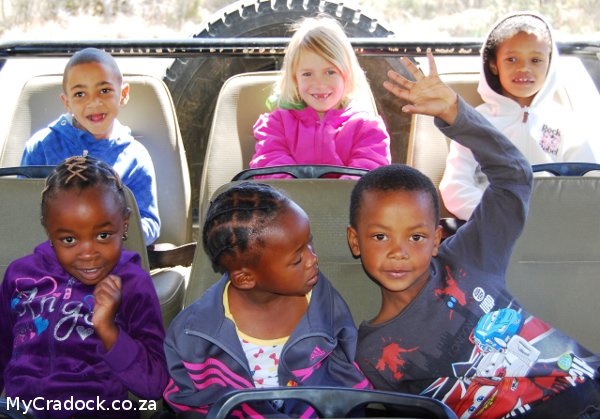
The Mountain Zebra National Park outside Cradock has an exciting winter school holiday programme lined up between 22 June and 6 July. Children between the ages of six and 16 and adults who consider themselves young at heart are invited to participate in a number of free activities over the two weeks. The only payment …

The Mountain Zebra National Park outside Cradock has an exciting winter school holiday programme lined up between 22 June and 6 July.

Children between the ages of six and 16 and adults who consider themselves young at heart are invited to participate in a number of free activities over the two weeks. The only payment due will be the conservation fee payable for Park entry. Game drives at a reduced price of R60 will also be on offer only to the youngsters.

Guided game drives will take place at 08h00 on Mondays, and at 09:00 on Wednesdays, which will include a visit to a cultural heritage and rock art site. A guided walk along the Imbila Hiking Trail (1km) will be offered on Tuesdays starting at 09:30. Thursdays will offer a range of fun leadership activities from 11:00 and on Fridays the programme centres around watching nature-based DVD’s and playing fun ecological games between 15:00 and 17:00. Finally, the young ones will be able to go on the Black Eagle Hiking Trail, a 2.5km guided walk, on Saturdays between 09:00 and 12:00.

Please book early as space is limited. Parents need to sign an indemnity form before children may participate in the activities. Programmes may be cancelled due to bad weather conditions. For further information, please contact the Park’s People and Conservation Officer, Mxolisi Fulumente, on (048) 881 2427.

Mountain Zebra National Park Holiday Fun
Category: NewsTag: cradock, holiday fun, mountain zebra, national park
16 June 2013 by Alan

Obama scraps safari ‘over cost of snipers’ required to neutralise cheetahs

President Barack Obama and his wife Michelle have scrapped a safari expedition during their trip to Africa because of the costs of snipers needed “to neutralise cheetahs, lions and other animals if they became a threatâ€?, it was claimed Friday. The couple will end a week-long tour of Africa in Tanzania, but austerity measures in …

President Barack Obama and his wife Michelle have scrapped a safari expedition during their trip to Africa because of the costs of snipers needed “to neutralise cheetahs, lions and other animals if they became a threat�, it was claimed Friday.

The couple will end a week-long tour of Africa in Tanzania, but austerity measures in the Secret Service mean that they will not head into the African wilderness, as was first planned.

US taxpayers will foot the bill of between pounds 40 million and pounds 65 million for the trip, only Mr Obama’s second to the continent of his father’s birth since he became president, leaked documents showed. But even with the overall costs involved, their scheduled afternoon’s visit to a Tanzanian wildlife sanctuary was judged to be too expensive and difficult to arrange, The Washington Post reported. It was dropped in favour of a tour of Robben Island, where Nelson Mandela was imprisoned, during the Obamas’ visit to South Africa before they fly to Tanzania.

The safari “would have required the president’s special counter assault team to carry sniper rifles with high-calibre rounds that could neutralise cheetahs, lions or other animals if they became a threat�, the newspaper reported, citing a leaked Secret Service internal planning document. “We do not have a limitless supply of assets to support presidential missions, and we prioritised a visit to Robben Island over a two-hour safari in Tanzania,� Josh Earnest, a White House spokesman, said.

The logistics of any presidential trip are costly. But arranging back-to-back visits to three developing countries with poor security infrastructure and limited medical resources could become the most expensive foreign excursions of Mr Obama’s time in office.

Military cargo planes will airlift 56 vehicles including 14 limousines, ambulances equipped for chemical and biological attacks and radio-jamming trucks to Senegal, South Africa and Tanzania.

A US aircraft carrier or amphibious warship with a full medical trauma centre will be anchored just offshore in case of emergencies. Three lorries will be used just to carry sheets of bullet-proof glass to be put up at hotels where the Obamas will stay during their trip, between June 26 and July 3.

Because the visits happen one after another, three separate security, medical and logistics teams will be dispatched, one to each country. At least 445 Secret Service and White House security agents will be involved.

“Even in the most developed places of western Europe, the level of support you need for mass movements by the president is extraordinary,� Steve Atkiss, special assistant for operations to George W Bush, told the Post. “As you go farther afield, to less-developed places, certainly it’s more of a logistical challenge.�

Mr Obama has spent less than 24 hours in sub-Saharan Africa during his time as president – a visit to Ghana in 2009. His office has been keen to stress that his pending visit is purely business.

The president is reported to be travelling with an entourage of more than 500 American entrepreneurs and investors, who will discuss commercial opportunities in each of the African countries.

His trip comes three months after Xi Jinping, China’s new premier, toured South Africa, Tanzania and the Republic of Congo within a fortnight of taking office in March.

Category: NewsTag: africa, karoo, safari
14 June 2013 by Alan

Document: Major resources needed for Obama Africa trip

Military cargo planes will airlift in 56 support vehicles, including 14 limousines and three trucks loaded with sheets of bullet­proof glass to cover the windows of the hotels where the first family will stay. Fighter jets will fly in shifts, giving 24-hour coverage over the president’s airspace, so they can intervene quickly if an errant …

Military cargo planes will airlift in 56 support vehicles, including 14 limousines and three trucks loaded with sheets of bullet­proof glass to cover the windows of the hotels where the first family will stay. Fighter jets will fly in shifts, giving 24-hour coverage over the president’s airspace, so they can intervene quickly if an errant plane gets too close.

The elaborate security provisions — which will cost the government tens of millions of dollars — are outlined in a confidential internal planning document obtained by The Washington Post. While the preparations appear to be in line with similar travels in the past, the document offers an unusual glimpse into the colossal efforts to protect the U.S. commander in chief on trips abroad.

Any journey by the president, such as one scheduled next week for Northern Ireland and Germany, is an immense and costly logistical challenge. But the trip to Africa is complicated by a confluence of factors that could make it one of the most expensive of Obama’s tenure, according to people familiar with the planning.

The first family is making back-to-back stops from June 26 to July 3 in three countries where U.S. officials are providing nearly all the resources, rather than depending heavily on local police forces, military authorities or hospitals for assistance.

The president and first lady had also planned to take a Tanzanian safari as part of the trip, which would have required the president’s special counterassault team to carry sniper rifles with high-caliber rounds that could neutralize cheetahs, lions or other animals if they became a threat, according to the planning document.

But officials said Thursday that the safari had been canceled in favor of a trip to Robben Island off the coast of Cape Town, South Africa, where Nelson Mandela was held as a political prisoner.

When The Post first asked White House officials about the safari last week, they said no final decision had been made. A White House official said Thursday that the cancellation was not related to The Post’s inquiries.

“We do not have a limitless supply of assets to support presidential missions, and we prioritized a visit to Robben Island over a two-hour safari in Tanzania,” said spokesman Josh Earnest. “Unfortunately, we couldn’t do both.”

Internal administration documents circulated in April show that the Obama family was scheduled to go to both Robben Island and the safari park, according to a person familiar with the plans.

Former presidents Bill Clinton and George W. Bush also made trips to multiple African nations involving similarly laborious preparations. Bush went in 2003 and 2008, bringing his wife on both occasions. Bush’s two daughters went along on the first trip, which included a safari at a game preserve on the Botswana-South Africa border.

Category: NewsTag: africa, karoo, safari
14 June 2013 by Alan

Where Prince William popped the question and Sam Branson wed: beautiful …

12 JUNE 2013 Filmmaker Sam Branson, son of Virgin tycoon Sir Richard, chose the idyllic setting of his dad Sir Richard’s private South African game reserve to marry stunning actress Isabella Anstruther-Gough-Calthorpe. And he isn’t the only one to choose a luxury African safari for an extra special holiday. Prince William and then girlfriend Kate …

12 JUNE 2013

Filmmaker Sam Branson, son of Virgin tycoon Sir Richard, chose the idyllic setting of his dad Sir Richard’s private South African game reserve to marry stunning actress Isabella Anstruther-Gough-Calthorpe.

And he isn’t the only one to choose a luxury African safari for an extra special holiday. Prince William and then girlfriend Kate Middleton headed off to the Kenyan wild, where the Prince chose the magical, romantic ambience of the Lewa Safari Camp to pop the question to the beautiful brunette.

Justin Timberlake and new wife Jessica Biel topped off their wonderful wedding with an unforgettable honeymoon in the world-famous Serengeti Park.

With the summer fast approaching and Africa set as the hottest continent to visit in 2013, leaf through 20 beautiful shots that will have you planning your next travel destination – wedding or no wedding…

CLICK ON PHOTO FOR FULL GALLERY OF BREATHTAKING SAFARI PHOTOS

‘;
for(i = 0; i ‘ +
google_ads[i].line1 + ‘

‘ +
google_ads[i].line2 + ‘ ‘ +
google_ads[i].line3 + ‘

‘ +
google_ads[i].visible_url + ‘
‘;
}
}
document.write(s);
return;
}
google_ad_client = ‘pub-4504953094998606’;
google_ad_channel = ‘12345678’;
google_ad_output = ‘js’;
google_max_num_ads = ‘3’;
google_ad_type = ‘text’;
//google_image_size = ‘728×90’;
google_feedback = ‘on’;
// —

Category: NewsTag: africa, karoo, safari
14 June 2013 by Alan

Agents on safari with Africa Safari Co – e

These lucky travel agents have just returned from another successful Africa Safari Co. educational trip to South Africa and Botswana. This group visited a variety of lodges in the Sabi Sands Game Reserve bordering the Kruger National Park and also visited the Mashatu Game Reserve, located in the Northern Tuli Reserve of Botswana.   Mashatu …

These lucky travel agents have just returned from another successful Africa Safari Co. educational trip to South Africa and Botswana.

This group visited a variety of lodges in the Sabi Sands Game Reserve bordering the Kruger National Park and also visited the Mashatu Game Reserve, located in the Northern Tuli Reserve of Botswana.  

Mashatu offers a variety of activities including horseback safaris, cycling safaris, Mountain Bike Safaris, walking safaris and cultural visits.

The agents also spent time at the spectacular Mala Mala Game Reserve – this lodge is the embodiment of an authentic safari experience – unassuming camps, vast sweeping plains, the African sky and the bush in all its splendour.

Another happy group of African Trained agents return to Australia to impart their knowledge on their clients.

Pictured here at Mala Mala – From left, Jane, Katie, Joanne, Karen – Africa Safari Co, Louise, Glenn, Bob 


Category: NewsTag: africa, karoo, safari
14 June 2013 by Alan

Lion World Tours Offers Luxurious Five-Star Pride of South Africa Safari Vacation

DELRAY BEACH, FL, June 12, 2013 (GLOBE NEWSWIRE) — Take in the ultimate beauty of South Africa on this luxury five-star Pride of South Africa adventure starting from  $3,999* per person, including taxes and air from 28 US cities. This saves $2,000 per person on competing packages. This 10-day vacation and safari is being offered …

DELRAY BEACH, FL, June 12, 2013 (GLOBE NEWSWIRE) — Take in the ultimate beauty of South Africa on this luxury
five-star Pride of South Africa adventure starting
from  $3,999* per person, including taxes and air from 28 US
cities. This saves $2,000 per person on competing packages. This
10-day vacation and safari is being offered by Lion World
Tours
for travel – December 6, 2013 and January 12,
2014 for USD $3,999 and selected dates in November 2013 and
January, February and March 2014 for USD $4,299. Single supplement
USD $950.
 

Included in this incredible deal:

•    Domestic flights from 28 U.S. cities** to
New York (JFK) or Washington, D.C.

•    Round-trip economy class airfare from New
York (JFK) or Washington, DC (Dulles) on the award winning South
African Airways

•    Internal flights within South Africa

•    Four-nights in a luxury room at the Table
Bay Hotel in Cape Town, a 2013 Conde Nast Gold List winner,
situated in the heart of the Victoria and Alfred Waterfront

•    Three-nights in a suite at Lion Sands Kruger
National Park Lodge, a luxury private game lodge in the Kruger
National Park.

•    High Tea at the renowned Lounge at the Table
Bay Hotel

•    Complimentary dinner at The Atlantic Grill
at The Table Bay Hotel offering a superb five-star dining
experience

•    Multi-course dinner at the top-rated Gold
Restaurant with an interactive Djembe drumming session

•    Franschhoek Valley Wine Tour including a
wine tasting at La Motte Wine Estate and olive oil and wine tasting
at La Bourgogne Farm

•    7 breakfasts, 3 lunches and 5 dinners

•    Six awe-inspiring open-vehicle game drives,
with the chance to see the Big Five up close

** Cities include: Atlanta, Boston, Buffalo,
Charleston, Charlotte, Chicago, Cleveland, Cincinnati, Dallas,
Denver, Detroit, Las Vegas, Los Angeles, Miami, Nashville, New
Orleans, New York, Orlando, Philadelphia, Phoenix, Pittsburgh,
Portland, Raleigh, St. Louis, San Diego, San Francisco, Seattle and
Washington, D.C.
 

OPTIONAL VICTORIA FALLS EXTENSION ~ from USD
$1,599* per person sharing accommodation. Straddling the borders of
Zimbabwe and Zambia, the Victoria Falls captivates visitors from
all over the world. The grandeur and beauty of this extraordinary
natural phenomenon must be seen to be believed. The region has
recently been described as the Adventure Capital of the World.

*Prices are in US Dollars and are per person based on double
occupancy accommodations and include fuel surcharges, Government
taxes, departure fees and September 11th Security Fee.

To book this travel deal, call Lion World Tours at
1-800-387-2706 from the USA or visit www.lionworldtours.com.

About Lion World Tours

Lion World Tours
specializes in group and individual tours to Southern and East
Africa, and is a member of the renowned Travel Corporation, which
also includes: Trafalgar Tours, Contiki, Brendan Vacations, Insight
Vacations, The Red Carnation Hotel Collection and Uniworld Boutique
River Cruise Collection. In its 49th year, clients continue to
benefit from Lion World Tours’ destination knowledge, expertise,
and emphasis on customer service. With their safari specialists all
having first-hand knowledge of Africa, Lion World Tours can
confidently assist clients in creating an African adventure that
fits their specific interests as well as their budget.
Extraordinary service, affordable luxury and value for money are
what keep clients coming back to Lion World Tours.


Winner of the South African Tourism
Ubuntu Awards “Top Producing Tour Operator for


North America” for 2010, 2011, 2012
and 2013


Winner of the South African Airways
“Award of Excellence in Travel and Tourism for


North America” for
2012


Winner of Travelzoo Award for “Best
Overall Provider of Vacation Package Deals to


Warm Weather Destinations” for
2012

About The TreadRight Foundation

The TreadRight Foundation is a not-for-profit organization
established in 2008 by The Travel Corporation
(TTC) to undertake conservation work and foster sustainability in
the tourism industry.

Collectively funded by TTC’s family of brands, TreadRight
supports projects that fall under the themes of water,
biodiversity, leadership and community, and which drive the
foundation’s vision to preserve the earth’s unique environments and
diversity for future generations.

To date, TreadRight has donated more than US $1.5 million to
sustainable tourism projects around the world, in addition to
supporting the World Travel Tourism Council’s ‘Tourism for
Tomorrow’ awards. To find out more about the foundation visit:
www.treadright.org.

FOR MORE INFORMATION 
Contact: Arnelle Kendall 
Telephone: (561) 330-0850
Email: 

Contact: Sara Verk 
Marketing, Lion World Tours
Telephone: 1-416-920-5466
Email:

Category: NewsTag: africa, karoo, safari
14 June 2013 by Alan

Barack Obama’s African safari scrapped over sniper costs

“We do not have a limitless supply of assets to support presidential missions, and we prioritised a visit to Robben Island over a two-hour safari in Tanzania,” Josh Earnest, a White House spokesman, said. The logistics of any presidential trip are costly. But arranging back-to-back visits to three developing countries with poor security infrastructure and …

“We do not have a limitless supply of assets to support presidential
missions, and we prioritised a visit to Robben Island over a two-hour safari
in Tanzania,” Josh Earnest, a White House spokesman, said.

The logistics of any presidential trip are costly.

But arranging back-to-back visits to three developing countries with poor
security infrastructure and limited medical resources could become the most
expensive foreign excursions of Mr Obama’s time in office.

Military cargo planes will airlift 56 vehicles including 14 limousines,
ambulances equipped for chemical and biological attacks and radio-jamming
trucks to Senegal, South Africa and Tanzania.

A US aircraft carrier or amphibious warship with a full medical trauma centre
will be anchored just offshore in case of emergencies.

Three lorries will be used just to carry sheets of bullet-proof glass to be
erected at hotels where the Obamas will stay during their trip, between June
26 and July 3.

Because the visits happen one after another, three separate security, medical
and logistics teams will be dispatched, one to each country. At least 445
Secret Service and White House security agents will be involved.

“Even in the most developed places of Western Europe, the level of
support you need for mass movements by the president is really extraordinary,”
Steve Atkiss, special assistant for operations to George W Bush, told the
newspaper.

“As you go farther afield, to less-developed places, certainly it’s more
of a logistical challenge.”

President Bush visited Africa with his wife, Laura, in both 2003 and 2008,
taking their two daughters for the first trip, when they enjoyed a safari in
a park on the South Africa-Botswana border.

Mr Obama has spent less than 24 hours in sub-Saharan Africa during his time as
president, when he visited Ghana in 2009.

His office has been keen to stress that his pending visit is purely business.

The president is reported to be travelling with an entourage of more than 500
American company directors and investors, who will discuss commercial
opportunities with counterparts in each of the African countries.

His trip comes three months after Xi Jinping, China’s new premier, toured
South Africa, Tanzania and the Republic of Congo within a fortnight of
taking office in March.

Commentators have quipped that Mr Obama and his team of entrepreneurs may be
too late.

An editorial in Kenya’s Citizen newspaper quoted experts who “argued that
Mr Obama’s visit, coming hot on the heels of his Chinese counterpart, is not
coincidental. The visit, they add, is the continuation of a scramble for
resources between the two major economic superpowers.”

Mr Obama will not visit Kenya, where his father was born and where many of his
relatives live.

It is likely this is to avoid the embarrassment of the US leader having to
meet Uhuru Kenyatta, Kenya’s newly-elected president, whose trial for crimes
against humanity starts at the International Criminal Court less than a week
after Mr Obama returns to Washington.

Category: NewsTag: africa, karoo, safari
Karoo Cycling
14 June 2013 by Alan

The Karoo Cycling Express

Two youngsters from Karoo National Park outside Beaufort West have decided to “go green” for World Environment Month and have swopped their cars for bicycles. Volunteer Armond Nel and student Robert Daley used scrap metal to attach plastic crates as carriers on their bicycles. They use the bicycles at least once a week to do …

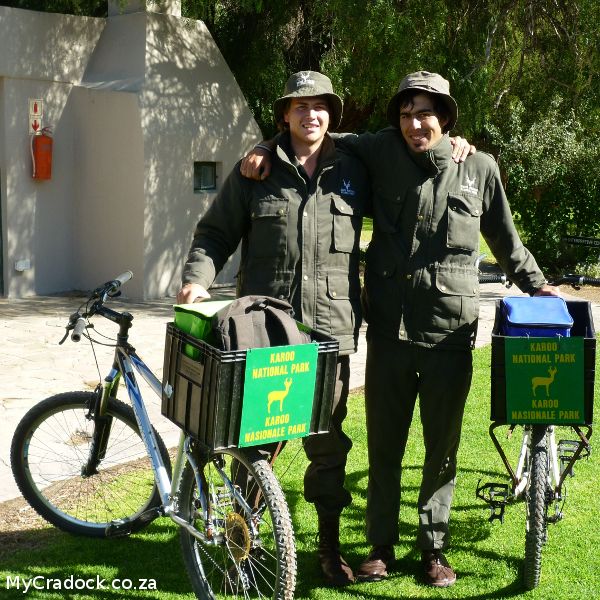
Two youngsters from Karoo National Park outside Beaufort West have decided to “go green” for World Environment Month and have swopped their cars for bicycles.

Volunteer Armond Nel and student Robert Daley used scrap metal to attach plastic crates as carriers on their bicycles. They use the bicycles at least once a week to do shopping and other town activities – a 26 kilometre round trip from the Park to town and back.

They have used the crates to carry anything from groceries to firewood bought in town. The “park signs” on the back of the bicycles are original antique Karoo National Park signs which were kindly donated by the Park.

They say the reason behind their initiative was two-fold: to encourage other people to use their imagination to reduce their carbon footprint, and to increase their fitness at the same time.

“The students came up with the idea themselves and I am a believer that good ideas should be supported and rewarded,” says Park Manager, Nico van der Walt.

“We have four conservation students in the Park, two of whom do their practical training voluntarily, which emphasises the determination and dedication of this young group. Their attitude is highly positive and they add so much value to Karoo National Park,” van der Walt concluded.

Karoo Cycling
Karoo National Park volunteer Armond Nel and student Robert Daley proudly showing off their pedal power.
Category: NewsTag: cycling, karoo
Karoo Snow June 2013
14 June 2013 by Alan

Karoo National Park Snowfall Images

Karoo National Park outside Beaufort West has received its first snow for the year. The first snowfall came overnight on 1 June, and again a week later on 8 June – in the area of the Park known as Puttervslei, on the Nuweveld Mountains. Park Manager, Nico van der Walt, says it was not as …

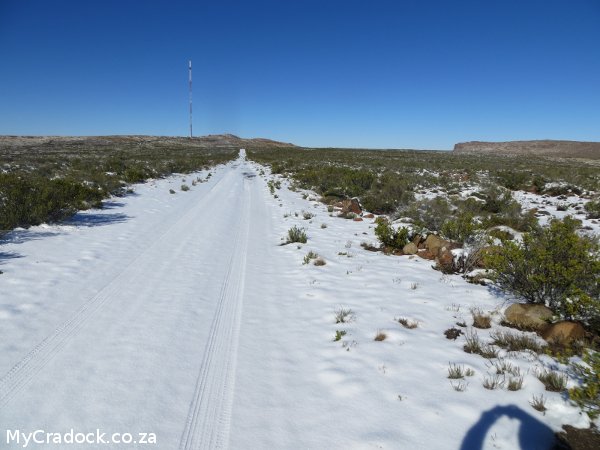
Karoo National Park outside Beaufort West has received its first snow for the year. The first snowfall came overnight on 1 June, and again a week later on 8 June – in the area of the Park known as Puttervslei, on the Nuweveld Mountains.

Park Manager, Nico van der Walt, says it was not as heavy as last year’s snow, though. “Last year we had snow twice – once in July and again in September. That snowfall was much heavier, and came down as low as the area known as the middle plateau.”

Snow used to occur in the town of Beaufort West regularly years ago. However, after a long absence, the locals got some on their doorsteps for the first time last year since 1984.

Karoo Snow June 2013
Category: NewsTag: karoo, snow
12 June 2013 by Alan

Ray Winstone – Jaime Winstone Banned From Safari By Paranoid Dad

Artist Index A B C D E F G H I J K L M N O P Q R S T U V W X Y Z 0 Click here to Book Accommodation in Cradock, Graaf Reinett, Hofmeyer or surrounds. Article source: http://www.contactmusic.com/news/jaime-winstone-banned-from-safari-by-paranoid-dad_3715213

Artist Index

A
B
C
D
E
F
G
H
I
J
K
L
M
N
O
P
Q
R
S
T
U
V
W
X
Y
Z
0

Category: NewsTag: africa, karoo, safari
12 June 2013 by Alan

Roaming Scribe: Girls on Safari

Scrape. Thud. Silence. Scraaaape. Thud. Silence. I’m listening very carefully to an elephant moving. Though the sounds are amplified due to anxiety, it doesn’t sound like a three tonne animal ambling along. I am on a girly safari in South Africa and am just about to find out how unnerving it is to be in …

Scrape. Thud. Silence. Scraaaape. Thud. Silence.

I’m listening very carefully to an elephant moving. Though the sounds are amplified due to anxiety, it doesn’t sound like a three tonne animal ambling along. I am on a girly safari in South Africa and am just about to find out how unnerving it is to be in the open bush around very large mammals.

2013-06-11-ShootingtheSunsetvs2500x375.jpgShooting the Sunset ©Lucinda Lacon

Night on the Kwandwe Private Game Reserve. Our location is not far from the Indian Ocean Coast in South Africa. The sky overhead is filled with stars. A group of five of us is traveling back to the lodge in an open jeep after imbibing several Sundowners (champagne, wine, coffee spiked with local spirits) and snacking on some lovely goodies post our late afternoon game drive. The one-lane dirt road is surrounded by scrub endemic to the region and dust billows up behind our vehicle as we speed along. Other than the light from headlamps, it is completely dark.

Making a quick turn, suddenly, looming in front of us, is an enormous bull elephant in musth (heat), the acrid smell of his testosterone tainted urine filling the air. Our vehicle quickly stops but the elephant keeps lumbering towards us. Ryan, our driver and game ranger, reverses the land rover quickly as is possible to the nearest T junction. Backing into the intersecting road, he then reverses around another corner and hides our Land Rover behind a large thicket. “No one talk. The elephant should pass by us and continue down the main dirt road,” whispers Ryan. “Then we will continue on”. We didn’t want to disturb the elephant’s routine and it would be impossible to go around him. This was the best option to get us back as quickly as possible to the delicious warm fire of the Great Fish River Lodge.

2013-06-11-IMG_3999400x361.jpg

But the elephant has other ideas.

Doing as we are told everyone sits in silence, secure in our belief that our game warden knows what he’s doing. I can hear the animal padding slowly along the road. Then the beast stops. It is eerily silent. I can barely make out an elephant sized shape on the other side of the thicket. Our tracker, Andy, flicks a high power torch on … the elephant is directly in front of us! Standing only 6 ft. away and extending his ears as far as he can, he does his best to look threatening. It works! “He’s still coming towards us, Ryan,” I hiss. Pulses are racing. We reverse again, this time at top speed. The elephant is still moving towards us. But then, luckily, something distracts him, he turns off our slip road and moves down another path. Ryan revs the engine, puts it in second gear and we go tearing past our large friend to collective sighs of relief.

Don’t think for a minute us girls are squeamish or cowards. We are a pretty hardy bunch, all of us journalists of some description. But this is a wake-up call to the realities of life in the bush!
2013-06-11-IMG_4024300x250.jpg

2013-06-11-IMG_4145307x400.jpg

The Kwandwe Private Game Reserve has plenty more of the Big Five to view: Black and White Rhino, Lion, Leopard and Water Buffalo and also many other wonderful animals. Zebra, Giraffe, Impala, Oryx, Aardwolf, Caracal, Wart hogs, Porcupine, Jackals are here as well … and the list goes on.

2013-06-11-IMG_4063500x334.jpg
For those of us new to going on safari, this is all a bit overwhelming. But it is also incredibly rewarding. Kwandwe also offers an Animal Conservation Safari where guests can get involved in rhino darting for the purpose of monitoring and administration of medicines. This is becoming more and more popular with visitors. Conservation of rhinos is vitally important in South Africa and globally. Especially with the poaching problem worsening at a terrific rate.

2013-06-11-IMG_4114600x400.jpgRhinos are heavy!

While here we discovered that animals are most active in the cool temperatures at dawn, which means that game drives often entail early morning starts. But this is exciting too as on one dawn safari we are able to view a pride of lions enjoying their recent kill.

With just a cup of tea or coffee to start off, it’s great to then return to a scrumptious brunch waiting and ready after a busy safari morning! Delicious tasting food, laid out in beautiful arrangements is part and parcel of what our lodge offers for every meal. The breakfast muesli is gorgeous and there are tarts (lemon meringue was my favourite) and small sandwiches laid out on stone tiles as well as loads of other tempting treats.

2013-06-11-GreatFishboma600x449.jpg

BBQ In the Boma

But the Boma BBQ at the end of our trip offered the best food by far. Boma is the name given to a traditional stone or wood enclosure in this part of South Africa. We enter to find a roaring fire in the pit and a formal table laid out with tablecloth and linen napkins. After everyone is served a fizzy drink, we got down to the business of tucking in! This is self-service and I choose the melt-in-your mouth chicken curry with potato gnocchi, venison skewers and roasted veg. The dessert of Cardamom and Yoghurt Panacotta, with berry consommé and a black pepper tulle is stunning.
2013-06-11-2012100817.31.50305x400.jpg

We also had the unique opportunity to visit the Mgcambele Community Centre at the local village.
Many of the indigenous people living on the reserve still farm, as they have since time immemorial, but now nearly 100 rural workers are employed on the Kwandwe Reserve by the Angus Gillis Foundation. Some are working in the animal conservation programme, others in hospitality and many others are working at the Mgcambele Community Centre. The newly built community centre offers classes and aftercare for children of staff where there is structured play for the youngsters as well as a place for the women’s Doll Making Co-operative to meet and sew.
2013-06-11-Kwandwedollmakingcoop.jpg
Any guests staying on the reserve can come and help out by volunteering or donating items.

Images ©roamingscribe unless otherwise stated

Kwandwe Game Reserve Telephone: +27 (0)46 603 3400 or e-mail: reservations@kwandwe.co.za

Prices at Great Fish River Lodge start from RAND4110 (approx £300) per person per night based on two adults sharing on full board basis, including drinks and safari activities.

South African Airways offers return flights to Port Elizabeth from London Heathrow via Johannesburg from £875pp including taxes and charges. Telephone: 0844 375 9680.


Follow Lynn Houghton on Twitter:

www.twitter.com/roaming_scribe

Category: NewsTag: africa, karoo, safari
12 June 2013 by Alan

Guiding Africa safari standards

He’s the go-to safari guide to the BBC and heads up the team at Heritage Hotels, but Paul Kirui has bigger plans to improve standards across Kenya. In this special edition of Eye on Africa, Amanda Greenwood delves into the life of a tour guide that knows no boundaries. Defining someone as an ‘expert’ is …

Paul KiruiHe’s the go-to safari guide to the BBC and heads up the team at Heritage Hotels, but Paul Kirui has bigger plans to improve standards across Kenya. In this special edition of Eye on Africa, Amanda Greenwood delves into the life of a tour guide that knows no boundaries.

Defining someone as an ‘expert’ is often an exaggerated claim but each story I hear from top safari guide Paul Kirui oozes of the knowledge you can only find from seeking for perfection. His work as head safari guide at Heritage Hotels is only a small part of his career, which has seen him lead BBC cameramen and presenters during several ‘Big Cat Diaries’ and wildlife series and become chairman of the Kenya Professional Safari Guides Association to drive standards across the country.

His role in the hospitality industry has clearly impacted his view of customer service and standards, with Kirui intent that those who visit its hotels will see what they want to and not what they are told to. So just as hotels change the way they service customers, it appears the tourism and touring businesses are doing just the same, with a personalised approach.

“A guide can make or break a trip,” he says several times throughout our chat. “We really invest in training our guides so they are the best and train them on an annual basis so there is a uniform standard across the group. We take a different approach to build the customers’ experience with our guidance as we know priorities and expectations change with each guest.”

His work with the BBC has also left him under no doubt that technology and television is changing client perceptions. With more watching documentaries and booking up holidays from their laps, Kirui knows people expect more than before and encouraged the UK travel trade to think about the quality of guides as much as accommodation when it comes to booking a holiday for clients. It has also shifted how Heritage has adopted its game drives.

“A few years ago most tourists wanted to tick off the ‘Big Five’ and it was like a competitive experience. Now they view it differently because they have watched television shows and are more aware that sometimes you have to wait and it takes time to see the animals. Our photography guests really appreciate it when I have told them to wait a few hours at the same spot and eventually get a great shot,” he said. “A bad holiday experience comes from a bad guide so we have to prepare our guides to what the client wants to create understanding and explanation. We also get them to appreciate the smaller things too like a sunset or insects, or bring cultural knowledge about nearby plants so there is an element of surprise.”

Having installed the standard into Heritage Hotels, Kirui is now using his role at the Kenya Professional Safari Guides Association to bring the level nationwide. Under his leadership a four-tier grading of guides has been introduced with exams and practical tests, with the ultimate gold level status taking six years to achieve. So if you think your training can be intense at times, spare a thought for Kirui’s students out in the plains.

“We take the guides out on three-day game drives and with us acting as guests we tear them apart, ask questions and rip the drive up to see how they handle it,” says Kirui. “We want to see how they can handle any situation that could happen like difficult customers, a medical issue or repairing the car.”

Only 18 guides have reached this level so far and Kirui’s pride is evident when he explains the greater impact of training and standards.

“I want our guides to be ambassadors and present them to guests as sales people. In the past guides in Kenya had a bad reputation because of their behaviour but now we are working with the government to reign this in,” he explains. “The association is working with guides to build policies and professional guides that can present the best they can.”

With this detailed approach Kirui hopes Kenya will become the pick of the safari destinations past nearby competitors such as South Africa and Tanzania. “I’m happy to leave a small legacy in a part of the world,” he smiles as we conclude our conversation. But with his expertise allowing the BBC to capture the images it can and with visits to conservation projects in the UK planned while he’s over here, it seems Kirui’s legacy may stretch further than he thinks.

Category: NewsTag: africa, karoo, safari
  • Previous
  • Page 1
  • Interim pages omitted …
  • Page 92
  • Page 93
  • Page 94
  • Page 95
  • Page 96
  • Interim pages omitted …
  • Page 100
  • Next
WE LOVE CRADOCK.

COPYRIGHT MyCradock · DESIGN BY REACH TRUST
All Rights Reserved · Powered by Straton Solar