
Tulela Safari Lodge lies within the Klaserie Private Nature Reserve, a privately protected area that forms part of the Greater Kruger ecosystem. The reserve is unfenced, allowing wildlife to move freely between Klaserie, Kruger National Park, and neighbouring concessions. This openness shapes both the landscape and the experience of being here.
For guests arriving at the start of 2026, each day is different, not because something extraordinary always happens, but because the land itself is in constant, subtle motion.
For their team, there is a quiet sense of anticipation at the lodge. Each new year brings changing conditions, shifting wildlife patterns, and new opportunities for guests to experience the reserve. Rainfall and animal movement all influence what happens on safari, ensuring that no two visits are ever quite the same.
A unique landscape
The area around Tulela is largely made up of mopane woodland, a habitat that encourages a more attentive style of game viewing, a landscape that is sometimes overlooked in favour of more open savannahs. Yet the mopane trees play a significant role in shaping the environment. In summer, their leaves provide shade and a valuable food source for many animals. In winter, the trees thin out, improving visibility and concentrating wildlife around remaining water sources.
Wildlife viewing in the Klaserie is varied and seasonal. Alongside large mammals, the reserve supports a wide range of bird species, with activity increasing during the warmer months. Early mornings and late afternoons are particularly rewarding times to notice birdlife around the lodge and during game drives.
Seeing the land through a camera
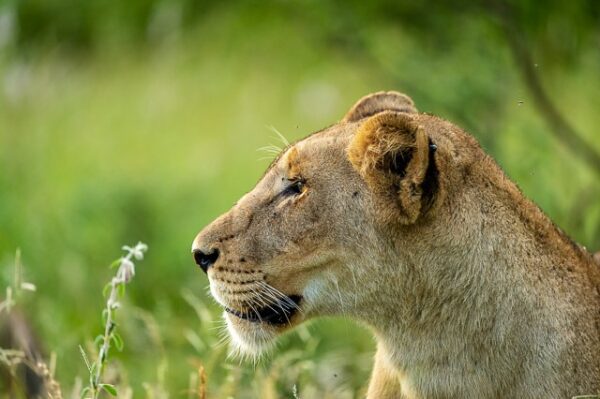
For guests interested in photography, the reserve offers many natural opportunities. The emphasis here is less on wide, dramatic scenes and more on individual moments, an animal in the shade, birds at first light and wildlife moving through the woodland.
For Andriëtte Krugel, Tulela’s lodge manager, this attentiveness extends beyond her operational role. She spends time photographing the reserve, capturing the details that shape daily life in the Klaserie.
“Tulela Safari Lodge offers guests access to an incredible landscape, and what I love most about photographing the wildlife here is that no two moments are ever the same,” says Andriëtte.
“The Klaserie Nature Reserve and its wildlife are not always about visual drama. Much of its appeal lies in intervals,” she adds. Andriëtte’s photography reflects this perspective, highlighting not only the wildlife but also the appreciation, connection, and care for the land shared by the people who live and work at Tulela.
Consistency, Comfort and Care
As the lodge moves into 2026, guests can expect the same level of attention to detail and personal care that Tulela is known for. The lodge remains a place to relax between game drives and feel supported by a team that values thoughtful, welcoming hospitality.
Tulela is designed to sit comfortably within its surroundings. Wildlife regularly moves past the lodge area, and evenings are accompanied by the natural sounds of the bush rather than scheduled activities. This creates a relaxed pace that allows guests to unwind and feel connected to the environment around them.
This year, guests are warmly invited to capture their own memories, whether through a camera lens or simply through time spent together.
Boilerplate and Editor’s Notes.
More Info on A New Year at Tulela: A Lens on the Klaserie here:
Twitter: https://twitter.com/MediawebSA
Facebook: https://www.facebook.com/MySociaLifeSA/
CLICK HERE to submit your press release to MyPR.co.za.
First Published here: MyPR.co.za
Did You Know?
- Cradock was founded in 1813 on the banks of the Great Fish River to cater for the migratory farmers who settled in this ruggedly beautiful area with its excellent grazing, abundant water and healthy climate.
- Cradock was officially renamed Nxuba on 26 August 2022. This change was officially gazetted by the Minister of Sport, Arts and Culture, Nathi Mthethwa, and it was part of a broader effort to rename towns with colonial or apartheid legacies in the Eastern Cape.
- Home to an actual Harry Potter’s grave: A British soldier with the name Harry Potter, who died during the South African War (Anglo-Boer War), is buried in the Cradock cemetery. His grave was discovered in 2002, long before the fictional character became a global phenomenon.
- Location of the last surrender of arms in the South African War: Cradock was the final place in South Africa where arms were officially laid down at the end of the South African War, with the event occurring four days after the Peace of Vereeniging was signed in 1902.
- Birthplace of Afrikaans publication: The first-ever article published in the Afrikaans language appeared in the local newspaper, the Cradock News, on December 4, 1868. This was a report on the separation of the Eastern Cape from the Western Cape, and the paper achieved the largest circulation in the country at the time.
- Second oldest cricket ground and library in South Africa: Cradock’s cricket ground and library are both the second oldest in the entire country, a testament to the town’s early establishment and development of civic amenities.
- Host to a total solar eclipse viewing by a Prime Minister: In 1942, the South African statesman and Prime Minister Jan Smuts came specifically to Cradock to witness a total eclipse of the sun, as the town was the best location for viewing the celestial event.