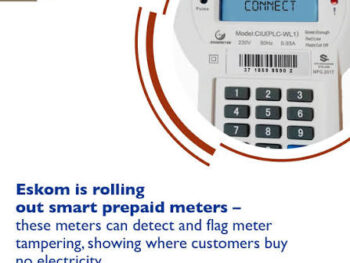
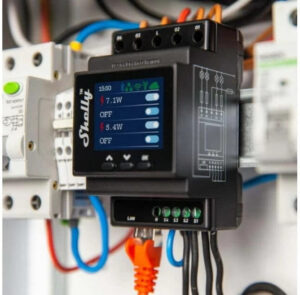
- Or, you could just go for the ‘Hippy Option’
One of the YouTube Channels that I watch on a semi-regular basis is ‘Undecided with Matt Ferrell’.
In his latest video, “The Hidden Problem With Home Batteries”, Matt details how he actually loses money on his home battery setup in a 1 for 1 net metering situation in the state of Massachusetts.
Matt is a bit of an uber nerd when it comes to making decisions – not only does he over research but he continues to do so by monitoring and reporting back on his purchases, in detail and well after the date of purchase.
In some ways he extolls the BA Systems Energy Management mantra of; “If you can measure it, you can manage it!”
BUT, the bottom line when watching such videos from another part of the world is that every country, province, metropolitan area and utility supplier has different ways that they handle charges for electricity and grid connection charges.
The quick take away for South Africa is somewhere in the following:
Financial efficiency may shift positively if utilities transition away from 1:1 net metering or introduce Time-of-Use (TOU) rate structures. Under TOU rates, storing cheap daytime energy to discharge during expensive peak hours makes batteries considerably more financially viable.
In fact Matt estimates that a TOU tariff may impact him directly as follows: From minus $200 per year to between $170 and $800 plus in savings per year. Again – efficient management of use is the key.
As a consumer in South Africa there are three main areas to consider:
- Does my supplier offer Net Metering?
- What is the proportion (1:1 2:1 etc)?
- What are the Time of Use Tariffs for each portion?
Of course the real reason why South African consumers install home batteries is really an emotional response to an Eskom failure – loadshedding provided the impetus.
Now, if Eskom was superbly efficient with a 100% uptime then we could forget about that emotional response and just use Grid Tie Solar – what Straton Solar call their ‘Hippy Option’ – without batteries which is a far cheaper option in a 1:1 environment.
Key Models & Distinctions Across Major SA Metros
Cash Payouts vs. Bill Offsets:
Cape Town (Cash for Power): Cape Town offers a true cash payout option for commercial and residential customers who generate a net surplus, paying out funds directly once accumulated credits pass a minimum threshold.
All Other Metros: Operates strictly on a bill-credit system. Excess power fed into the grid offsets the electricity portion of your municipal account for that billing cycle, but you cannot request cash refunds.
The ‘payback’ amounts vary between the Metros and one can expect a ‘payback’ amount of around 30% of what you pay for a kW/h as a consumer – again dependant upon a number of factors such as whether you are on an IBT Tariff or not.
Mandatory Fixed Monthly Charges:
To prevent solar users from avoiding infrastructure maintenance costs, most metros (including Joburg City Power and Cape Town) require SSEG participants to pay a fixed monthly network access fee or capacity charge.
Net Consumer Requirement:
Under NERSA guidelines, residential customers in almost all South African municipalities must remain net consumers (importing more kilowatt-hours from the grid annually than they export) unless they obtain a specific independent power producer (IPP) generation license.
Non-Export / Zero-Export Alternative:
If you do not wish to pay bi-directional smart meter fees or fixed SSEG network charges, most metros allow you to install a reverse-flow blocking device (export limiter). This lets you use solar for your own home consumption without feeding back into the municipality grid or changing your standard residential tariff.
Video Summary:
Here is a summary of the salient points from the video “The Hidden Problem With Home Batteries” by Matt Ferrell (Undecided with Matt Ferrell):
Financial & Return on Investment (ROI) Realities
Negative Financial ROI: Despite installing $22,385 worth of batteries (net cost after federal tax credits and state incentives), the system costs about $27/year in electricity to run and does not generate direct savings under standard 1:1 net metering.
Roundtrip Efficiency Losses: Storing self-generated solar energy in a home battery loses ~16% of that energy as heat. Under flat-rate, 1:1 net metering policies, exporting power to the grid is effectively 100% efficient, making the grid a better “battery” financially.
High Stored Energy Costs: Factoring in equipment depreciation and charging opportunity costs, power drawn from the home battery costs approximately $0.68/kWh, compared to paying $0.32/kWh directly from the grid.
Revenue Streams (Utility Battery Demand Response)
Virtual Power Plant (VPP) Income: The only significant monetary return comes from utility programs (e.g., Connected Solutions) that “rent” the battery to discharge power during summer peak demand hours.
Variable Payouts: Annual earnings ranged between ~$1,500 and $1,880. However, payments are tied to peak power delivery rate (kW) rather than total capacity (kWh), meaning payouts fluctuate based on how utilities manage discharge times.
Degredation vs. Time-Based Wear
Aging Out Before Wearing Out: Due to lower winter generation and lower discharge cycles, the battery completes roughly 230 cycles per year. Because it is rated for 6,000 cycles or 15 years, the unit will reach its calendar shelf life long before reaching its maximum cycle limits.
Resilience vs. Financial Motivation
Resilience, Not Independence: The speaker makes a clear distinction between leaving the grid (independence) and keeping seamless power during grid failures (resilience).
Peace of Mind: The primary non-financial benefit is seamless backup during grid outages—allowing critical home loads (HVAC, refrigeration, lights) to stay powered without interruption or manual intervention.
Environmental Impact: Discharging stored energy during peak hours replaces reliance on dirty “peaker” fossil-fuel plants.
Images:

Video:
https://www.youtube.com/watch?v=YrO9TArSK6o
Don’t Let Others Experience Put You Off Battery Storage
Links:
Boilerplate and Editor’s Notes.
More Info on Don’t Let Others Experience Put You Off Battery Storage here:
X: https://twitter.com/MyPE
LinkedIn: https://www.linkedin.com/company/straton-electrical/
Facebook: https://www.facebook.com/StratonElectrical/
CLICK HERE to submit your press release to MyPR.co.za.
First Published here: MyPR.co.za
Did You Know?
- Cradock was founded in 1813 on the banks of the Great Fish River to cater for the migratory farmers who settled in this ruggedly beautiful area with its excellent grazing, abundant water and healthy climate.
- Cradock was officially renamed Nxuba on 26 August 2022. This change was officially gazetted by the Minister of Sport, Arts and Culture, Nathi Mthethwa, and it was part of a broader effort to rename towns with colonial or apartheid legacies in the Eastern Cape.
- Home to an actual Harry Potter’s grave: A British soldier with the name Harry Potter, who died during the South African War (Anglo-Boer War), is buried in the Cradock cemetery. His grave was discovered in 2002, long before the fictional character became a global phenomenon.
- Location of the last surrender of arms in the South African War: Cradock was the final place in South Africa where arms were officially laid down at the end of the South African War, with the event occurring four days after the Peace of Vereeniging was signed in 1902.
- Birthplace of Afrikaans publication: The first-ever article published in the Afrikaans language appeared in the local newspaper, the Cradock News, on December 4, 1868. This was a report on the separation of the Eastern Cape from the Western Cape, and the paper achieved the largest circulation in the country at the time.
- Second oldest cricket ground and library in South Africa: Cradock’s cricket ground and library are both the second oldest in the entire country, a testament to the town’s early establishment and development of civic amenities.
- Host to a total solar eclipse viewing by a Prime Minister: In 1942, the South African statesman and Prime Minister Jan Smuts came specifically to Cradock to witness a total eclipse of the sun, as the town was the best location for viewing the celestial event.