• Skip to main content
  • Skip to header right navigation
  • Skip to site footer

My Cradock

My Cradock

Cradock News Classifieds and Directory

  • Home
  • About
  • Accommodation
  • Business
  • Events
  • Free Business Advert
  • Submit News
You are here: Home / Archives for North

North

31 March 2018 by Alan

Image from page 508 of “American fishes; a popular treatise upon the game and food fishes of North America, with especial reference to habits and methods of capture” (1888) – The Great Fish River Museum

Image from page 508 of “American fishes; a popular treatise upon the game and food fishes of North America, with especial reference to habits and methods of capture” (1888) Image by Internet Archive Book Images Identifier: americanfishespo1888good Title: American fishes; a popular treatise upon the game and food fishes of North America, with especial reference …

Image from page 508 of “American fishes; a popular treatise upon the game and food fishes of North America, with especial reference to habits and methods of capture” (1888)
The Great Fish River museum
Image by Internet Archive Book Images
Identifier: americanfishespo1888good
Title: American fishes; a popular treatise upon the game and food fishes of North America, with especial reference to habits and methods of capture
Year: 1888 (1880s)
Authors: Goode, G. Brown (George Brown), 1851-1896
Subjects: Fishes — North America
Publisher: New York, Standard book company
Contributing Library: Harvard University, Museum of Comparative Zoology, Ernst Mayr Library
Digitizing Sponsor: Harvard University, Museum of Comparative Zoology, Ernst Mayr Library

View Book Page: Book Viewer
About This Book: Catalog Entry
View All Images: All Images From Book

Click here to view book online to see this illustration in context in a browseable online version of this book.

Text Appearing Before Image:
h, or Silver Salmon, Oncorhynclius kisuich, writes Jordan, isalmost everywhere known by the name of Silver Salmon. It has alsoa series of local names. In Kamtchatka it is still known by the nameKisutch, in use in Pennants time, a hundred years ago. The name Bielaya Ryba, or A\hite-fish, is also ascribed to it. On FrazerRiver it is known by the INIusquaw name of Coho; at Seattle, by theNisciually name of Skowitz ; about Cape Flattery by the Makah nameof Hoopid ; on the Columbia it is called Silver Salmon or ^^hiteSalmon, and southward the same names prevail. It reaches a weight oftwenty pounds, the usual range being from seven to ten. The SilverSalmon enters all the rivers from Sacramento to Behring Island and Kamt-chatka. In the fall it is abundant in probably all the rivers. Few ornone, however, are seen in the spring. They are often taken with seinesin Puget Sound at all seasons. Like the other fall-running Salmon, theyseldom ascend the rivers to any great distance. ypsn^fi^^-^^^Sf.

Text Appearing After Image:

Note About Images
Please note that these images are extracted from scanned page images that may have been digitally enhanced for readability – coloration and appearance of these illustrations may not perfectly resemble the original work.

This The Great Fish River museum image was automatically curated and published with WP Robot plugin – CLICK HERE to learn more about WP Robot for Wordpress – a massive time and money saver.

Category: ImagesTag: 1888, America, American, capture, especial, Fish, fishes, food, from, Game, great, habits, image, methods, Museum, North, page, popular, reference, River, treatise, upon
29 March 2018 by Alan

Image from page 458 of “American fishes; a popular treatise upon the game and food fishes of North America, with especial reference to habits and methods of capture” (1888) – The Great Fish River Museum

Image from page 458 of “American fishes; a popular treatise upon the game and food fishes of North America, with especial reference to habits and methods of capture” (1888) Image by Internet Archive Book Images Identifier: americanfishespo1888good Title: American fishes; a popular treatise upon the game and food fishes of North America, with especial reference …

Image from page 458 of “American fishes; a popular treatise upon the game and food fishes of North America, with especial reference to habits and methods of capture” (1888)
The Great Fish River museum
Image by Internet Archive Book Images
Identifier: americanfishespo1888good
Title: American fishes; a popular treatise upon the game and food fishes of North America, with especial reference to habits and methods of capture
Year: 1888 (1880s)
Authors: Goode, G. Brown (George Brown), 1851-1896
Subjects: Fishes — North America
Publisher: New York, Standard book company
Contributing Library: Harvard University, Museum of Comparative Zoology, Ernst Mayr Library
Digitizing Sponsor: Harvard University, Museum of Comparative Zoology, Ernst Mayr Library

View Book Page: Book Viewer
About This Book: Catalog Entry
View All Images: All Images From Book

Click here to view book online to see this illustration in context in a browseable online version of this book.

Text Appearing Before Image:
ght to add that I tasted the dish again whencold next morning at breakfast, and that it had lost nothing of its relish,and I do not think that many who sat down before it without prejudicewould come to any other than such a favorable conclusion. Perhaps\inegar instead of lemon might cheapen the dish, but as the recipe isgiven, it may be classed as economical. The common Brook Sucker, Catostonius Coiiuiicrsoiii. or the • AVhiteSucker, is the most familiar and generally abundant of the group. It CARP, DACE AND MINNOW. 435 inhabits all bodies of water, large and small, from New England to Colo-rado. In the great lakes it reaches a length of two feet or more. In smallbrooks it is mature at eight or ten inches. It varies much in size, colorand form in the different streams. It bites freely, ami is one of the fisheswith which the unambitious brook angler is well contented. When takenout of clear water, ])roperly cared for and well washed, it is an excellentpan-fish, like most of its kind.

Text Appearing After Image:
THE BROOK SUCKER—CATOSTOMlS COMMERSOXI. All the lakes and rivers of the Rocky Mountains and the Pacific slope,says Jordan, are inhabited by species of this genus, or of the alliedgenera Chasmistes and Pantostcus. In Utah Lake, said to be the greatestSucker-pond in the world, are found Caiostoimis fcciiinitis and ardcns,Chasmistes liorus and PantostcusplatyrliyncJius, all in abundance. In LakeTahoe Catostoinus tahoensis; in the Sacramento C. occidcntalis; in theColumbia C. macrochilus; in Klamath Lake Chasmistes luxatus and CJi.hrevirostiis, abound, while in the great lakes and all waters thence toAlaska and Arctic Ocean C. loiigirostris is an important food-fish. The Stone-roller, Hog Sucker, Stone Toter or Hammer-head Sucker, Catostomus nigricans, abounds in most waters from the greatlakes southward. The Stone-roller is extremely abundant in every run-ning stream in the North and West, where its singular, almost comical formis familiar to every school-boy. It delights in rapids and

Note About Images
Please note that these images are extracted from scanned page images that may have been digitally enhanced for readability – coloration and appearance of these illustrations may not perfectly resemble the original work.

This The Great Fish River museum image was automatically curated and published with WP Robot plugin – CLICK HERE to learn more about WP Robot for Wordpress – a massive time and money saver.

Category: ImagesTag: 1888, America, American, capture, especial, Fish, fishes, food, from, Game, great, habits, image, methods, Museum, North, page, popular, reference, River, treatise, upon
18 March 2018 by Alan

Image from page 249 of “Fur and feather in North China” (1914)

Image from page 249 of “Fur and feather in North China” (1914) Image by Internet Archive Book Images Identifier: furfeatherinnort00sowe Title: Fur and feather in North China Year: 1914 (1910s) Authors: Sowerby, Arthur de Carle, 1885-1954 Subjects: Zoology — China Birds — China Publisher: Tientsin, North China : Tientsin Press Contributing Library: American Museum of …

Image from page 249 of “Fur and feather in North China” (1914)
The Great Fish River museum
Image by Internet Archive Book Images
Identifier: furfeatherinnort00sowe
Title: Fur and feather in North China
Year: 1914 (1910s)
Authors: Sowerby, Arthur de Carle, 1885-1954
Subjects: Zoology — China Birds — China
Publisher: Tientsin, North China : Tientsin Press
Contributing Library: American Museum of Natural History Library
Digitizing Sponsor: Biodiversity Heritage Library

View Book Page: Book Viewer
About This Book: Catalog Entry
View All Images: All Images From Book

Click here to view book online to see this illustration in context in a browseable online version of this book.

Text Appearing Before Image:
ff colour marbledwith dark brown. The male is of a light greeny-brown, without marb-lings. It is very common in North Shensi and even in the Ordos Desert.During the dry season it burrows deep into the loess or sand, and sopreserves itself from dessication. It spawns in the small rivers, moun-ifin streams and lakes, but otherwise keeps away from water. The common toad, though found nearly all over the world, is farless common in North China than the foregoing species. It is of a dullearth-brown colour, and would be an ugly creature indeed were it not FROGS, TOADS AND SO^IE FRESH-WATER FISH. 171 for the wonderful gem-like eye. It is Shakespeare who has said, the toad, ugly and venomous. Wears yet a precious jewel in fiis head.referring doubtless to the creatures wonderful eye. To which, if either, of these species a very large toad that I havefrequently come across belongs I do not know. This variety isremarkable both for its size and the great number and size of theworts upon its skin.

Text Appearing After Image:

Note About Images
Please note that these images are extracted from scanned page images that may have been digitally enhanced for readability – coloration and appearance of these illustrations may not perfectly resemble the original work.

This The Great Fish River museum image was automatically curated and published with WP Robot plugin – CLICK HERE to learn more about WP Robot for Wordpress – a massive time and money saver.

Category: ImagesTag: 1914, China, feather, from, image, North, page
20 October 2017 by Alan

Image from page 53 of “American fishes; a popular treatise upon the game and food fishes of North America, with especial reference to habits and methods of capture” (1888)

Image from page 53 of “American fishes; a popular treatise upon the game and food fishes of North America, with especial reference to habits and methods of capture” (1888) Image by Internet Archive Book Images Identifier: americanfishespo1888good Title: American fishes; a popular treatise upon the game and food fishes of North America, with especial reference …

Image from page 53 of “American fishes; a popular treatise upon the game and food fishes of North America, with especial reference to habits and methods of capture” (1888)
The Great Fish River museum
Image by Internet Archive Book Images
Identifier: americanfishespo1888good
Title: American fishes; a popular treatise upon the game and food fishes of North America, with especial reference to habits and methods of capture
Year: 1888 (1880s)
Authors: Goode, G. Brown (George Brown), 1851-1896
Subjects: Fishes — North America
Publisher: New York, Standard book company
Contributing Library: Harvard University, Museum of Comparative Zoology, Ernst Mayr Library
Digitizing Sponsor: Harvard University, Museum of Comparative Zoology, Ernst Mayr Library

View Book Page: Book Viewer
About This Book: Catalog Entry
View All Images: All Images From Book

Click here to view book online to see this illustration in context in a browseable online version of this book.

Text Appearing Before Image:
is kept at the clubhouse of the daily catch, by whom caught, where taken, on what station,the number of fish, weight, and date. Some members of the CuttyhunkClub also belong to the West Island Club, which controls only five acresof land. The West Island Club is limited to thirty members, witli an ad-mission fee of ,000. Professor Leith Adams has drawn a vivid pen-i)icture of Indian Bass-fish-ing in New Brunswick. The Indians (on the St. Johns River) pursue them at spawningtime. The scene on a beautiful summer afternoon is extremely ex-citing. There a i^w canoes containing remnants of the Melicitatribe may be seen dropping quietly down the river, each with an Indianin the prow, spear in hand, and another at the stern paddling gently; thena sudden splash close by calls for his utmost exertions, and like an arrowthe birch-bark skiff is shot towards the spot, when the man in front, rest-ing on his knees, with much force and dexterity sends his three-prongedharpoon straight on the fish.

Text Appearing After Image:
THE WHITE BASS. ROCCUS CHRTSOPS. THE WHITE BASS AND THE YELLOW BASS. Subtle. Has he bit? Has he bit? Face. And swallowed too, my Subtle. I have given him line, and now he pkys i faith. Subtle. And shall we twitch him ? Face. Through both the gills. Ben. Jonson, The Alche7nist, 1611, Act. ii, ?c. i. T^HE White Bass, or Striped Lake Bass, Roccus chrysops, is often con-founded with the Striped Bass, which it closely resembles. It mayeasily be distinguished by the presence of thirteen, instead of eleven, softrays in the anal fin, as well as by the greater size of its scales, of whichthere are about fifty-five rows, instead of sixty or more. It is most abundant in the Great Lake region, although it has a widedistribution in the Ohio and upper tributaries of the Mississippi, and isfound in many streams farther south. It frequents chiefly the lakes andponds and the deeper parts of the rivers. It feeds upon minnows and thelike, usually taking the hook readily, and is considered gamy by theano

Note About Images
Please note that these images are extracted from scanned page images that may have been digitally enhanced for readability – coloration and appearance of these illustrations may not perfectly resemble the original work.

This The Great Fish River museum image was automatically curated and published with WP Robot plugin – CLICK HERE to learn more about WP Robot for Wordpress – a massive time and money saver.

Category: ImagesTag: 1888, America, American, capture, especial, fishes, food, from, Game, habits, image, methods, North, page, popular, reference, treatise, upon
23 August 2017 by Alan

On the edge of Owens Dry Lake north of Keeler, Sierra Mountains in the distance – keeler18

On the edge of Owens Dry Lake north of Keeler, Sierra Mountains in the distance – keeler18 Image by mlhradio North of Owens Dry Lake, CA. Another look at the utter desolation of the Owens Valley. November 12, 2007. Photo #18 of 50 of my ‘Keeler’ photoset. This Valley of Desolation image was automatically curated …

On the edge of Owens Dry Lake north of Keeler, Sierra Mountains in the distance – keeler18
Valley of Desolation
Image by mlhradio
North of Owens Dry Lake, CA. Another look at the utter desolation of the Owens Valley. November 12, 2007. Photo #18 of 50 of my ‘Keeler’ photoset.

This Valley of Desolation image was automatically curated and published with WP Robot plugin – CLICK HERE to learn more about WP Robot for Wordpress – a massive time and money saver.
Category: ImagesTag: distance, edge, Keeler, keeler18, Lake, Mountains, North, Owens, Sierra
30 July 2017 by Alan

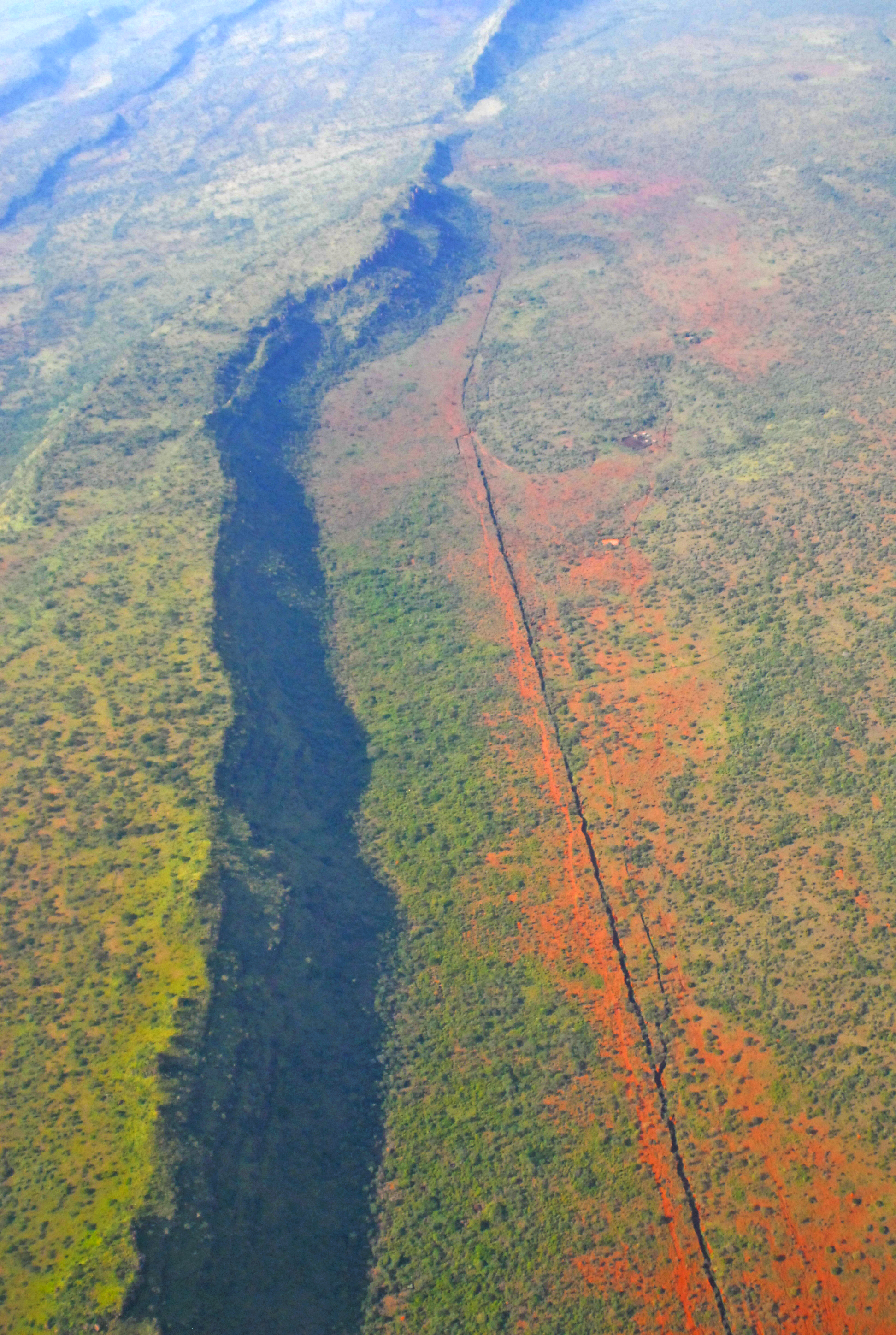
Rift Valley, North of Masai Mara, Kenya

Rift Valley, North of Masai Mara, Kenya Image by GRIDArendal A rift valley is a linear-shaped lowland between highlands or mountain ranges created by the action of a geologic rift or fault. This action is manifest as crustal extension, a spreading apart of the surface which is subsequently further deepened by the forces of erosion. …

Rift Valley, North of Masai Mara, Kenya
Mountain Zebra National Park
Image by GRIDArendal
A rift valley is a linear-shaped lowland between highlands or mountain ranges created by the action of a geologic rift or fault. This action is manifest as crustal extension, a spreading apart of the surface which is subsequently further deepened by the forces of erosion. When the tensional forces are strong enough to cause the plate to split apart it will do so such that a center block will drop down relative to its flanking blocks, forming a graben.
This photo has been graciously provided to be used in the GRID-Arendal resources library by: Peter Prokosch.

This Mountain Zebra National Park image was automatically curated and published with WP Robot plugin – CLICK HERE to learn more about WP Robot for Wordpress – a massive time and money saver.

Category: ImagesTag: Kenya, Mara, Masai, North, Rift, VALLEY
27 July 2017 by Alan

Rifts in Rift Valley, North of Masai Mara, Kenya

Rifts in Rift Valley, North of Masai Mara, Kenya Image by GRIDArendal A rift valley is a linear-shaped lowland between highlands or mountain ranges created by the action of a geologic rift or fault. This action is manifest as crustal extension, a spreading apart of the surface which is subsequently further deepened by the forces …

Rifts in Rift Valley, North of Masai Mara, Kenya
Mountain Zebra National Park
Image by GRIDArendal
A rift valley is a linear-shaped lowland between highlands or mountain ranges created by the action of a geologic rift or fault. This action is manifest as crustal extension, a spreading apart of the surface which is subsequently further deepened by the forces of erosion. When the tensional forces are strong enough to cause the plate to split apart it will do so such that a center block will drop down relative to its flanking blocks, forming a graben.Author: Peter Prokosch

This Mountain Zebra National Park image was automatically curated and published with WP Robot plugin – CLICK HERE to learn more about WP Robot for Wordpress – a massive time and money saver.

Category: ImagesTag: Kenya, Mara, Masai, North, Rift, Rifts, VALLEY
15 February 2016 by Alan

Image from page 422 of “American fishes; a popular treatise upon the game and food fishes of North America, with especial reference to habits and methods of capture” (1888)

Image from page 422 of “American fishes; a popular treatise upon the game and food fishes of North America, with especial reference to habits and methods of capture” (1888) Image by Internet Archive Book Images Identifier: americanfishespo1888good Title: American fishes; a popular treatise upon the game and food fishes of North America, with especial reference …

Image from page 422 of “American fishes; a popular treatise upon the game and food fishes of North America, with especial reference to habits and methods of capture” (1888)
The Great Fish River museum
Image by Internet Archive Book Images
Identifier: americanfishespo1888good
Title: American fishes; a popular treatise upon the game and food fishes of North America, with especial reference to habits and methods of capture
Year: 1888 (1880s)
Authors: Goode, G. Brown (George Brown), 1851-1896
Subjects: Fishes — North America
Publisher: New York, Standard book company
Contributing Library: Harvard University, Museum of Comparative Zoology, Ernst Mayr Library
Digitizing Sponsor: Harvard University, Museum of Comparative Zoology, Ernst Mayr Library

View Book Page: Book Viewer
About This Book: Catalog Entry
View All Images: All Images From Book

Click here to view book online to see this illustration in context in a browseable online version of this book.

Text Appearing Before Image:
>ifm

Text Appearing After Image:
TUE ELKUlEAN SUAD. It is very closely allied to the European species, but is a much finer fish.The English care little for their shad, though in France the same speciesis highly esteemed. The following account of our Shad is from the pen of Col. MarshallMacDonald, who has made it a subject of special study for many years : The Shad is found along the whole Atlantic coast of the United States,and its capture constitutes one of the most important fisheries in all thestreams draining into the Atlantic between the Gulf of St. Lawrence andthe St. Johns River, Florida. It is but rarely seen on the Atlantic coast of Nova Scotia, but occurs inthe Gulf of St. Lawrence, the various rivers of which it ascends as farnorth as the Miramichi, which seems to be its limit in that direction, nonehaving been seen in the Bay of Chaleur. Throughout its entire range the Shad is found in sufficient quantities togive rise to fisheries of great commercial value. There is no run of Shadin any of the rivers dra

Note About Images
Please note that these images are extracted from scanned page images that may have been digitally enhanced for readability – coloration and appearance of these illustrations may not perfectly resemble the original work.

This The Great Fish River museum image was automatically curated and published with WP Robot plugin – CLICK HERE to learn more about WP Robot for Wordpress – a massive time and money saver.

Category: ImagesTag: 1888, America, American, capture, especial, fishes, food, from, Game, habits, image, methods, North, page, popular, reference, treatise, upon
WE LOVE CRADOCK.

COPYRIGHT MyCradock · DESIGN BY REACH TRUST
All Rights Reserved · Powered by Straton Solar