• Skip to main content
  • Skip to header right navigation
  • Skip to site footer

My Cradock

My Cradock

Cradock News Classifieds and Directory

  • Home
  • About
  • Accommodation
  • Business
  • Events
  • Free Business Advert
  • Submit News
You are here: Home / Archives for Accommodation

Accommodation

15 February 2026 by Alan

Turn Your Website Into a Submission Engine With Gravity Forms

If you have ever visited Gqeberha based MyPR.co.za, you’ve seen one of the most efficient uses of WordPress automation in South Africa. MyPR handles thousands of press releases annually, but they don’t have a team manually re-typing every submission. Instead, they use Gravity Forms to do the heavy lifting. The MyPR Workflow: From Form to …

If you have ever visited Gqeberha based MyPR.co.za, you’ve seen one of the most efficient uses of WordPress automation in South Africa. MyPR handles thousands of press releases annually, but they don’t have a team manually re-typing every submission.

Instead, they use Gravity Forms to do the heavy lifting.

The MyPR Workflow: From Form to Draft in Seconds

Most people think a form is just for “Contact Us” pages. MyPR uses Gravity Forms for Front-End Content Submission. When a PR professional submits a release on MyPR, the form is mapped directly to WordPress Post fields.

  • The Title becomes the Post Headline.
  • The Body becomes the Post Content.
  • The Featured Image/s is/are automatically uploaded to the Media Library.

The Result? The release appears instantly as a “Pending Draft” in the WordPress backend, ready for an editor to review and publish with a single click.

Why Gravity Forms is the Industry Standard

Whether you are building a news portal like MyPR, a job board, or a complex registration system, Gravity Forms offers the reliability that free plugins simply cannot match.

  • Post Creation Add-On: This is the “secret sauce.” It allows you to turn any form submission into a WordPress post or custom post type automatically.
  • Advanced Conditional Logic: Show or hide fields based on user input, ensuring your users only see what they need to see.
  • Secure File Uploads: Handle high-resolution images and PDFs with built-in security protocols.
  • Bulletproof Integration: Connect your data to Mailchimp, HubSpot, or Zapier seamlessly.

Build Your Own Professional Workflow

Don’t let manual data entry slow your business down. If you want to scale your site’s functionality – whether for press releases, guest blogging, or user-generated content – you need a tool that handles the complexity for you.

Experience the power of the most advanced form builder on the market. Get started with Gravity Forms today and see why professional South African platforms like MyPR rely on it every day.

MyPR has an agency license dating back to the days when Gravity Forms started. There are now three different licenses available at 3 different price points: Basic, Elite (similar to our Agency license) and Pro.

Images:

As a decades long user of Gravity Forms MyPR confidently recommends this essential WordPress Plugin. Photo: Gravity Forms

First Published here: MyPR.co.za

Did You Know?

  • Cradock was founded in 1813 on the banks of the Great Fish River to cater for the migratory farmers who settled in this ruggedly beautiful area with its excellent grazing, abundant water and healthy climate.
  • Cradock was officially renamed Nxuba on 26 August 2022. This change was officially gazetted by the Minister of Sport, Arts and Culture, Nathi Mthethwa, and it was part of a broader effort to rename towns with colonial or apartheid legacies in the Eastern Cape.
  • Home to an actual Harry Potter’s grave: A British soldier with the name Harry Potter, who died during the South African War (Anglo-Boer War), is buried in the Cradock cemetery. His grave was discovered in 2002, long before the fictional character became a global phenomenon.
  • Location of the last surrender of arms in the South African War: Cradock was the final place in South Africa where arms were officially laid down at the end of the South African War, with the event occurring four days after the Peace of Vereeniging was signed in 1902.
  • Birthplace of Afrikaans publication: The first-ever article published in the Afrikaans language appeared in the local newspaper, the Cradock News, on December 4, 1868. This was a report on the separation of the Eastern Cape from the Western Cape, and the paper achieved the largest circulation in the country at the time.
  • Second oldest cricket ground and library in South Africa: Cradock’s cricket ground and library are both the second oldest in the entire country, a testament to the town’s early establishment and development of civic amenities.
  • Host to a total solar eclipse viewing by a Prime Minister: In 1942, the South African statesman and Prime Minister Jan Smuts came specifically to Cradock to witness a total eclipse of the sun, as the town was the best location for viewing the celestial event.
Category: Cradock, NewsTag: MyPR, SA News
14 February 2026 by Alan

Straton Electrical Weighs In on SONA 2026: A Vision for Infrastructure, but Execution Concerns Remain

GQEBERHA – Following President Cyril Ramaphosa’s State of the Nation Address (SONA) delivered on 12 February 2026 in Cape Town, Straton Electrical – a leading electrical contracting firm in the Eastern Cape – has critically examined the President’s roadmap for the energy sector. While the speech signaled a historic pivot toward a competitive electricity market, …

GQEBERHA – Following President Cyril Ramaphosa’s State of the Nation Address (SONA) delivered on 12 February 2026 in Cape Town, Straton Electrical – a leading electrical contracting firm in the Eastern Cape – has critically examined the President’s roadmap for the energy sector.

While the speech signaled a historic pivot toward a competitive electricity market, the local contracting industry remains cautious about the transition from high-level policy to “boots on the ground” implementation.

The “Good News”: Opportunities for Growth

Straton Electrical welcomes several key announcements that provide a clear runway for the electrical contracting and renewable energy sectors:

  • End of the Eskom Monopoly: The President’s confirmation of a fully independent state-owned transmission entity (separate from Eskom Holdings) is a watershed moment. This leveling of the playing field is expected to accelerate Independent Power Producer (IPP) projects, creating a massive demand for private electrical grid-tie and substation infrastructure.
  • The 40% Renewable Target: The bold commitment to have 40% of South Africa’s energy supply come from renewable sources by 2030 ensures long-term work for solar and wind contractors. The introduction of a 150% tax deduction for New Energy Vehicles (NEVs) and battery manufacturing further incentivizes industrial electrical upgrades.
  • Infrastructure Spend: The allocation of R940 billion for infrastructure over the next three years—including R375 billion by state-owned companies—promises significant sub-contracting opportunities in the revitalisation of national power systems.
  • Eradication of “Load Reduction”: The focus on provinces to address transformer overloading and illegal connections is a direct call to action for local contractors. Modernizing the distribution network is essential for the safety and stability of our communities.

Areas of Concern: The Challenges Ahead

Despite the optimism, Straton Electrical identifies significant “red flags” that could stifle progress:

  • Municipal Incapacity: The President acknowledged that many municipalities lack the technical skills to maintain electricity supply. While the plan to establish “professionally managed, ring-fenced utilities” is sound, the transition period may lead to further infrastructure decay and payment risks for contractors working with local government.
  • Grid Capacity Bottlenecks: While the President invited private investment into the grid, the current reality is that transmission constraints are still blocking new projects. The R440 billion needed for 14,000km of new lines is an astronomical figure, and the industry is concerned about the speed at which this “private capital” will actually be mobilized.
  • The “Construction Mafia”: President Ramaphosa specifically mentioned that “building sites are shut down by criminals.” For electrical contractors, the threat of site disruptions and extortion remains a major risk factor that the speech addressed in theory but has yet to solve in practice.
  • Technical Skills Gap: The massive scale of the proposed energy transition requires a workforce that South Africa currently lacks. Without an immediate, aggressive push in TVET college partnerships and apprenticeship funding, the industry may struggle to find enough qualified electricians to meet the 2030 targets.

Executive Commentary: “SONA 2026 feels like a shift from crisis management to structural reform,” says the Straton Electrical team. “The intent to decentralize the grid and embrace renewables is exactly what the industry has been asking for. However, for a contractor in Nelson Mandela Bay, the success of this plan depends entirely on whether the R54-billion municipal reform incentive actually reaches the street level to fix failing transformers and aging cables.”

Straton Electrical remains committed to supporting South Africa’s energy transition and will continue to provide expert solutions that align with the national goal of long-term energy security.

Images:

President Cyril Ramaphosa ahead of SONA 2026. Photo: Straton

Links:

Boilerplate and Editor’s Notes.
More Info on Straton Electrical Weighs In on SONA 2026: A Vision for Infrastructure, but Execution Concerns Remain here:
Facebook: https://www.facebook.com/StratonElectrical/

CLICK HERE to submit your press release to MyPR.co.za.

First Published here: MyPR.co.za

Did You Know?

  • Cradock was founded in 1813 on the banks of the Great Fish River to cater for the migratory farmers who settled in this ruggedly beautiful area with its excellent grazing, abundant water and healthy climate.
  • Cradock was officially renamed Nxuba on 26 August 2022. This change was officially gazetted by the Minister of Sport, Arts and Culture, Nathi Mthethwa, and it was part of a broader effort to rename towns with colonial or apartheid legacies in the Eastern Cape.
  • Home to an actual Harry Potter’s grave: A British soldier with the name Harry Potter, who died during the South African War (Anglo-Boer War), is buried in the Cradock cemetery. His grave was discovered in 2002, long before the fictional character became a global phenomenon.
  • Location of the last surrender of arms in the South African War: Cradock was the final place in South Africa where arms were officially laid down at the end of the South African War, with the event occurring four days after the Peace of Vereeniging was signed in 1902.
  • Birthplace of Afrikaans publication: The first-ever article published in the Afrikaans language appeared in the local newspaper, the Cradock News, on December 4, 1868. This was a report on the separation of the Eastern Cape from the Western Cape, and the paper achieved the largest circulation in the country at the time.
  • Second oldest cricket ground and library in South Africa: Cradock’s cricket ground and library are both the second oldest in the entire country, a testament to the town’s early establishment and development of civic amenities.
  • Host to a total solar eclipse viewing by a Prime Minister: In 1942, the South African statesman and Prime Minister Jan Smuts came specifically to Cradock to witness a total eclipse of the sun, as the town was the best location for viewing the celestial event.
Category: Cradock, NewsTag: MyPR, SA News
8 February 2026 by Guest

Graaff-Reinet Will Always Be Graaff-Reinet

Graaff-Reinet will always be Graaff-Reinet – and not Robert Sobukwe Town – to the Freedom Front Plus (VF Plus). The party, therefore, calls on the people of Graaff-Reinet, the broader Eastern Cape and the rest of South Africa to ignore the name change. This geographical name change along with 20 others – such as East …

Graaff-Reinet will always be Graaff-Reinet – and not Robert Sobukwe Town – to the Freedom Front Plus (VF Plus). The party, therefore, calls on the people of Graaff-Reinet, the broader Eastern Cape and the rest of South Africa to ignore the name change.

This geographical name change along with 20 others – such as East London to KuGompo City – was recently published in the Government Gazette by the Minister of Sport, Arts and Culture, Gayton McKenzie.

This not only proves that limited public funds are being spent on misguided priorities, but it is also a blatant example of cultural imperialism in which Afrikaner cultural history is annihilated under the pretext of so-called social cohesion.

It has become customary to expect Afrikaners, and only Afrikaners, to sacrifice their heritage on the altar to appease the rest. We refuse to keep doing it.

So, the Freedom Front Plus implores everyone who values the name Graaff-Reinet to remain loyal to the name, which is inextricably part of everyone in the country’s shared heritage and national identity.

More than thirty years have passed since the beginning of the new political dispensation and yet there is still this needless meddling – such as changing names – which benefits no-one.

These steps create division and waste taxpayers’ money, while urgent problems such as job creation, infrastructure and safety are ignored.

The Freedom Front Plus rejects Graaff-Reinet’s name change and will rectify it at the first opportunity that arises.

The name Graaff-Reinet dates to 1786 and honours Cornelis Jacob van de Graaff, a Dutch governor of the Cape Colony under the VOC, and his wife, Cornelia Reynet. In 1795, citizens rid themselves of VOC taxes and established the short-lived Republic of Graaff-Reinet. Much later, in the 1830s, Graaff-Reinet was also the point of departure for the Great Trek.

Afrikaners, and previous dispensations, did not change the name seeing as it forms part of South Africa’s colourful and multifaceted history.

No-one benefits from erasing parts of history that some people may not like. It merely results in a narrowed and distorted image of everyone’s heritage while unnecessarily sowing division.

Freedom Front Plus Name Change: The party changed its name to Freedom Front Plus in 2003.

Read More at the Source

First Published here: MyZA.co.za

Did You Know?

  • Cradock was founded in 1813 on the banks of the Great Fish River to cater for the migratory farmers who settled in this ruggedly beautiful area with its excellent grazing, abundant water and healthy climate.
  • Cradock was officially renamed Nxuba on 26 August 2022. This change was officially gazetted by the Minister of Sport, Arts and Culture, Nathi Mthethwa, and it was part of a broader effort to rename towns with colonial or apartheid legacies in the Eastern Cape.
  • Home to an actual Harry Potter’s grave: A British soldier with the name Harry Potter, who died during the South African War (Anglo-Boer War), is buried in the Cradock cemetery. His grave was discovered in 2002, long before the fictional character became a global phenomenon.
  • Location of the last surrender of arms in the South African War: Cradock was the final place in South Africa where arms were officially laid down at the end of the South African War, with the event occurring four days after the Peace of Vereeniging was signed in 1902.
  • Birthplace of Afrikaans publication: The first-ever article published in the Afrikaans language appeared in the local newspaper, the Cradock News, on December 4, 1868. This was a report on the separation of the Eastern Cape from the Western Cape, and the paper achieved the largest circulation in the country at the time.
  • Second oldest cricket ground and library in South Africa: Cradock’s cricket ground and library are both the second oldest in the entire country, a testament to the town’s early establishment and development of civic amenities.
  • Host to a total solar eclipse viewing by a Prime Minister: In 1942, the South African statesman and Prime Minister Jan Smuts came specifically to Cradock to witness a total eclipse of the sun, as the town was the best location for viewing the celestial event.
Category: Cradock, News, SportTag: MyZA, ‘Cradock
7 February 2026 by Alan

Thousands of Walkers Bring Hope and Comfort to Those Affected by Cancer

Proceeds from the entries in a record field of around 20 000 participants in the 2025 Algoa FM Big Walk for Cancer presented by Isuzu Motors South Africa will raise the levels of support and treatment for patients from the Garden Route to the Wild Coast and through the Karoo. The region is served by …

Proceeds from the entries in a record field of around 20 000 participants in the 2025 Algoa FM Big Walk for Cancer presented by Isuzu Motors South Africa will raise the levels of support and treatment for patients from the Garden Route to the Wild Coast and through the Karoo.

The region is served by the three cancer organisations selected in 2025 – Siyavuka for Kids, Project Flamingo, and Reach for Recovery.

The funds raised have been used to purchase a wide range of equipment and devices for the three charities.

“The generous donation will make a real and lasting difference in the lives of the children supported by Siyavuka for Kids,” says Yiota Kieck, Siyavuka for Kids board member and head of the executive committee of Siyavuka for Kids.

“The equipment provided will help ensure that vital treatment can be delivered safely and effectively, giving children undergoing cancer and blood disorder care the support they need during one of the most vulnerable times in their lives.

“Having reliable equipment available allows medical teams to focus fully on what matters most – caring for the children – while improving comfort, continuity of treatment and overall outcomes.

“This donation is about so much more than medical equipment. It brings hope to the children we support and peace of mind to families facing incredibly difficult journeys”.

Dr. Liana Roodt, chief executive officer Project Flamingo, says “As a cancer NGO that deeply understands the need for dignified, evidence-based care, we are profoundly grateful to Algoa FM and every participant in the 2025 Big Walk for Cancer.

“In the spirit of World Cancer Day 2026’s theme, ‘United by Unique,’ this donation enables us to honour the fact that every cancer journey is different, while strengthening equitable, people-centred care in our public hospitals”.

The equipment will be used in the Livingstone and George Provincial Hospitals, “and are a tangible example of how collective community action can meaningfully improve individual cancer journeys.”

“The 2026 ‘United by Unique’ theme of World Cancer day truly captures the spirit of the Algoa FM Big Walk for Cancer, which brings together people from all walks of life united in the fight to support those affected by cancer,” says Algoa FM managing director Alfie Jay.

Funds raised will also provide silicone prostheses for women who have had mastectomies through Reach for Recovery.

National manager Stephanie van Deventer says “these prostheses not only restore physical balance, but also help with emotional healing.

“Many women feel inadequate and lose their sense of femininity after breast cancer. Silicone prostheses remind them that they can reclaim their bodies and confidence, allowing them to return to their professional lives with dignity.

Additionally, care bags given to patients contain important items that address the challenges faced by breast cancer patients.

“We extend our heartfelt gratitude to each of you for your incredible support of the Algoa FM Big Walk for Cancer,” she says.

“Isuzu Motors South Africa (IMSAf) is proud to be the presenting partner of the Algoa FM Big Walk for Cancer, an initiative which seeks to raise awareness and funds for cancer research, treatment, and support services,” says Nandi Matomela, Department Executive: Corporate Affairs at Isuzu Motors South Africa.

“The partnership with Algoa FM brings to life our vision of creating value and driving positive change within our communities. It is an honour for us to be part of a movement that contributes to the well-being of society,” she adds.

The 2026 Algoa FM Big Walk for Cancer presented by Isuzu Motors South Africa will be held on Saturday, October 31, with physical walks in George, Gqeberha and Kugompo City (formerly East London).

Celebrating the handover of equipment and supplies purchased using funds raised by the 2025 Algoa FM Big Walk for cancer are, from the left Algoa FM marketing team member Aphelele Jonas, Gill Forlee from Reach for Recovery, Lou-Ann Stone from Project Flamingo, Yiota Kieck from Siyavuka for Kids and Nande Sipunzi from Algoa FM.. Photo: Algoa FM

Boilerplate and Editor’s Notes.
More Info on Thousands of Walkers Bring Hope and Comfort to Those Affected by Cancer here:
Twitter: https://twitter.com/Siyathetha
Facebook: https://www.facebook.com/algoafm/

CLICK HERE to submit your press release to MyPR.co.za.

First Published here: MyPR.co.za

Did You Know?

  • Cradock was founded in 1813 on the banks of the Great Fish River to cater for the migratory farmers who settled in this ruggedly beautiful area with its excellent grazing, abundant water and healthy climate.
  • Cradock was officially renamed Nxuba on 26 August 2022. This change was officially gazetted by the Minister of Sport, Arts and Culture, Nathi Mthethwa, and it was part of a broader effort to rename towns with colonial or apartheid legacies in the Eastern Cape.
  • Home to an actual Harry Potter’s grave: A British soldier with the name Harry Potter, who died during the South African War (Anglo-Boer War), is buried in the Cradock cemetery. His grave was discovered in 2002, long before the fictional character became a global phenomenon.
  • Location of the last surrender of arms in the South African War: Cradock was the final place in South Africa where arms were officially laid down at the end of the South African War, with the event occurring four days after the Peace of Vereeniging was signed in 1902.
  • Birthplace of Afrikaans publication: The first-ever article published in the Afrikaans language appeared in the local newspaper, the Cradock News, on December 4, 1868. This was a report on the separation of the Eastern Cape from the Western Cape, and the paper achieved the largest circulation in the country at the time.
  • Second oldest cricket ground and library in South Africa: Cradock’s cricket ground and library are both the second oldest in the entire country, a testament to the town’s early establishment and development of civic amenities.
  • Host to a total solar eclipse viewing by a Prime Minister: In 1942, the South African statesman and Prime Minister Jan Smuts came specifically to Cradock to witness a total eclipse of the sun, as the town was the best location for viewing the celestial event.
Category: Cradock, NewsTag: MyPR, SA News
5 February 2026 by Alan

Question: Shouldn’t We ONLY Invest in JSE Listed Businesses Paying Large Tax Bills?

Receive a sign up bonus from EasyEquities with our compliments. Then you should consider adding the stocks below to your EasyEquities portfolio… In South Africa, corporate income tax (CIT) is heavily concentrated. According to recent SARS data, a tiny fraction of companies—roughly 0.2% of all assessed businesses—contribute nearly 60% of the country’s total corporate tax revenue. …

Receive a sign up bonus from EasyEquities with our compliments.

Then you should consider adding the stocks below to your EasyEquities portfolio…

In South Africa, corporate income tax (CIT) is heavily concentrated. According to recent SARS data, a tiny fraction of companies—roughly 0.2% of all assessed businesses—contribute nearly 60% of the country’s total corporate tax revenue.

The primary contributors are dominated by the “Big Four” banks and major telecommunications firms. Based on the 2024/2025 fiscal reports and PwC’s Major Banks Analysis, here are the JSE-listed companies that pay the largest amounts of direct tax to SARS:

1. The Financial Sector (The Heavyweights)

The banking sector is consistently the largest contributor to CIT. In 2023/2024, the major banks paid a combined total of over R37 billion in direct taxes.

Company Name – Estimated Annual Direct Tax (SA)

  • Standard Bank Group – ~R12.72 billion
  • FirstRand Limited (FNB/RMB) – ~R12.59 billion
  • Absa Group – ~R8 billion+
  • Nedbank Group – ~R4.43 billion
  • Capitec Bank – ~R2.88 billion

2. Telecommunications

Telecom giants are critical contributors due to their massive domestic consumer bases and consistent profitability.

  • MTN Group: Reported approximately R7.5 billion in total income tax for the 2023/2024 fiscal year.
  • Vodacom: Contributed roughly R4.4 billion in direct taxes (with a total public finance contribution, including indirect taxes, of over R13 billion).

3. Retail and Consumer Goods

  • Shoprite Holdings: As Africa’s largest retailer, they paid roughly R2.46 billion in South African income tax alone.
  • Naspers/Prosus: While much of their revenue is international, their South African operations contributed roughly R2.14 billion in the most recent fiscal period.

Sector Performance Trends (2025/2026)

The “Top Taxpayer” landscape has shifted slightly recently due to economic conditions:

  • Mining Sector Decline: Historically, miners like Anglo American Platinum and Kumba Iron Ore were the top taxpayers. However, due to softening commodity prices (especially PGMs and Coal) and logistical challenges at Transnet, their tax contributions fell by over 50% in the 2024/2025 period.
  • Financial Growth: The Financial Intermediation and Insurance sector has taken over as the primary driver of tax growth, buoyed by high-interest rates which increased bank profitability.


Images:

EasyEquities General Transfer Dashboard. Photo: EE

Links:

  • More Info on Question: Should We ONLY Invest in JSE Listed Businesses Paying Large Tax Bills? here:
  • Open an EasyEquities Account and get a signing bonus here: https://bit.ly/3Hah4OE

CLICK HERE to submit your press release to MyPR.co.za.

First Published here: MyPR.co.za

Did You Know?

  • Cradock was founded in 1813 on the banks of the Great Fish River to cater for the migratory farmers who settled in this ruggedly beautiful area with its excellent grazing, abundant water and healthy climate.
  • Cradock was officially renamed Nxuba on 26 August 2022. This change was officially gazetted by the Minister of Sport, Arts and Culture, Nathi Mthethwa, and it was part of a broader effort to rename towns with colonial or apartheid legacies in the Eastern Cape.
  • Home to an actual Harry Potter’s grave: A British soldier with the name Harry Potter, who died during the South African War (Anglo-Boer War), is buried in the Cradock cemetery. His grave was discovered in 2002, long before the fictional character became a global phenomenon.
  • Location of the last surrender of arms in the South African War: Cradock was the final place in South Africa where arms were officially laid down at the end of the South African War, with the event occurring four days after the Peace of Vereeniging was signed in 1902.
  • Birthplace of Afrikaans publication: The first-ever article published in the Afrikaans language appeared in the local newspaper, the Cradock News, on December 4, 1868. This was a report on the separation of the Eastern Cape from the Western Cape, and the paper achieved the largest circulation in the country at the time.
  • Second oldest cricket ground and library in South Africa: Cradock’s cricket ground and library are both the second oldest in the entire country, a testament to the town’s early establishment and development of civic amenities.
  • Host to a total solar eclipse viewing by a Prime Minister: In 1942, the South African statesman and Prime Minister Jan Smuts came specifically to Cradock to witness a total eclipse of the sun, as the town was the best location for viewing the celestial event.
Category: Cradock, NewsTag: MyPR, SA News
4 February 2026 by Alan

iCaur V23 Earns Five-Star ASEAN NCAP Safety Rating Ahead of South African Debut

Advanced crash protection and intelligent safety systems deliver proven peace of mind for drivers and passengers. The iCAUR V23 earned a five-star ASEAN NCAP rating, excelling in frontal, side, and rollover crash tests with strong occupant and battery protection. Its reinforced structure, energy-absorbing components, and six standard airbags work together to manage impact forces and …

Advanced crash protection and intelligent safety systems deliver proven peace of mind for drivers and passengers.

  • The iCAUR V23 earned a five-star ASEAN NCAP rating, excelling in frontal, side, and rollover crash tests with strong occupant and battery protection.
  • Its reinforced structure, energy-absorbing components, and six standard airbags work together to manage impact forces and maintain cabin integrity.
  • Advanced safety systems, including AEB, blind spot detection, and child protection features, ensure reliable collision avoidance and top-tier active safety.

The iCAUR V23 has been awarded a five-star safety rating by ASEAN NCAP (New Car Assessment Program for Southeast Asian Countries), confirming its safety performance with internationally recognised certification. Beyond the result itself, what deserves closer attention is how this electric SUV has a stable and reliable safety protection system across its structure, materials, and overall vehicle systems.

The V23 excelled in the 40% frontal offset crash test. In this evaluation, the vehicle collides with a barrier at 64 km/h, using only 40% of the front area. Compared with a full-front impact, an offset impact is more demanding on the front cabin. Upon impact, the V23’s front airbags deployed quickly and accurately, and the high-voltage system shut down immediately, with no electrolyte leakage. The battery pack, along with the pillars and cabin structure, remained intact, and the doors automatically unlocked, effectively ensuring occupant safety.

Beyond that, the V23 spreads impact energy through the front longitudinal beam and subframe. In a frontal impact, energy is distributed in different directions. Key parts are designed with energy-absorbing structures, allowing the front cabin to deform evenly and controllably, avoiding sudden failure. The V23 also features an upper longitudinal beam, which, together with the subframe, forms a three-stage load path that reduces the risk of intrusion into the passenger cabin. The upper beam is an integral part of the impact protection system, channelling forces to the A-pillars and body to prevent damage to critical structures.

Behind the V23’s crash score is solid engineering. In adult occupant protection, the V23 scored 31.77 points (99%). The V23 also excelled in the 50 km/h side impact test, struck by a 950 kg moving barrier. The side airbags deployed precisely and on time, providing ample survival space and earning a full eight points. These results don’t just happen: the V23’s body is made of 70% high-strength steel, including 18% hot-stamped steel, with all models coming with six airbags as standard. With pre-tensioning, load-limiting seatbelts for both front and rear seats, it offers full protection in frontal, side, and rollover crashes.

The V23 has also achieved a perfect eight-point score in the 50 km/h side impact test. The electric SUV’s higher stance allows the side sills to engage earlier in a side impact. By deforming during impact, the sills absorb energy and reduce the force transmitted directly to the passenger cabin. Small energy-absorbing boxes are also integrated inside the sills, increasing body stiffness while providing additional protection for the battery pack beneath the floor.

In child occupant protection, it scored an impressive 42.5 points. In the safety assist tests, it scored 18 points, achieving full marks in both the AEB City and AEB Inter-Urban tests. This is thanks to its 1V3R camera and three millimetre-wave radars, providing reliable input for the AEB system and ensuring strong active safety on both city streets and highways.

In the AEB frontal impact test, the V23 successfully detected both stationary and moving vehicles ahead, avoiding collisions. The 1V3R sensor setup can detect pedestrians, motorcycles, and vehicles, thanks to dual millimetre-wave radars, which are effective in detecting moving vehicles, and can assist when vision is limited. By fusing data from multiple sensors in time and space, the system can identify objects and provide reliable input for the AEB function.

In another AEB test, for motorcycle detection, the V23 quickly detected a motorcycle trying to overtake from behind. The blind-spot warning turned on immediately, and the side mirror alert activated at the same time, helping the vehicle avoid a collision. The V23’s Blind Spot Detection system uses rear corner millimetre-wave radars to monitor areas behind and beside the vehicle. The system detects moving vehicles, calculates their distance and speed, filters out stationary objects, and assesses risk. When a vehicle enters the blind spot, a warning appears in the side mirror, and if the driver attempts to change lanes, visual and audible alerts are triggered to prevent a collision.

“South African roads are full of surprises. You never know what’s coming next,” commented Shannon Gahagan, National Brand and Marketing Manager at iCAUR South Africa. “Ahead of the V23’s debut in South Africa, its five-star safety rating shows it’s ready for exactly these conditions. With its proven, robust structure, advanced safety systems, and a battery engineered for maximum crash resilience, the V23 offers local motorists unparalleled peace of mind.”

CLICK HERE to submit your press release to MyPR.co.za.

Author: Nikki Chennells from Have Your Say ZA on behalf of iCAUR.

First Published here: MyPR.co.za

Did You Know?

  • Cradock was founded in 1813 on the banks of the Great Fish River to cater for the migratory farmers who settled in this ruggedly beautiful area with its excellent grazing, abundant water and healthy climate.
  • Cradock was officially renamed Nxuba on 26 August 2022. This change was officially gazetted by the Minister of Sport, Arts and Culture, Nathi Mthethwa, and it was part of a broader effort to rename towns with colonial or apartheid legacies in the Eastern Cape.
  • Home to an actual Harry Potter’s grave: A British soldier with the name Harry Potter, who died during the South African War (Anglo-Boer War), is buried in the Cradock cemetery. His grave was discovered in 2002, long before the fictional character became a global phenomenon.
  • Location of the last surrender of arms in the South African War: Cradock was the final place in South Africa where arms were officially laid down at the end of the South African War, with the event occurring four days after the Peace of Vereeniging was signed in 1902.
  • Birthplace of Afrikaans publication: The first-ever article published in the Afrikaans language appeared in the local newspaper, the Cradock News, on December 4, 1868. This was a report on the separation of the Eastern Cape from the Western Cape, and the paper achieved the largest circulation in the country at the time.
  • Second oldest cricket ground and library in South Africa: Cradock’s cricket ground and library are both the second oldest in the entire country, a testament to the town’s early establishment and development of civic amenities.
  • Host to a total solar eclipse viewing by a Prime Minister: In 1942, the South African statesman and Prime Minister Jan Smuts came specifically to Cradock to witness a total eclipse of the sun, as the town was the best location for viewing the celestial event.
Category: Cradock, NewsTag: MyPR, SA News
3 February 2026 by Alan

A New Year at Tulela: A Lens on the Klaserie

Tulela Safari Lodge lies within the Klaserie Private Nature Reserve, a privately protected area that forms part of the Greater Kruger ecosystem. The reserve is unfenced, allowing wildlife to move freely between Klaserie, Kruger National Park, and neighbouring concessions. This openness shapes both the landscape and the experience of being here. For guests arriving at …

Tulela Safari Lodge lies within the Klaserie Private Nature Reserve, a privately protected area that forms part of the Greater Kruger ecosystem. The reserve is unfenced, allowing wildlife to move freely between Klaserie, Kruger National Park, and neighbouring concessions. This openness shapes both the landscape and the experience of being here.

For guests arriving at the start of 2026, each day is different, not because something extraordinary always happens, but because the land itself is in constant, subtle motion.

For their team, there is a quiet sense of anticipation at the lodge. Each new year brings changing conditions, shifting wildlife patterns, and new opportunities for guests to experience the reserve. Rainfall and animal movement all influence what happens on safari, ensuring that no two visits are ever quite the same.

A unique landscape

The area around Tulela is largely made up of mopane woodland, a habitat that encourages a more attentive style of game viewing, a landscape that is sometimes overlooked in favour of more open savannahs. Yet the mopane trees play a significant role in shaping the environment. In summer, their leaves provide shade and a valuable food source for many animals. In winter, the trees thin out, improving visibility and concentrating wildlife around remaining water sources.

Wildlife viewing in the Klaserie is varied and seasonal. Alongside large mammals, the reserve supports a wide range of bird species, with activity increasing during the warmer months. Early mornings and late afternoons are particularly rewarding times to notice birdlife around the lodge and during game drives.

Seeing the land through a camera

For guests interested in photography, the reserve offers many natural opportunities. The emphasis here is less on wide, dramatic scenes and more on individual moments, an animal in the shade, birds at first light and wildlife moving through the woodland.

For Andriëtte Krugel, Tulela’s lodge manager, this attentiveness extends beyond her operational role. She spends time photographing the reserve, capturing the details that shape daily life in the Klaserie.

“Tulela Safari Lodge offers guests access to an incredible landscape, and what I love most about photographing the wildlife here is that no two moments are ever the same,” says Andriëtte.

“The Klaserie Nature Reserve and its wildlife are not always about visual drama. Much of its appeal lies in intervals,” she adds. Andriëtte’s photography reflects this perspective, highlighting not only the wildlife but also the appreciation, connection, and care for the land shared by the people who live and work at Tulela.

Consistency, Comfort and Care

As the lodge moves into 2026, guests can expect the same level of attention to detail and personal care that Tulela is known for. The lodge remains a place to relax between game drives and feel supported by a team that values thoughtful, welcoming hospitality.

Tulela is designed to sit comfortably within its surroundings. Wildlife regularly moves past the lodge area, and evenings are accompanied by the natural sounds of the bush rather than scheduled activities. This creates a relaxed pace that allows guests to unwind and feel connected to the environment around them.

This year, guests are warmly invited to capture their own memories, whether through a camera lens or simply through time spent together.

www.tulela.co.za

A New Year at Tulela: A Lens on the Klaserie

Boilerplate and Editor’s Notes.
More Info on A New Year at Tulela: A Lens on the Klaserie here:
Twitter: https://twitter.com/MediawebSA
Facebook: https://www.facebook.com/MySociaLifeSA/

CLICK HERE to submit your press release to MyPR.co.za.

First Published here: MyPR.co.za

Did You Know?

  • Cradock was founded in 1813 on the banks of the Great Fish River to cater for the migratory farmers who settled in this ruggedly beautiful area with its excellent grazing, abundant water and healthy climate.
  • Cradock was officially renamed Nxuba on 26 August 2022. This change was officially gazetted by the Minister of Sport, Arts and Culture, Nathi Mthethwa, and it was part of a broader effort to rename towns with colonial or apartheid legacies in the Eastern Cape.
  • Home to an actual Harry Potter’s grave: A British soldier with the name Harry Potter, who died during the South African War (Anglo-Boer War), is buried in the Cradock cemetery. His grave was discovered in 2002, long before the fictional character became a global phenomenon.
  • Location of the last surrender of arms in the South African War: Cradock was the final place in South Africa where arms were officially laid down at the end of the South African War, with the event occurring four days after the Peace of Vereeniging was signed in 1902.
  • Birthplace of Afrikaans publication: The first-ever article published in the Afrikaans language appeared in the local newspaper, the Cradock News, on December 4, 1868. This was a report on the separation of the Eastern Cape from the Western Cape, and the paper achieved the largest circulation in the country at the time.
  • Second oldest cricket ground and library in South Africa: Cradock’s cricket ground and library are both the second oldest in the entire country, a testament to the town’s early establishment and development of civic amenities.
  • Host to a total solar eclipse viewing by a Prime Minister: In 1942, the South African statesman and Prime Minister Jan Smuts came specifically to Cradock to witness a total eclipse of the sun, as the town was the best location for viewing the celestial event.
Category: Cradock, NewsTag: MyPR, SA News
2 February 2026 by Guest

Minister McKenzie Misled the People on Eastern Cape Name Changes

Statement by Samantha Graham-Maré MP – DA Dr Beyers Naude Constituency Leader: Minister Gayton McKenzie misled the people of the Eastern Cape when, a year and a half ago, he told the media that he was not approving the name changes for Graaff-Reinet and that there were bigger issues that needed attention. He has now …

Statement by Samantha Graham-Maré MP – DA Dr Beyers Naude Constituency Leader:

Minister Gayton McKenzie misled the people of the Eastern Cape when, a year and a half ago, he told the media that he was not approving the name changes for Graaff-Reinet and that there were bigger issues that needed attention. He has now signed off on the change of 21 names, including Graaff-Reinet to Robert Sobukwe Town, East London to KuGompo City, Aberdeen to Xamdeboo, Adendorp to KwaMseki Bishop Limba and Nieu-Bethesda to Kwa Noheleni.

The Democratic Alliance (DA) recognises the importance of restoring historical dignity and acknowledging the contribution of liberation figures such as Sobukwe and Bishop Limba. South Africa’s past demands honest reflection, and naming can play a role in that process.

However, this must be accompanied by lawful process, meaningful consultation, and transparent decision-making. The DA is deeply concerned about how the latest round of geographical name changes has been handled.

In 2024, Minister McKenzie indicated that he had rejected the application because there was insufficient evidence that the public’s concerns had been considered. The question we are asking is what has changed since then?

While government claims that public consultations were conducted, feedback from residents, business organisations, and community stakeholders suggests otherwise. Many affected parties report feeling sidelined, unheard, or informed only after key decisions had already been made.

Public participation cannot be reduced to a procedural formality. Genuine consultation requires openness about proposals, clarity on motivations, transparency around submissions received, and evidence that community input meaningfully influenced outcomes.

Instead, the chairperson of the South African Geographical Names Council (SAGNC), Johnny Mohlala, has told communities that objections are premature until names are gazetted. This approach undermines democratic accountability and conflicts with the principles of procedural fairness set out in the Promotion of Administrative Justice Act.

These name changes carry operational and economic consequences. Small businesses must rebrand, tourism operators must adjust marketing material, and critical systems such as emergency services, postal networks, mapping platforms, and property records all require updates.

Despite this, there is no evidence of implementation cost projections, timelines, or support measures. This lack of transparency is unacceptable. Transformation should strengthen social cohesion, not create uncertainty or resentment. Historical recognition must be matched by responsible governance.

My colleague in the Provincial Legislature, DA MPL Leander Kruger, has written to the MEC for Sport, Arts, and Culture, Sibulele Ngongo; the Eastern Cape Provincial Geographical Names Committee; and the SAGNC to request the full consultation records and the decision criteria.

He has also asked they release cost estimates and implementation timelines and reopen meaningful engagement with affected communities and business sectors. We need clear, documented evidence of changes since 2024 that could justify reversing the decision.

The DA continues to engage this matter through lawful channels to ensure transparency, accountability, and genuine community involvement. We will assist residents who wish to lodge formal objections once the changes are gazetted and will ensure these submissions are properly tabled within the prescribed period.

Minister McKenzie and his department have underestimated the importance of inclusive governance and the expectation of communities to be heard before decisions of this magnitude are finalised. Residents of Graaff-Reinet, and across the Eastern Cape, deserve clear answers, documented consultation outcomes, and a process that respects both their history and their democratic rights.

First Published here: MyZA.co.za

Did You Know?

  • Cradock was founded in 1813 on the banks of the Great Fish River to cater for the migratory farmers who settled in this ruggedly beautiful area with its excellent grazing, abundant water and healthy climate.
  • Cradock was officially renamed Nxuba on 26 August 2022. This change was officially gazetted by the Minister of Sport, Arts and Culture, Nathi Mthethwa, and it was part of a broader effort to rename towns with colonial or apartheid legacies in the Eastern Cape.
  • Home to an actual Harry Potter’s grave: A British soldier with the name Harry Potter, who died during the South African War (Anglo-Boer War), is buried in the Cradock cemetery. His grave was discovered in 2002, long before the fictional character became a global phenomenon.
  • Location of the last surrender of arms in the South African War: Cradock was the final place in South Africa where arms were officially laid down at the end of the South African War, with the event occurring four days after the Peace of Vereeniging was signed in 1902.
  • Birthplace of Afrikaans publication: The first-ever article published in the Afrikaans language appeared in the local newspaper, the Cradock News, on December 4, 1868. This was a report on the separation of the Eastern Cape from the Western Cape, and the paper achieved the largest circulation in the country at the time.
  • Second oldest cricket ground and library in South Africa: Cradock’s cricket ground and library are both the second oldest in the entire country, a testament to the town’s early establishment and development of civic amenities.
  • Host to a total solar eclipse viewing by a Prime Minister: In 1942, the South African statesman and Prime Minister Jan Smuts came specifically to Cradock to witness a total eclipse of the sun, as the town was the best location for viewing the celestial event.
Category: Cradock, NewsTag: MyZA, ‘Cradock
28 January 2026 by Alan

Are You Throwing Money Away?

Two recent incidents have prompted Straton Prepaid to expand on this subject. The first one was a personal wake-up call: Hexing 115KP Single Phase Prepaid Electricity Meter. Photo: Straton Prepaid I recently renovated my flatlet and installed a new Sub DB with new wiring. Unfortunately, the existing prepaid meter was ‘tossed’ out in the rubble. …

Two recent incidents have prompted Straton Prepaid to expand on this subject.

The first one was a personal wake-up call:

Hexing 115KP Single Phase Prepaid Electricity Meter. Photo: Straton Prepaid

I recently renovated my flatlet and installed a new Sub DB with new wiring. Unfortunately, the existing prepaid meter was ‘tossed’ out in the rubble.

It took me a few months to upgrade my main distribution board and re-connect my manual meter reading the flatlet consumption. Yes, the one is a fail safe for the other!

When I finally got around to reading my manual meter I received a bit of a shock! My tenant has been consuming just over R2000 in electricity per month, for which I have been paying.

A new prepaid electricity meter has been installed and recoveries have begun again.

Now – the price to the consumer for supply and installation to a flatlet with a sub distribution board that complies is under R2000.00

So – for less than one month’s worth of electricity I will now recover my tenant’s usage for years to come (or, until the next renovation).

The second was from a recent quotation:

Hexing-HXE310P-PLC-1. Photo Straton Prepaid

The client owns a building in an industrial area in Gqeberha.

At present the tenant pays R12000 per month in rental.

The rental includes electricity and water.

The municipal electricity bill to the owner is just over R13000 per month.

Factor in water consumption, rates, maintenance, estate agent commission etc and the owner is on a slippery path to nowhere.

Three phase Prepaid Electricity Meter:

Sure, the electricity supply is three phase to the building and installation will cost a tad more but certainly NOT R13000.

So, the client could save R13000 per month for years just by spending half of that amount on the supply and installation of a 3 Phase Prepaid Electricity Meter. A MAGNIFICENT ROI for any landlord.

Presently we install the Hexing HXE310-P (PLC) – a three-phase, 100A, split-type prepayment meter commonly used for smart electricity metering. It operates with a Customer Interface Unit (CIU) that communicates via Power Line Communication (PLC).

Biggest Bang for Your Buck:

If you have a tenant downstream of your main distribution board then it is a no brainer to install a Prepaid Electricity meter – your retirement nest egg will thank you.

What about rental increases?

We do come across many owners of property who have never factored in tenants paying for their own electricity and water consumption.

Obviously landlords do not want to chase good paying tenants away so we suggest that owners engage with tenants and maybe tell them that a prepaid meter will be installed and the normal rental increase will be waived for the next 12 months.

OR, just be honest with your tenant and play open cards with regards to just how expensive electricity and water usage has become on the property.

At the end of the day landlords have seen how ‘electricity bracket creep’ is eroding their profitability and should be taking active early steps to recover the cost of utilities.

The user must pay for their usage.

Links:

Boilerplate and Editor’s Notes.
More Info on Are You Throwing Money Away? here:
Facebook: https://www.facebook.com/StratonElectrical/

CLICK HERE to submit your press release to MyPR.co.za.

First Published here: MyPR.co.za

Did You Know?

  • Cradock was founded in 1813 on the banks of the Great Fish River to cater for the migratory farmers who settled in this ruggedly beautiful area with its excellent grazing, abundant water and healthy climate.
  • Cradock was officially renamed Nxuba on 26 August 2022. This change was officially gazetted by the Minister of Sport, Arts and Culture, Nathi Mthethwa, and it was part of a broader effort to rename towns with colonial or apartheid legacies in the Eastern Cape.
  • Home to an actual Harry Potter’s grave: A British soldier with the name Harry Potter, who died during the South African War (Anglo-Boer War), is buried in the Cradock cemetery. His grave was discovered in 2002, long before the fictional character became a global phenomenon.
  • Location of the last surrender of arms in the South African War: Cradock was the final place in South Africa where arms were officially laid down at the end of the South African War, with the event occurring four days after the Peace of Vereeniging was signed in 1902.
  • Birthplace of Afrikaans publication: The first-ever article published in the Afrikaans language appeared in the local newspaper, the Cradock News, on December 4, 1868. This was a report on the separation of the Eastern Cape from the Western Cape, and the paper achieved the largest circulation in the country at the time.
  • Second oldest cricket ground and library in South Africa: Cradock’s cricket ground and library are both the second oldest in the entire country, a testament to the town’s early establishment and development of civic amenities.
  • Host to a total solar eclipse viewing by a Prime Minister: In 1942, the South African statesman and Prime Minister Jan Smuts came specifically to Cradock to witness a total eclipse of the sun, as the town was the best location for viewing the celestial event.
Category: Cradock, NewsTag: MyPR, SA News
16 January 2026 by Alan

Everything You Need to Know about Photography Tours

A photography tour is a guided trip built around taking great images. Instead of just sightseeing, the itinerary, timing, and guiding are designed to put you in the right place at the right time with expert support. What are typical features of a photography tour? You’ll be guided by an expert, usually a professional photographer, …

A photography tour is a guided trip built around taking great images. Instead of just sightseeing, the itinerary, timing, and guiding are designed to put you in the right place at the right time with expert support.

What are typical features of a photography tour?

You’ll be guided by an expert, usually a professional photographer, who knows both the location and the craft – helping people on the tour with composition, camera settings, and fieldcraft. Your purpose-built itinerary will include early starts, sunset sessions (otherwise called “golden hour”), and off-peak visits so you hit locations in the best light and with fewer crowds.

Generally, a tour like this will be limited to a small group of say four to 10 people, to allow for better access and one-on-one guidance. One extra nice thing about tours like this is that all the logistics will generally be handled by those in tourism jobs on your behalf, from transport, accommodation, and park permits, to local guides and most meals – so you can focus on shooting.

Think of it as a workshop on the move: you’re learning, shooting, reviewing images, and sharing the experience with like-minded people.

Why are photography tours in South Africa so popular?

South Africa is a dream destination because it offers an extensive variety of options in a relatively compact, easy-to-travel. Select between:

  • world-class wildlife: Kruger National Park and private reserves like Sabi Sands are renowned for big cats, elephants, rhinos, giraffes and more, often at close range;
  • dramatic landscapes: From the Drakensberg mountains to the Garden Route coastline and the Western Cape’s vineyards and seascapes, you can shoot multiple ecosystems in one trip;
  • great infrastructure: You’ll enjoy quality lodges, internal flights, and tour operators with specialised vehicles adapted for photographers (swivelling seats, lens supports, and open sides)’ and
  • year-round options: Different seasons enhance different styles of work – the dry season for clean wildlife images, or the wet season for lush green landscapes and dramatic skies.

On top of all this, many South African photo tours are run by local photographers who know specific animals’ territories, den sites, roosts and waterholes, giving you a much higher chance of those “bucket list” shots.

What are the top photography-tour regions within South Africa?

Four key regions and their most fascinating highlights appear below:

a) Kruger National Park & other private reserves

  • Style: Big-5 wildlife, birds, environmental portraits, and night drives.
  • Highlights: Frequent encounters with lions, leopards, elephants, buffalo and rhino; and seasonal opportunities such as newborn animals in the wet season.
  • Best time: The dry, winter months (roughly May to September) are considered ideal for wildlife photography, due to thinner vegetation, animals concentrated at waterholes, and softer light.

Private concessions, such as Sabi Sands, often allow off-road driving and fewer vehicles per sighting, which is considered “gold” for photographers.

b) Cape Town & the Western Cape

  • Style: Seascapes, cityscapes, street photography, and cultural documentary.
  • Highlights: Table Mountain, Chapman’s Peak Drive, and Boulders Beach penguins; and the colourful houses of the Bo-Kaap together with the working harbour at Kalk Bay.
  • Best time: Summer and the shoulder seasons (roughly October to April) for long golden hours and relatively stable weather; winter can bring moody skies and dramatic surf.

c) The Garden Route & Eastern Cape

  • Style: Forest and coastline landscapes, and slower-paced wildlife safaris.
  • Highlights: Coastal cliffs around Knysna and Tsitsikamma; and malaria-free wildlife reserves in the Eastern Cape (great for families).

d) KwaZulu-Natal (KZN)

  • Style: Bird photography, wetlands, cultural and community work.
  • Highlights: Coastal reserves like iSimangaliso, famous for birdlife and varied habitats; and Zulu cultural experiences, traditional villages, and ceremonies in some tours.

What does a typical South African photo-safari day look like?

While each operator presents a slightly different offering, a “classic” safari photography routine might look like this:

  • 05:00 to 05:30 – Wake-up & coffee: Quick snack, gear check, climb into the game vehicle before sunrise.
  • 06:00 to 09:30 – Morning game drive: Focus on soft light and animal behaviour. The guide and photo leader position the vehicle with the sun angle and background in mind. You may keep going with one subject for an hour, or even longer.
  • 10:00 to 14:30 – Midday break: Brunch, rest, download cards, and batteries on charge. Many tours include classroom-style sessions or image critiques, which you can attend during the heat of the day.
  • 15:30 to 18:30 – Afternoon/evening drive: Golden-hour portraits, backlit dust, and silhouettes. Some lodges offer limited night photography, using with spotlights or the stars.
  • Evening – Dinner & review: Informal Q&A, planning for the next day, dealing with technical challenges like high-ISO noise or focus issues.

On city or landscape tours (e.g., Cape Town or Drakensberg), the rhythm will be similar: pre-dawn departures, midday breaks, sunset and blue-hour sessions.

How do photography tours differ from normal safaris or tours?

There are five key differences:

  • Tourist safaris often rush from animal to animal or viewpoint to viewpoint. Photo tours, on the other hand, typically stay longer at one scene to allow for changing light, behaviour, and composition;
  • Everyone on board is there to shoot. Nobody starts complaining if you spend 20 minutes waiting for a lion to yawn, or a wave to break just right;
  • Some specialist tourism job operators can remove certain rows of seats, plus add gimbal mounts and beanbag ledges so photographers can manoeuvre with big telephoto lenses, if required;
  • You’re encouraged to ask about settings, critique images, and experiment as desired. Many tours include structured lessons on composition, exposure, and post-processing; and
  • Tours are often timed to coincide with special events: migrations, wildflower seasons, autumn colours, or specific festivals just so that you have the optimal possible experience of that setting, or location.

What other countries are especially popular for photography tours?

While South Africa (and the wider southern African region) is hugely popular for photography tours, there are several other “heavyweight” destinations where such tours are extremely common.

These include:

Iceland

  • Why it’s popular: Glaciers, black-sand beaches, waterfalls, ice caves, and volcanoes. Winter tours for aurora borealis; summer tours for midnight sun.
  • Typical subjects: Long-exposure waterfalls, dramatic seascapes, abstract patterns in ice and lava, and night-sky photography.

Japan

  • Why it’s popular: Cherry blossom (sakura) in spring, fiery maples (k?y?) in autumn, snowy landscapes in Hokkaido, plus neon cityscapes in Tokyo and Osaka.
  • Typical subjects: Seasonal foliage, temples and shrines, street photography, cultural festivals, and wildlife like Japanese macaques or red-crowned cranes (on specialised tours).

Italy

  • Why it’s popular: Iconic cities (Venice, Florence, Rome), hill towns in Tuscany, and Dolomites mountains.
  • Typical subjects: Architecture, everyday European street life, Mediterranean coastlines, and alpine scenery.

Arctic & Northern Europe

  • Destinations: Finland, Norway, Sweden, Greenland.
  • Why: Northern Lights tours, winter wildlife (orcas, whales), snowy forests and frozen lakes.

Latin America & Others

  • Peru, Bolivia, Chile: Andean peaks, salt flats, and the Atacama Desert.
  • Belize & Central America: Jungle, caves, and reefs.
  • India & Southeast Asia: Colourful markets, festivals, temples, and rural life.

Across all these destinations, the same principles generally apply: small groups, knowledgeable guides, and itineraries tuned for light and access.

How do I choose the right photography tour?

A main factor you should consider and evaluate, is your experience level (whether beginner, or intermediate/advanced). Beginners often benefits from an emphasis on teaching, small groups, and patient instruction, while those at intermediate or advanced level may prefer itineraries that advertise “maximum time in the field,” access to rare species or hard-to-reach locations, and fewer classroom sessions.

It’s also good to find out in advance the group size and guide ratio. Aim for six to 10 guests on general landscape/city tours; and three to four photographers per vehicle on safaris – ideally with each having a “corner” seat and unrestricted shooting angles.

Next up, look over the itinerary, pace, and day-by-day plan. Are there long transfers every day? How many actual sunrise/sunset sessions are promised? And are there rest days built in to manage fatigue – especially in remote areas?

Two last but important considerations include specialisation and subject focus (i.e. birding vs big mammals, street and culture vs landscapes, or night skies, macro, or drones. You’re advised to select the operator whose portfolio reflects the work you most wish to create); and both ethics and sustainability (good signs in a photography tour operator, include their partnering with local guides and communities, clear policies on animal welfare, and respectful guidance on photographing people and sensitive cultural sites).

What gear should I bring on a photography tour?

Cameras:

  • a primary camera body plus a backup, if possible. Dust, vibration, and weather can be punishing;
    and
  • a DSLRs and mirrorless bodies are both common; choose what you’re comfortable with.

Lenses (wildlife-focused tour):

  • a telephoto zoom: 100 to 400mm, 150 to 600mm, or similar is the workhorse for mammals and birds;
  • a fast telephoto prime (optional): 300mm or 400mm, with f/2.8–f/4 if you’re serious about wildlife;
  • a wide-angle zoom: 16 to 35mm or equivalent for landscapes, night skies, and environmental animal shots; and
  • a standard zoom: 24 to 70mm or similar for lodge life, portraits, and general travel images.

Lenses (city & landscape tours e.g., Iceland, Italy, Japan):

  • ultra-wide i.e., 14 to 24mm or 16 to 35mm;
  • a standard zoom, i.e., 24 to 70mm; and
  • short telephoto i.e., 70 to 200mm, for compressed landscapes and candid people shots.

Your tour operator will usually send a packing list; use it, but don’t be afraid to ask follow-up questions about realistic focal length needs for specific destinations.

Additional items of support, as well accessories include:

  • a sturdy tripod (especially for waterfalls, night skies, cityscapes);
  • a beanbag or window supports for safari vehicles;
  • plenty of memory cards and at least one backup drive;
  • rain covers or dry bags for sudden showers and
  • cleaning kit: blower, microfibre cloths, or sensor cleaning if you’re comfortable with it.

Are there any legal or safety issues I should know about, especially in South Africa?

Yes, read on about drone usage, wildlife ethics, and general travel safety.

Drones in South Africa

South Africa has fairly detailed drone regulations overseen by the South African Civil Aviation Authority (SACAA). Key points generally include:

  • restrictions on flying near airports, national key points, and densely populated areas;
  • visual-line-of-sight requirements and maximum altitude limits; and
  • commercial operators need certification and licensing, while recreational users must still respect strict rules, especially in national parks.

National parks like the Kruger typically ban drones for recreational visitors, due to safety, noise, and wildlife disturbance. Always check the latest park and national regulations before you travel and, if in doubt, leave the drone at home.

Wildlife and park rules: You’re advised to stay inside vehicles, unless your guide says otherwise, and to be sure not to pressure animals or block their movement for the sake of a photo. Other advice to note is that no feeding is allowed in the national parks, and please don’t use a flash at night unless a guide specifically allows it for a certain species.

Personal safety: South Africa, like many destinations, has areas with higher crime rates. Reputable tour operators minimise risk by using vetted drivers and lodges; advising on when/where it’s safe to walk with expensive photographic gear; and by organising transfers instead of relying on random taxis or self-driving in unfamiliar cities after dark. Remember to always follow your guide’s advice, and use common sense (discreet gear carrying, and not leaving equipment visible in cars, as just two examples).

How do I prepare creatively for a photography tour?

Beyond gear and logistics, prepare your eye and your mindset with these five tips:

  • Study other photographers’ work that you emulate – Look at images from your chosen destination, including tour websites, Instagram, and photo blogs. This will show you classic views and also gaps where you can create something different.
  • Research the subject matter -For wildlife: learn basic behaviour patterns i.e., hunting, mating, parenting. It helps you anticipate the kind of action you may expect. For cities/culture: learn about festivals, customs, and etiquette.
  • Practice at home – Simulate your tour challenges, which could include anything from panning moving subjects in low light and long exposures with filters, to shooting in harsh midday sun and still getting usable images.
    Define a small personal project – Examples could include “backlit portraits of animals”, “hands and gestures in street markets”, or “minimalist seascapes.” A simple project like this helps you stay focused when travel overstimulation hits.
  • Plan your backup workflow – This should ideally encompass two copies of your files (laptop + external drive, or two drives); and daily downloads with simple folder naming (e.g., “Day 01_Kruger_Morning”).

Is a photography tour worth the cost?

Photography tours are rarely cheap – especially when they involve remote destinations, specialist guides, and small groups. Whether they’re “worth it” depends on what you value. Reasons they often are worth it is that you’re effectively paying for time, access and expertise; things that can take years to piece together without an organised tour. You’re more likely to return with a cohesive body of work rather than a random collection of snapshots, and many participants describe them as “trips of a lifetime” not only for the photos, but for the friendships and shared focus that goes along with it

However, be sure to reconsider going on a tour like this if you prefer total independence and wandering off alone; as well as if you’re mainly a casual shooter and would be happiest with a simple sightseeing tour plus a few self-guided photo walks. A good plan in this case is to select a hybrid option i.e. shorter three to four day photo workshops, attached to a longer general holiday where you can do your own thing.

How can I be a respectful guest while photographing people and places?

The best tips in this category range from always asking permission where appropriate (in many cultures it’s appreciated if you ask before taking someone’s close-up portrait. A smile, a gesture to your camera, and a simple “OK?” goes a long way), and being sensitive when it comes to children and vulnerable people (always check with parents or guardians, and avoid images that feel exploitative or that you wouldn’t be comfortable showing them afterwards). On that note, be sure to share the results if you can – show people the back of the camera; some tours facilitate sending prints or digital copies later.

Lastly, follow local customs and rules: some religious sites or government buildings restrict photography. Your guide should brief you, but asking never hurts. And remember that you’re telling real stories, so try to avoid clichés and stereotypes. Look for moments of everyday life, dignity, and humour – not just “exotic” differences.

What’s the ideal first photography tour: South Africa or somewhere else?

If you’re torn between South Africa and other popular destinations like Iceland or Japan, consider the following:

  • Choose South Africa if you want wildlife front and centre; you like warm climates and golden light more than cold, harsh environments; and you’re excited by the idea of early-morning game drives, sundowners in the bush, and the chance of seeing the Big 5 – potentially all in a single day.
  • Choose Iceland or the Arctic if you’re drawn to dramatic landscapes, waterfalls, glaciers, and night skies; and if you’re comfortable with cold and potentially challenging weather.
  • Choose Japan or Italy if you love culture, food, architecture, and street life as much as (or more than) nature; and you’re happy to walk a lot, ride on public transport, and shoot in urban environments.

Ultimately, the “best” first tour is the one you’re genuinely excited about – your enthusiasm will fuel you through early alarms, jetlag, and what could end up being rather long (and thrilling!) days.

What final tips can you offer to help me make the most of any photography tour I go on?

  • Travel as light as you can – Bring what you’re truly going to use. A slightly limited kit you know well, beats a back-breaking load you’re going to fumble with.
  • Embrace all weather – Many iconic images come from “bad” weather, such as storms, fog, and even drizzle. Have rain protection and keep shooting.
  • Be patient – Great images often come from waiting: for the animal to move into the right line of light, for a person to walk into your frame, or for clouds to shift.
  • Stay present – Don’t spend every break on your phone or buried in editing. Take time to actually experience the place: the sounds, smells, and conversations will influence how you shoot.
  • Back up daily – Assume that anything not backed up twice (or more!) could vanish tomorrow.

Photography tours, whether tracking leopards in South Africa, chasing auroras in Iceland, or roaming temple paths in Japan, are about more than just “getting the shot”. They’re about immersing yourself in a place with a camera, as your excuse to pay extra-special attention to it.

Images:

Photo: Pexels.com


Photo: Pexels.com
Photo: Freepik.com


CLICK HERE to submit your press release to MyPR.co.za.

Links:

Boilerplate and Editor’s Notes:

More Info on Everything You Need To Know About Photography Tours here: https://travex.com/
X: https://x.com/VanessaRogers3
LinkedIn: https://www.linkedin.com/in/textbox-conceptual/
Facebook: https://www.facebook.com/textboxconceptual/

First Published here: MyPR.co.za

Did You Know?

  • Cradock was founded in 1813 on the banks of the Great Fish River to cater for the migratory farmers who settled in this ruggedly beautiful area with its excellent grazing, abundant water and healthy climate.
  • Cradock was officially renamed Nxuba on 26 August 2022. This change was officially gazetted by the Minister of Sport, Arts and Culture, Nathi Mthethwa, and it was part of a broader effort to rename towns with colonial or apartheid legacies in the Eastern Cape.
  • Home to an actual Harry Potter’s grave: A British soldier with the name Harry Potter, who died during the South African War (Anglo-Boer War), is buried in the Cradock cemetery. His grave was discovered in 2002, long before the fictional character became a global phenomenon.
  • Location of the last surrender of arms in the South African War: Cradock was the final place in South Africa where arms were officially laid down at the end of the South African War, with the event occurring four days after the Peace of Vereeniging was signed in 1902.
  • Birthplace of Afrikaans publication: The first-ever article published in the Afrikaans language appeared in the local newspaper, the Cradock News, on December 4, 1868. This was a report on the separation of the Eastern Cape from the Western Cape, and the paper achieved the largest circulation in the country at the time.
  • Second oldest cricket ground and library in South Africa: Cradock’s cricket ground and library are both the second oldest in the entire country, a testament to the town’s early establishment and development of civic amenities.
  • Host to a total solar eclipse viewing by a Prime Minister: In 1942, the South African statesman and Prime Minister Jan Smuts came specifically to Cradock to witness a total eclipse of the sun, as the town was the best location for viewing the celestial event.
Category: Cradock, NewsTag: MyPR, SA News
13 January 2026 by Alan

An Alternative to Tanked Water Supply

In South Africa, the reliance on tanked water delivery has significant negative implications for both the environment and public health. As communities depend on plastic containers for this essential resource, the growing accumulation of plastic waste contributes to pollution, harming ecosystems and wildlife. Moreover, the emissions generated from frequent water delivery trucks exacerbate our carbon …

In South Africa, the reliance on tanked water delivery has significant negative implications for both the environment and public health. As communities depend on plastic containers for this essential resource, the growing accumulation of plastic waste contributes to pollution, harming ecosystems and wildlife.
Moreover, the emissions generated from frequent water delivery trucks exacerbate our carbon footprint, further jeopardizing our environment. This unsustainable practice not only strains our natural resources but also poses health risks associated with untreated water. Instead of continuing on this path, we must advocate for sustainable solutions like Carocell Water Purification Systems.
By investing in effective water purification technologies, we can ensure access to clean, safe drinking water while minimizing plastic waste and reducing harmful emissions.
For more information on how Carocell can transform water access in your community, visit www.carocell.africa .
Images:
Carocell Water Farm Photo: Carocell


Installation in Andriesvale Photo: Carocell


Carocell logo


Video:

https://www.youtube.com/channel/UCiF62O_BVvJ-q3ZokuNJPRw

An Alternative to Tanked Water Supply

CLICK HERE to submit your press release to MyPR.co.za.

Links:

Boilerplate and Editor’s Notes:

More Info on An Alternative to Tanked Water Supply here: https://www.carocell.africa/
LinkedIn: https://www.linkedin.com/company/108587966/
Facebook: https://www.linkedin.com/posts/louise-wessels-b16037302_in-south-africa-the-reliance-on-tanked-water-activity-7416754884722638849-d684

First Published here: MyPR.co.za

Did You Know?

  • Cradock was founded in 1813 on the banks of the Great Fish River to cater for the migratory farmers who settled in this ruggedly beautiful area with its excellent grazing, abundant water and healthy climate.
  • Cradock was officially renamed Nxuba on 26 August 2022. This change was officially gazetted by the Minister of Sport, Arts and Culture, Nathi Mthethwa, and it was part of a broader effort to rename towns with colonial or apartheid legacies in the Eastern Cape.
  • Home to an actual Harry Potter’s grave: A British soldier with the name Harry Potter, who died during the South African War (Anglo-Boer War), is buried in the Cradock cemetery. His grave was discovered in 2002, long before the fictional character became a global phenomenon.
  • Location of the last surrender of arms in the South African War: Cradock was the final place in South Africa where arms were officially laid down at the end of the South African War, with the event occurring four days after the Peace of Vereeniging was signed in 1902.
  • Birthplace of Afrikaans publication: The first-ever article published in the Afrikaans language appeared in the local newspaper, the Cradock News, on December 4, 1868. This was a report on the separation of the Eastern Cape from the Western Cape, and the paper achieved the largest circulation in the country at the time.
  • Second oldest cricket ground and library in South Africa: Cradock’s cricket ground and library are both the second oldest in the entire country, a testament to the town’s early establishment and development of civic amenities.
  • Host to a total solar eclipse viewing by a Prime Minister: In 1942, the South African statesman and Prime Minister Jan Smuts came specifically to Cradock to witness a total eclipse of the sun, as the town was the best location for viewing the celestial event.
Category: Cradock, NewsTag: MyPR, SA News
8 January 2026 by Alan

Why Solar Salespeople Are Compared to Snake Oil Salesman of Old

I think back to the first online adverts that I used to see for renewable energy systems like Solar Panels and wonder if they were the reason for a lot of scepticism. Those adverts promised free electricity without mentioning the investment needed to generate said free electricity. Now to the uninitiated the word ‘free’ conjures …

I think back to the first online adverts that I used to see for renewable energy systems like Solar Panels and wonder if they were the reason for a lot of scepticism.

Those adverts promised free electricity without mentioning the investment needed to generate said free electricity.

Now to the uninitiated the word ‘free’ conjures up easy street life with no worries and no special skills required.

I recall also the start of loadshedding 1.0 in South Africa – the number of quotations that I did every day was simply horrendous. Almost as horrendous as the strike rate of less than 1%.

I tried mightily to increase the strike rate by pre-qualifying client enquiries and warning prospective clients that in order to kick Eskom to touch they would need to spend – in those days – a minimum of R340 000 if they wanted battery storage of 14 kW plus an inverter and solar panels.

But, the desire to get FREE electricity blinded them to the real expenses.

Our country missed a really good opportunity to get rid of loadshedding much sooner if only they had heavily promoted my ‘hippy’ option, and introduced some form of incentive encouraging property owners to install Grid Tie Only – my ‘hippy’ option.

Grid Tie only is not only much cheaper but also shows a far quicker Return on Investment. The equation is simple – produce more than you use on any given day and that will reduce/negate your night time usage.

The ‘hippy’ option was quite straightforward:

  • Install and over panel with Solar Panels only
  • No battery (i.e still subject to loadshedding)
  • Allow your excess production to go to the grid to help support Eskom
    If we had a 50 000 households each sending 10 kWh per day into the grid we could have gifted FIVE HUNDRED Megawatts per day to Eskom – not to mention the even larger savings from self consumption.

Eskom produces tens of thousands of megawatts daily, but a precise single number isn’t fixed; it’s a dynamic range, often in the 30,000-40,000 MW band, heavily impacted by plant performance and system constraints, with peaks and troughs daily.

For a solar system with batteries and enough capacity to be called off grid you will be paying around R300 000 today – this for a system at least three times in size of the first battery driven systems.

For most of these large, redundancy focused systems you can expect a return on investment to kick in in year 7 after installation.

The above ROI represents a 23% year on year Compound Annual Growth Rate – numbers that are horrendously impossible to consistently achieve using normal market investments.

Why Snake Oil Salesmen?

  • There is no such thing as a free lunch – even free air and food demands an investment.
  • Our loadshedding turned the purchase of a Solar System into an emotional grudge purchase.
  • Loadshedding drove the demand for a NOW solution rather than an informed solution.
  • Solar Salespeople more often than not promised the world and then delivered a small patch of sand.
  • Due to the pressure many fly by nights entered the industry and failed to understand the long term commitment required to service clients thereafter.

Links:

Boilerplate and Editor’s Notes.
More Info on Why Solar Salespeople are Compared to Snake Oil Salesman of Old here:
Facebook: https://www.facebook.com/StratonElectrical/

CLICK HERE to submit your press release to MyPR.co.za.

First Published here: MyPR.co.za

Did You Know?

  • Cradock was founded in 1813 on the banks of the Great Fish River to cater for the migratory farmers who settled in this ruggedly beautiful area with its excellent grazing, abundant water and healthy climate.
  • Cradock was officially renamed Nxuba on 26 August 2022. This change was officially gazetted by the Minister of Sport, Arts and Culture, Nathi Mthethwa, and it was part of a broader effort to rename towns with colonial or apartheid legacies in the Eastern Cape.
  • Home to an actual Harry Potter’s grave: A British soldier with the name Harry Potter, who died during the South African War (Anglo-Boer War), is buried in the Cradock cemetery. His grave was discovered in 2002, long before the fictional character became a global phenomenon.
  • Location of the last surrender of arms in the South African War: Cradock was the final place in South Africa where arms were officially laid down at the end of the South African War, with the event occurring four days after the Peace of Vereeniging was signed in 1902.
  • Birthplace of Afrikaans publication: The first-ever article published in the Afrikaans language appeared in the local newspaper, the Cradock News, on December 4, 1868. This was a report on the separation of the Eastern Cape from the Western Cape, and the paper achieved the largest circulation in the country at the time.
  • Second oldest cricket ground and library in South Africa: Cradock’s cricket ground and library are both the second oldest in the entire country, a testament to the town’s early establishment and development of civic amenities.
  • Host to a total solar eclipse viewing by a Prime Minister: In 1942, the South African statesman and Prime Minister Jan Smuts came specifically to Cradock to witness a total eclipse of the sun, as the town was the best location for viewing the celestial event.
Category: Cradock, NewsTag: MyPR, SA News
7 January 2026 by Alan

Want to Free Yourself From Municipal Electricity Bills?

AND have a redundant system! Are batteries still viable in this ‘loadshedding lite’ pattern we find ourselves in? I recently wrote an article comparing the average annual percentage increase for electricity in Nelson Mandela Bay and contrasted that with the average annual percentage increases for municipal employees and councillors. (Article here: https://mynmb.co.za/how-the-nmbm-contributes-massively-to-nelson-mandela-bays-financial-failure/) That got me …

  • AND have a redundant system!
  • Are batteries still viable in this ‘loadshedding lite’ pattern we find ourselves in?

I recently wrote an article comparing the average annual percentage increase for electricity in Nelson Mandela Bay and contrasted that with the average annual percentage increases for municipal employees and councillors. (Article here: https://mynmb.co.za/how-the-nmbm-contributes-massively-to-nelson-mandela-bays-financial-failure/)

That got me thinking about how we could zero our consumption at home and have a redundant Solar System.

Want to Join me to Free Yourself From Municipal Bills?

I have already taken the first step and prepared my Distribution Board for the installation of a Solar System (See: https://mypr.co.za/a-real-tale-of-the-cobbler-and-his-shoes/)

The second conversation is around monthly consumption – I find myself on the Top Tier and we consume around 1200 kWh’s per month.

I require a certain amount of redundancy so that means installing TWO inverters (and batteries if required).

I need to produce around of 40kwh’s per day.

That would mean around 12kw of PV Panels which is approximately 22 panels.

The redundancy idea also gives the ability to utilise an east, north, west orientation (with four MPPT’s)

A 30 – 40kWh battery bank will carry us through the night and on cloudy days.

The above setup, with two 12kW inverters will produce from 40 – 65kwh’s per day in summer – allowing for top up and self consumption.

My flatlet tenants consume around 450 units of electricity per month – so that will increase my recovery on the upfront investment a bit faster.

There are two suggestions as to equipment:

  1. 2 x Sunsynk 8kW Hybrid Inverters plus 6 x 5.12kWh batteries plus 20 x Tier 1 Solar Panels OR
  2. 2 x 12kw Sigenergy Hybrid Inverters plus 4 x 8.06kWh Sigen Battery Modules plus 22 x 550W Tier 1 Solar Panels

Estimated pricing (Including BoS, Cabling and Labour):

  1. Sunsynk: R237 900 – R283 500.
  2. Sigenergy – R282 000 – R348 000.

As Straton Solar are installers of both models my preference is for the Sigenenergy range.

Should I opt for the highest estimated amount of R348 00 then it will take me 7 years to recover that investment.

BTW – In year 7 the price of electricity (increased by 12% per annum) will be R9.02 per unit.

Next step is to get the Solar Panels up, breathe for a bit and then do the inverter and battery combinations.

Links:

Boilerplate and Editor’s Notes.
More Info on Want to Free Yourself From Municipal Electricity Bills? here:
Facebook: https://www.facebook.com/StratonElectrical/

CLICK HERE to submit your press release to MyPR.co.za.

First Published here: MyPR.co.za

Did You Know?

  • Cradock was founded in 1813 on the banks of the Great Fish River to cater for the migratory farmers who settled in this ruggedly beautiful area with its excellent grazing, abundant water and healthy climate.
  • Cradock was officially renamed Nxuba on 26 August 2022. This change was officially gazetted by the Minister of Sport, Arts and Culture, Nathi Mthethwa, and it was part of a broader effort to rename towns with colonial or apartheid legacies in the Eastern Cape.
  • Home to an actual Harry Potter’s grave: A British soldier with the name Harry Potter, who died during the South African War (Anglo-Boer War), is buried in the Cradock cemetery. His grave was discovered in 2002, long before the fictional character became a global phenomenon.
  • Location of the last surrender of arms in the South African War: Cradock was the final place in South Africa where arms were officially laid down at the end of the South African War, with the event occurring four days after the Peace of Vereeniging was signed in 1902.
  • Birthplace of Afrikaans publication: The first-ever article published in the Afrikaans language appeared in the local newspaper, the Cradock News, on December 4, 1868. This was a report on the separation of the Eastern Cape from the Western Cape, and the paper achieved the largest circulation in the country at the time.
  • Second oldest cricket ground and library in South Africa: Cradock’s cricket ground and library are both the second oldest in the entire country, a testament to the town’s early establishment and development of civic amenities.
  • Host to a total solar eclipse viewing by a Prime Minister: In 1942, the South African statesman and Prime Minister Jan Smuts came specifically to Cradock to witness a total eclipse of the sun, as the town was the best location for viewing the celestial event.
Category: Cradock, NewsTag: MyPR, SA News
3 December 2025 by Alan

If Your Article Fits These Criteria Then Your Featured Submission Is Free

We are offering free Featured Press Release publication to any article that fully encapsulate the following guidelines: Journalistic in style, Unique, Topical, Entertaining, Newsy, NOT an ad (or even a sniff of an ad) and to be Published FIRST on MyPR In essence we are seeking to showcase and heavily promote articles submitted to MyPR that …

We are offering free Featured Press Release publication to any article that fully encapsulate the following guidelines: Journalistic in style, Unique, Topical, Entertaining, Newsy, NOT an ad (or even a sniff of an ad) and to be Published FIRST on MyPR

In essence we are seeking to showcase and heavily promote articles submitted to MyPR that closely follow what Alfred Harmsworth (the Lord of Northcliffe) said about the news:

“News is what somebody somewhere wants to suppress; all the rest is advertising.” ~ Lord Northcliffe

Alfred Harmsworth, 1st Viscount Northcliffe (1865–1922) was a hugely influential British newspaper owner and proprietor of titles such as The Daily Mail and The Daily Mirror. His quote perfectly encapsulates the adversarial and investigative role he believed the press should play in holding power to account, separating genuine news from self-serving public relations material.

If you think that your article falls under the above guidelines then please use THIS form below to submit it. In turn and in addition to our normal promotion, we will also heavily promote DIRECTLY to some of our trusted journalists looking for genuine news. Don’t be fooled into thinking that we are only looking for investigative journalism scoops – unique news comes in many forms.

Suggestions: Sport/Culture Reports from your local school or club, Praise or condemnation for local municipalities, Celebrating a local achievement – you get the drift.

Please Log in to your MyPR Account and then submit at will. We will ONLY publish articles submitted by you as the Logged In user.


First Published here: MyPR.co.za

Did You Know?

  • Cradock was founded in 1813 on the banks of the Great Fish River to cater for the migratory farmers who settled in this ruggedly beautiful area with its excellent grazing, abundant water and healthy climate.
  • Cradock was officially renamed Nxuba on 26 August 2022. This change was officially gazetted by the Minister of Sport, Arts and Culture, Nathi Mthethwa, and it was part of a broader effort to rename towns with colonial or apartheid legacies in the Eastern Cape.
  • Home to an actual Harry Potter’s grave: A British soldier with the name Harry Potter, who died during the South African War (Anglo-Boer War), is buried in the Cradock cemetery. His grave was discovered in 2002, long before the fictional character became a global phenomenon.
  • Location of the last surrender of arms in the South African War: Cradock was the final place in South Africa where arms were officially laid down at the end of the South African War, with the event occurring four days after the Peace of Vereeniging was signed in 1902.
  • Birthplace of Afrikaans publication: The first-ever article published in the Afrikaans language appeared in the local newspaper, the Cradock News, on December 4, 1868. This was a report on the separation of the Eastern Cape from the Western Cape, and the paper achieved the largest circulation in the country at the time.
  • Second oldest cricket ground and library in South Africa: Cradock’s cricket ground and library are both the second oldest in the entire country, a testament to the town’s early establishment and development of civic amenities.
  • Host to a total solar eclipse viewing by a Prime Minister: In 1942, the South African statesman and Prime Minister Jan Smuts came specifically to Cradock to witness a total eclipse of the sun, as the town was the best location for viewing the celestial event.
Category: Cradock, NewsTag: MyPR, SA News
2 December 2025 by Guest

Justice for Caiphus Nyoka, Finally

GOOD Statement by Brett Herron, Unite for Change Leadership Council Member and GOOD Secretary-General: The GOOD Party applauds the conviction of Abraham Engelbrecht and Pieter Stander for the murder of anti-apartheid activist Caiphus Nyoka in 1987. The two former policemen shot the anti-apartheid student activist at the Nyoka family home in Daveyton. While Engelbrecht gave the …

GOOD Statement by Brett Herron, Unite for Change Leadership Council Member and GOOD Secretary-General:

The GOOD Party applauds the conviction of Abraham Engelbrecht and Pieter Stander for the murder of anti-apartheid activist Caiphus Nyoka in 1987.

The two former policemen shot the anti-apartheid student activist at the Nyoka family home in Daveyton.

While Engelbrecht gave the order, Stander carried out the killing with his colleague, Johan Marais, who admitted to his role and was sentenced to a 15-year prison term earlier this year.

Nyoka’s murder was among approximately 300 serious human rights violations recommended for prosecution by the Truth and Reconciliation Commission more than 20 years ago. President Ramaphosa recently appointed a judicial commission of inquiry to investigate decades-long delays in addressing the recommendations.

The appointment of the judicial commission followed the launch of a High Court action for damages by several victims’ families.

Under extreme pressure from the families, the State has, of late, shown signs of renewed interest in seeing justice done. It has reopened the Cradock Four and Chief Albert Luthuli inquests – among others – leading to calls last week from the Pan-Africanist Congress for the re-examination of the death of its former leader, the legendary anti-apartheid activist Robert Sobukwe.

The GOOD Party reiterates its call for justice in all 300-plus cases. This is not a matter of vengeance, but of justice. When prosecutors are allowed to act selectively to satisfy their political masters, the integrity of the entire criminal justice system is undermined.

If there was a deal between the ANC and NP to act unlawfully to prevent prosecutions, South Africans have the right to know exactly who took these decisions, and on what authority.

While the wheels of justice often turn painfully slowly, taking 38 years to resolve the Nyoka matter, the fact that they do eventually turn, at least in some cases, offers a measure of hope.


GOOD Political Position: GOOD is a social democratic political party.

Read More at the Source

First Published here: MyZA.co.za

Did You Know?

  • Cradock was founded in 1813 on the banks of the Great Fish River to cater for the migratory farmers who settled in this ruggedly beautiful area with its excellent grazing, abundant water and healthy climate.
  • Cradock was officially renamed Nxuba on 26 August 2022. This change was officially gazetted by the Minister of Sport, Arts and Culture, Nathi Mthethwa, and it was part of a broader effort to rename towns with colonial or apartheid legacies in the Eastern Cape.
  • Home to an actual Harry Potter’s grave: A British soldier with the name Harry Potter, who died during the South African War (Anglo-Boer War), is buried in the Cradock cemetery. His grave was discovered in 2002, long before the fictional character became a global phenomenon.
  • Location of the last surrender of arms in the South African War: Cradock was the final place in South Africa where arms were officially laid down at the end of the South African War, with the event occurring four days after the Peace of Vereeniging was signed in 1902.
  • Birthplace of Afrikaans publication: The first-ever article published in the Afrikaans language appeared in the local newspaper, the Cradock News, on December 4, 1868. This was a report on the separation of the Eastern Cape from the Western Cape, and the paper achieved the largest circulation in the country at the time.
  • Second oldest cricket ground and library in South Africa: Cradock’s cricket ground and library are both the second oldest in the entire country, a testament to the town’s early establishment and development of civic amenities.
  • Host to a total solar eclipse viewing by a Prime Minister: In 1942, the South African statesman and Prime Minister Jan Smuts came specifically to Cradock to witness a total eclipse of the sun, as the town was the best location for viewing the celestial event.
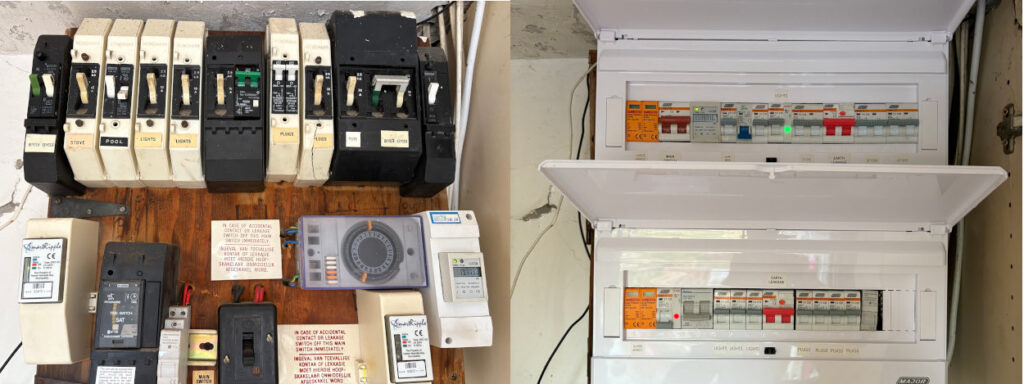
Category: Cradock, NewsTag: MyZA, ‘Cradock
27 November 2025 by Alan

Don’t Let Black Friday Turn Your Bank Account RED: A Guide to Avoiding Online Scams

Don’t Race to the ‘Buy Now’ button Simple way to create a Bulletproof password Black Friday can end in disaster – here’s how to avoid that Black Friday, Cyber Monday, and the entire festive shopping season are a golden opportunity for savvy shoppers to grab incredible deals. Unfortunately, they’re also a prime hunting ground for …

  • Don’t Race to the ‘Buy Now’ button
  • Simple way to create a Bulletproof password
  • Black Friday can end in disaster – here’s how to avoid that

Black Friday, Cyber Monday, and the entire festive shopping season are a golden opportunity for savvy shoppers to grab incredible deals. Unfortunately, they’re also a prime hunting ground for scammers, phishers, and other online miscreants looking to exploit the rush and excitement. As you navigate the digital aisles, staying vigilant is your best defence.

Here’s how to protect yourself and ensure your Black Friday savings don’t become a scammer’s gain.

Be Wary of “Too Good to Be True” Deals

This is the golden rule of online shopping. If a deal seems impossibly good, it probably is. Scammers often dangle unbelievably low prices on high-demand items to lure victims.

Action: If an item is listed significantly below its market value across other retailers, proceed with extreme caution. Research the seller independently.

Scrutinize Emails and SMSes: Phishing is Rampant

During peak shopping seasons, your inbox and phone will be flooded with promotional messages. Phishers mimic legitimate brands to trick you into revealing personal information or clicking malicious links.

Check the Sender: Look closely at the “From” address. It should match the official domain of the company (e.g., support@amazon.com, not amazon-deals@gmail.com). Slight misspellings are a common tactic (amaz0n.com vs amazon.com).

Hover Over Links (Don’t Click!): Before clicking any link, hover your mouse over it (on desktop) or long-press it (on mobile) to see the actual URL. If it doesn’t match the expected website, it’s likely a scam.

Look for Red Flags: Generic greetings (“Dear Customer”), poor grammar, spelling mistakes, and a sense of urgency (“Act now or lose out!”) are classic phishing indicators.

Go Directly to the Source: If an email announces an amazing deal, don’t click the link. Instead, open your browser and type the retailer’s official URL directly (e.g., www.stratlec.co.za) to verify the offer.

Verify Websites: Is it Legitimate or a Look-alike?

Fake websites are designed to steal your payment information or deliver counterfeit goods.

Check the URL: Ensure the website address is correct (e.g., www.woolworths.co.za, not woolworths-store.co). Look for https:// at the beginning, indicating a secure connection (though even scam sites can have this now).

Look for the Padlock Icon: A padlock symbol in the browser’s address bar indicates an SSL certificate, meaning your connection is encrypted. However, this alone doesn’t guarantee the site is legitimate.

Website Quality: Assess the site’s overall quality. Poor design, low-resolution images, broken links, and bad grammar are red flags.

Contact Information: Legitimate sites will have clear contact information (phone number, physical address, email). Test them if unsure.

Use Secure Payment Methods

How you pay can make a big difference in your protection if a scam occurs.

Credit Cards: Credit cards often offer strong fraud protection and chargeback options, allowing you to dispute unauthorized or fraudulent transactions.

Reputable Payment Gateways: Use trusted gateways like PayPal, PayFast, or Peach Payments. Avoid direct bank transfers, wire transfers, or cryptocurrency payments to unknown sellers, as these are almost impossible to reverse.

Avoid Saving Card Details (Unless Highly Trusted): While convenient, saving card details on less-frequented or new websites increases your risk if their security is breached.

Protect Your Personal Information

Be stingy with the information you share online.

Only Provide Necessary Information: Legitimate retailers only need information relevant to your purchase and shipping. Be suspicious if they ask for your ID number, bank account details (beyond payment for the transaction), or other sensitive data unnecessarily.

Strong, Unique Passwords: Use strong, unique passwords for each online shopping account. Consider a password manager.

Two-Factor Authentication (2FA): Enable 2FA wherever possible (e.g., for banking apps, email, and major shopping accounts). This adds an extra layer of security.

Create a Long Password for EACH Web Site Account – A Bulletproof method

Suggestion – choose a core set of letters, number and special characters as a BASE for your password, e.g. TwoWords!@#456, then apply a standard set of rules based on the web site that you find yourself on, e.g. Insert web site name after the exclamation mark AND the domain identifier at the end – using this method your password for Fraud Alert will be: TwoWordsFraudAlert!@#456.co.za. And there you have an easy to remember long password that allows you to have a UNIQUE Password for EVERY web site you visit.

In that way you also have an audit trail to see where a password leak occurred.

Be Cautious with Public Wi-Fi

Avoid Sensitive Transactions: Public Wi-Fi networks (coffee shops, malls) are often unsecured, making it easier for criminals to intercept your data. Avoid making purchases or accessing banking details on public Wi-Fi.

Use a VPN: If you must use public Wi-Fi, use a Virtual Private Network (VPN) to encrypt your connection.

Monitor Your Bank Statements

Regular Checks: Keep a close eye on your bank and credit card statements during and after the Black Friday period.

Report Suspicious Activity: Report any unauthorized or suspicious transactions to your bank immediately.

Be Skeptical of Social Media Ads

Scammers frequently use social media platforms to promote fake deals.

Research the Seller: Don’t blindly trust an ad because it appears in your feed. Click on the seller’s profile and check for legitimacy (age of account, reviews, follower engagement, professional content).

Look for Reviews: Search for reviews of the company or product outside of the social media platform.

Black Friday offers incredible opportunities, but a little extra caution goes a long way. By being vigilant, skeptical, and following these guidelines, you can enjoy the thrill of securing great deals without falling prey to online scammers. Happy (and safe) shopping!

Images:

Don’t let Black Friday scammers dump your bank account in the Red. Photo: Nano Banana


Links:

Boilerplate and Editor’s Notes.
More Info on Don’t Let Black Friday Turn Your Bank Account RED: A Guide to Avoiding Online Scams here:

CLICK HERE to submit your press release to MyPR.co.za.

First Published here: MyPR.co.za

Did You Know?

  • Cradock was founded in 1813 on the banks of the Great Fish River to cater for the migratory farmers who settled in this ruggedly beautiful area with its excellent grazing, abundant water and healthy climate.
  • Cradock was officially renamed Nxuba on 26 August 2022. This change was officially gazetted by the Minister of Sport, Arts and Culture, Nathi Mthethwa, and it was part of a broader effort to rename towns with colonial or apartheid legacies in the Eastern Cape.
  • Home to an actual Harry Potter’s grave: A British soldier with the name Harry Potter, who died during the South African War (Anglo-Boer War), is buried in the Cradock cemetery. His grave was discovered in 2002, long before the fictional character became a global phenomenon.
  • Location of the last surrender of arms in the South African War: Cradock was the final place in South Africa where arms were officially laid down at the end of the South African War, with the event occurring four days after the Peace of Vereeniging was signed in 1902.
  • Birthplace of Afrikaans publication: The first-ever article published in the Afrikaans language appeared in the local newspaper, the Cradock News, on December 4, 1868. This was a report on the separation of the Eastern Cape from the Western Cape, and the paper achieved the largest circulation in the country at the time.
  • Second oldest cricket ground and library in South Africa: Cradock’s cricket ground and library are both the second oldest in the entire country, a testament to the town’s early establishment and development of civic amenities.
  • Host to a total solar eclipse viewing by a Prime Minister: In 1942, the South African statesman and Prime Minister Jan Smuts came specifically to Cradock to witness a total eclipse of the sun, as the town was the best location for viewing the celestial event.
Category: Cradock, NewsTag: MyPR, SA News
26 November 2025 by Alan

MyPR Outlinks List – The OUTLINK LIST You Want to be on!

At MyPR we track all links to outside sites clicked on by readers on the site. The list below is from the Top 500 Outlinks for the 2025 year. And you want to be on it for the simple reason that it is proof (for MyPR at least) that you are getting bang for your …

At MyPR we track all links to outside sites clicked on by readers on the site.

The list below is from the Top 500 Outlinks for the 2025 year.

And you want to be on it for the simple reason that it is proof (for MyPR at least) that you are getting bang for your buck when signing up for a Featured Press Release account on MyPR.

A simple Ctrl F will help you search this list on this page and:

  1. If you find your web site URL here then well done in making good choices
  2. If you do not find your website URL here then why don’t you chat to MyPR about remedying that.

Outlink list in Alphabetical Order:

1888pressrelease.com
24-7pressrelease.com
9k5studio.co.za
aadrones.co.za
aatf2025.showhub.live
abstract7.co.za
abyc.co.za
activetransport.co.za
adma.co.za
adsfreeclassifieds.in
affinityhealth.co.za
afribet.bet
africa-newsroom.com
africabusiness.com
africanmagnets.com
afrisupply.co.za
agricol.co.za
aheadmarketing.co.za
alan.straton.org.za
alanjacobs.co.za
alfadestiny.co.za
algoafm.co.za
allied-mobile.com
alsa.co.za
altronhealthtech.com
amarantinetravels.com
amazon.co.za
ambani.co.za
andreapr.com
angelfishpr.co.za
animatedvideos.co
annistonstar.com
antelopecountynews.com
antprojects.co.za
api.whatsapp.com
appliance-repairscentre.co.za
apva.africa
arkkonsult.com
aroraonlinesa.com
asg.co.za
ashpromotions.co.za
aspireart.net
aspirelifestyle.co.za
atomicdemolishers.com
atterbury.co.za
autonomousagency.global
autotrader.co.za
avansa.co.za
azdailysun.com
babbleforum.com
bakkieandvanhire.co.za
balwin.co.za
bassanis.co.za
bassanis.co.za
basystems.co.za
bcmnews.co.za
bcw-global.com
bedking.co.za
bedking.co.za
belladonnascarves.co.za
benaters.com
bereporter.co.za
betanews.com
bettercompare.co.za
bigskylogistics.co.za
bing.com
biographywriting.com
bizcommunity.com
bizeurope.com
bookprint.ca
bramleyrentals.co.za
briefingwire.com
britedecking.com.au
britishbookpublishing.co.uk
broadmedia.co.za
brookebuckland.com
brooklyncare.co.za
bullionpr.com
burnesseo.co.za
businessinsider.com
businessportal24.com
bustle.com
buyostrichfeathers.com
bwproductions.co.za
caia.co.za
calgan.co.za
camelus.co.za
canadapatches.ca
canmusic.org
capetownvascular.co.za
capitallegacy.co.za
capitalnewspapers.co.za
capro.co.za
cathyfindleypr.co.za
caveatlegal.com
cbn.co.za
cgsentinel.com
chaifm.com
changesrehab.co.za
cheil.com
chemi.co.za
chillihotsauce.co.za
chroniclejournal.com
clarkecountylife.com
clevelandpaddle.com
clickpress.com
cliffedekkerhofmeyr.com
clockworkmedia.co.za
cloudcamper.co.za
cnbc.com
coloradocommunitymedia.com
connbertish.com
contently.com
contentpowered.com
contractcorridor.com
contractus.co.za
conyedit.com
copyhackers.com
coralcommunications.agency
corner57.com
corporate.adslive.com
cp.reachtrust.co.za
cracked.com
creativecommons.org
ctwgroup.co.za
cubicice.co.za
culturesummit.co.za
cycleworldwitbank.co.za
cyspera.co.za
dadsprinting.com
dailydispatch.co.za
dailymaverick.co.za
dailysun.co.za
dalucon.com
damagedcarswanted.co.za
daviddtech.cryptobanter.com
daybreakfoods.co.za
decodoorware.co.za
decorhandles.co.za
defendoor.co.za
dentsplysirona.com
designercovers.co.za
designercoverscapetown.co.za
designerperfumefragrances.co.za
diekoelkamers.com
displayit.com
djservice.co.za
doorsplus.co.za
downtownvapoury.co.za
drewafrica.com
dreyerlinen.co.za
dribbble.com
drive.google.com
drivingtestscancellations.co.uk
drtfletcher.co.za
dryadpress.co.za
dryice.africa
dryvarfoods.com
dstvproinstallation.co.za
dsvdirect.co.za
dtmsa.co.za
duckduckgo.com
dustaside.com
easterfestival.co.za
easypay.co.za
eatsleepcycle.co.za
ecasa.co.za
ecosmartpest.co.za
elecboard.co.za
electrician.org.za
elveeconsultancy.co
etacollege.com
eventbranding.co.za
everme.co.za
evogames.co.za
exigepromotions.co.za
express-press-release.net
expressive.co.za
fabtab.com
facebook.com
facebook.com
faithful-to-nature.co.za
fameweekafrica.com
flipsnack.com
flume.co.za
fmjfinancial.co.za
forms.fabfoundation.org
foursixty.studio
fraudalert.co.za
free-press-release-center.info
free-press-release.com
free4all.co.za
freeprnow.com
freshearth.co.za
friedtomato.co.za
gautengtrucksales.co.za
gclandscaping.co.za
geewiz.co.za
gipca.uct.ac.za
glamourpromotions.co.za
globaltaxrecovery.com
gloryhouse.co.za
godalmingchamber.org.uk
goodnewsdaily.co.za
goodnewslab.agency
google.co.za
google.com
gopack.co.za
goto.gg
greentreehealth.co.za
h2oguru.co.za
hairclinicinternational.co.za
hairnetwork.co.za
herbalremedies.co.za
hobie16nationals.co.za
hold.co.il
holyrosaryschool.co.za
houseofsupreme.co.za
hoyleopen.spotify.com
https
huffpost.com
hwb.co.za
idcband.co.za
ihsinsurance.co.za
imagnaryhouse.com
imrmarketreports.com
inprsa.com
instagram.com
investopedia.com
irwingsoya.co.za
isilumko.co.za
isilumko.co.za
isilumkoactivate.co.za
issuewire.com
itworkup.co.za
journalismweb.co.za
jozikart.com
jrpromotions-western-cape.co.za
jrpromotions.co.za
kjomedia.co.za
labour.gov.za
labspace.africa
lapromotions.co.za
legalinteract.com
lekkevape.co.za
lesakatech.com
lesakatech.com
lexpro.co.za
lightingwarehouse.co.za
linkedin.com
listenup.co.za
listverse.com
littletuscany.co.za
livingseeds.co.za
loadit.africa
loohire.co.za
louappels.co.za
lower.co.za
lunapr.io
lwmag.co.za
m-l-c.co.za
magadhdarpan.in
magnificentgaragedoors.co.za
mallmarketing.co.za
maps.app.goo.gl
marcomarketing.my.canva.site
marisalouw.com
marketpressrelease.com
martinmeyersafaris.com
martinmyers.wordpress.com
mashabatours.co.za
mashable.com
mbhashefm.co.za
measuredability.com
mediapost.com
mediaupdate.co.za
mediawebgroup.co.za
membership.businesswire.com
mg.co.za
mhcworld.co.za
milemanmedia.co.za
mk.ca
mkkosher.co.za
mmaddocksinc.co.za
mobelli.co.za
mogolpos.co.za
moneyclub.co.za
moreleta-exp.co.za
mota.africa
motlekartech.com
mslgroup.co.za
myaddo.co.za
mycapetown.co.za
mygqeberha.com
myheraldreview.com
mynmb.co.za
mynmb.co.za
mype.co.za
mype.co.za
mysocialife.com
myza.co.za
myza.co.za
nanotech-now.com
nbcei.co.za
netwerk24.com
networxpr.co.za
news.balwin.co.za
news.thomasnet.com
news24.com
newsbywire.com
newslink.co.za
nexis-systems.co.za
novusgroup.co.za
nutun.com
oaklaw.co.za
oceanplastictechnologies.com
ocfo.com
oliviajones.co.za
omoda.co.za
onlywire.com
open.spotify.com
orchardon25.co.za
oysterboxhotel.com
papertrail.co.za
partner.bybit.com
passionhq.co.za
passyourdriverslicense.co.za
patchmakersusa.com
payfast.co.za
peoplesmart.global
pestpolice.co.za
pgifts.co.za
pinterest.com
pinterest.com
pioneer.com
pitchengine.com
pixalot.co.za
plasticinnovations.co.za
plastics.unica.co.za
plus.google.com
pmd.payportal.co.za
pr-inside.com
pr.com
prcrecovery.co.za
pressbox.co.uk
presspulse.co.za
pressreleasepoint.com
pressreleasepost.com
prestigestorage.co.za
prfire.co.uk
prfree.org
private-investigators-sa.co.za
prlog.org
prmac.com
prorank.co.za
prowly.com
prpowerhouse.co.za
prsync.com
quicket.co.za
radkids.com.au
razorpr.co.za
reachtrust.co.za
republicdigitalconsultancy.com
republicpr.co.za
restoreworldwide.org
reviewonline.co.za
ridesharemechanic.com
ringlight.ng
rioperfumes.co.za
risefulapr.com
risestudentliving.com
ro-bust.com
ro.straton.org.za
rode.co.za
rse.regenesys.net
rsimports.co.za
sabc.co.za
sailing.org.za
sarie.com
saywatt.co.za
scoinshop.com
scrolla.africa
search.ecasa.co.za
search.yahoo.com
sedibengster.com
seedsforafrica.co.za
send2press.com
shop.thedeli.co.za
shop.ticketpro.co.za
show.co
simplyafricanseedcompany.co.za
siyathetha.com
smsportal.com
socialhappiness.co.za
solumedris.com
southafricatoday.net
spinehealthpretoria.co.za
sportsride.co.za
square1paragliding.co.za
stbenedicts.co.za
stone.consulting
stonessafaris.co.za
store2dooronline.co.za
stratlec.co.za
stratlec.com
straton.co.za
straton.org.za
sunninja.com
support.theatlantic.com
surfingsouthafrica.co.za
switchcom.co.za
synthesis.co.za
tacticaldistributors.co.za
tammytaylornails.co.za
tears.org.za
teatimeresults.info
techcrunch.com
techmarkit.co.za
thebeerstore.co.za
thebicycleleague.co.za
thechiropractors.co.za
thedogfoodapp.co.za
thefastpackaging.com
thegoldavenue.co.za
themuse.com
thenielsennetwork.com
thepennyhoarder.com
thepromogroup.co.za
thestar.co.za
thevaluator.co.za
thunda.fund
ticketpro.co.za
timbilagamelodge.co.za
tinyurl.com
topauto.co.za
topcarewomensclinic.co.za
topclickblogs.co.za
totalsportswomensrace.co.za
tourguidesa.co.za
tourismnewsafrica.com
townshipfleva.co.za
tpwagency.com
tradeway.co.za
trailarent.co.za
travelnewshub.com
travpr.com
treefellingjhb.com
tribecapr.co.za
triplement.com
truelove.co.za
truthcollective.co.za
trxe.com
ttwaterproofing.co.za
twelvemarketinginc.co.za
twitter.com
twizza.co.za
ukmfoods.co.za
ul.ac.za
ultimatex.co.za
ummbilaemoyeni.com
unitpix.com
usn.co.za
usomedical.com
vaja.co.za
valleyfm.co.za
valueforklifts.co.za
vaperscorner.co.za
varsitymaker.com
vipmovers.co.za
virginactivepadelclub.co.za
vitagene.co.za
voiceoftembisafm.co.za
web.archive.org
web.facebook.com
webknowhow.net
webmd.com
websitedesignjoburg.co.za
weddingguide.co.za
wellnesswarehouse.com
wendysonline.co.za
wheelerconsulting.co.za
wigglepromotions.com
wikicreation.co.uk
wikiwriters.co.uk
wildsfees.co.za
windowart.co.za
wordpress.com
wordpress.org
wprobot.net
writersdigest.com
x.com
yourdiamonds.co.za
youtu.be
youtube.com
youtube.com
zando.co.za
zebros.co.za

The above list is from the MyPR Africa AND MyPR International web sites

CLICK HERE to submit your press release to MyPR.co.za.

First Published here: MyPR.co.za

Did You Know?

  • Cradock was founded in 1813 on the banks of the Great Fish River to cater for the migratory farmers who settled in this ruggedly beautiful area with its excellent grazing, abundant water and healthy climate.
  • Cradock was officially renamed Nxuba on 26 August 2022. This change was officially gazetted by the Minister of Sport, Arts and Culture, Nathi Mthethwa, and it was part of a broader effort to rename towns with colonial or apartheid legacies in the Eastern Cape.
  • Home to an actual Harry Potter’s grave: A British soldier with the name Harry Potter, who died during the South African War (Anglo-Boer War), is buried in the Cradock cemetery. His grave was discovered in 2002, long before the fictional character became a global phenomenon.
  • Location of the last surrender of arms in the South African War: Cradock was the final place in South Africa where arms were officially laid down at the end of the South African War, with the event occurring four days after the Peace of Vereeniging was signed in 1902.
  • Birthplace of Afrikaans publication: The first-ever article published in the Afrikaans language appeared in the local newspaper, the Cradock News, on December 4, 1868. This was a report on the separation of the Eastern Cape from the Western Cape, and the paper achieved the largest circulation in the country at the time.
  • Second oldest cricket ground and library in South Africa: Cradock’s cricket ground and library are both the second oldest in the entire country, a testament to the town’s early establishment and development of civic amenities.
  • Host to a total solar eclipse viewing by a Prime Minister: In 1942, the South African statesman and Prime Minister Jan Smuts came specifically to Cradock to witness a total eclipse of the sun, as the town was the best location for viewing the celestial event.
Category: Cradock, NewsTag: MyPR, SA News
25 November 2025 by Alan

New ES90 Marks the Next Chapter in Three Decades of Volvo Flagship Sedans

Volvo’s first all-electric executive sedan redefines sustainable luxury with next-generation performance, technology, and design. The ES90 blends sedan elegance with fastback versatility and SUV-like spaciousness, signalling Volvo’s next era of sustainable luxury. It builds on more than three decades of flagship sedans, from the 960 and early S90 to the innovative S80 generations and the …

Volvo’s first all-electric executive sedan redefines sustainable luxury with next-generation performance, technology, and design.

  • The ES90 blends sedan elegance with fastback versatility and SUV-like spaciousness, signalling Volvo’s next era of sustainable luxury.
  • It builds on more than three decades of flagship sedans, from the 960 and early S90 to the innovative S80 generations and the modern 2016 S90.
  • Each previous model shaped Volvo’s identity through safety, refinement, and design innovation, a legacy the ES90 now carries into a fully electric future.

For more than three decades, Volvo’s flagship sedans have defined understated luxury, intelligent engineering, and forward-thinking design. From the iconic 960 to the sophisticated S90, each generation of large Volvo sedan has reflected the values of its time, with safety and refinement remaining key tenets across all generations. Now, with the arrival of the new ES90, that legacy moves into a fully electric future.

Every flagship Volvo has been a statement of intent. The ES90 continues this tradition, embodying the very best of Scandinavian design and sustainable innovation. Built on Volvo’s next-generation SPA2 electric architecture, the ES90 combines long-range performance, cutting-edge connectivity, and a cabin designed to be as serene as it is smart.

The 960 and first-generation S90 — the beginning of modern Volvo luxury

Introduced in 1990, the Volvo 960 was one of the marque’s first vehicles to feature styling by Peter Horbury, the late automotive designer whose influence shaped the manufacturer in the decade to come. While still boxy and conservative, the 960 donned a more contemporary fascia with slimmer headlights and a refined grille, with an even more modern look being introduced for the 1994 facelift.

While the 960 wasn’t a common sight on South African roads, this range-topping Volvo had performance to compete with the very best of Europe’s luxury sedans. The powerful 2.9-litre inline-six available in the top model developed a respectable 150 kW and 267 N.m of torque, sent to the rear wheels via a five-speed automatic transmission.

Of course, other markets received turbocharged four-cylinder options, along with an available manual transmission. Over the eight-year production run, Volvo produced 154,329 examples, of which 112,710 were sedans. The 960 would eventually be called the S90, bringing it in line with Volvo’s new naming convention that came with the 1995 debut of the S40. The 960/S90 was the last Volvo to offer rear-wheel drive, until the arrival of the XC40 Recharge Single Motor.

Is that a Volvo? — the innovative S80 arrives

The first-generation S80 marked a bold step forward for the Gothenburg-based brand. With a transverse-mounted inline-six engine (although inline five engines were also available), the S80 stunned with its innovative design, penned by the aforementioned Horbury. With its pronounced shoulder lines, it pushed the Volvo brand into the 21st century, redefining what a Swedish luxury sedan should look like.

Importantly, Volvo used the S80 to debut important safety technology, namely WHIPS (Whiplash Injury Protection System), which, together with a specially-designed head-restraint and smart seat, absorbs energy in rear-end collisions, reducing the risk of whiplash injuries to occupants. The other was the Inflatable Curtain, an airbag system designed to keep first- and second-row passengers safe in the event of a side impact or rollover.

At the top of the lineup sat the 2.9-litre twin-turbocharged inline-six, which delivered power and torque comparable to a V8 engine, with 210 kW and 380 N.m of torque, but with considerably better claimed fuel consumption of just 11.1 L/100 km (combined). Environmental concern was just as important to Volvo back then as it is now, with the S80 designed to be eco-friendly, with 85% of the vehicle’s total weight being recyclable.

S80 reimagined — the second generation arrives

In 2006, it was time to replace the first-generation S80 with an all-new model. Larger and more luxurious than its predecessor, the second S80 was the first (and last) Volvo sedan to be offered with a powerful V8. The naturally-aspirated 4.4-litre (co-designed by Volvo and Yamaha) is widely regarded by enthusiasts to be one of the most mellifluous-sounding eight-cylinders of the 21st century.

The second-generation S80 was in production for 10 years. During that time, it was offered with an array of interesting engines, the 1.6D DRIVe being the smallest and most economical of them all. What it lacked in power, it made up for in efficiency, with the 80 kW/240 N.m turbodiesel motor returning an exceptional claimed 4.5L/100 km, which was class-leading at the time for an executive sedan.

The return of the S90 — Scandinavian luxury for a new era

When the S90 badge made its return in 2016, it signalled Volvo’s shift into true modern luxury. Built on the brand’s then-new SPA platform, the S90 introduced a cleaner, more architectural design language, with broad surfaces, crisp lines, and the signature Thor’s Hammer headlights. Inside, it showcased Volvo’s minimalist interior design, centred around natural materials and intuitive technology, showcasing how sophistication could be expressed through calm, uncluttered design.

An efficient lineup of engines, along with the powerful 340 kW T8 plug-in hybrid, demonstrated Volvo’s commitment to performance without excess. Quiet, confident, and unmistakably Swedish, the S90 set the tone for Volvo’s flagship sedans in the decade that followed, bridging the gap between traditional luxury and the electric future now embodied by the ES90.

The ES90 — The future of Volvo’s flagship

Now, the story continues with the all-electric ES90. As Volvo’s first fully electric executive sedan, it delivers the sophistication expected of the brand’s flagship, redefined through sustainability and smart efficiency. With exceptional range, rapid charging, and intelligent driver assistance, the ES90 represents the next step in Volvo’s electrification journey.

In early 2026, the ES90 is expected to arrive as part of Volvo’s ongoing electrification journey. Blending the elegance of a sedan, the versatility of a fastback, and the spaciousness of an SUV, it introduces a fresh dimension of all-electric mobility. Built on the advanced SPA2 architecture, which also underpins the EX90, and powered by next-generation core computing, it offers an exceptional WLTP-estimated range of 700 km, along with class-leading safety systems that include Volvo’s latest driver-understanding technology.

Inside, a spacious and thoughtfully designed cabin features premium materials, cutting-edge infotainment powered by Google, and an immersive Bowers and Wilkins sound system with Dolby Atmos. A panoramic roof and advanced air purification further enhance the sense of a mobile sanctuary.

“Every flagship Volvo has marked a turning point, from the 960 to the S90,” commented Grant Locke, Managing Director of Volvo Car South Africa. “With each generation, we’ve redefined what luxury, safety, and innovation mean for our customers. The ES90 represents our next transformation: luxury defined by sustainability, smart efficiency, and the most advanced technology we’ve ever brought to a sedan.”

CLICK HERE to submit your press release to MyPR.co.za.

Author: Michelle Muir from Have Your Say on behalf of Volvo Car South Africa.

First Published here: MyPR.co.za

Did You Know?

  • Cradock was founded in 1813 on the banks of the Great Fish River to cater for the migratory farmers who settled in this ruggedly beautiful area with its excellent grazing, abundant water and healthy climate.
  • Cradock was officially renamed Nxuba on 26 August 2022. This change was officially gazetted by the Minister of Sport, Arts and Culture, Nathi Mthethwa, and it was part of a broader effort to rename towns with colonial or apartheid legacies in the Eastern Cape.
  • Home to an actual Harry Potter’s grave: A British soldier with the name Harry Potter, who died during the South African War (Anglo-Boer War), is buried in the Cradock cemetery. His grave was discovered in 2002, long before the fictional character became a global phenomenon.
  • Location of the last surrender of arms in the South African War: Cradock was the final place in South Africa where arms were officially laid down at the end of the South African War, with the event occurring four days after the Peace of Vereeniging was signed in 1902.
  • Birthplace of Afrikaans publication: The first-ever article published in the Afrikaans language appeared in the local newspaper, the Cradock News, on December 4, 1868. This was a report on the separation of the Eastern Cape from the Western Cape, and the paper achieved the largest circulation in the country at the time.
  • Second oldest cricket ground and library in South Africa: Cradock’s cricket ground and library are both the second oldest in the entire country, a testament to the town’s early establishment and development of civic amenities.
  • Host to a total solar eclipse viewing by a Prime Minister: In 1942, the South African statesman and Prime Minister Jan Smuts came specifically to Cradock to witness a total eclipse of the sun, as the town was the best location for viewing the celestial event.
Category: Cradock, NewsTag: MyPR, SA News
18 November 2025 by Alan

Alsa Exco Invited to Discuss African Housing Matters -Easynec

JOHANNESBURG, NOVEMBER 18, 2025: ALSA Founder, Hans van Breugel, and Managing Director, Tando Canham, have been invited to participate in a discussion with a group of African change makers focused on the future of affordable housing in Africa. EasyNec Global is hosting a webinar on Wednesday, 26 November, addressing the key theme: Balancing profit, impact, …

JOHANNESBURG, NOVEMBER 18, 2025: ALSA Founder, Hans van Breugel, and Managing Director, Tando Canham, have been invited to participate in a discussion with a group of African change makers focused on the future of affordable housing in Africa. EasyNec Global is hosting a webinar on Wednesday, 26 November, addressing the key theme: Balancing profit, impact, and policy in Africa’s urban future.

This is a valuable opportunity to expand your African network, especially with the growing interest in the ALSA franchise concept across various African countries. In response to this demand, ALSA has developed a master franchise license aimed at providing affordable, energy-efficient housing throughout all SADC countries.

Property enthusiasts are encouraged to register for this insightful discussion or to seek more information at easynec22@gmail.com.

https://www.linkedin.com/posts/activity-7395084938586304512-oYMc

Video:

ALSA EXCO INVITED TO DISCUSS AFRICAN HOUSING MATTERS -EASYNEC

CLICK HERE to submit your press release to MyPR.co.za.

Links:

Boilerplate and Editor’s Notes:

More Info on ALSA EXCO INVITED TO DISCUSS AFRICAN HOUSING MATTERS -EASYNEC here: https://www.easynecglobal.com/
X: https://www.linkedin.com/in/hans-van-breugel-b96a761/
LinkedIn: https://www.linkedin.com/in/hans-van-breugel-b96a761/
Facebook: https://www.facebook.com/profile.php?id=61567347508488

First Published here: MyPR.co.za

Did You Know?

  • Cradock was founded in 1813 on the banks of the Great Fish River to cater for the migratory farmers who settled in this ruggedly beautiful area with its excellent grazing, abundant water and healthy climate.
  • Cradock was officially renamed Nxuba on 26 August 2022. This change was officially gazetted by the Minister of Sport, Arts and Culture, Nathi Mthethwa, and it was part of a broader effort to rename towns with colonial or apartheid legacies in the Eastern Cape.
  • Home to an actual Harry Potter’s grave: A British soldier with the name Harry Potter, who died during the South African War (Anglo-Boer War), is buried in the Cradock cemetery. His grave was discovered in 2002, long before the fictional character became a global phenomenon.
  • Location of the last surrender of arms in the South African War: Cradock was the final place in South Africa where arms were officially laid down at the end of the South African War, with the event occurring four days after the Peace of Vereeniging was signed in 1902.
  • Birthplace of Afrikaans publication: The first-ever article published in the Afrikaans language appeared in the local newspaper, the Cradock News, on December 4, 1868. This was a report on the separation of the Eastern Cape from the Western Cape, and the paper achieved the largest circulation in the country at the time.
  • Second oldest cricket ground and library in South Africa: Cradock’s cricket ground and library are both the second oldest in the entire country, a testament to the town’s early establishment and development of civic amenities.
  • Host to a total solar eclipse viewing by a Prime Minister: In 1942, the South African statesman and Prime Minister Jan Smuts came specifically to Cradock to witness a total eclipse of the sun, as the town was the best location for viewing the celestial event.
Category: Cradock, NewsTag: MyPR, SA News
10 November 2025 by Alan

A REAL Tale of the Cobbler and His Shoes

Some Major Vetting took place before specifying Major Tech VETi The electrician and his circuits The path to a highly efficient solar system involves these essential steps The word cobbler is believed to be derived from the 14th century from the surname and place name “cobelere”, meaning “one who mends shoes”. A shoe mender, shoe …

  • Some Major Vetting took place before specifying Major Tech VETi
  • The electrician and his circuits
  • The path to a highly efficient solar system involves these essential steps

The word cobbler is believed to be derived from the 14th century from the surname and place name “cobelere”, meaning “one who mends shoes”. A shoe mender, shoe repairer, a shoe-maker, one who hand-crafts shoes. In modern day, a cobbler is a master craftsman, an artisan.

The saying, which exists in various forms like “the cobbler’s children have no shoes,” originates from the idea that professionals are often so busy serving others that they neglect their own needs or the needs of those closest to them.

In today’s modern age one thinks that the younger generation have no trust in certain idioms that their parents and grandparents hold sacred.

Sayings to Live by:

  • The Cobbler and his shoes,
  • My Word is my Bond,
  • A Bird in the hand is worth two in the Bush,
  • When Life gives you lemons make Lemonade,
  • All good things come to him who waits,
  • Under promise and overdeliver,
  • The client comes first,
  • Don’t count your Chickens before they are hatched…

But back to THIS Cobbler:

In 1966 our late father, George Weston Straton established Straton & Co. (Pty) Ltd – an electrical contracting firm.

As young boys (our school holiday working careers started at 12 years of age) we were brought up on a diet of all the above sayings along with a hard work ethic and to always put clients needs ahead of our own.

In 1999 I moved into the present home that I occupy. At the time the original wooden distribution board and circuit breakers were deemed ‘adequate’ and passed a Certificate of Compliance.

As the years passed by the distribution board gave good service and I failed to see the need for a new Distribution Board.

Then we started doing Solar installations (for consumers in 2012 after exclusively servicing a large national company since 2005) and I realised that my old distribution board would not be adequate enough to handle a solar installation so relied on a portable backup solution whilst we made sure that we could handle the demand whilst our clients received the best service and time.

Fast forward to 2025 and the need to put up a large home solar installation became pressing so the slow process to find materials and time to replace the distribution board and split it into essential and non-essential circuits.

Yes, if you want maximum benefit out of any Solar Installation you need to undertake a preparatory journey which will include:

  • Record your consumption for at least 12 months *
  • Replace energy hungry appliances and lighting with energy efficient choices
  • Check that your roof will handle the installation – TIP: If your trusses are held together by nails and not nail plates then you could have a problem
  • Make sure that your distribution board can be easily split into essential and non-essential loads – this was my sticking point!

* As an aside – one of Straton Solar‘s first clients, when asked if he had a record of electricity consumption, produced a set of reports all recorded on graph paper beginning in 1966. Frankly – these are the type of clients that we love as we know that they will appreciate the benefit and be able to chart the massive savings.

Stepping up to the plate with some shiny new circuit breakers and boxes was my old mate, Bevan Barkhuizen, from Major Tech VETi. VETi supply products for the home and business such as: Switches & Sockets, Smart Products, Power Towers, Circuit Breakers & Enclosures, Lighting and Connector Blocks. Sorry Bevan – I did warn you that we may take a bit of time to install your Major Tech breakers and boards…

In fact it took us nearly six months to finally get a full day free to deploy three of our electricians on the replacement.

The results were quite sexy and have encouraged me to open the cupboard every now and then and feel just a teensy bit of pride in what Straton Electrical have done in the home that I stay in. AND I hope that our clients feel the same when they see the work that we do in their premises.

Next phase will be to link the inverter and backup battery and install the Solar Panels – don’t hold your breath as I may take a long time if we stay as busy as we have been these last couple of decades.

Major Tech VETi Equipment used:

Major Tech VETi
  • 63A Double Pole Isolator
  • 20A Double Pole MCB 3kA C-Curve
  • 40A 3 kA Double Pole MCB63A Double Pole MCB
  • 63A Double Pole Electronic ELCB
  • 40A 3kA Single Pole MCB
  • 32A Single Pole 3kA C-Curve MCB
  • 20A Single Pole C-Curve 3kA MCB
  • 10A Single Pole 3kA C-Curve MCB
  • 15-18 Way Surface DB Steel Tray
  • 5-7 Way Surface DB Steel Tray
  • Sundry cabling

About VETi:

VETi is a range of electrical switches and sockets from Major Tech, known for its modern designs, durability, and functionality. It includes the VETi 1 (rounded design, modular and complete options), VETi 2 (flat, ultra-slim monoblock design), and VETi 3 (also flat, with enhanced features like internal switches and communication modules). VETi products are manufactured from high-quality, flame-retardant materials and are compliant with both local and international standards like IEC and SANS.

About Major-Tech:

Major-Tech is a South African company founded in 1992 that specializes in developing and supplying a wide range of electrical and related products, including professional test and measurement equipment, hand tools, security products, and smart home devices. The company is known for its innovation in electrical instrumentation, such as introducing double injection housings for durable meters, and serves a variety of industries, including residential, commercial, mining, and solar.

About Straton Electrical:

Straton Electrical is an electrical contracting firm based in Gqeberha (formerly Port Elizabeth), South Africa, established in 1966. It specializes in the commercial and retail sectors, offering services like electrical maintenance, construction, and installations. The company is part of the larger Stratlec Group, which includes other businesses focused on solar energy, prepaid meters, and building automation.

Before and After Images:

Major Tech VETi Before and After

Links:

Boilerplate and Editor’s Notes.
More Info on A REAL Tale of the Cobbler and His Shoes here:
X: https://twitter.com/MyPE
LinkedIn: https://www.linkedin.com/company/straton-electrical/
Facebook: https://www.facebook.com/StratonElectrical/

CLICK HERE to submit your press release to MyPR.co.za.

First Published here: https://mypr.co.za/a-real-tale-of-the-cobbler-and-his-shoes/ – MyPR is a free press release site distributing releases from well known brands, small business and artists to on and off line publications and social media.

Did You Know? Cradock was founded in 1813 on the banks of the Great Fish River to cater for the migratory farmers who settled in this ruggedly beautiful area with its excellent grazing, abundant water and healthy climate.

Category: Cradock, NewsTag: MyPR, SA News
  • Previous
  • Page 1
  • Page 2
  • Page 3
  • Page 4
  • Interim pages omitted …
  • Page 7
  • Next
WE LOVE CRADOCK.

COPYRIGHT MyCradock · DESIGN BY REACH TRUST
All Rights Reserved · Powered by Straton Solar