• Skip to main content
  • Skip to header right navigation
  • Skip to site footer

My Cradock

My Cradock

Cradock News Classifieds and Directory

  • Home
  • About
  • Accommodation
  • Business
  • Events
  • Free Business Advert
  • Submit News
You are here: Home / Archives for karoo

karoo

13 August 2020 by Guest

South Africa: Destitute Karoo Residents Barely Survive Covid-19

Living lives of desperation in rural areas where food is almost as scarce as work, the Eastern Cape Karoo’s impoverished are struggling to make it through the pandemic. Small Karoo towns in the Eastern Cape that have been spared the worst of the coronavirus infections and deaths have not been spared the other devastating impacts …

Living lives of desperation in rural areas where food is almost as scarce as work, the Eastern Cape Karoo’s impoverished are struggling to make it through the pandemic.

Small Karoo towns in the Eastern Cape that have been spared the worst of the coronavirus infections and deaths have not been spared the other devastating impacts of the lockdown. The towns are filled with starving people who cannot take their chronic medication without food, and as a result they get sicker every day.

Phumla Seane, a senior nurse at the Wongalethu Clinic in Klipplaat, has seen dozens of patients defaulting on their treatment for high blood pressure, heart disease, tuberculosis and HIV since the lockdown began, when all possibilities of casual work in the town came to an abrupt halt. But the situation was bad even before then.

“There is no work in this place. There is nothing that makes people feel they should wake up in the morning,” she said. “I have seen cases that are not getting better for more than two years, to the point where I ask where are the resources of this country and where is anyone who is kind?”

Klipplaat is about 184km inland from Port Elizabeth. According to the 2011 census, it had fewer than 3 000 residents. A rusting train lies abandoned at its entrance, mirroring the sense of abandonment of the town itself, with its tiny three-room dwellings built during apartheid, newer RDP houses and empty, dusty streets.

When disaster relief organisation Gift of the Givers pulled into the town, the only signs of life were municipal workers filling two tanks with water, which is trucked in daily for residents to collect in buckets. About 200 people quickly emerged from run-down houses when they saw the food aid truck.

Life in the town was unfathomably difficult even before the lockdown, but now it had become unsurvivable, said Seane who had asked Gift of the Givers to distribute food aid in Klipplaat so that sick residents could take their medication. It was the first time the organisation visited this town, but it has a 28-year track record of providing emergency relief to communities all over the world.

Its Eastern Cape coordinator, Corene Conradie, said Deputy Minister of Human Settlements, Water and Sanitation Pam Tshwete contacted her to say there had not been a single case of Covid-19 in Klipplaat and Gift of the Givers should take special care with social distancing and sanitation.

Staving off hunger

In total, the organisation delivered more than 1 000 food parcels to seven small Karoo towns over two days. Each parcel contained tinned fish, tinned beans, jam, beef-flavoured noodles, porridge, tea, salt, oil and 10kg of rice and maize each. But in Klipplaat, when the Gift of the Givers truck arrived on Thursday 6 August, the process was fraught with difficulty.

Seane had compiled an exhaustive list of 400 families who do not get grants and have no work or food, but with the entire town devastated by the lockdown, there was never going to be enough food for everybody. Only 11 food parcels had been provided by the government during the lockdown. So when ANC ward councillor Louis Langeveldt and the ward committee arrived to marshal people into lines, the residents who had already gathered in the street when they saw the truck became angry.

“The councillors of this town, the ANC and the DA, don’t do anything for us. Our youngsters are jobless, school-less, suffering! We are very angry. It is outrageous. We are fed up!” said resident Chyne Jacodusa. “I already know I am not getting a parcel. I won’t even look for my name on that list. I will rather just continue suffering. You will see for yourself today how it is here in Klipplaat. That is why I am not going to vote.”

Another resident walked past and yelled: “Don’t take a photo of me as I didn’t get a food parcel!” “I am very hungry and that is the main problem!” another shouted.

Single mother of three Felicity Johnson, 37, said the lockdown had been terrible. “It affected our lifestyle because, in the lockdown, food prices are rising and the grant we get is no longer enough. We are jobless because there are no more char jobs or washing jobs. A R5 half loaf of bread is now R8.”

Johnson was thankful there had been no Covid-19 cases in the town. “I have no idea how we would get tested. You can see for yourself that it is a small town.”

No grants, no casual work

Both Jacodusa and Johnson said thousands of people in Klipplaat do not get grants and survive on casual work in town and on neighbouring farms. Most of the white commercial livestock farmers in the Eastern Cape Karoo shut their gates to outsiders during the lockdown and barred even permanent farm workers from leaving the farms to prevent the spread of the virus. This negatively affected residents who lost the opportunity of casual work.

At another food-aid drop-off point in Klipplaat, close to a monument bearing the names of 16 anti-apartheid activists who were killed in the struggle, elderly people arrived on crutches and in wheelchairs, their grandchildren pushing wheelbarrows to carry the food home.

“I am so pleased today. This is more food than I have had at home in many years,” said Sindiswa Phakathi, 58. There is only one child grant of R470 a month in her family, of which R180 is spent on a 25kg bag of maize meal and the rest on sugar, salt, electricity and transport to Jansenville, 33km away, where the shops are. The family buys tinned food throughout the month and more maize meal if they earn anything from casual jobs, which have dried up during the lockdown.

A resident, who did not want to be named, said: “We don’t only like the Givers because they bring food. Yes, we love the food, but we like the Givers because they are not corrupt. They don’t steal from the people. We wish they could be the government.”

Ellen Kamp, 60, said life had always been bad in Klipplaat, but now it was worse. “Our children usually drop out of school and go to work on the farms. Now, in lockdown, the children have no more work and they have to steal things that they can sell for food. Life in Klipplaat is so difficult – there is no shop here, no butchery, no bank or post office. Every time we need to pay R50 to go to Jansenville. Look at these houses that we have to live in!” Kamp said.

“Hunger here is a virus on its own,” said Conradie. “So many businesses have closed and people have no jobs and nowhere to turn to.”

Hunger worse than the virus

In Jansenville, the local hospital has set up an 11-bed Covid-19 unit and workers from the Department of Public Works are building an extension. During New Frame’s visit, hospital CEO Gillian January said the unit had only two patients and had not yet been full. But again, hunger and starvation plague the hospital’s outpatients, many of whom have also stopped taking their medication because they have no food.

At the Graaff-Reinet municipal dump, about 88 kilometres away, 15 families who survive on recycling also received emergency food aid from Gift of the Givers. They each earn between R50 and R100 a week for recycling cans and clear plastic, and had no income at all for the first three months of lockdown when the recycling depot was closed.

Two of the families live in bleak and rickety shacks at the foot of the Sneeuberg mountain range. During New Frame’s visit, snow was visible on mountains and it was bitterly cold. Recycler Geraldine Engelbrecht, 18, who has a one-year-old son, Eroldine, said: “Lockdown hasn’t gone well. It was extremely cold here and we have no water or food except what the Givers bring.”

She said she has never received a child grant for Eroldine and when she made her most recent enquiry, the South African Social Security Agency told her to check again after the lockdown. Her neighbour, Felicity Engelbrecht, 48, said: “We are so scared of the virus that we have not left this place. We are glad that not one of us has caught coronavirus.”

The families moved here after they could not afford to pay for water and electricity in town, and said they were just “camping” for a while. But there was no sign that they would ever find a better income that would allow them to move into a house. An old 5 000-litre concrete water tank, which Gift of the Givers fills regularly, is their only water supply. There is no electricity and no useful vegetation – just miles and miles of dry brown grass and a few hardy bushes. Because they can only cook on fires, Gift of the Givers brings cooked meals twice a week.

At the dump, Piet Oormeyer, 37, and Calvin Ligman, 20, worked together to fill large white sacks with plastic and cans. Used disposable nappies lay strewn across the ground. Oormeyer and Ligman have only ever made R400 a week at most, which they split between them. For the first three months of the lockdown, when the depot was closed, they survived on the Gift of the Givers meals.

“This is first-class work. We are keeping the community clean but we also get sick from the burning garbage smoke and we have no gloves or boots,” said Oormeyer, referring to the garbage that is set alight in small piles after the recyclable products are removed.

Both are dependent on a man only known as “Oom Pottie”, who sells what they collect to a waste company. They are the children of recyclers and first came to the dump with their fathers when they were children. “Every day it is harder for us to get out of the suffering of this life,” said Oormeyer.

Another kind of pandemic

On the same night in Umasizakhe, Graaff-Reinet’s 180-year-old township, community leader and father of three Xolile Galada, 33, had arranged with Gift of the Givers to bring food aid to the parents of disabled children. “Our people can wash hands, wear masks, sanitise, but if they have got nothing to eat that becomes a major pandemic,” he said.

About 100 Umasizakhe residents were retrenched during lockdown from a major local employer, the Montego animal feed factory, and others were retrenched from farms and even non-profit organisations.

“We have taken two steps backwards in terms of poverty,” said Galada. “I am a socialist and that is why I am here – because I can’t sleep at night. I can’t smile knowing that I have a bowl but not knowing what my neighbour is eating.”

Working closely with grassroots community leaders and nurses to devise a list of the people in greatest need and arrange the best drop-off points takes time and consideration – the delivery of 500 food parcels took 14 hours on the first day.

On the second day, Friday 7 August, Gift of the Givers provided emergency aid to 500 retrenched farm and other workers. At 55 farms in the Nieu-Bethesda and Sneeuberg area, farm workers have continued working throughout lockdown as essential service workers, but their partners and family members have lost their jobs elsewhere and they have all been hit hard by the rising cost of food.

“We are taking it easy and obeying the lockdown rules for our safety, and we don’t have coronavirus here. We are safe. But the prices of food are our fear,” said Katrina Tromp. She was working as a labourer on a construction project, but lost her job and her wage of R1 100 a month. Her husband earns the same, meaning they now have half their previous income and can no longer survive without food aid.

The Gift of the Givers philosophy, honed by decades of disaster relief aid, is to assist the “absolutely destitute”, even if there are others, like the government or employers, who should be helping.

“We never wait for the government or anyone else to help. We cannot ignore people and wait for someone else to take responsibility. If we do not turn up to assist them, what will happen?” said Conradie.

Sign up for free AllAfrica Newsletters

Get the latest in African news delivered straight to your inbox

By submitting above, you agree to our privacy policy.


Success!

Almost finished…

We need to confirm your email address.

To complete the process, please follow the instructions in the email we just sent you.


Error!

There was a problem processing your submission. Please try again later.

Isolation and poverty

At Bethesda Junction, a former railway junction 20km past Nieu-Bethesda, three women live in the abandoned railway homes and pay R380 a month each from their pensions to a local farmer for water.

“We have no electricity. We use candles and we collect small sticks to make fire. Our husbands have passed on. We are just old ladies and kids. We are really feeling the strain,” said Rachel Jacobus, 65. They hike the 30km to Graaff-Reinet when they want to go to the supermarket or draw their pension money, and it can take many hours before anyone drives past and picks them up.

The final batch of food aid was delivered in the small town of Pearston. Here, the Soqaqamba community organisation started a soup kitchen at the beginning of the lockdown and now feeds hundreds of people twice a week. Gift of the Givers provides food to the soup kitchen, but people are still not able to survive. This time, the drop-off was dedicated to retrenched workers.

Pearston resident Luthando Dunster, 36, was part of a large group of workers who used to erect fences as far away as the Free State and Gauteng, but he was laid off at the start of lockdown. He used to earn R1 100 a month. “It was a slave wage. We used to go away for work for months at a time. The foreman used to deduct money for our food, but he also used to eat that food. But now it is worse,” Dunster said.

A devastating drought

In this part of the Karoo, the pandemic came hot on the heels of a devastating drought, which has still not ended. It has been ongoing for years and resulted in the huge Nqweba Dam in Graaff-Reinet emptying completely in 2019 and then being vandalised to the point where it is no longer operational, said Conradie.

Much of the region still depends on borehole water, and subsistence farmers and people living in isolated areas, like the three women of Bethesda Junction, have been unable to grow vegetables. Many emerging and commercial farmers have been almost bankrupted by the high cost of buying bales of grass to feed their animals.

This, and existing poverty levels, form the harsh background to the Covid-19 pandemic in the Eastern Cape Karoo. Throughout the visit to the small towns and farms spread across 550km, it was clear that many people had only ever earned as little as R1 100 a month, or they survive on grants alone. The working class and impoverished people all said the same thing – life had always been bad, but now it was much, much worse, and there was no sign that it would ever go back to its pre-pandemic state.

“Unlike Covid-19, hunger is a silent war that nobody talks about,” said Conradie. “You can put on PPE [personal protective equipment] to protect yourself from the virus, but you can’t protect yourself from hunger. People here are highly destitute. They literally have nothing.”

Category: NewsTag: cradock, graaff reinet, hofmeyer, karoo, news
12 August 2020 by Guest

Deary4 with Karoo King

Singer, songwriter, rapper, producer; Karoo King all the way from Ladismith in the Western Cape shares his story with us. Karoo King who was born Michael Roodtman released his latest album called ‘Deary4’, which is a trap soul-inspired album. The artist identifies as an African of the legendary Southern African Khoikhoi people, and in his …

Singer, songwriter, rapper, producer; Karoo King all the way from Ladismith in the Western Cape shares his story with us. Karoo King who was born Michael Roodtman released his latest album called ‘Deary4’, which is a trap soul-inspired album.

The artist identifies as an African of the legendary Southern African Khoikhoi people, and in his music, he uses mostly Afrikaans, English, and other indigenous South African words. The title of his album ‘Deary4’ means ‘deur die vuur’ in Afrikaans and in direct English translation ‘through the fire’.

This comes after the artist’s whole studio and everything he owned burned down in 2018. He rose like a phoenix from the ashes as explained in one of his songs and began to record again two years later.


[also read] – Join our WhatsApp community to get the Soweto Urban Newspaper delivered to your phone


The devasting fire inspired the whole album that there is light at the end of the tunnel. Kharshay Oliphant who is Karoo King’s public relations officer said: “This album has a pick-me-up feel to it and will inspire numerous people, especially during this trying times of this pandemic.”

Growing up in the church, Karoo King learned how to play the drums and basic beginner chords on the guitar.

The artist got introduced to songwriting and live musical shows by his brother-in-law Eloff Jacobs also known as ejaycooljay.


Tracklist.


After living in the United Nations for a while, Karoo King released his first mixtape in 2005, and in 2007 he moved back to South Africa. Karoo King performed in Dubai in a band and then bought all of his equipment to start his own studio called Ram Klan Productions in his father’s garage.

The artist won the Showville (Ladysmith) talent competition in 2015 performing an original composition called Pittekop. After the devasting fire, and no insurance, Karoo King was set back until this year where he is now releasing his album ‘Deary4’.

Karoo King’s music is now available on all music stores and if you need to know more information on the artist, you can email; [email protected] or social media: barbarr_records_media.


Follow Us Here:

Catch the latest news by visiting our other platforms:

  • Facebook
  • Soweto Urban News
  • Twitter
  • Youtube
Category: NewsTag: cradock, graaff reinet, hofmeyer, karoo, news
10 August 2020 by Guest

TAKE A LOOK | Spectacular ‘tiny homes’ are popping up all over South Africa

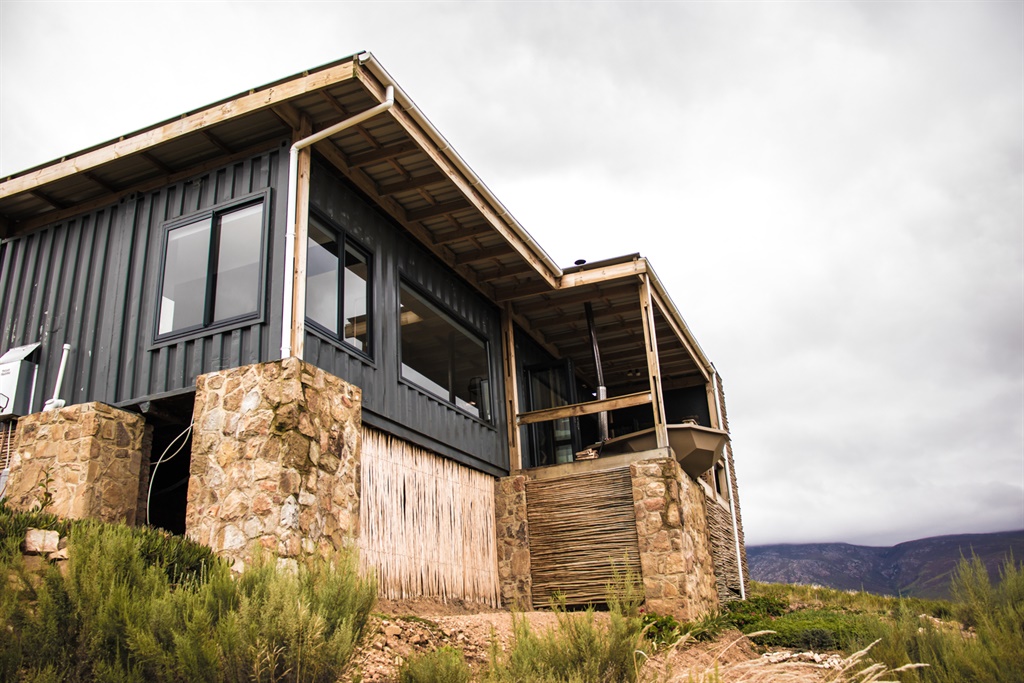
Across the world, small, luxurious houses are in hot demand as aspiring home-owners seek cheaper, eco-friendly abodes.    In South Africa, many of these high-end tiny homes are created using converted shipping containers. Business Insider looked at some of the options now popping up in South Africa. For more articles, go to www.BusinessInsider.co.za.  As the “tiny …

Photo supplied by Copia Eco Cabins.

  • Across the world, small, luxurious houses are in hot demand as aspiring home-owners seek cheaper, eco-friendly abodes.   
  • In South Africa, many of these high-end tiny homes are created using converted shipping containers.
  • Business Insider looked at some of the options now popping up in South Africa.
  • For more articles, go to www.BusinessInsider.co.za. 

As the “tiny house” movement sweeps across the world, the demand for luxurious, small homes is also growing in South Africa. 

Top-end tiny houses are popular because they offer a cheaper way to get on the property ladder, and a way to pare down your life to the essentials – while still enjoying luxuries. 

They are often immaculately designed, surprisingly extravagant, and optimised to use every square centimetre of space.

READ | 35 incredible tiny homes from around the world

Simply put, a tiny home is a fully functioning house, but on in a much smaller scale. They are part of a global architectural trend, which is still growing in the US, Canada, Australia, and New Zealand. Called the Tiny Movement, the trend embraces simple living by decluttering homes and downsizing on space.

In South Africa, high-end tiny homes are increasingly being erected in rural areas, often using shipping containers.  

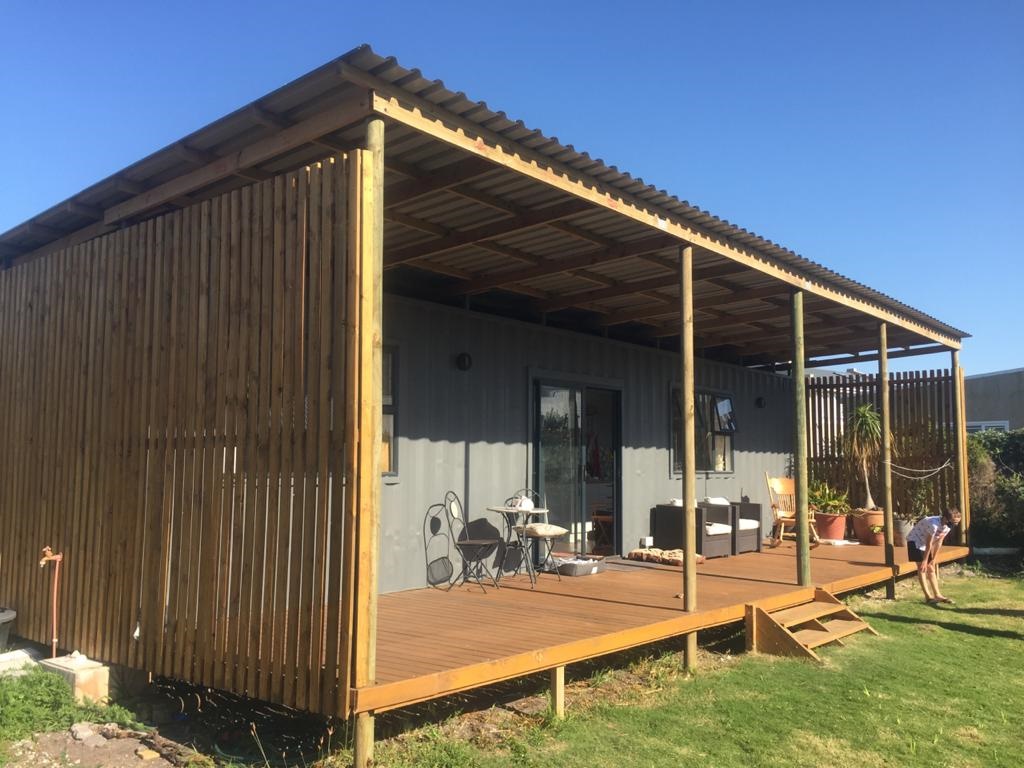
“Even though shipping container homes have been around for years, it has only been in the last five years that the building technique has become a viable alternative option,” says Deon van Deventer, founder of Container Home SA. His company has been making container homes from recycled containers in both Johannesburg and Cape Town since 2018.  

Innovations like smarter power generation via solar and battery capacity storage, as well as low-energy LED lighting, dry toilets, improved insulation, and better water filtration systems have made for viable off-the-grid solutions.

Photo supplied by Container Home SA.

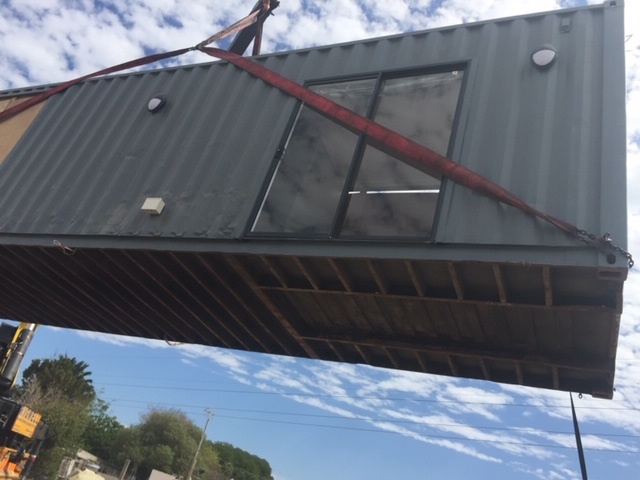
The homes are also fast to build. And with most of the manufacturing being off-site, there is less mess on-site.

“There’s been quite a lot of demand for people looking to build holiday homes or add a separate flat in their backyard. We’re also getting requests from people that live far out of the city, where home owners have struggled to get a building contractor. Or it’s on a near impossible place to build – like plots that stand at a 45-degree angle – and a conventional build would cost a fortune to lay foundations,” says Van Deventer.

Homes can also be expanded in much the same way as Lego fits together.

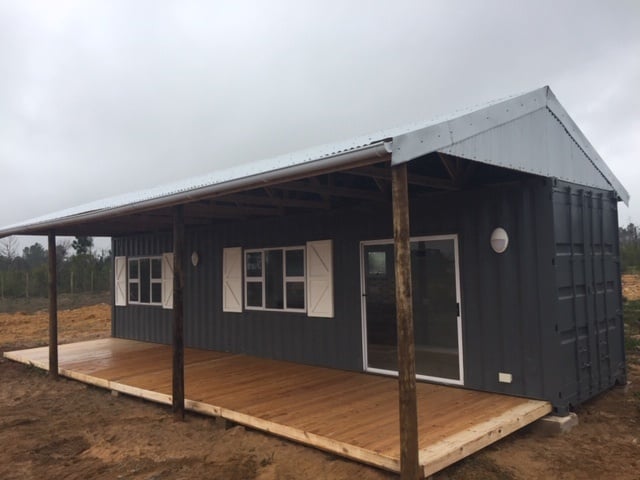
While the average price of building a home from scratch can be anywhere from R6,000 to R8,000 per square metre, basic container units are usually much cheaper. In some cases, basic units can be comparable in cost to RDP housing, which starts from around R1,500 per square metre.  

Photo supplied by Container Home SA.

Van Deventer keeps costs low by recycling used containers and refurbishing them locally. 

“We’re looking at between R70,000 and R80,000 for a brand-new container,” while a second-hand unit may cost around R20,000.

Fitted out, a basic studio container home can come in at around R170,000.

Photo supplied by Container Home SA.

Fancier container homes will be much more expensive, though.  

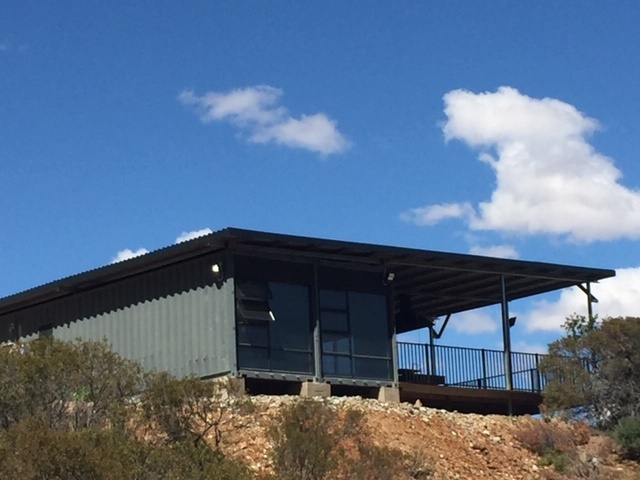
Photo supplied by Container Home SA. Photo supplied by Container Home SA.

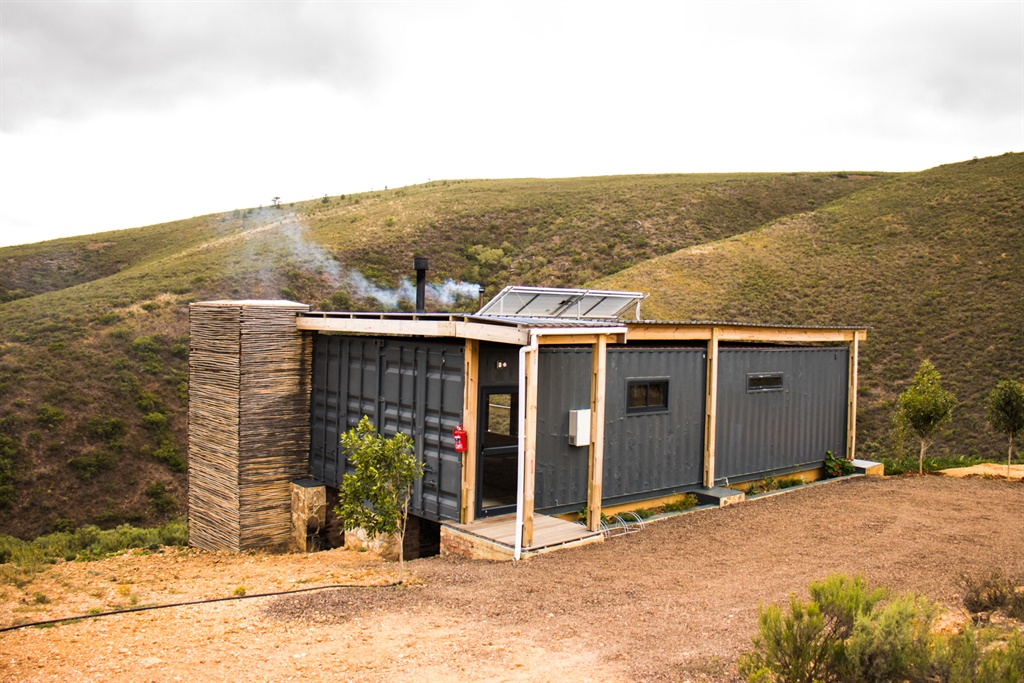
Take a look at this luxurious home made from four containers, recently erected in the Klein Karoo.

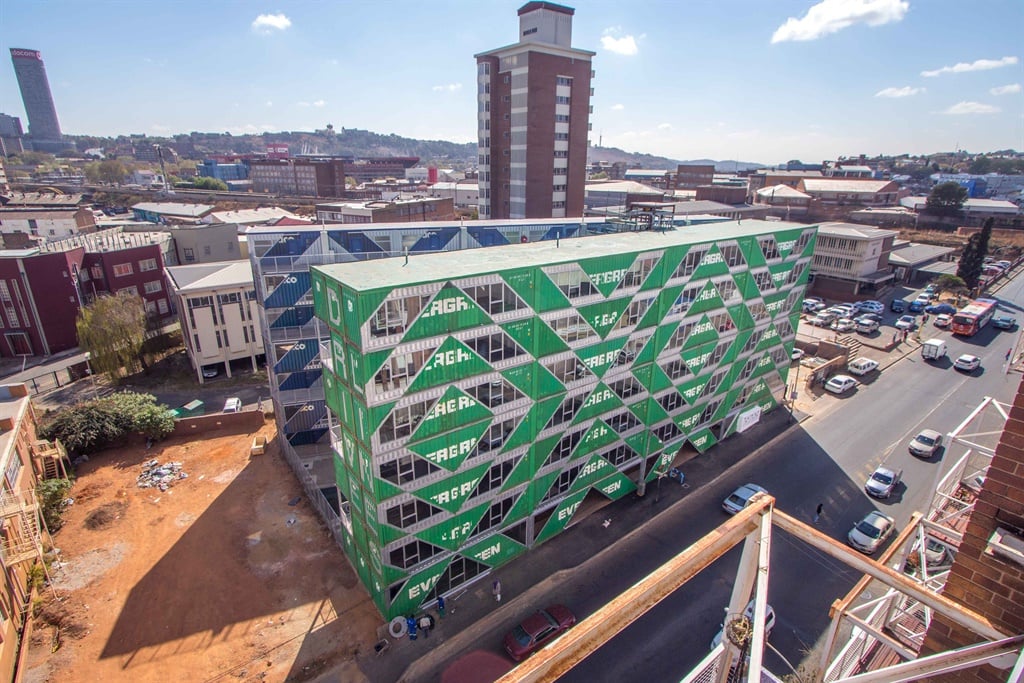
Containers have also been used to construct an apartment complex in Joburg’s Maboneng Precinct.

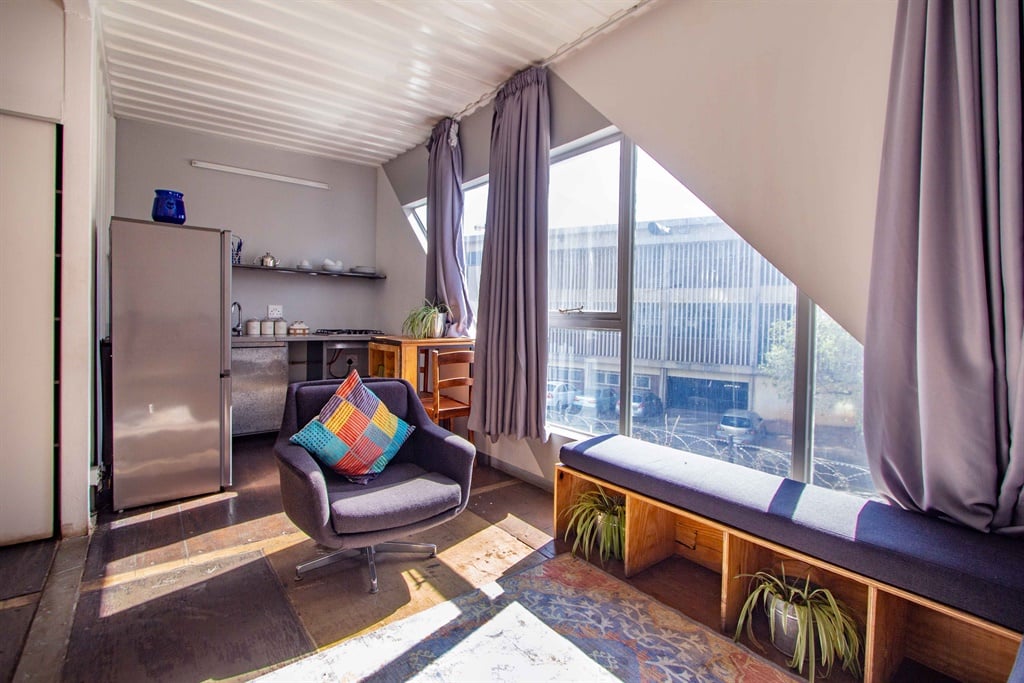
Photos supplied by QHoldings.

Built in 2017 by architects LOT-EK, Drivelines Studios’ furnished units can be rented for R3,000 a month.

The upcycled ISO shipping containers are organised in a V, with a triangular open yard with swimming pool and sundeck.

Photos supplied by QHoldings.

Here are some other tiny home options in South Africa.

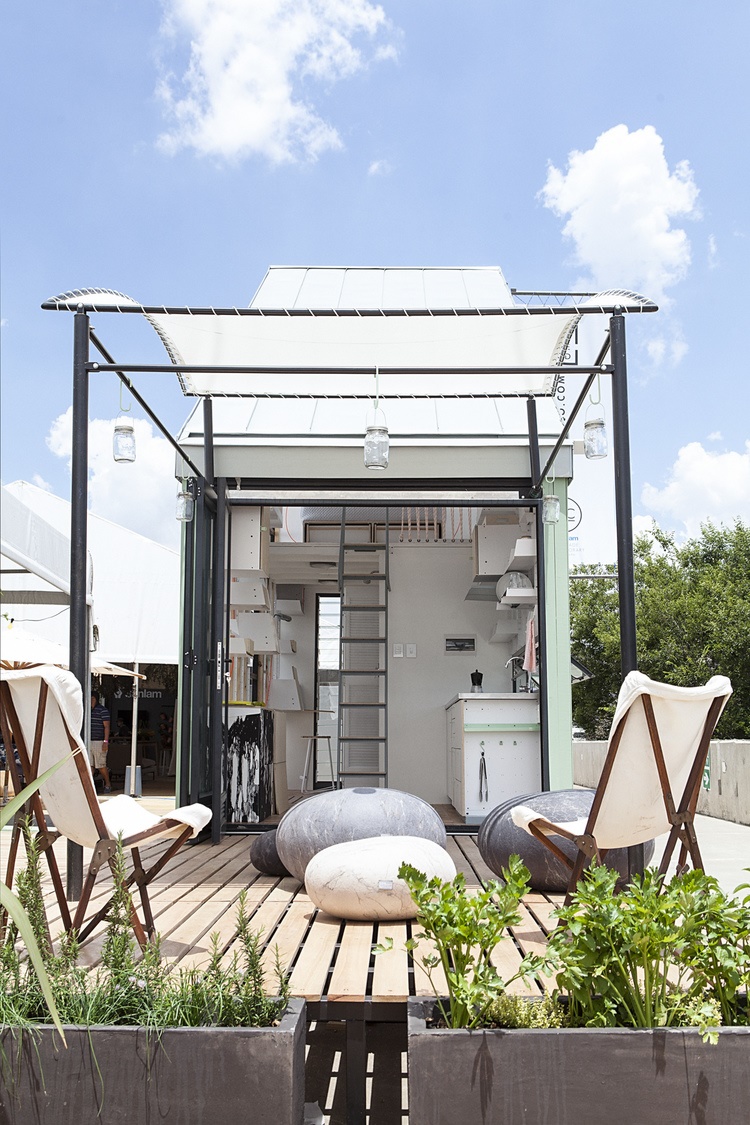
Plant your Pod Idladla on an open piece of land.

Manufactured in Johannesburg, the Pod Idladla is a prefabricated nano-home, starting from R270,000. Several 17-square-metre units can be positioned in various configurations to form larger, multi-use living areas.

Tiny, portable homes in KZN

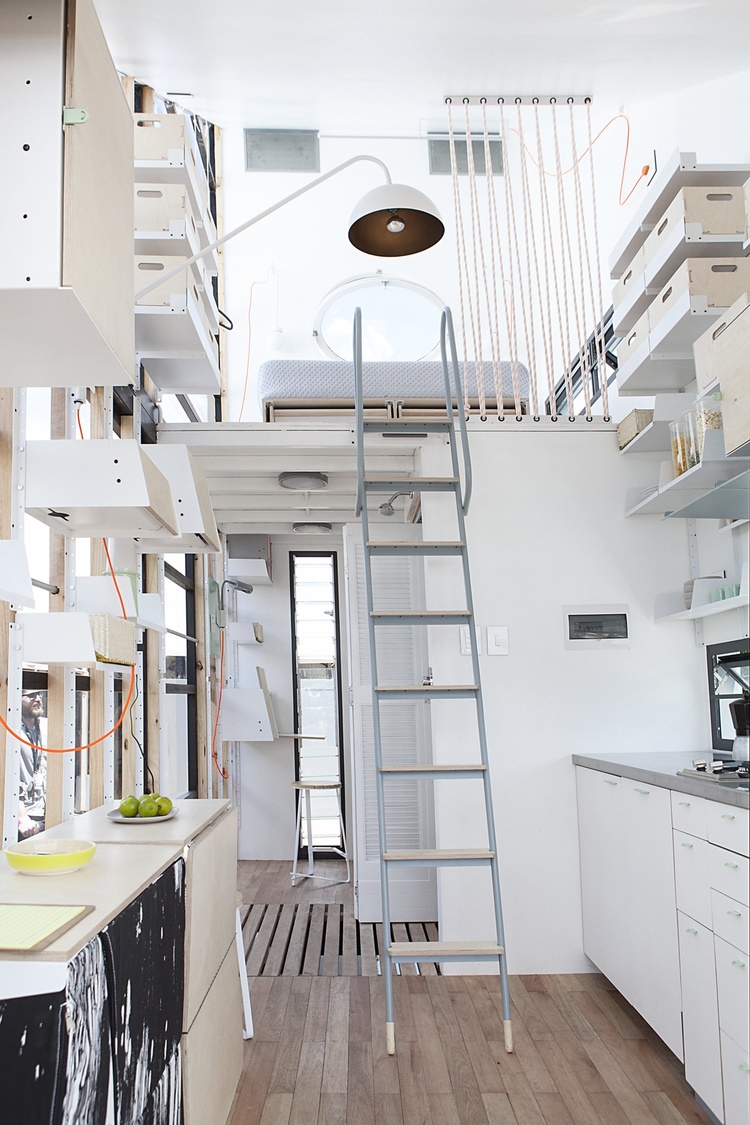
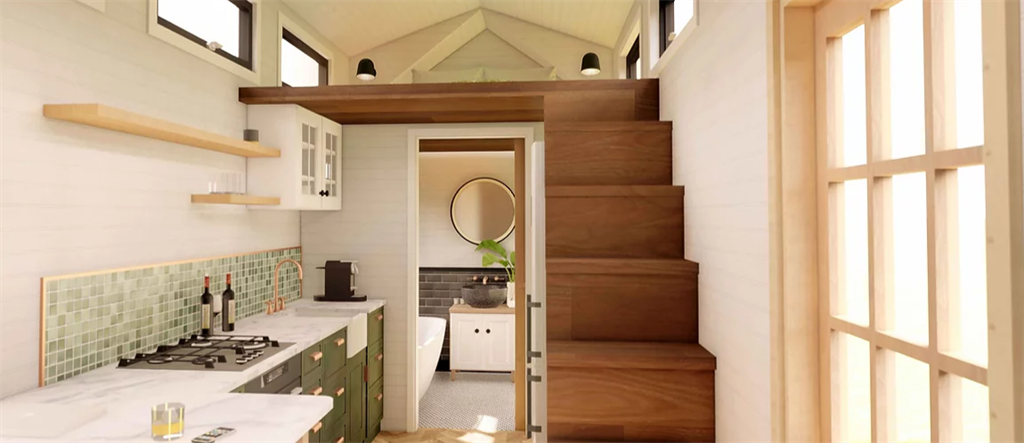
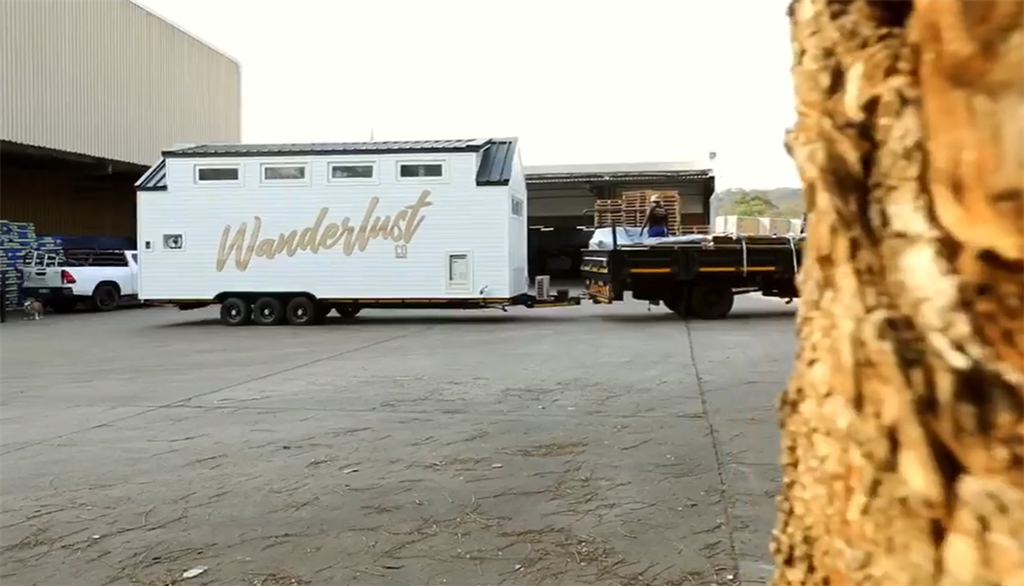
In order to prove tiny home living was easy, Matt and Kendal Bower moved into their own tiny home. They now manufacture their own range as Wanderlust Co.

Based in Tongaat, KwaZulu-Natal, they make a variety of houses that can sleep up to six people, with the aim of reducing living costs and the negative impact on the environment.

The tiny homes can be easily towed to their next destination.

The base cost is from R350,000.

Live in a PangoPod

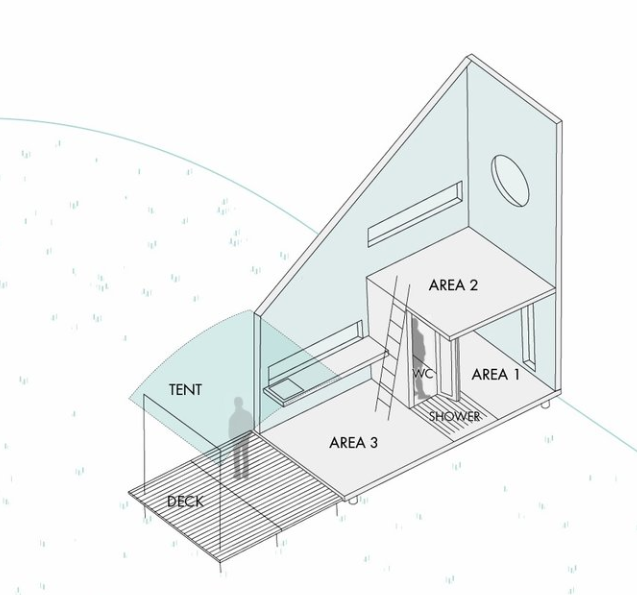
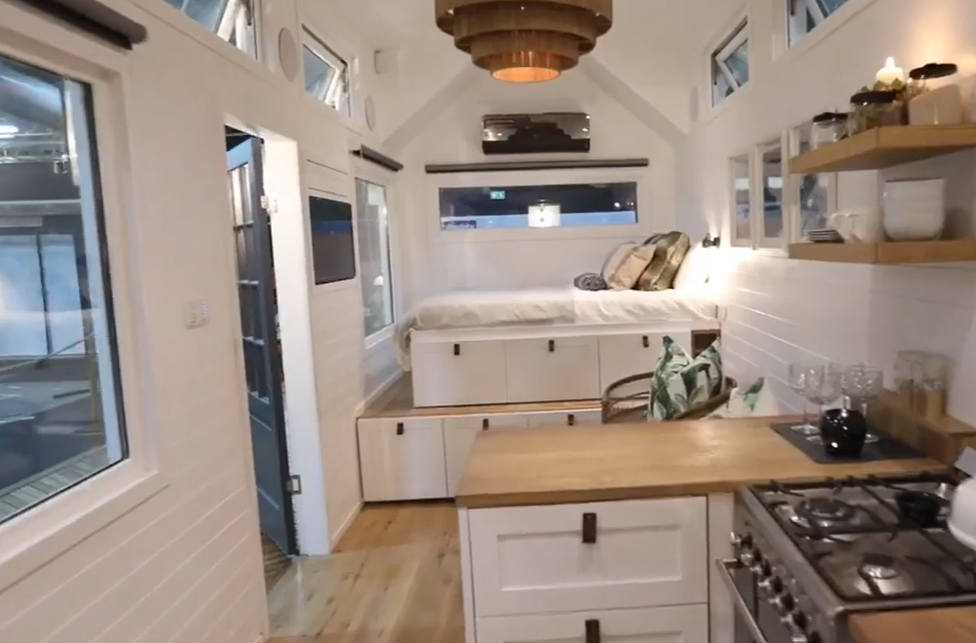
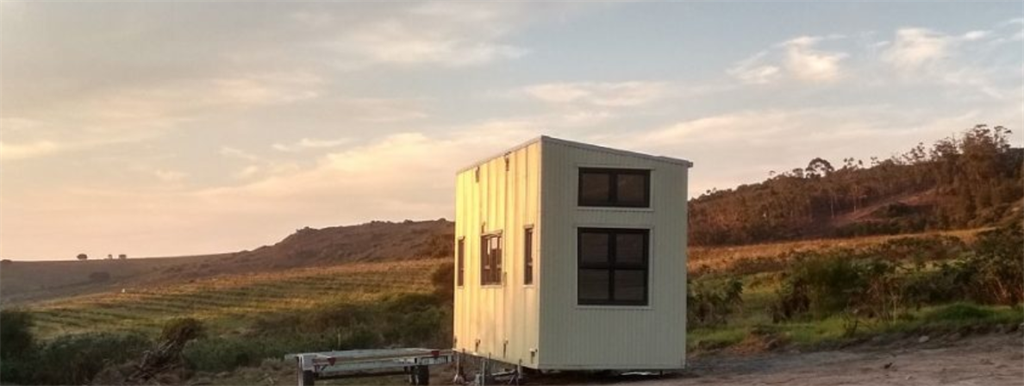
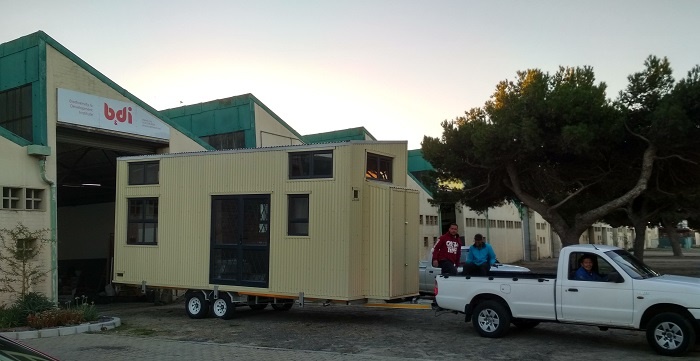
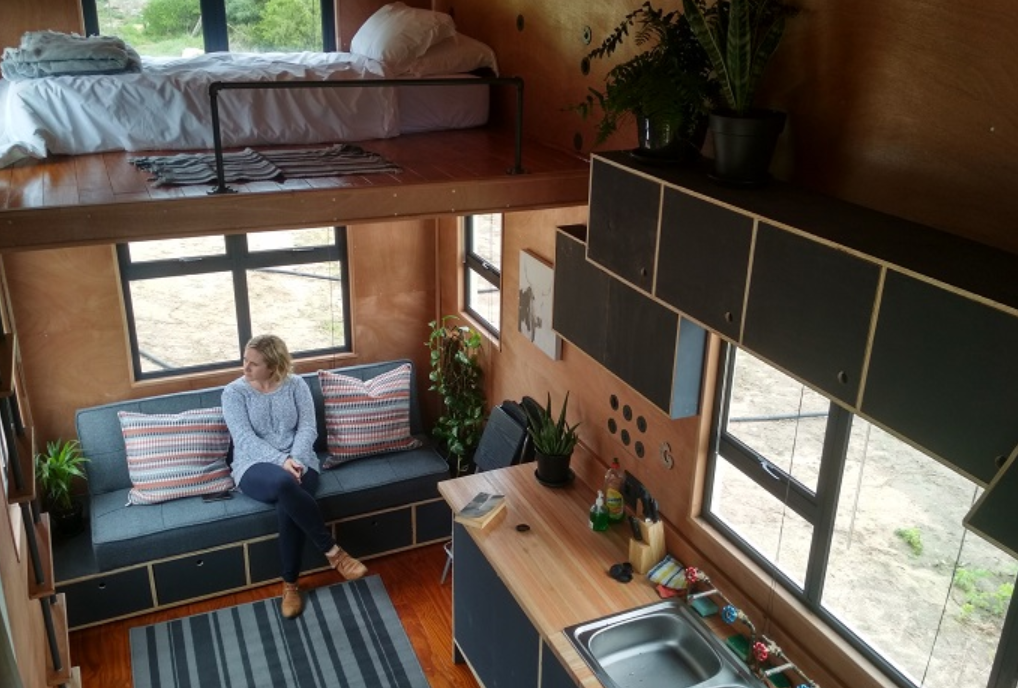
Built by the Biodiversity and Development Institute (BDI), a non-profit company focused on research related to biodiversity conservation, PanGoPods are off-grid, eco-friendly mobile homes. The houses draw inspiration from the pangolin, which can roll up into a tight ball. 

PanGoPods weight just 3,500kg and can be towed by a large 4×4. They run off of solar power, using water from rainwater harvesting tanks, and have a dry toilet.

Pangopods have a ground floor of roughly 16 square metres and two mezzanine lofts, each of just over 4 square metres, for a total area of nearly 25 square metres.

Shipping container cabins in Bot River valley

Photo supplied by Copia Eco Cabins.

In the Bot Rivier valley on a working farm, the luxurious Copia Eco Cabins can be rented out from R1,650 per night to see if you’ve got a taste for tiny living.

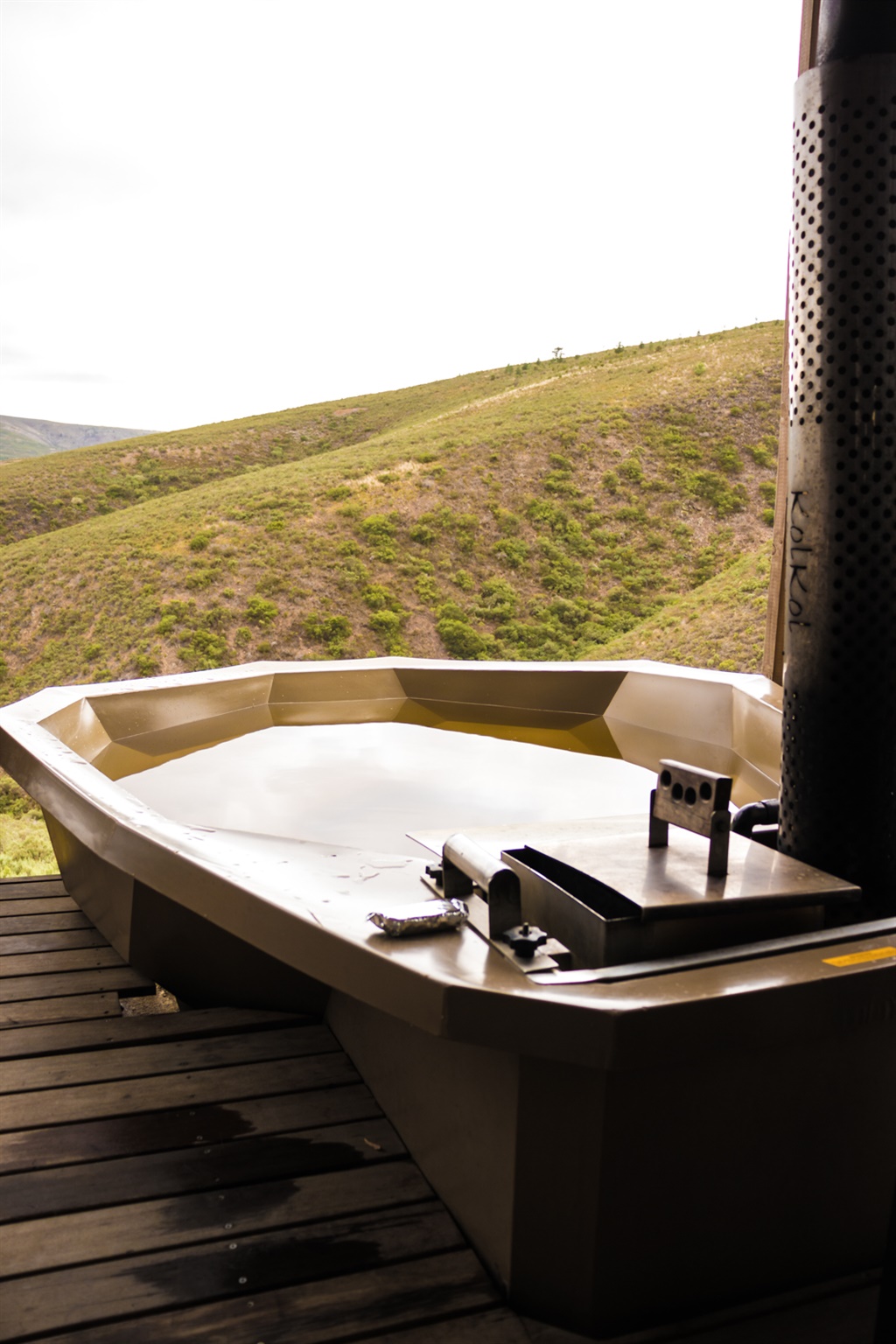
Made from two shipping containers, they each come with a hot tub and a deck.

Photo supplied by Copia Eco Cabins.Photo supplied by Copia Eco Cabins.

The cabins were designed by South African company Berman-Kalil, which manufactures bespoke tiny homes, shops and even classrooms. 

Stylish prefab house

This stunning house in Northcliff was designed by architects A4ac. The small container house was fully prefabricated, and it can be placed on any site which a truck can access. It’s fitted with a kitchen, bathroom, bed, built-in cupboards, gas geyser and stove, and television.

Receive a daily update on your cellphone with all our latest news: click here.

Get the best of our site emailed to you daily: click here.

Also from Business Insider South Africa:

  • Namibia should have a huge pile of cigarettes. Mysteriously, they are nowhere to be found.
  • Have you tried to quit? SA to take part in a big tobacco survey ahead of planned new restrictions
  • Nasa says never again after a Trump-flagged boat approached SpaceX’s splashed down ship
  • TikTok is at the heart of a wild geopolitical fight. Here’s what’s going on.
  • Low interest rates suck for savers, but you still have options
  • Electricity prices are going up by 15% next year – here’s how it affects you

Category: NewsTag: cradock, graaff reinet, hofmeyer, karoo, news
9 August 2020 by Guest

Coronavirus – South Africa: Premier Alan Winde on Coronavirus COVID-19 cases for 7 August

Content provided by APO Group. CNBC Africa provides content from APO Group as a service to its readers, but does not edit the articles it publishes. CNBC Africa is not responsible for the content provided by APO Group. Download logo As of 1pm on 7 August, the Western Cape has active 8631 cases of COVID-19, …

Content provided by APO Group. CNBC Africa provides content from APO Group as a service to its readers, but does not edit the articles it publishes. CNBC Africa is not responsible for the content provided by APO Group.
Download logo

As of 1pm on 7 August, the Western Cape has active 8631 cases of COVID-19, with a total of 97506 confirmed cases and 85528 recoveries.

Total confirmed COVID-19 cases

97506

Total recoveries

85528

Total deaths

3347

Total active cases (currently infected patients)

8631

Tests conducted

433443

Hospitalisations

1266 with 277 in ICU or high care

Cape Metro Sub-districts:

 Sub-district

Cases

Recoveries

Western

8248

 7351

Southern

8539

 7486

Northern

5721

 5190

Tygerberg

12087

 10806

Eastern

8936

 7927

Klipfontein

8480

 7477

Mitchells Plain

7739

 6890

Khayelitsha

7873

 7226

Total

67623

60353

Sub-districts:

 District

 Sub-district

Cases

Recoveries

Garden Route

Bitou

475

353

Garden Route

Knysna

1140

854

Garden Route

George

2869

2248

Garden Route

Hessequa

207

168

Garden Route

Kannaland

61

47

Garden Route

Mossel Bay

1652

1181

Garden Route

Oudsthoorn

686

378

Cape Winelands

Stellenbosch

1860

1629

Cape Winelands

Drakenstein

3951

3551

Cape Winelands

Breede Valley

2920

25551

Cape Winelands

Langeberg

1032

886

Cape Winelands

Witzenberg

1355

1147

Overberg

Overstrand

1405

1269

Overberg

Cape Agulhas

224

171

Overberg

Swellendam

246

226

Overberg

Theewaterskloof

1031

890

West Coast

Bergrivier

365

321

West Coast

Cederberg

134

97

West Coast 

Matzikama

248

195

West Coast

Saldanha Bay Municipality

1202

1050

West Coast

Swartland

1286

1037

Central Karoo

Beaufort West

338

198

Central Karoo

Laingsburg

45

22

Central Karoo

Prince Albert

9

4

Unallocated: 5133 (4687 recovered)

Data note: It is not always possible to check and verify that the address data supplied for each new recorded case is correct, within the time frames required to provide regular and timely updates. This means that in some instances, cases could be allocated to the wrong sub-districts. We are working with the sub-districts to clean and verify the data and where errors are picked up locally, cases will be re-allocated to the correct areas. 

More data is available here: https://bit.ly/2BsfdXt

The Western Cape has recorded an additional 34 deaths, bringing the total number of COVID-19 related deaths in the province to 3347. We send our condolences to the loved ones of all the deceased at this time.

Western Cape cabinet adopts position on business opening and alcohol sales:

The Western Cape cabinet has concluded its two day bosberaad where we have adopted the position that where business can open safely, they should be allowed to do so. Additionally, we have also adopted the position that domestic alcohol sales should be allowed, with smart recommendations in place. These positions have been taken with a view to reducing the impact of a second, equally dangerous pandemic- unemployment. We will now engage the national government on these positions.

Issued by: Western Cape Provincial Government

Distributed by APO Group on behalf of South African Government.

Category: NewsTag: cradock, graaff reinet, hofmeyer, karoo, news
7 August 2020 by Guest

WHAM BAM! Release Debut Single ‘On Your Own’

We use cookies on our website. Some of them are essential for the operation of the site, while others help us to improve this site and the user experience (tracking cookies). You can decide for yourself whether you want to allow cookies or not. Please note that if you reject them, you may not be …

We use cookies on our website. Some of them are essential for the operation of the site, while others help us to improve this site and the user experience (tracking cookies). You can decide for yourself whether you want to allow cookies or not. Please note that if you reject them, you may not be able to use all the functionalities of the site.

Category: NewsTag: cradock, graaff reinet, hofmeyer, karoo, news
6 August 2020 by Guest

Seed companies join forces to form Limagrain Zaad South Africa

Three of South Africa’s agricultural seed companies, Link Seed, Klein Karoo Seed Marketing (K2) and Seed Co South Africa, have joined forces to create a joint venture (JV) company ? Limagrain Zaad South Africa ? to provide multi crop alternatives for farmers in Southern Africa. K2 offers an agronomical and forage seed product range, as …

Three of South Africa’s agricultural seed companies, Link Seed, Klein Karoo Seed Marketing (K2) and Seed Co South Africa, have joined forces to create a joint venture (JV) company ? Limagrain Zaad South Africa ? to provide multi crop alternatives for farmers in Southern Africa.

K2 offers an agronomical and forage seed product range, as well as vegetable seeds across the region.

Seed Co is involved in the creation, multiplication and distribution of improved hybrid seed varieties such as maize, wheat, soybeans, sugar beans, cowpeas, sorghum, groundnuts and vegetables across the continent.

Link Seed, a Limagrain affiliate, offers a range of maize and soybean cultivars in South Africa.

Limagrain Zaad South Africa has a unified sales team selling three brands of seeds – Limagrain, K2 and Seed Co – enabling it to market a complete offering to producers in South Africa, Lesotho, eSwatini and Namibia.

With the farming market in Southern Africa dominated by multinational companies, the size of the JV company and its access to technologies is expected to give farmers an alternative for all major field and pasture crops.

The head office of the new company will be in Greytown, with research and development stations in Potchefstroom and Bapsfontein.

Seed production will be done in various locations across the country. Seed processing facilities are in Greytown and Bethal.

Category: NewsTag: cradock, graaff reinet, hofmeyer, karoo, news
4 August 2020 by Guest

Coronavirus – South Africa: Premier Alan Winde on Coronavirus COVID-19 update for 3 August

Content provided by APO Group. CNBC Africa provides content from APO Group as a service to its readers, but does not edit the articles it publishes. CNBC Africa is not responsible for the content provided by APO Group. Download logo As of 1pm on 3 August, the Western Cape has 10 955 active cases of COVID-19, …

Content provided by APO Group. CNBC Africa provides content from APO Group as a service to its readers, but does not edit the articles it publishes. CNBC Africa is not responsible for the content provided by APO Group.
Download logo

As of 1pm on 3 August, the Western Cape has 10 955 active cases of COVID-19, with a total of 95 407 confirmed cases and 81309 recoveries.

Total confirmed COVID-19 cases

95407

Total recoveries

81309

Total deaths

3143

Total active cases (currently infected patients)

10955

Tests conducted

423234

Hospitalisations

1387 with 295 in ICU or high care

Cape Metro Sub-districts:

 Sub-district

Cases

 Recoveries

Western

7978

 6927

Southern

8280

 7166

Northern

5478

 4925

Tygerberg

11648

 10261

Eastern

8638

 7536

Klipfontein

8309

 7243

Mitchells Plain

7481

 6475

Khayelitsha

7795

 7077

Total

65607

57610 

Sub-districts:

 District

 Sub-district

Cases

Recoveries

Garden Route

Bitou

426

288

Garden Route

Knysna

1049

698

Garden Route

George

2664

1887

Garden Route

Hessequa

173

104

Garden Route

Kannaland

55

44

Garden Route

Mossel Bay

1431

911

Garden Route

Oudsthoorn

561

304

Cape Winelands

Stellenbosch

1819

1570

Cape Winelands

Drakenstein

3873

3403

Cape Winelands

Breede Valley

2815

2416

Cape Winelands

Langeberg

1003

834

Cape Winelands

Witzenberg

1320

1034

Overberg

Overstrand

1380

1211

Overberg

Cape Agulhas

214

152

Overberg

Swellendam

244

208

Overberg

Theewaterskloof

994

825

West Coast

Bergrivier

359

278

West Coast

Cederberg

118

78

West Coast 

Matzikama

234

158

West Coast

Saldanha Bay Municipality

1170

983

West Coast

Swartland

1222

962

Central Karoo

Beaufort West

296

130

Central Karoo

Laingsburg

31

19

Central Karoo

Prince Albert

5

1

Unallocated: 6344 (5201recovered)

Data note: It is not always possible to check and verify that the address data supplied for each new recorded case is correct, within the time frames required to provide regular and timely updates. This means that in some instances, cases could be allocated to the wrong sub-districts. We are working with the sub-districts to clean and verify the data and where errors are picked up locally, cases will be re-allocated to the correct areas.

More data is available here: https://bit.ly/2BsfdXt

The Western Cape has recorded an additional 38 deaths, bringing the total number of COVID-19 related deaths in the province to 3105. We send our condolences to their family and friends at this time.

Message to healthcare workers:

It has been almost five months since the first case of COVID-19 was detected in the Western Cape. Over this period of time, thousands of healthcare workers have gone to work on the frontline every day, in service of the people of this country. This service was often at great personal risk to themselves and we acknowledge and pay tribute to all of those who have lost their lives in this fight.

I would like to convey a special thank you to the doctors, nurses, porters, cleaners, technicians, administrative staff and all of those people who work in our healthcare system. For many patients, contracting COVID-19 is scary, and having the expertise, support and guidance of this province’s healthcare workers, has helped thousands of people recover.

Whether it’s the people doing the testing in our testing and triage centres, or the ICU nurses who see to the most vulnerable, we thank you for the hard work, the long hours, and the courage and commitment you have shown during this time.

Over the past few weeks, we have seen a flattening in some of our key indicators of infections: case positivity rates, healthcare worker infections, hospitalisations and deaths which indicate that we have reached a plateau in new infections- with indications of a decline in certain areas. We owe a debt of gratitude to the healthcare workers who have helped us reach this point.

We all need to take personal responsibility now to ensure that we are able to maintain this, to reduce the number of new infections and ensure that we can continue to save lives and to protect our frontline workers.

PPE procurement transparency:

We welcome the fact that members of the public have been engaging with the PPE procurement disclosure report, released by the Western Cape Government last week. The ultimate goal of releasing these details was to ensure full transparency and accountability in our procurement processes. We also note the call by national Finance Minister Tito Mboweni for provinces to make this information available following the publication of this report. This report is not a once-off, and we have committed to regularly publishing these details.

Anyone seeking to study the report can do so here: https://bit.ly/3a6A5k5.

Members of the public are also welcome to share suggestions on improvements, or raise concerns about the information presented in the report by emailing.

For further information, to share suggestions on improvements, or to raise concerns with regards to the information presented in the report, you send an email to our supplier helpdesk at [email protected]

Issued by: Western Cape Office of the Premier

Distributed by APO Group on behalf of South African Government.

Category: NewsTag: cradock, graaff reinet, hofmeyer, karoo, news
3 August 2020 by Guest

Weather forecast, alerts and UVB index for all South African provinces, 3 August 2020

Weather data provided by the South African Weather Service. For a detailed forecast of your province, click here. Weather Warnings Extremely high fire danger conditions are expected over the central parts of the Northern Cape, the eastern parts of the Western Cape as well as the central and western interior of the Eastern Cape. Weather …

Weather data provided by the South African Weather Service. For a detailed forecast of your province, click here.

Weather Warnings

  1. Extremely high fire danger conditions are expected over the central parts of the Northern Cape, the eastern parts of the Western Cape as well as the central and western interior of the Eastern Cape.

Weather Watches

Nil.

Special Weather Advisories

  1. Strong interior winds (50-60km/h) with gusts (65-75km/h) are expected over the southern part of the Namakwa District of the Northern Cape, as well as the Cape Winelands, Central Karoo and interior of the Garden Route Districts of the Western Cape.

Gauteng:

Temperature: Fine and cool.

The expected UVB Sunburn Index: High.

Mpumalanga:

Temperature: Fine and cool but warm in the Lowveld.

The expected UVB Sunburn Index: –

Limpopo:

Temperature: Fine and cool to warm.

The expected UVB Sunburn Index: –

North-West Province:

Temperature: Fine and cool to warm.

The expected UVB Sunburn Index: –

Free State:

Temperature: Fine and cool to warm.

The expected UVB Sunburn Index: –

Northern Cape:

Temperature: Fine and cool in the south, otherwise warm, becoming cloudy in the evening along the coast and adjacent interior, with morning frost over the southern high ground.

Wind: The wind along the coast will be moderate southerly becoming fresh in the afternoon.

The expected UVB Sunburn Index: –

Western Cape:

Temperature: Fog in places along the south and southwestern coastal areas in the morning, otherwise fine and warm over the interior but cool along the coast. Light rain is expected over the southwestern parts in the evening.

Wind: The wind along the coast will be moderate westerly to northwesterly becoming fresh to strong from late morning. It will be moderate southwesterly in then south becoming fresh westerly in the evening.

The expected UVB Sunburn Index: Low.

Eastern Cape:

The Western half – Temperature: Fine and warm, becoming partly cloudy with mist in places along the coast and adjacent interior from late afternoon.

The Western Half – Wind: The wind along the coast will be Moderate north westerly, becoming fresh south westerly in the afternoon.

The Eastern half – Temperature: Fine and warm, becoming partly cloudy with mist south of Kei Mouth from late afternoon.

The Eastern half – Wind: The wind along the coast will be Moderate north westerly, becoming fresh south westerly in the evening.

The expected UVB Sunburn Index: –

Kwazulu-Natal:

Temperature: Fine and warm but hot in places in the east.

Wind: The wind along the coast will be moderate northerly to north-easterly becoming fresh in the north by afternoon.

The expected UVB Sunburn Index: Moderate.


DMCA.com Protection Status

Category: NewsTag: cradock, graaff reinet, hofmeyer, karoo, news
1 August 2020 by Guest

Coronavirus – South Africa: Premier Alan Winde on Coronavirus COVID-19 cases for 31 July

Content provided by APO Group. CNBC Africa provides content from APO Group as a service to its readers, but does not edit the articles it publishes. CNBC Africa is not responsible for the content provided by APO Group. Download logo As of 1pm on 31 July, the Western Cape has 10 532 active cases of …

Content provided by APO Group. CNBC Africa provides content from APO Group as a service to its readers, but does not edit the articles it publishes. CNBC Africa is not responsible for the content provided by APO Group.
Download logo

As of 1pm on 31 July, the Western Cape has 10 532 active cases of COVID-19, with a total of 93 413 confirmed cases and 79 841 recoveries.

Total confirmed COVID-19 cases

93 413

Total recoveries

79841

Total deaths

3040

Total active cases (currently infected patients)

10532

Tests conducted

414 304

Hospitalisations

1433 with 281 in ICU or high care

Cape Metro Sub-districts:

 Sub-district

Cases

Recoveries

Western

7832

 6826

Southern

8107

 7047

Northern

5357

 4836

Tygerberg

11451

 10101

Eastern

8375

 7417

Klipfontein

8174

 7189

Mitchells Plain

7318

 6369

Khayelitsha

7709

 7026

Total

64323

 56811

Sub-districts:

 District

 Sub-district

Cases

Recoveries

Garden Route

Bitou

385

280

Garden Route

Knysna

964

647

Garden Route

George

2430

1785

Garden Route

Hessequa

140

87

Garden Route

Kannaland

49

43

Garden Route

Mossel Bay

1293

852

Garden Route

Oudsthoorn

475

281

Cape Winelands

Stellenbosch

1748

1538

Cape Winelands

Drakenstein

3779

3358

Cape Winelands

Breede Valley

2727

2370

Cape Winelands

Langeberg

959

814

Cape Winelands

Witzenberg

1261

998

Overberg

Overstrand

1338

1178

Overberg

Cape Agulhas

191

144

Overberg

Swellendam

238

203

Overberg

Theewaterskloof

945

794

West Coast

Bergrivier

346

268

West Coast

Cederberg

110

75

West Coast 

Matzikama

223

151

West Coast

Saldanha Bay Municipality

1135

963

West Coast

Swartland

1116

929

Central Karoo

Beaufort West

242

116

Central Karoo

Laingsburg

25

18

Central Karoo

Prince Albert

2

1

Unallocated: 6969 (5137 recovered)

Data note: It is not always possible to check and verify that the address data supplied for each new recorded case is correct, within the time frames required to provide regular and timely updates. This means that in some instances, cases could be allocated to the wrong sub-districts. We are working with the sub-districts to clean and verify the data and where errors are picked up locally, cases will be re-allocated to the correct areas. 

More data is available here: https://bit.ly/2BsfdXt

The Western Cape has recorded an additional 31 deaths, bringing the total number of COVID-19 related deaths in the province to 3040. We send our condolences to their family and friends at this time.

Safety in the “new normal”:

The Western Cape has started to see a stabilisation in the number of COVID-19 infections, hosptalisations and deaths in certain parts of the province. I would like to thank all of our residents who have played their part in making this happen by staying at home as much as possible, wearing their masks and practicing social distancing when they go out, and keeping up with hygiene protocols like hand washing, keeping surfaces clean and coughing and sneezing into an arm or an elbow. These are small things that we can all do, which have a collective impact. We must continue these behaviours, especially now that the numbers have started to stabilise in order to ensure that we don’t see second waves of infections forming. 

COVID-19 will be around for many more months to come, and adapting how we live now, will not only help us avoid becoming sick or infecting our loved ones, but will also allow more businesses to start to operate fully again, and save thousands of jobs which currently hang in the balance. 

We expect that the new tourism regulations will be gazetted in the next few days, which will allow intra-provincial tourism accommodation establishments to begin operating. The tourism sector is one of the biggest job creators in the Western Cape, especially in our small towns and rural areas and we are pleased that these establishments will be able to allowed to open for business. 

We still intend to engage with the national government on ways that we can support other businesses in the province that are being negatively impacted by the alert level 3 regulations.

We must put all of our energy into averting the second pandemic of unemployment. I therefore call on all of these businesses to be responsible when you re-open and ensure that you are following all of the rules and guidelines set out for safe operations. We do not want businesses to become sites of infection, putting their staff and clients at risk, and which will ultimately only further negatively impact the sector.

For those residents who will be booking trips and stays once business has re-opened, we thank you for supporting this sector at this time but urge you to travel responsibly, and to continue taking the same precautions you would at home, while on your holidays and weekends away. 

Issued by: Western Cape Provincial Government

Distributed by APO Group on behalf of South African Government.

Category: NewsTag: cradock, graaff reinet, hofmeyer, karoo, news
31 July 2020 by Guest

Hartswater Farm Murders: Hundreds Show Up to Murder Suspects’ First Appearance

Hundreds of community members turned up today outside the magistrate’s court in Hartswater in the Northern Cape of South Africa, where five suspects appeared for the murders of Breggie (73) and Danie Brand (83) and their daughter Elzabie (54) which has shocked the nation. Photo supplied The peaceful protesters from Hartswater and surrounding communities carried …

Hundreds of community members turned up today outside the magistrate’s court in Hartswater in the Northern Cape of South Africa, where five suspects appeared for the murders of Breggie (73) and Danie Brand (83) and their daughter Elzabie (54) which has shocked the nation.

hartswater farm murders protest outside court today
Photo supplied

The peaceful protesters from Hartswater and surrounding communities carried posters condemning these and farm murders in general.

According to Johan Kruger, AfriForum’s Head of Community Development, there was a sense of unity and solidarity among community members. He and Lize-Mari Smit, AfriForum’s District Coordinator for the Karoo, attended the court proceedings.

The local AfriForum branch were part of the team (with SA Police and the local farming community) that helped track down the five suspects – being the first to spot the stolen car in which the suspects were fleeing. AfriForum’s Trauma Support Unit also arranged counselling for the family and neighbours of the victims.

IT IS PAINFUL??????

Murderers of Danie,Breggie and Elzabe Brand. pic.twitter.com/TBMkrZkQYD

— cabonena alfred (@alfred_cabonena) July 30, 2020

Kruger said in a statement Thursday: “The community united today to stand together. People have had enough – they want President Cyril Ramaphosa here. He must look the community squarely in the eye and explain why farm attacks and murders are still considered ordinary crimes. Communities are tired of feeling unsafe, saying loud and clear that enough is now enough.”

AfriForum launched an intensified campaign against farm murders on 8 July after the recent months saw an upsurge in farm attacks. This year has so far witnessed 186 farm attacks and 29 farm murders. In July alone, 39 attacks occurred, in which nine people were murdered. Many more people who are not on farms are murdered in just one day in SA – an average of 58, but according to the DA statistics show that it is four times more dangerous to live on a farm in South Africa than anywhere else in the country.

Both the DA and AfriForum have written open letters to President Ramaphosa.

Ernst Roets, Head of Policy and Action at AfriForum, says that AfriForum is not asking for special treatment for farm attacks, but for equal treatment. “The South African government has no qualm about developing focused counter-strategies to curb a number of unique crimes. including violence against women and children, gang-related violence, copper cable theft, cash-in-transit heists and rhino poaching, to name a few. It is only in the case of farm murders that we are suddenly confronted with Cabinet members who – at worst – justify these crimes, or – at best – downplay the existence of the crisis.”

pic.twitter.com/Z2JpWOZ0t0

— Mariska Schalekamp (@MariskaSchalek1) July 30, 2020

Farmers and farmworkers are taking over the town of Hartswater to protest against the murders of 3 farmers there.

Posted by Johann Abrie on Thursday, July 30, 2020

Category: NewsTag: cradock, graaff reinet, hofmeyer, karoo, news
31 July 2020 by Guest

Hartswater Farm Murders: Hundreds Show Up to Murder Suspects’ First Appearance

Hundreds of community members turned up today outside the magistrate’s court in Hartswater in the Northern Cape of South Africa, where five suspects appeared for the murders of Breggie (73) and Danie Brand (83) and their daughter Elzabie (54) which has shocked the nation. Photo supplied The peaceful protesters from Hartswater and surrounding communities carried …

Hundreds of community members turned up today outside the magistrate’s court in Hartswater in the Northern Cape of South Africa, where five suspects appeared for the murders of Breggie (73) and Danie Brand (83) and their daughter Elzabie (54) which has shocked the nation.

hartswater farm murders protest outside court today
Photo supplied

The peaceful protesters from Hartswater and surrounding communities carried posters condemning these and farm murders in general.

According to Johan Kruger, AfriForum’s Head of Community Development, there was a sense of unity and solidarity among community members. He and Lize-Mari Smit, AfriForum’s District Coordinator for the Karoo, attended the court proceedings.

The local AfriForum branch were part of the team (with SA Police and the local farming community) that helped track down the five suspects – being the first to spot the stolen car in which the suspects were fleeing. AfriForum’s Trauma Support Unit also arranged counselling for the family and neighbours of the victims.

IT IS PAINFUL??????

Murderers of Danie,Breggie and Elzabe Brand. pic.twitter.com/TBMkrZkQYD

— cabonena alfred (@alfred_cabonena) July 30, 2020

Kruger said in a statement Thursday: “The community united today to stand together. People have had enough – they want President Cyril Ramaphosa here. He must look the community squarely in the eye and explain why farm attacks and murders are still considered ordinary crimes. Communities are tired of feeling unsafe, saying loud and clear that enough is now enough.”

AfriForum launched an intensified campaign against farm murders on 8 July after the recent months saw an upsurge in farm attacks. This year has so far witnessed 186 farm attacks and 29 farm murders. In July alone, 39 attacks occurred, in which nine people were murdered. Many more people who are not on farms are murdered in just one day in SA – an average of 58, but according to the DA statistics show that it is four times more dangerous to live on a farm in South Africa than anywhere else in the country.

Both the DA and AfriForum have written open letters to President Ramaphosa.

Ernst Roets, Head of Policy and Action at AfriForum, says that AfriForum is not asking for special treatment for farm attacks, but for equal treatment. “The South African government has no qualm about developing focused counter-strategies to curb a number of unique crimes. including violence against women and children, gang-related violence, copper cable theft, cash-in-transit heists and rhino poaching, to name a few. It is only in the case of farm murders that we are suddenly confronted with Cabinet members who – at worst – justify these crimes, or – at best – downplay the existence of the crisis.”

pic.twitter.com/Z2JpWOZ0t0

— Mariska Schalekamp (@MariskaSchalek1) July 30, 2020

Farmers and farmworkers are taking over the town of Hartswater to protest against the murders of 3 farmers there.

Posted by Johann Abrie on Thursday, July 30, 2020

Category: NewsTag: cradock, graaff reinet, hofmeyer, karoo, news
29 July 2020 by Guest

Fossil plants could help Rhodes University PhD researcher solve a 200-year puzzle

Paleobotanist Aviwe Matiwane on site (Onder Karoo,[-] South Africa), finding fossil plants. ROSE PREVEC Andrew Wight, Australian Science Journalist.  Paleobotanist Aviwe Matiwane is working in her native South Africa to find and catalog fossils of a plant that can provide us with a glimpse back in time to the climate and even food chains of …

Paleobotanist Aviwe Matiwane on site (Onder Karoo,[-]
South Africa), finding fossil plants.
ROSE PREVEC

Andrew Wight, Australian Science Journalist. 

Paleobotanist Aviwe Matiwane is working in her native South Africa to find and catalog fossils of a plant that can provide us with a glimpse back in time to the climate and even food chains of a time before the dinosaurs.

Matiwane, who is a PhD researcher at Rhodes University and Albany Museum in South Africa, says that Glossopteris has no living relatives, but was an early example of a gymnosperm, that is, a plant that uses an exposed seed to reproduce, rather than a fruit.

This fossil plant was around during the Permian, a period 252-299 million years ago, and in addition to now forming the oldest coal deposits in South Africa, the plants have been used to solve a wide-range of scientific mysteries.

“Glossopteris can tell us so much about the past: For example in some cases stomatal studies have been used to model Carbon Dioxide (CO2) changes during the Permian and these are used to inform researchers about the climate conditions during that time period,” she said, “Glossopteris can also be a link to prehistoric food chains, as feeding patterns preserved on the fossil impressions together with the fossil insects found can help researchers link animal-plant interactions.”

Matiwane says fossils of the plant also support the concept of continental drift – the now-accepted theory that the continents once formed one massive landmass and have drifted apart over time – because the fossils have now been found in all the southern continents: Australia, Antarctica, India, South Africa, and South America.

“My work involves finding the best descriptive features to identify and name Glossopteris leaves because taxonomic approaches used to differentiate these leaves vary, most descriptions of these fossil plants rely on visual estimations of relatively few characteristics.” she said, adding that species identification has proven to be subjective, inconsistent and extremely challenging.

Matiwane says that the most important part of her study is to solve the 200-year-old problem of how to classify and organise Glossopteris leaves.

“My work considers new approaches involving morphometric and ecological techniques with the aim of establishing a standardized methodology for the leaf taxonomy of this group,” she said, “I am also developing a national and international online leaf description database which will be used by researchers across the world.”

Matiwane says her work is important because she is describing the first conclusive middle Permian flora in South Africa.

“The study site is in Ouberg Pass (near Sutherland) this will contribute towards the greater goal of establishing a reliable biostratigraphic framework for Glossopteris floras of the Permian of the Karoo Basin,” she said.

Matiwane says growing up in a small village in South Africa’s Eastern Cape Province, she always loved plants and that walks with her grandfather as a formative moment.

“My grandfather is a self-taught botanist and he used to take me on walks in the forest and show me the different types of plants and some of their uses,” she said, “I was always intrigued about the evolution of plants but having grown up in a rural village I never knew there was such a field as botany.”

She eventually obtained both an Honours and Master of Science degrees at Rhodes University in South Africa, looking at the plant biodiversity of the Southern Mistbelt Forests of the Eastern Cape.

Matiwane says there is not much known about the broader fields of palaeoscience among the South African public even though fossils are part of the country’s national heritage.

“The public may know about dinosaurs however, not about the fossil plants” she said, adding that one of the biggest challenges is getting people to appreciate our wonderful fossil heritage.

“Also dealing with discrimination and racism as a Black woman in the field has been tough,” she said.  

Matiwane says one of the biggest opportunities so far has been to the National Museum of Natural History, Paris, where she got to work on some of the original Glossopteris specimens,

“But most importantly, I get to show kids that scientists come in different shapes, sizes, and form,” she said, “I am not the generalized/typical lab coat scientist you see in your Google searches.”

Matiwane is one of a new generation of female paleontologists in the developing world. Another is Catalina Suarez, a Colombian geologist and paleontologist, who studies fossils of ancient mammals, their paleobiology and paleoecology, searching for clues to understand how climate change affects diversification and extinction rates in mammals.


Source:  https://www.forbes.com

Please help us to raise funds so that we can give all our students a chance to access online teaching and learning. Covid-19 has disrupted our students’ education.  Don’t let the digital divide put their future at risk. Visit www.ru.ac.za/rucoronavirusgateway to donate

Category: NewsTag: cradock, graaff reinet, hofmeyer, karoo, news
28 July 2020 by Guest

South Africa: Meerkat Telescope to Be Expanded By 20 Dishes – AllAfrica

Higher Education, Science and Innovation Minister, Dr Blade Nzimande, says the 64-dish MeerKAT, the pre-cursor to the Square Kilometer Array (SKA), will be expanded by 20 dishes at a cost of R800 million. The Minister said this when he outlined the department’s spending priorities during a virtual sitting of the National Assembly on Friday. Nzimande …

Higher Education, Science and Innovation Minister, Dr Blade Nzimande, says the 64-dish MeerKAT, the pre-cursor to the Square Kilometer Array (SKA), will be expanded by 20 dishes at a cost of R800 million.

The Minister said this when he outlined the department’s spending priorities during a virtual sitting of the National Assembly on Friday.

Nzimande said that astronomy in South Africa remains important to its socio-economic landscape and that the heritage will further be strengthened through the MeerKAT, which has already been able to give the world a glimpse into the star-formation history of the universe.

“To extend its research area reach, the MeerKAT is to be expanded by 20 dishes at a cost of R800 million. The expansion will be a partnership between South Africa, Germany and China.

“The MeerKAT will further be integrated into SKA Phase one (2019-2024) with an additional 133 antennas in the Karoo up to 80km baseline from the core to make it a 197-dish array mid-frequency telescope.”

The Minister said the MeerKAT, located in the Karoo, continues to perform great science and has contributed to several discoveries.

The benefits of hosting these telescopes include a 75% local content component, direct investment of more than R300 million in the Northern Cape alone, the development of technical skills and big data capabilities, strengthening of university research programmes, opportunities for SMMEs and industry, community upliftment programmes, and investment in the youth.

“South Africa also participates in the African Very Long Baseline Interferometry Network (AVN) project that aims to establish self-sufficient radio telescopes in Africa through the conversion of redundant telecommunications antennae into radio telescopes, “new-build” telescopes or training facilities with training telescopes.

“Our countries who participates in this initiative are Botswana, Ghana, Kenya, Madagascar, Mauritius, Mozambique, Namibia, and Zambia,” he said.

Government mulls over new SKA exploratorium

The Minister said, meanwhile, that government is also collaborating with the Department of Tourism, the Northern Cape Department of Finance, Economic Development and Tourism, and the Kareeberg Municipality to establish the SKA Exploratorium in Carnarvon.

“This envisaged R60 million multi-purpose science tourism visitor centre will create jobs and boost tourism in the area, and also serve as an outreach hub.

“A funding agreement is now being finalised for signature by the relevant parties in order to kick-start the project,” he said.

Category: NewsTag: cradock, graaff reinet, hofmeyer, karoo, news
26 July 2020 by Guest

Triton Xtreme, Hilux GR Sport… These are the bakkies Ford’s upcoming Ranger Thunder will face

• Ford’s new Thunder is a special-edition Ranger. • We list several ‘special’ bakkies in South Africa’s carpool. • The list include models from all the major role players in the local bakkie market. • For more motoring stories, go to www.Wheels24.co.za Following on from our recent article on Ford’s upcoming Ranger Thunder, the Wheels24 team scoured through …

• Ford’s new Thunder is a special-edition Ranger.

• We list several ‘special’ bakkies in South Africa’s carpool.

• The list include models from all the major role players in the local bakkie market.

• For more motoring stories, go to www.Wheels24.co.za


Following on from our recent article on Ford’s upcoming Ranger Thunder, the Wheels24 team scoured through the South African carpool. Our aim: to find more special or limited edition bakkies.

Ranked from the most expensive, here are six bakkies you should know of.

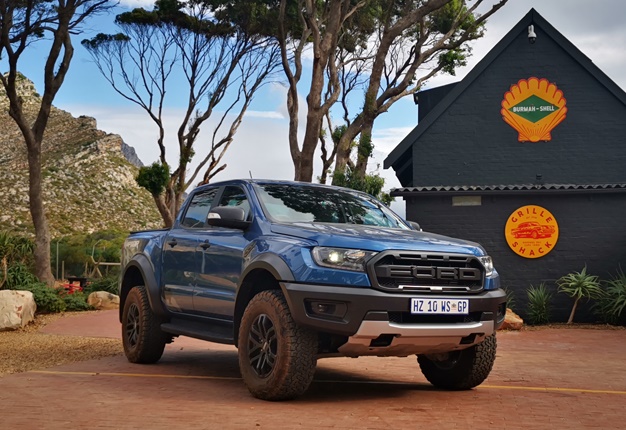
Ford Ranger Raptor – R875 700

The Raptor is a special bakkie, one that has captured the minds and imagination of South African bakkie lovers. Built in Pretoria, the Ranger Raptor is exported to various global markets, which allows for only a handful of units to be sold locally every month.

The Raptor is powered by a bi-turbo 2.0-litre diesel engine that produces 157kW and 500Nm. Power is sent to the wheels via a 10-speed automatic gearbox. The Raptor’s trump card is its FOX suspension. FOX developed the suspension for use in the Raptor, and it affords the bakkie with one of the best ride qualities for a bakkie in the country.

Despite the hefty price tag, this is one bakkie we’d always pick.

WATCH: These four boys got a ride to their new school in a Ford Ranger Raptor and it made them feel so cool

Follow @Wheels24

ford ranger raptor,bakkie

2020 Ford Ranger Raptor (Wheels24 / Charlen Raymond)

Volkswagen Amarok Canyon – R852 800

The Amarok is an impressive bakkie. Coming to market in 2010, it grew in stature to the product we see today. The Canyon is the current range-topper and is powered by a 3.0-litre V6 engine. The 165kW and 550Nm it produces is ample, so much so that the bakkie can run onto a top speed of 193km/h. Power is sent to the all-wheel-drive system via an eight-speed automatic gearbox.

Later this year, the current V6 Amarok will be replaced by an even stronger version of the engine, which should see the bakkie comfortably occupy the position as SA’s most powerful bakkie.

READ: How Volkswagen’s Amarok changed South Africa’s opinion about bakkies

volkswagen amarok canyon,v6,bakkie

2020 Volkswagen Amarok Canyon V6 (Wheels24 / Charlen Raymond)

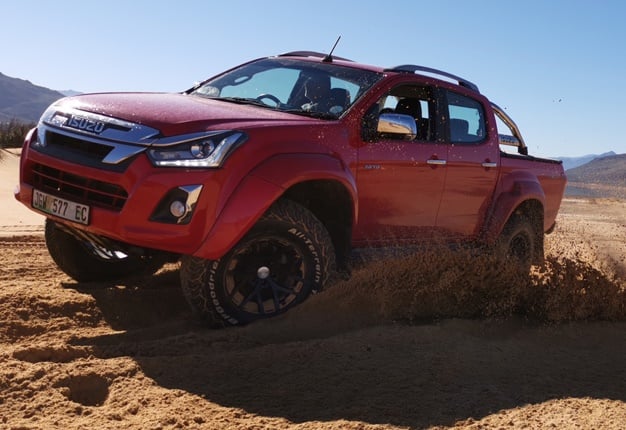
Isuzu D-Max Arctic AT 35 – R822 000

Though the Arctic’s expressive design impresses us, no part of the bakkie’s drivetrain has been altered from the rest of the D-Max range. The 3.0-litre diesel engine still produces 130kW and 380Nm, and power is fed to all four wheels via a six-speed automatic gearbox.

Raised ride height and grippy tyres aside, the Arctic is a marketing venture by Isuzu SA. The local arm got the necessary rights to build the Arctic in Port Elizabeth, and only 50 will roll off the production line annually.

It remains to be seen whether or not the Arctic treatment will be given to the all-new D-Max when it arrives in 2021.

KEEP UPDATED on the latest Wheels news by subscribing to our FREE newsletter.

bakkie,isuzu arctic at35,ford ranger raptor,toyota

2020 Isuzu D-Max Arctic AT 35 (Wheels24 / Charlen Raymond)

Toyota Hilux GR Sport – R750 800

Like the Arctic, the GR Sport also makes use of an unchanged drivetrain over the existing Hilux models. The 2.8-litre turbo diesel engine produces 130kW and 450Nm, mated to a six-speed automatic gearbox. In 2019, when the bakkie was launched, Toyota said that only a few hundred units would be built.

Given that the bakkie is still listed on the Toyota SA website, it can be assumed that several units are still up for grabs.

The Hilux GR Sport is the top model in an otherwise overly popular range, and it fits the bill with aplomb. A revised front suspension and a barrage of stickers make this a bakkie worth taking note of.

bakkie,isuzu arctic at35,ford ranger raptor,toyota

2020 Toyota Hilux GR Sport (Wheels24 / Charlen Raymond)

Mitsubishi Triton Xtreme – R654 995

The Triton is struggling to make an impact on the South African bakkie market, but in other parts of the world, like Australia, it excels. To help the Triton attract a bigger audience, Mitsubishi SA launched a new limited-edition model, called the Triton Xtreme.

Sporting accessories to the value of R100 000, the automaker is giving the Xtreme kit to customers at a premium of R60 000 over the next most-expensive model in the range.

The Triton Xtreme is powered by a 2.4-litre diesel engine that produces 133kW and 430Nm. A six-speed automatic gearbox sends power to all four tyres via the automaker’s impressive Super Select II off-road system.

READ: Why the Mitsubishi Triton deserves a second look from SA bakkie lovers

Mitsubishi Triton Xtreme

2020 Mistubishi Triton Xtreme (QuickPic)

Nissan Navara Stealth – From R630 100

Nissan is no stranger to producing bakkies. In the local market, the automaker offers no less than three bakkies, of which two are always among the best-selling bakkies in SA every month. The Navara, however, is also on that list, but it sells far fewer units than its two siblings.

Two increase the bakkie’s appeal, Nissan added two Stealth model to the Navara range, comprising 4×2 and 4×4 models. The latter retails for R649 400. Power is still derived from the 2.3-litre diesel engine, with power rated as 140kW and 450Nm. A seven-speed automatic gearbox does transfer duties.

The Stealth boasts with several exterior enhancements to distinguish it from the rest of the range.

nissan navara

2020 Nissan Navara Stealth (MotorPress)

Mahindra Pik Up Karoo – from R328 499

The Pik Up is another popular model among South Africans. And the fact that it’s built in Durban helps keep the price low and competitive. Launched at the start of the year, the new Pik Up is headlined by the S11 Karoo 4×4, retailing for R429 999. But the Karoo line-up begins with the S6, which adds several bits to the package for that added bit of ruggedness.

Both the extended range and Karoo models are powered by a 2.2-litre turbo diesel engine that produces 103kW and 320Nm. Power is transferred to the road either via a six-speed automatic transmission or a six-speed manual gearbox. The Karoo is available in either 4×4 or 4×2.

mahindra,pik up,karoo

2020 Mahindra Pik Up S11 Karoo 4×4 A/T (QuickPic)

Category: NewsTag: cradock, graaff reinet, hofmeyer, karoo, news
25 July 2020 by Guest

Agriculture sector used to govt making ill-considered decisions

Agricultural leaders and farmers in the region reacted with shock, disbelief and disappointment last week to the announcement by the national ram management centre that the drought no longer enjoys disaster status and that the funds will henceforth be used for Covid-19. Agricultural leaders predicted that this would put further pressure on agriculture in the …

Agricultural leaders and farmers in the region reacted with shock, disbelief and disappointment last week to the announcement by the national ram management centre that the drought no longer enjoys disaster status and that the funds will henceforth be used for Covid-19.

Agricultural leaders predicted that this would put further pressure on agriculture in the region and could have a ripple effect because the sector has a major impact on towns’ economies.

Joey Potgieter, chairman of Agri Klein Karoo, said on Monday that it was not strange for agriculture to see ill-considered decisions by some government departments.

“We are praised in the Covid-19 era as the food suppliers that keep people’s stomachs full, but the system and systems work counterproductively against agriculture.”

According to him, this now means that the government no longer allocates funds to specific areas.

“All other aid packages for agriculture expire. Even at municipal level.”

Agriculture is already under pressure. The markets such as the ostrich industry, for example, have been closed for almost four months.

“Your operating costs continue, but the tap for the inflow of income has been turned off. In the Little Karoo, agricultural leaders are getting stuck in cashflow problems. There are several factors such as the drought that has been coming since 2014 and now the Covid-19 situation. ”

According to Henry Meyer, Garden Route regional representative of Agri Western Cape, people in agriculture have always had it in the back of their minds that commercial farmers will be helped. He farms himself in the Brandwag / Ruiterbos area near Mossel Bay.

“Any small amount will help. The announcement proved to me that our expectation was in vain.”

He is aware of farmers who locked all the gates of their farms and went looking for another place to live.

Meyer does not expect food shortages, but food is likely to be very expensive.

Jannie Stander, a well-known dairy and vegetable farmer from George, said the small farmers would get even heavier. The message is not good for the minds of the majority of farmers who do not get help anyway. He added: “Farmer has already learned to adapt and provide for himself.”

Jannie Stander. Image: Supplied.

According to Jan Volschenk, who farms at Ladysmith with his father, La Grange, it will especially affect livestock farmers and small/subsistence farmers. In the area, many people are unemployed. The fruit crops were smaller and fewer workers were needed to harvest the fruit.

In addition, there are many questions in agriculture about, for example, climate change. Farmers want to know if they are still producing the right products. Farmers, however, strive to remain positive.

Thys Sutherland, a dairy farmer from the Heidelberg area, agreed that the latest events will affect agriculture, especially farmers involved in dry and arable lands and livestock farmers.

Agriculture is a major employer in the region and it also affects the families and dependents of employees.

This article first appeared on George Herald and was republished with permission.

For more news your way, download The Citizen’s app for iOS and Android.

Category: NewsTag: cradock, graaff reinet, hofmeyer, karoo, news
23 July 2020 by Guest

South Africa: Premier Alan Winde On Coronavirus Covid-19 Update for 22 July

As of 1pm on 22 July, the Western Cape has 12 135 active cases of COVID-19, with a total of 86 372 confirmed cases and 71 491 recoveries. Total confirmed COVID-19 cases 86372 Total recoveries 71491 Total deaths 2746 Total active cases (currently infected patients) 12135 Tests conducted 384197 Hospitalisations 1622 with 337 in ICU …

As of 1pm on 22 July, the Western Cape has 12 135 active cases of COVID-19, with a total of 86 372 confirmed cases and 71 491 recoveries.

Total confirmed COVID-19 cases

86372

Total recoveries

71491

Total deaths

2746

Total active cases (currently infected patients)

12135

Tests conducted

384197

Hospitalisations

1622 with 337 in ICU or high care

Cape Metro Sub-districts:

Sub-district

Cases

Recoveries

Western

7357

6192

Southern

7633

6365

Northern

5071

4317

Tygerberg

10843

9268

Eastern

7894

6747

Klipfontein

7867

6674

Mitchells Plain

6906

5832

Khayelitsha

7504

6637

Total

61075

52032

Sub-districts:

District

Sub-district

Cases

Recoveries

Garden Route

Bitou

297

157

Garden Route

Knysna

721

377

Garden Route

George

1955

1217

Garden Route

Hessequa

105

66

Garden Route

Kannaland

45

28

Garden Route

Mossel Bay

910

481

Garden Route

Oudsthoorn

322

176

Cape Winelands

Stellenbosch

1652

1370

Cape Winelands

Drakenstein

3542

3019

Cape Winelands

Breede Valley

2500

2028

Cape Winelands

Langeberg

871

675

Cape Winelands

Witzenberg

1089

844

Overberg

Overstrand

1244

1022

Overberg

Cape Agulhas

143

85

Overberg

Swellendam

216

137

Overberg

Theewaterskloof

867

680

West Coast

Bergrivier

297

228

West Coast

Cederberg

90

54

West Coast

Matzikama

175

112

West Coast

Saldanha Bay Municipality

1050

833

West Coast

Swartland

1025

753

Central Karoo

Beaufort West

143

61

Central Karoo

Laingsburg

20

7

Central Karoo

Prince Albert

1

1

Unallocated: 6004 (5040 recovered)

Data note: It is not always possible to check and verify that the address data supplied for each new recorded case is correct, within the time frames required to provide regular and timely updates. This means that in some instances, cases could be allocated to the wrong sub-districts. We are working with the sub-districts to clean and verify the data and where errors are picked up locally, cases will be re-allocated to the correct areas.

More data is available here: https://coronavirus.westerncape.gov.za/covid-19-dashboard

Sign up for free AllAfrica Newsletters

Get the latest in African news delivered straight to your inbox

By submitting above, you agree to our privacy policy.


Success!

Almost finished…

We need to confirm your email address.

To complete the process, please follow the instructions in the email we just sent you.


Error!

There was a problem processing your submission. Please try again later.

The Western Cape has recorded an additional 52 deaths, bringing the total number of COVID-19 related deaths in the province to 2746. We send our condolences to their loved ones at this time.

Western Cape Government deeply concerned by growing joblessness pandemic:

The Western Cape Government is deeply concerned by the growing joblessness pandemic emerging in the Western Cape and South Africa.

Data released by Statistics South Africa yesterday lays bare the harsh reality of the impact that the lockdown has had on the food and beverages industry in particular.

Their stats show that in April, when the country was under the hard lockdown, revenue for restaurants, coffee shops, bars and take-away businesses fell 94% when compared to April 2019. In May, under lockdown level four, revenue fell by 87,9% compared to May 2019.

In the Western Cape, where tourism and hospitality are among the leading job creators, the impact on employment will be devastating.

Jobs are not “nice-to-haves”. They are the difference between putting food on the table, and starving. We have to treat this second pandemic with equal determination because it will also cost lives.

The Western Cape has worked around the clock to prepare our healthcare system for the peak of infections, and while under pressure, our health platform is coping because of these interventions.

We will not let our foot off the pedal and will continue to work tirelessly to fight the Covid-19 pandemic.

But we cannot just leave it there. All levels of government must also realise that jobs do save lives too, and they must act in a way that takes this seriously.

For this to happen, we need smart, innovative solutions to our complex problems. We need to work together with private sector and find ways to allow business to re-open safely.

When we act in this way, we are stronger, more efficient and will achieve much more.

The Western Cape Government will continue to fight for the safe re-opening of the economy and will work with the private sector in ensuring this happens.

Let’s work together as partners and get our people back to work, safely. If we act in this way now, we can defeat both the Covid and unemployment pandemics in South Africa.

Category: NewsTag: cradock, graaff reinet, hofmeyer, karoo, news
22 July 2020 by Guest

Coronavirus – South Africa: Premier Alan Winde on Coronavirus COVID-19 update for 14 July

As of 1pm on 14 July, the Western Cape has 15 160 active cases of COVID-19, with a total of 79 332 confirmed cases and 61 756 recoveries. Sub Districts Cape Town Metro: Sub-districts:  Unallocated: 6777 (4500 recovered)  Data note: As the province moves closer to the peak and the Department of Health is recording over …

As of 1pm on 14 July, the Western Cape has 15 160 active cases of COVID-19, with a total of 79 332 confirmed cases and 61 756 recoveries.

Sub Districts Cape Town Metro:

Sub-districts: 

Unallocated: 6777 (4500 recovered) 

Data note: As the province moves closer to the peak and the Department of Health is recording over 1000 new cases daily, it is not possible to check and verify that the address data supplied for each new case is correct, within the time frames required to provide regular and timely updates. This means that in some instances, cases could be allocated to the wrong sub-districts. We are working with the sub-districts to clean and verify the data and where errors are picked up locally, cases will be re-allocated to the correct areas.

More data is available here: https://bit.ly/2BsfdXt 

The Western Cape has recorded an additional 49 deaths, bringing the total number of COVID-19 related deaths in the province to 2416. We send our condolences to their family and friends at this time.

Health update:

I have been following the advice of my doctor and have been resting at home as much as possible. I am feeling significantly better today, and both my blood sugar levels and my temperature are down. I am still isolating at home and taking all the necessary precautions because I fall into a high risk group.

It is incredibly important that if you are a diabetic, you take all measures possible to protect yourself from contracting COVID-19. The most effective way to do this is to stay home as much as possible, and to ensure that you take extra care when leaving home- including regular hand washing, wearing a mask and social distancing. 

If you are diabetic, it is important that you continue to take your medication, as diabetics who do not have their blood glucose controlled are at the highest risk of becoming seriously ill. 

If you experience symptoms, such as a sore throat, fever, cough and loss of smell or taste , it is important that you get tested. If you develop a tight chest or struggle to breathe, seek medical attention.

Oxygen supply:

The Western Cape is currently using approximately 29 tonnes of medical grade oxygen in our facilities daily, with the biggest consumption occurring at Tygerberg and Groote Schuur hospitals. We are currently using approximately 60 percent of the available oxygen supply, so have sufficient supply margins available in the province.

Before the start of the pandemic, the Western Cape and the City of Cape Town put measures in place to ensure that the facility where medical grade oxygen is manufactured in the province is not impacted by loadshedding. It is especially important during this pandemic to ensure that production interruptions do not occur.

Issued by: Western Cape Office of the Premier

Distributed by APO Group on behalf of South African Government.South African Government
Download logo

Category: NewsTag: cradock, graaff reinet, hofmeyer, karoo, news
20 July 2020 by Guest

Your daily weather update, inspiration and random facts

Here are a few random facts to start your morning off: South Africa is home to the highest commercial bungi jump in the world at 710 feet. There are more than 2000 shipwrecks off the South African coast, most dating back at least 500 years. The oldest remains of modern humans were found in South Africa …

Here are a few random facts to start your morning off:

  • South Africa is home to the highest commercial bungi jump in the world at 710 feet.
  • There are more than 2000 shipwrecks off the South African coast, most dating back at least 500 years.
  • The oldest remains of modern humans were found in South Africa and are well over 160,000 years old.
  • The Karoo region in the Western Cape is home to some of the best fossils of early dinosaurs. In fact, it is estimated that some 80% of the mammalian fossils found to date were found in the Karoo.
  • The South African Rovos Rail is considered the most luxurious train in the world.

Your weather forecast for today:

A minimum of 4°C and a maximum of 22°C

Hazy sun; air quality will be unhealthy for sensitive groups

Sunrise: 6:53 AM

Sunset: 5:36 PM

*Weather update by AccuWeather


Category: NewsTag: cradock, graaff reinet, hofmeyer, karoo, news
19 July 2020 by Guest

DA’s rule in the Central-Karoo is over after KGP joins forces with ANC

The DA has lost control of the Central-Karoo District Municipality in the Western Cape. The DA’s coalition partner in the municipality has decided to join forces with the ANC. At the centre of the dispute between the parties is an investigation into a R12 million government project. The DA is no longer the kings of …

  • The DA has lost control of the Central-Karoo District Municipality in the Western Cape.
  • The DA’s coalition partner in the municipality has decided to join forces with the ANC.
  • At the centre of the dispute between the parties is an investigation into a R12 million government project.

The DA is no longer the kings of the Karoo after its coalition partner ended a four-year relationship, and jumped into bed with the ANC.

While the ANC is celebrating the move, the DA Western Cape has said the coalition agreement came to an end due to their “zero-tolerance” approach to corruption.

The Central Karoo District Municipality’s new mayor is the Karoo Gemeenskap Party’s (KGP) Isak Windvogel. His deputy, Margaret Jafta, is also from the KGP.

The ANC’s Mkhululi Hangana has been appointed as speaker, while his colleague Johanna Botha will serve on the mayoral committee.

Whistle-blower

After the 2016 municipal elections, the KGP and DA joined forces to form a coalition, in which Windvogel served as speaker, 

but DA MPL and Beaufort West constituency head Daylin Mitchell said the relationship with the KGP became untenable due to the DA’s zero-tolerance approach to corruption and its “relentless undertaking to clean out the administration”.

He said in August 2019, the municipal council agreed to launch an investigation into a Local Government Sector Education and Training Authority (LGSETA) project, commonly known as the Africa Creek project, totaling R12 million.

Mitchell said it came on the back of a decision by the Western Cape government to investigate the matter, after a report from a whistle-blower.

He said the Africa Creek report was sent to (the DA’s former) mayor, Annelie Rabie, in May and, two days later, she informally furnished Windvogel (now the mayor of the municipality) with a copy of the report.

“However, since it was lockdown, the mayor was unable to table the report in council. A report of this nature would ordinarily have been submitted to the municipal manager (MM). However, the MM is named in the report and, since the MM reports to council via the mayor, the report was submitted to the mayor,” Mitchell said.

READ| Municipalities’ finances managed in ways contrary to recognised accounting disciplines – AG

He also said, since the lockdown regulations were eased with regard to council meetings, Windvogel has on several occasions refused to allow Rabie to table the report in council.

“The DA has therefore asked Local Government MEC Anton Bredell to immediately request the new mayor (Windvogel) to table the forensic report. If the report is not tabled, we will have no other choice but to approach the courts.

“The DA will not be deterred in our commitment to speak for the most vulnerable to ensure that every citizen lives a life that they value,” he said.

But the ANC’s secretary in the Central-Karoo, Windy Plaatjies, said the KGP had lost all confidence in the DA’s leadership style.

“The DA’s refusal to deal with service delivery issues, their habit of playing politics with people’s lives and their point-blank refusal to address the developmental agenda and the safety plan have upset KGP.

“The fact that the DA does not understand that a coalition is a collective, and that no party leads, has also alienated the KPG. Their relationship with the DA was also soured by the provincial government’s constant interference, as well as DA party bosses trying to micro-manage matters in the Karoo from Cape Town,” he said.

Plaatjies said the parties agreed to work with national and provincial government to improve service delivery in the region.

“We will, like all district municipalities in the country, support the initiatives of the President District Model approach.

“We will support the president’s deployment of national champions to our district.

“We are glad that the president is again trying to activate the model points, as we once were an area identified as a nodal point,” he said.

Category: NewsTag: cradock, graaff reinet, hofmeyer, karoo, news
17 July 2020 by Guest

5 reasons why the Karoo is the perfect post-lockdown escape

By Travel Reporter Jul 15, 2020 Share this article: ShareTweetShareShareShareEmailShare There are many South Africans busy planning their bucket lists post-Covid-19. One of the places to check out is the picturesque Karoo.  Here are some reasons why you should consider it as a possible destination:  Beauty galore  If there’s one thing everybody associates with the …

By Travel Reporter Jul 15, 2020

Share this article:

There are many South Africans busy planning their bucket lists post-Covid-19. One of the places to check out is the picturesque Karoo. 

Here are some reasons why you should consider it as a possible destination: 

Beauty galore 

If there’s one thing everybody associates with the Karoo with, it’s its beauty. Think horizons without end, stars without number and peace without parallel. But, even if this larger-than-life landscape is all about scope and limitlessness, a little attention to detail brings into focus the incredible diversity of fauna and flora. Its four vegetation biomes are home to over 60 mammal species, including the Big Five. The viewpoints are breathtaking – looking out over the plains of the Camdeboo. 

Wander through history-steeped towns along the way

Explore towns like Graaff-Reinet or Nieu Bethesda, and take in the wonderful museums and art galleries (the Owl House, in particular, is worth a visit). 

It’s away from the crowds 

If social distancing is your worry post-Covid-19, do not stress. This destination can be accessed without having to go through an airport. If you want a road trip (no 4×4 necessary)away from the crowds, this destination is for you. 

Stay safe 

If you’re daunted by the prospect of a hotel full of guests, you’ll welcome the invitation to book Samara Game Reserve’s famed Manor House for your travelling party. 

Plush and luxurious, the house accommodates eight guests in four rooms, each with en-suite bathroom, with shared living and dining spaces, private chef, swimming pool, ranger and game drive vehicle. There’s also the Karoo Lodge, which is also available for exclusive use. 

There’s something for everyone

Most guests can’t wait to get into the safari vehicle, and Samara Game Reserve is just one of the many places you can see the Big 5. Other activities include MTB trails and other nature spots to chill. 

Category: NewsTag: cradock, graaff reinet, hofmeyer, karoo, news
  • Previous
  • Page 1
  • Interim pages omitted …
  • Page 5
  • Page 6
  • Page 7
  • Page 8
  • Page 9
  • Interim pages omitted …
  • Page 101
  • Next
WE LOVE CRADOCK.

COPYRIGHT MyCradock · DESIGN BY REACH TRUST
All Rights Reserved · Powered by Straton Solar