• Skip to main content
  • Skip to header right navigation
  • Skip to site footer

My Cradock

My Cradock

Cradock News Classifieds and Directory

  • Home
  • About
  • Accommodation
  • Business
  • Events
  • Free Business Advert
  • Submit News
You are here: Home / Archives for news

news

31 October 2021 by Guest

Real Estate News

Cradock in the News: Real Estate Services (CORE), recognized six local tri-county nonprofit organizations last week at its second awards distribution ceremony of 2021. The C … Read more on: “Cradock” – BingNews A business entity that was allegedly used to defraud the Eastern Province Rugby Union of more than R450,000 has been hauled before …

Cradock in the News:

Real Estate Services (CORE), recognized six local tri-county nonprofit organizations last week at its second awards distribution ceremony of 2021. The C …

Read more on: “Cradock” – BingNews

A business entity that was allegedly used to defraud the Eastern Province Rugby Union of more than R450,000 has been hauled before court.

Read more on: “Cradock” – BingNews
Category: NewsTag: Estate, news, Real
15 September 2021 by Guest

Pan African Regulatory News

Cradock in the News: Pan African Resources PLC (“Pan African” or “the Company” or “the Group”) (Incorporated and registered in England and Wales under the UK Companies Act 2006 with registration … Read more on: “Cradock” – BingNews

Cradock in the News:

Pan African Resources PLC (“Pan African” or “the Company” or “the Group”) (Incorporated and registered in England and Wales under the UK Companies Act 2006 with registration …

Read more on: “Cradock” – BingNews

Category: NewsTag: African, news, Regulatory
13 July 2021 by Guest

Are ads there to distract us from depressing news?

Cradock in the News: COLUMN: “I’m beginning to wonder whether the advertisements may be there mainly to draw readers’ attention away from the horribly depressing contents of the actual news,” David Biggs writes. Read more on: “Cradock” – BingNews

Cradock in the News:

COLUMN: “I’m beginning to wonder whether the advertisements may be there mainly to draw readers’ attention away from the horribly depressing contents of the actual news,” David Biggs writes.

Read more on: “Cradock” – BingNews

Category: NewsTag: depressing, distract, from, news, there
10 July 2021 by Guest

Court news week of July 5

Cradock in the News: A bench warrant was issued for Ana Cradock, 36, of Lowell, Mass., for failing to appear in court regarding a charge of theft. •?Steven Illsley, 51, of Bartlett had two counts of animal cruelty and one … Read more on: “Cradock” – BingNews

Cradock in the News:

A bench warrant was issued for Ana Cradock, 36, of Lowell, Mass., for failing to appear in court regarding a charge of theft. •?Steven Illsley, 51, of Bartlett had two counts of animal cruelty and one …

Read more on: “Cradock” – BingNews

Category: NewsTag: Court, July, news, Week
7 June 2021 by Guest

Mobile coronavirus vaccine clinics coming to Portsmouth and Newport News

Cradock in the News: For the third week in a row, mobile vaccine units are moving through Hampton Roads. This time, they’re headed to Portsmouth and Newport News. The units — 61-foot They’re designed to reach unvaccinated … Read more on: “Cradock” – BingNews

Cradock in the News:

For the third week in a row, mobile vaccine units are moving through Hampton Roads. This time, they’re headed to Portsmouth and Newport News. The units — 61-foot They’re designed to reach unvaccinated …

Read more on: “Cradock” – BingNews

Category: NewsTag: clinics, coming, coronavirus, mobile, Newport, news, Portsmouth, vaccine
28 January 2021 by Guest

Australian captain cricket: South Africa Test squad leaves us in the dark on future captain | The

No Cookies To use this website, cookies must be enabled in your browser. To enable cookies, follow the instructions for your browser below. Facebook App: Open links in External Browser There is a specific issue with the Facebook in-app browser intermittently making requests to websites without cookies that had previously been set. This appears to …

No Cookies

To use this website, cookies must be enabled in your browser. To enable cookies, follow the instructions for your browser below.

Facebook App: Open links in External Browser

There is a specific issue with the Facebook in-app browser intermittently making requests to websites without cookies that had previously been set. This appears to be a defect in the browser which should be addressed soon. The simplest approach to avoid this problem is to continue to use the Facebook app but not use the in-app browser. This can be done through the following steps:

1. Open the settings menu by clicking the hamburger menu in the top right
2. Choose “App Settings” from the menu
3. Turn on the option “Links Open Externally” (This will use the device’s default browser)

Enabling Cookies in Internet Explorer 7, 8 9

1. Open the Internet Browser
2. Click Tools Internet Options Privacy Advanced
3. Check Override automatic cookie handling
4. For First-party Cookies and Third-party Cookies click Accept
5. Click OK and OK

Enabling Cookies in Firefox
1. Open the Firefox browser
2. Click Tools Options Privacy Use custom settings for history
3. Check Accept cookies from sites
4. Check Accept third party cookies
5. Select Keep until: they expire
6. Click OK

Enabling Cookies in Google Chrome
1. Open the Google Chrome browser
2. Click Tools Options Privacy Options Under the Hood Content Settings
3. Check Allow local data to be set
4. Uncheck Block third-party cookies from being set
5. Uncheck Clear cookies
6. Close all

Enabling Cookies in Mobile Safari (iPhone, iPad)
1. Go to the Home screen by pressing the Home button or by unlocking your phone/iPad
2. Select the Settings icon.
3. Select Safari from the settings menu.
4. Select ‘accept cookies’ from the safari menu.
5. Select ‘from visited’ from the accept cookies menu.
6. Press the home button to return the the iPhone home screen.
7. Select the Safari icon to return to Safari.
8. Before the cookie settings change will take effect, Safari must restart. To restart Safari press and hold the Home button (for around five seconds) until the iPhone/iPad display goes blank and the home screen appears.
9. Select the Safari icon to return to Safari.

Category: NewsTag: cradock, news, online, south africa
28 January 2021 by Guest

The Magic Bird, a noble ostrich of the Karoo

Photograph by Chris Marais (Image supplied) The Karoo ostrich might have had its updrafts and hard landings, but its legends still fly high. First published in Karoo Space. All photographs by Chris Marais. If you ever found yourself on the party streets of New Orleans on Mardi Gras Day, you might be lucky enough to …


Photograph by Chris Marais (Image supplied)

The Karoo ostrich might have had its updrafts and hard landings, but its legends still fly high.

First published in Karoo Space. All photographs by Chris Marais.

If you ever found yourself on the party streets of New Orleans on Mardi Gras Day, you might be lucky enough to spot a Big Chief Indian in full glorious spate.

This wondrous apparition, clad from head to toe in sequins, beads, rhinestones, velvet and constantly-wavy ostrich plumes, would be accompanied by his Spyboy, his Flagboy, a whole bunch of drummers, a street-walking jazz band and a few hundred dancing followers.

Down south in Rio de Janeiro, the annual Carnival would also be in progress, with thousands of lovely Samba Girls of the Copacabana dressed in a couple of sequins and very little else besides their beloved ostrich feathers.

Showgirls and their feathers

Across the sea in Belgium, the little coal-mining town of Binche has its traditional Gilles characters parading on Shrove Tuesday. During what some call “the world’s weirdest Mardi Gras”, the Gille is restricted to wearing his elaborate costume, wooden clogs and fancy ostrich feather headdress within the confines of Binche – and only on this day.

On most nights not too far from here, you might be in the Moulin Rouge Theatre in the Montmartre district of Paris, completely bedazzled by a large troupe of leggy performers, tantalising the audience behind their brightly dyed ostrich feather arrangements.

Their trans-Atlantic match is the legendary Las Vegas Showgirl, motionless (legally, she had to stand really still to appear before you in her birthday suit), bedecked all about in ostrich plumes and jewels.

But all that marvellous carnival glitz and glamour, all those high-priced gin joints and chorus-line saloons cannot match the true Romance Dance of the Plume down here in the Karoo when a male ostrich with blood-red shins begins to court his darling-to-be.

The ostrich romance dance

Monsieur will drop to the ground, spread his gorgeous wings before Madame and, with his head flung back, he will begin to thrum and gyrate, making a loud booming noise. Then, lifting himself on the tips of his toes like Baryshnikov, he will puff up all his feathers and run daintily around the eyelash-batting object of his affections.

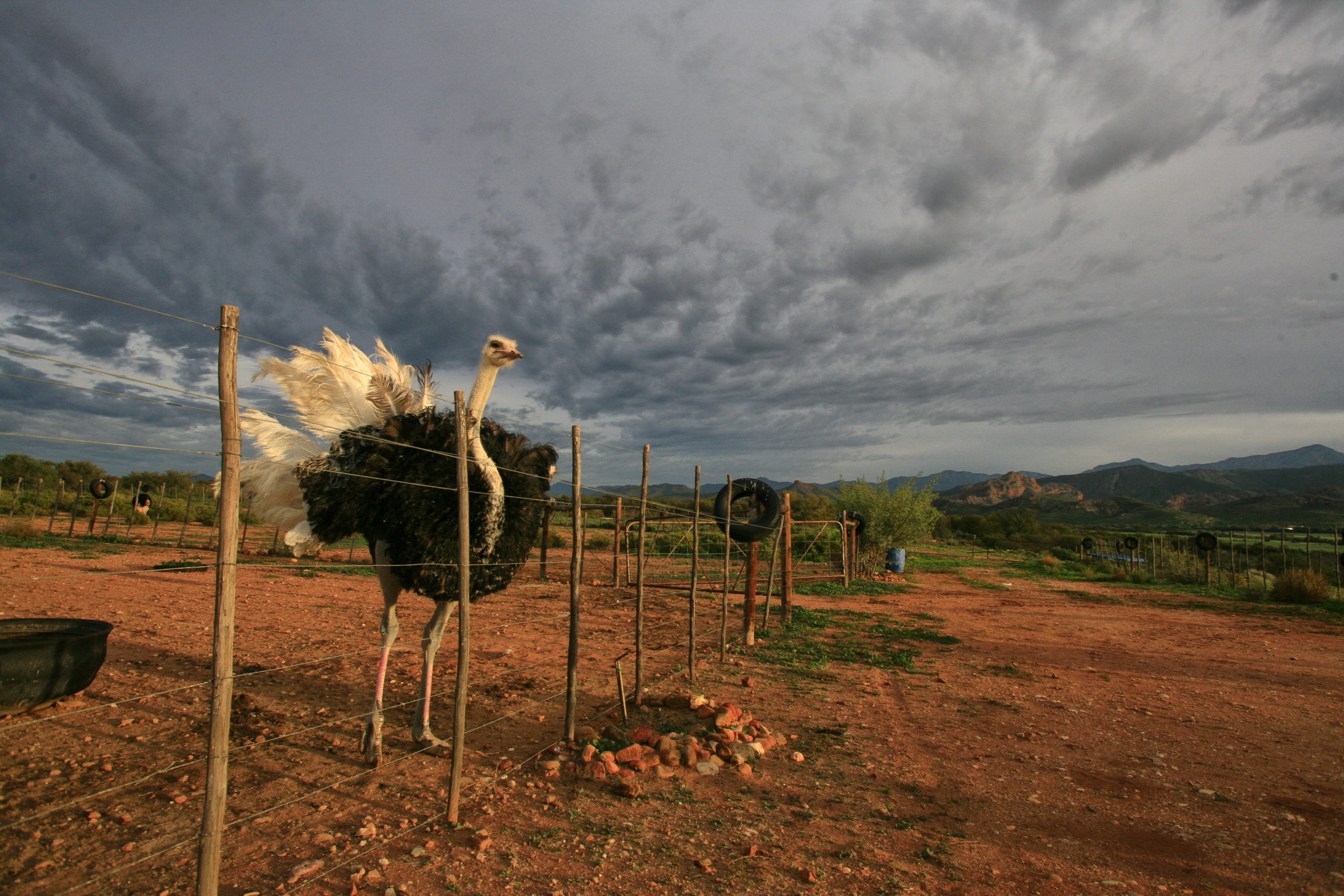
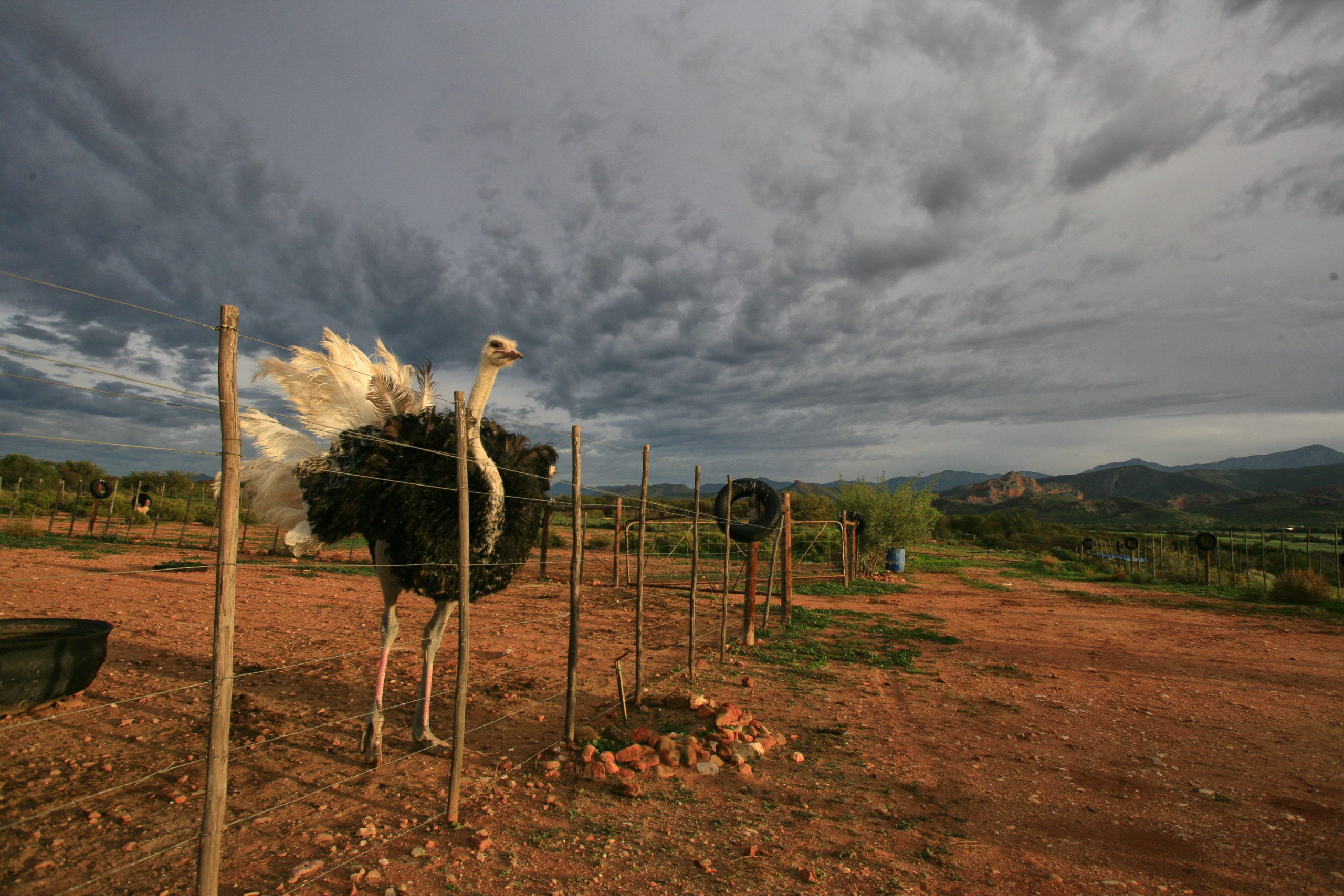
Handsome male ostrich patrolling the fenceline at Rietfontein Farm outside Oudtshoorn.
There are few birds as curious as a ‘wobble’ of young ostriches at the gate.
Ostriches – both male and female – generally make for great parents who share the baby-sitting duties.

If she likes the guy, Madame will modestly lower her head as she walks, shivering her grey wing feathers in approval. She will find a spot, sit down and let the games begin.

Such is the enduring inter-continental romantic lure of the ostrich, its delightful courtship moves and the gorgeous flightless feathers that line its wings.

Rietfontein Ostrich Palace

Now should you ever need a handy time portal while road-tripping along Route 62 in the Little Karoo, here’s how you get there.

Driving from Cape Town, you head through Calitzdorp on the Oudtshoorn road and continue eastwards for about 18km. Approaching the Karoo Boom farm stall on your right, look sharp left at the Red Stone Hills.

At the base of those stark crimson outcrops streaked with green algae, framed by tall blue gums and old date trees, is a palace fit for a Victorian-era royal in exile. The domed cupola gives it away.

Instantly, the mind’s eye wanders to an age of cavalry officers in uniform, ladies in big bonnet dresses, horse-drawn carriages in the driveway and kick-ass parties in the ballroom. With scandal and intrigue sure to follow.

Welcome to Rietfontein Ostrich Palace, the legendary home of the Potgieter family. Now let’s dart through that portal to a day in 1845 and a small clump of wagons outspanned about 200km west of here.

The stately Rietfontein Ostrich Palace in the distance, framed by the timeless Red Stone Hills at the base of the Swartberg range of mountains.
Rietfontein Ostrich Palace in the pink light of a Karoo dawn.
Dinner at the Rietfontein Ostrich Palace – ostrich fillet on the menu.

The pioneering Potgieters

Young Armaans Potgieter is a wagon driver who goes hunting for the pot in his down-time. He returns with an antelope of sorts and a couple of wild ostriches bagged along the way.

Armaans saves the tail and wing feathers of the birds and hopes he might flog them to a passing hide trader (smous) for a couple of pennies. Instead, gold coins fall into his hand along with some equally valuable advice from the smous:

“Buy land and farm with ostriches.”

And that’s how Armaans Potgieter becomes one of the world pioneers of ostrich farming, raising these glorious birds which had been hunted and killed (the lucky ones were simply stripped and sent off naked) for thousands of years before this.

Millennia ago, when Egypt was a major power, one of its many deities was the goddess Ma’at. This rather fetching young beauty was all about order, truth, justice and harmony. Her headdress contained a single white ostrich feather, and when you died your heart was weighed against that plume in the Afterworld. If you had lived a decent life, your ticker was lighter than the Feather of Truth and your chances of gaining entry to Paradise were fair. If not, well…

An ancient obsession

The Romans appeared to be a little more irreverent about the ostrich. Heliogabalus, who definitely would have failed the Egyptian Feather Test, was arguably the worst-behaved Roman teenage emperor of them all – quite a feat back then.

Heliogabalus fancied a three-day orgy with a very colourful menu. He once ordered 600 ostriches to be decapitated so he could serve their brains to his guests as teaspoon-sized appetisers. However, you do have to see this act of culinary insanity in its context: on occasion, the teenage potentate also ordered up platters of flamingo brains, parrot heads and peacock tongues. And you don’t want to know what these overfed gentryfolk did between courses.

He ran his empire in this macabre fashion from the age of 14 for four years until his granny, Julia Maesa, had enough of the brat and ordered the Praetorian Guard to dispose of him one night. You can read all about this royal rogue in The Fat Man’s Food Drink Compendium by Tony Grumley-Grennan.

Biblical Noah, charged with loading his Ark full of breeding pairs of various beasts, also had to pack an astonishing variety of feed for them. Various religious texts claim that he even stashed a supply of glass for the two ostriches in the hold of his vast cargo ship before the floods arrived.

Medieval literature has it that the female ostrich possessed the ultimate “lazy eye”, and could make her eggs hatch by simply staring hard at them for a while.

Fashion and the feathers

In those crazy Victorian times, women wore all kinds of dead-bird feathers on their hats, the most popular being ostrich plumes. In fact, if you look carefully at old photographs of various potentates through history, you’ll note that the guys wore ostrich plumes on their ceremonial helmets, and the 12 black horses that pulled the Duke of Wellington’s funeral wagon in 1852 all had clumps of black ostrich feathers on their heads.

Modern fashion displays using ostrich feathers – politician Helen Zille in the line-up at the CP Nel Museum.

And, possibly inspired by the vaguely erotic dance rituals of the ostrich, the plumes thus became an essential part of a showgirl’s costume from Paris to Rio de Janeiro. Big Chiefs at the New Orleans Mardi Gras and the various Junkanoos of the Caribbean islands wore them as well.

Someone simply had to start farming these wondrous birds. You couldn’t just keep killing them off for their wing feathers.

The rise of Veldskoendorp

In the first half of the 19th century, Oudtshoorn was a hardscrabble village described by its detractors rather haughtily as Veldskoendorp – a place of poor man’s shoes. It was officially named Oudtshoorn in honour of a newly-appointed Cape governor who never made it to these shores – he perished on the sea voyage out.

The 1860s began with a killer drought and ended in the Golden Age of the Ostrich. The ostrich farming frenzy really took hold when one Arthur Douglass invented the incubator in 1869, and production was vastly increased.

Farmers had to find markets for their feathers, and so a host of Jewish Lithuanian feather merchants criss-crossed the Little Karoo as middle-men in this fledgling industry.

Oom Swepie’s story

Oom Swepie le Roux of Doornkraal Farm east of Oudtshoorn, is every bit the baronial storyteller, who comes complete with his own family feather palace and a tasty brand of sparkling muscadel-grape rose called Tickled Pink. The front label sports a running ostrich and the back-label speaks of spicy food, good company and naughty women.

Well into his 80s, Oom Swepie tells the story of his Oupa Gert, his Ouma Maggie and the various smouse who visited Doornkraal.

Oom Swepie le Roux comes from a long line of Little Karoo ostrich farmers.

“They came for the feathers, the fare and the brandy cellar,” he says. “They would arrive from their dusty journeys, and Ouma would make them bathe first. She was also a devout Christian whose life’s ambition was to convert at least one Jewish pedlar, so she’d make them attend a service before dinner.

“After supper, Oupa and the smous would go down to the brandy cellar, light the lamps, share a drink and discuss the feathers, laid out for inspection. Then the haggling would begin.”

Oupa Gert may have prospered from his lamplight negotiations but Ouma Maggie, they say, had no luck converting the smouse.

There are ostrich palaces scattered about the Eastern Cape, but they really do seem to have a nest in the Calitzdorp-Oudtshoorn-De Rust district of the Little Karoo.

The feather boom mansions

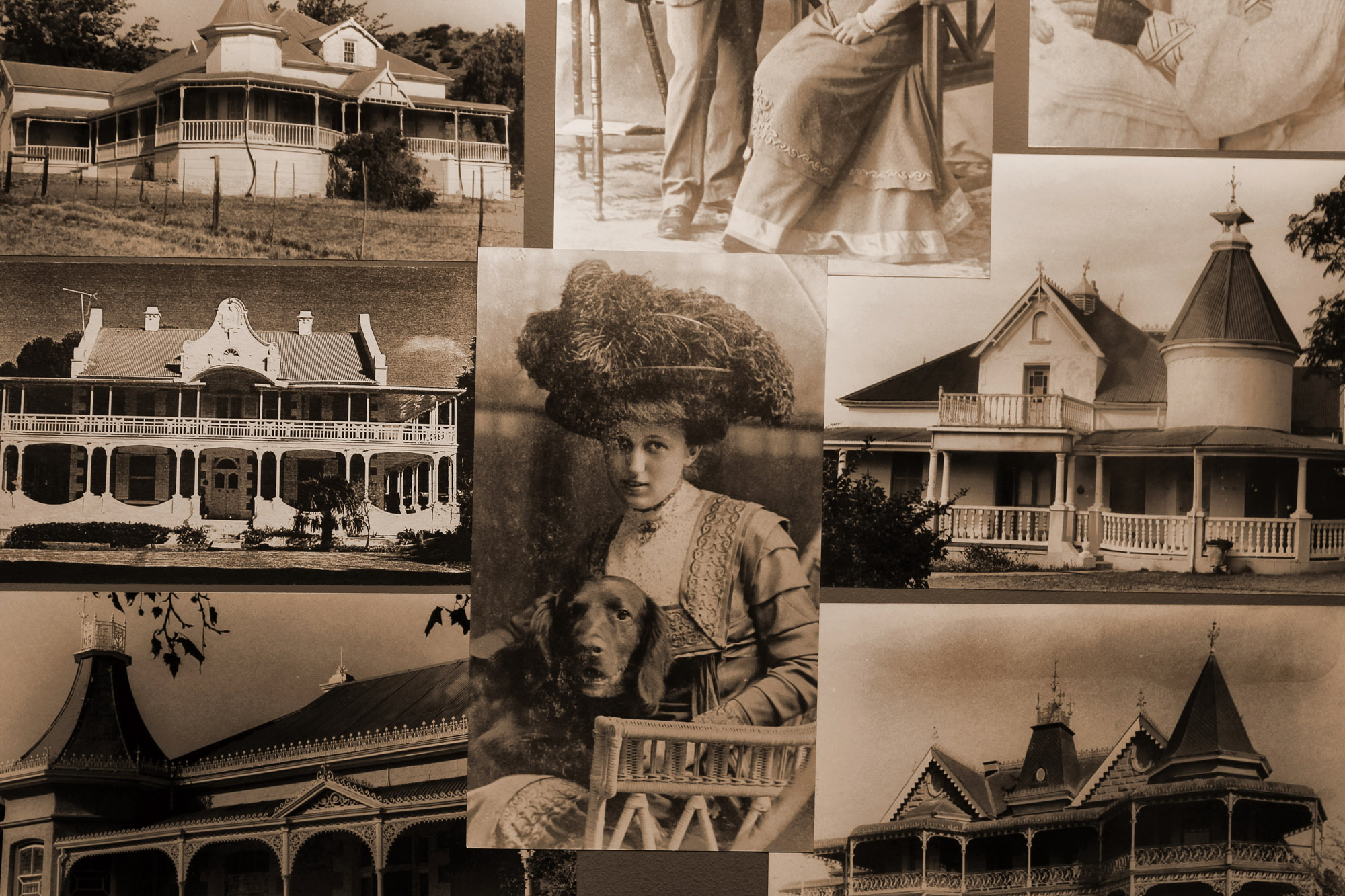
Back in the heyday of the ostrich industry, when a prime wing feather was worth more than its weight in gold, the new dry land millionaires wanted to tell the world of their riches. The Feather Boom Nouveaux Riche set had massive mansions built of local sandstone, sparing no expense on architectural shout-outs like turrets and parapets that served no practical purpose. Suddenly families had to have ballrooms, homes with 20 bedrooms and coach houses, all built in an eccentric froth of styles that drew from the Edwardian, Tudor, Elizabethan and Victorian eras.

The days of feathers, mansions and fine things on display at Oudtshoorn’s CP Nel Museum.
Ostrich feathers – at one time worth a fortune.

The two architects who made serious names for themselves here were Charles Bullock and Johannes Egbertus Vixseboxse. You see their handiwork all over Oudtshoorn, in the form of mansions that have been repurposed into old age homes, museums, little businesses and, of late, guest houses.

Dining rooms for 100 guests, marble baths that held 1,500 litres of water, Italian ceramic tiles around the fireplaces, mahogany inlaid libraries, Carrara marble in the kitchen, Delft and teak fancies, broekielace (cast iron railings) and burnt bricks, endless verandahs, stained glass windows, big lion carvings and other expensive doo-dahs from all corners of the Earth – it was not the Age of Minimalism. The diamond magnates of Kimberley and the gold barons of the Witwatersrand stood back in envy.

You can only imagine how the mail order catalogue business flourished in those days, how goods-laden ships flowed endlessly back and forth between continents while ostrich barons’ bank accounts just grew fatter and fatter with every plucking.

Adventure on the Niger

This saga of the South African ostrich industry comes with its own exotic adventure story, worthy of an Indiana Jones film or an Allan Quatermain classic.

Despite all these profits, the ostrich farmed in the Little Karoo was just so-so. It simply did not possess the ultimate plume quality to match that of the Barbary Bird, found somewhere in North Africa. There was a need to enrich the South African breeding stock with the Barbary, to give the locals an edge over their rivals, the USA. The magical feather everyone was after went by the name of Evans-Lovemore. It was blunt, strong and double-fluff dense.

So a small and discrete party, led by Russell Thornton of Grootfontein Agricultural College in Middelburg, set out in September 1911 on a steamship up the Niger River in the general direction of Timbuktu.

The Thornton Expedition travelled towards Timbuktu on the fabled Niger River. Photo by Chris Marais

A couple of train journeys later, they were based in Kano, northern Nigeria. They offered a reward for a sample of the Evans-Lovemore, located a likely source from Fort Zinder in French Sudan territory, recruited more than 100 porters, kept an eagle eye out for Tuareg raiders and hit the desert with gusto.

Thornton begged the French fort commander at Zinder to allow them to export some of the indigenous ostriches. The answer was a firm non, and so they returned to Nigeria and put out a general appeal for Barbaries once more.

Ostriches from all over the region were presented to the South Africans and gradually, bird by bird, they gathered a flock of Barbaries to take home. Nearly 150 specimens were carefully trucked back to the coast and shipped down to South Africa. Thornton was hailed as a local hero, the SA breeding herds were enriched and the Americans were full of envy.

The parties

In fact, so entrenched was the South African grip on the ostrich trade that, when the Titanic sank in 1912, part of its most valuable on-board cargo was a shipment of our feathers bound for New York markets, insured for millions of dollars.

The next two years of Oudtshoorn’s rather eccentric existence can be described for millennials as the old-time equivalent of the dot.com billionaire boom of Silicon Valley, California. The prime feathers from three ostriches could buy you a Model T Ford. One really perfect plume could be traded for a Union Castle berth from Cape Town to Southampton. It was The Great Gatsby before The Great Gatsby.

Bullock and Vixseboxse went into overdrive, servicing the architectural whims of the various ostrich overlords and their bigwig wives.

The Ostrich industry in its boom time, just before the crash of 1914.

The hangover

In 1914 it all came crashing down. World War I turned the globe away from the light-heartedness of party feathers; the open-top automobile made the wearing of big hats impractical, if not downright dangerous; it became a mark of shame to wear any body part of a bird on your head. It was the inevitable perfect storm of misfortune for this vanity-based industry and its kingpins. In so many ways, the carnival was over.

It was recorded that one feather dealer had a cheque for £100,000 honoured by his bank in early 1914 and a cheque for £1 rejected the next year. There were suicides, bankruptcies, mysterious disappearances and empty mansions on the Karoo veld.

The Karoo ostrich: gorgeous as ever, grubby beak and all.
The ostrich skin cowboy hat – part of modern Western Wear.
The ostrich feather duster sellers outside the CP Nel Museum in Oudtshoorn.

In the past century since the Feather Fall of 1914, the ostrich industry has had a roller coaster ride consisting of a resurgent plume market, a growing taste for ostrich meat and a wider use for ostrich leather. And do not discount the ongoing boom in feather dusters.

Bird flu scares and European Union bans have come and gone, and the present southern African drought has also added to the decimation of the formerly vast ostrich flocks of the Little Karoo.

The ostrich arises

The Oudtshoorn ostrich flocks have been diminished due to the long drought – but they will return.

Now, however, the industry shows signs of innovation. The Klein Karoo Ostrich Emporium in Oudtshoorn has an extensive workshop where crafters fashion a variety of ostrich goods. Ostrich show-farms like Safari, Highgate and Cango tell the big bird story every day to busloads of tourists from everywhere.

And the palaces are being spruced up again. At Rietfontein, where it all began, you can stay in elegant accommodations within spitting distance of the old feather mansion and be hosted by Kobus Potgieter, descendant of The Original Armaans, and his wife, Elmarie.

The Rietfontein flock has been reduced to one rather feisty male and his two wives in a paddock out back. But they do a really good job of representing their legendary species, and the memory of their many flightless ancestors. DM/ ML

The Magic Bird is a chapter in Karoo Roads – Tales from South Africa’s Heartland, by Chris Marais and Julienne du Toit (MLM Publishers, 320 pages, 201 black and white images, 1 Karoo Map). To purchase, either order from www.karoospace.co.za or email [email protected] for details.

Chris Marais is a storyteller from Karoo Space.

Useful Links:

  1. Oudtshoorn Tourism: www.oudtshoorn.co.za
  2. Rietfontein Ostrich Palace: www.rop.co.za
  3. Safari Ostrich Farm: www.safariostrich.co.za
  4. Highgate Ostrich Show Farm: www.highgate.co.za
  5. Cango Ostrich Show Farm: www.cangoostrich.co.za
  6. Klein Karoo Ostrich Emporium: www.capekarooshop.co.za

Gallery


Comments – share your knowledge and experience

Please note you must be a Maverick Insider to comment. Sign up here or sign in if you are already an Insider.

Everybody has an opinion but not everyone has the knowledge and the experience to contribute meaningfully to a discussion. That’s what we want from our members. Help us learn with your expertise and insights on articles that we publish. We encourage different, respectful viewpoints to further our understanding of the world. View our comments policy here.

All Comments 3

  • Patricia Sidley says:

    Chris Marais always wrote beautifully — from the Rand Daily Mail days. And it’s a delight to read this. I had relatives who must have been traders in Oudtshoorn and I’m sure were never converted! There was a museum in Oudtshoorn with part of it devoted to the Jewish community there — but which curiously never made any mention anywhere in the museum, of black people. I was told that was because they “did not have a history there”. With a bit of luck that has changed.

    • Trevor Hall says:

      It has changed Pat and for the better, to be much more inclusive but retaining all the old grandeur. A superb museum, well run well staffed from our experience of a visit last March.

  • Brett Bard says:

    Dreamily romantic notions, but for the sake of human folly unbearable cruelty continues to be meted out unabated on these ‘magic’, ‘noble’, ‘glorious’ and essentially wild birds. On farms the pathetic majority spend their entire, rather short and unnatural lives crammed into bleak, leafless feedlots where they endure the humiliation and pain of captivity exposed to searing daytime temperatures. Annually around solstice, numerous ostriches in the Karoo succumb to the intense heat because no shade is provided. In effect this means that most days throughout the long, hot summers these poor birds are teetering on the brink of death, until the final horror of the day they’re trucked off to the abattoir to be unceremoniously slain.

    It’s not surprising that under such an assault on the natural order of things there have been several outbreaks of numerous strains of avian influenza (including H5N2 and H7N1) and it’s just a matter of time before…well we know how the story unfolds.

  • Category: NewsTag: cradock, graaff reinet, hofmeyer, karoo, news
    27 January 2021 by Guest

    Craddock: Our most gripping series since ’05 Ashes

    The temptation is to say Australia lacks a killer punch but tackling this Indian team is like boxing Floyd Mayweather. You spot a bare chin and wind up for the haymaker only to connect with nothing but thin air. You see a dropped guard and go for broke – only to graze an ear. You …

    The temptation is to say Australia lacks a killer punch but tackling this Indian team is like boxing Floyd Mayweather.

    You spot a bare chin and wind up for the haymaker only to connect with nothing but thin air.

    You see a dropped guard and go for broke – only to graze an ear. You move them into a corner then they spin on a sixpence and vanish.

    Surely they must crack eventually?

    What a magnificent series this has been. Both teams deserve great credit.

    Even if India do not retain the Border-Gavaskar Trophy they have made the cricket world think about going the road less travelled with selections, collective mindsets … everything.

    The admirable way they chose five bowlers in this Test confirmed a cavalier spirit which never used to be their trademark.

    Watch Australia v India Test Series Live Ad-Break Free During Play with the Fox Cricket commentary team. New to Kayo? Get your free trial now start streaming instantly


    The fact that they have only two players – Cheteshwar Pujara and Ajinkya Rahane – surviving from the first Test of the series proved you can leave blood on the floor in the selection room and still have team harmony.

    India don’t die wondering.

    It’s true that many of their players were dropped through injury but several significant others like Prithvi Shaw and Mayank Agarwal were dropped through poor form without a hint of disruption.

    Through it all they looked like cricket’s version of the NFL’s New England Patriots, about whom it was once said that their game plans were so well absorbed throughout the organisation that you could put the car park ticket-seller in as quarterback and he would know all the plays.

    It used to be said that win in Australia you had to have an Australian style alpha male captain like South Africa’s Graeme Smith or Faf du Plessis but that has all changed with the calm, measured, unsung Rahane keeping his team in the fight.


    This is a very unusual series because Australia barely ever does arm wrestles on its own soil. Its speciality is the brutal backslam and when that does not happen it is often backslammed itself.

    But it is rare and special to see two teams with hands locked around each other’s throats.

    This is the most gripping Test series Australia has played in since the 2005 Ashes but it could have an even more profound impact on the game.

    The 2005 Ashes, in which England won 2-1 after a series of spell binding twists and turns, became the instant yardstick by which all other compelling series are measured.

    Its impact on the game was such that cricket gear sellers in Australia broke records when the 2005-06 summer started a couple of months after the team returned home.

    But that was when Test cricket was the unchallenged king of the castle.


    Twenty20 has since swept the globe and is the game of the future.

    Now the Test match game is under siege, not simply from the razzle dazzle forces of T20 cricket but just the extreme financial demands of supporting first class systems that produce Test players.

    If you’re India, Australia and England you’re doing fine but the rest of the world is struggling.

    South African cricket is a financial basket-case and even New Zealand needed a helping hand to generate some cash so Australia will send a mixture of second and third XI players there next month to play white ball games while the Test side in in South Africa.

    This Test should ensure that India stays in love with Test cricket and that is all Test cricket needs to live on indefinitely.

    Originally published as Craddock: Our most gripping series since ’05 Ashes

    Category: NewsTag: cradock, news, online, south africa
    27 January 2021 by Guest

    The Magic Bird, a noble ostrich of The Karoo

    Photograph by Chris Marais (Image supplied) The Karoo ostrich might have had its updrafts and hard landings, but its legends still fly high. First published in Karoo Space. All photographs by Chris Marais. If you ever found yourself on the party streets of New Orleans on Mardi Gras Day, you might be lucky enough to …


    Photograph by Chris Marais (Image supplied)

    The Karoo ostrich might have had its updrafts and hard landings, but its legends still fly high.

    First published in Karoo Space. All photographs by Chris Marais.

    If you ever found yourself on the party streets of New Orleans on Mardi Gras Day, you might be lucky enough to spot a Big Chief Indian in full glorious spate.

    This wondrous apparition, clad from head to toe in sequins, beads, rhinestones, velvet and constantly-wavy ostrich plumes, would be accompanied by his Spyboy, his Flagboy, a whole bunch of drummers, a street-walking jazz band and a few hundred dancing followers.

    Down south in Rio de Janeiro, the annual Carnival would also be in progress, with thousands of lovely Samba Girls of the Copacabana dressed in a couple of sequins and very little else besides their beloved ostrich feathers.

    Showgirls and their feathers

    Across the sea in Belgium, the little coal-mining town of Binche has its traditional Gilles characters parading on Shrove Tuesday. During what some call “the world’s weirdest Mardi Gras”, the Gille is restricted to wearing his elaborate costume, wooden clogs and fancy ostrich feather headdress within the confines of Binche – and only on this day.

    On most nights not too far from here, you might be in the Moulin Rouge Theatre in the Montmartre district of Paris, completely bedazzled by a large troupe of leggy performers, tantalising the audience behind their brightly dyed ostrich feather arrangements.

    Their trans-Atlantic match is the legendary Las Vegas Showgirl, motionless (legally, she had to stand really still to appear before you in her birthday suit), bedecked all about in ostrich plumes and jewels.

    But all that marvellous carnival glitz and glamour, all those high-priced gin joints and chorus-line saloons cannot match the true Romance Dance of the Plume down here in the Karoo when a male ostrich with blood-red shins begins to court his darling-to-be.

    The ostrich romance dance

    Monsieur will drop to the ground, spread his gorgeous wings before Madame and, with his head flung back, he will begin to thrum and gyrate, making a loud booming noise. Then, lifting himself on the tips of his toes like Baryshnikov, he will puff up all his feathers and run daintily around the eyelash-batting object of his affections.

    Handsome male ostrich patrolling the fenceline at Rietfontein Farm outside Oudtshoorn.
    There are few birds as curious as a ‘wobble’ of young ostriches at the gate.
    Ostriches – both male and female – generally make for great parents who share the baby-sitting duties.

    If she likes the guy, Madame will modestly lower her head as she walks, shivering her grey wing feathers in approval. She will find a spot, sit down and let the games begin.

    Such is the enduring inter-continental romantic lure of the ostrich, its delightful courtship moves and the gorgeous flightless feathers that line its wings.

    Rietfontein Ostrich Palace

    Now should you ever need a handy time portal while road-tripping along Route 62 in the Little Karoo, here’s how you get there.

    Driving from Cape Town, you head through Calitzdorp on the Oudtshoorn road and continue eastwards for about 18km. Approaching the Karoo Boom farm stall on your right, look sharp left at the Red Stone Hills.

    At the base of those stark crimson outcrops streaked with green algae, framed by tall blue gums and old date trees, is a palace fit for a Victorian-era royal in exile. The domed cupola gives it away.

    Instantly, the mind’s eye wanders to an age of cavalry officers in uniform, ladies in big bonnet dresses, horse-drawn carriages in the driveway and kick-ass parties in the ballroom. With scandal and intrigue sure to follow.

    Welcome to Rietfontein Ostrich Palace, the legendary home of the Potgieter family. Now let’s dart through that portal to a day in 1845 and a small clump of wagons outspanned about 200km west of here.

    The stately Rietfontein Ostrich Palace in the distance, framed by the timeless Red Stone Hills at the base of the Swartberg range of mountains.
    Rietfontein Ostrich Palace in the pink light of a Karoo dawn.
    Dinner at the Rietfontein Ostrich Palace – ostrich fillet on the menu.

    The pioneering Potgieters

    Young Armaans Potgieter is a wagon driver who goes hunting for the pot in his down-time. He returns with an antelope of sorts and a couple of wild ostriches bagged along the way.

    Armaans saves the tail and wing feathers of the birds and hopes he might flog them to a passing hide trader (smous) for a couple of pennies. Instead, gold coins fall into his hand along with some equally valuable advice from the smous:

    “Buy land and farm with ostriches.”

    And that’s how Armaans Potgieter becomes one of the world pioneers of ostrich farming, raising these glorious birds which had been hunted and killed (the lucky ones were simply stripped and sent off naked) for thousands of years before this.

    Millennia ago, when Egypt was a major power, one of its many deities was the goddess Ma’at. This rather fetching young beauty was all about order, truth, justice and harmony. Her headdress contained a single white ostrich feather, and when you died your heart was weighed against that plume in the Afterworld. If you had lived a decent life, your ticker was lighter than the Feather of Truth and your chances of gaining entry to Paradise were fair. If not, well…

    An ancient obsession

    The Romans appeared to be a little more irreverent about the ostrich. Heliogabalus, who definitely would have failed the Egyptian Feather Test, was arguably the worst-behaved Roman teenage emperor of them all – quite a feat back then.

    Heliogabalus fancied a three-day orgy with a very colourful menu. He once ordered 600 ostriches to be decapitated so he could serve their brains to his guests as teaspoon-sized appetisers. However, you do have to see this act of culinary insanity in its context: on occasion, the teenage potentate also ordered up platters of flamingo brains, parrot heads and peacock tongues. And you don’t want to know what these overfed gentryfolk did between courses.

    He ran his empire in this macabre fashion from the age of 14 for four years until his granny, Julia Maesa, had enough of the brat and ordered the Praetorian Guard to dispose of him one night. You can read all about this royal rogue in The Fat Man’s Food Drink Compendium by Tony Grumley-Grennan.

    Biblical Noah, charged with loading his Ark full of breeding pairs of various beasts, also had to pack an astonishing variety of feed for them. Various religious texts claim that he even stashed a supply of glass for the two ostriches in the hold of his vast cargo ship before the floods arrived.

    Medieval literature has it that the female ostrich possessed the ultimate “lazy eye”, and could make her eggs hatch by simply staring hard at them for a while.

    Fashion and the feathers

    In those crazy Victorian times, women wore all kinds of dead-bird feathers on their hats, the most popular being ostrich plumes. In fact, if you look carefully at old photographs of various potentates through history, you’ll note that the guys wore ostrich plumes on their ceremonial helmets, and the 12 black horses that pulled the Duke of Wellington’s funeral wagon in 1852 all had clumps of black ostrich feathers on their heads.

    Modern fashion displays using ostrich feathers – politician Helen Zille in the line-up at the CP Nel Museum.

    And, possibly inspired by the vaguely erotic dance rituals of the ostrich, the plumes thus became an essential part of a showgirl’s costume from Paris to Rio de Janeiro. Big Chiefs at the New Orleans Mardi Gras and the various Junkanoos of the Caribbean islands wore them as well.

    Someone simply had to start farming these wondrous birds. You couldn’t just keep killing them off for their wing feathers.

    The rise of Veldskoendorp

    In the first half of the 19th century, Oudtshoorn was a hardscrabble village described by its detractors rather haughtily as Veldskoendorp – a place of poor man’s shoes. It was officially named Oudtshoorn in honour of a newly-appointed Cape governor who never made it to these shores – he perished on the sea voyage out.

    The 1860s began with a killer drought and ended in the Golden Age of the Ostrich. The ostrich farming frenzy really took hold when one Arthur Douglass invented the incubator in 1869, and production was vastly increased.

    Farmers had to find markets for their feathers, and so a host of Jewish Lithuanian feather merchants criss-crossed the Little Karoo as middle-men in this fledgling industry.

    Oom Swepie’s story

    Oom Swepie le Roux of Doornkraal Farm east of Oudtshoorn, is every bit the baronial storyteller, who comes complete with his own family feather palace and a tasty brand of sparkling muscadel-grape rose called Tickled Pink. The front label sports a running ostrich and the back-label speaks of spicy food, good company and naughty women.

    Well into his 80s, Oom Swepie tells the story of his Oupa Gert, his Ouma Maggie and the various smouse who visited Doornkraal.

    Oom Swepie le Roux comes from a long line of Little Karoo ostrich farmers.

    “They came for the feathers, the fare and the brandy cellar,” he says. “They would arrive from their dusty journeys, and Ouma would make them bathe first. She was also a devout Christian whose life’s ambition was to convert at least one Jewish pedlar, so she’d make them attend a service before dinner.

    “After supper, Oupa and the smous would go down to the brandy cellar, light the lamps, share a drink and discuss the feathers, laid out for inspection. Then the haggling would begin.”

    Oupa Gert may have prospered from his lamplight negotiations but Ouma Maggie, they say, had no luck converting the smouse.

    There are ostrich palaces scattered about the Eastern Cape, but they really do seem to have a nest in the Calitzdorp-Oudtshoorn-De Rust district of the Little Karoo.

    The feather boom mansions

    Back in the heyday of the ostrich industry, when a prime wing feather was worth more than its weight in gold, the new dry land millionaires wanted to tell the world of their riches. The Feather Boom Nouveaux Riche set had massive mansions built of local sandstone, sparing no expense on architectural shout-outs like turrets and parapets that served no practical purpose. Suddenly families had to have ballrooms, homes with 20 bedrooms and coach houses, all built in an eccentric froth of styles that drew from the Edwardian, Tudor, Elizabethan and Victorian eras.

    The days of feathers, mansions and fine things on display at Oudtshoorn’s CP Nel Museum.
    Ostrich feathers – at one time worth a fortune.

    The two architects who made serious names for themselves here were Charles Bullock and Johannes Egbertus Vixseboxse. You see their handiwork all over Oudtshoorn, in the form of mansions that have been repurposed into old age homes, museums, little businesses and, of late, guest houses.

    Dining rooms for 100 guests, marble baths that held 1,500 litres of water, Italian ceramic tiles around the fireplaces, mahogany inlaid libraries, Carrara marble in the kitchen, Delft and teak fancies, broekielace (cast iron railings) and burnt bricks, endless verandahs, stained glass windows, big lion carvings and other expensive doo-dahs from all corners of the Earth – it was not the Age of Minimalism. The diamond magnates of Kimberley and the gold barons of the Witwatersrand stood back in envy.

    You can only imagine how the mail order catalogue business flourished in those days, how goods-laden ships flowed endlessly back and forth between continents while ostrich barons’ bank accounts just grew fatter and fatter with every plucking.

    Adventure on the Niger

    This saga of the South African ostrich industry comes with its own exotic adventure story, worthy of an Indiana Jones film or an Allan Quatermain classic.

    Despite all these profits, the ostrich farmed in the Little Karoo was just so-so. It simply did not possess the ultimate plume quality to match that of the Barbary Bird, found somewhere in North Africa. There was a need to enrich the South African breeding stock with the Barbary, to give the locals an edge over their rivals, the USA. The magical feather everyone was after went by the name of Evans-Lovemore. It was blunt, strong and double-fluff dense.

    So a small and discrete party, led by Russell Thornton of Grootfontein Agricultural College in Middelburg, set out in September 1911 on a steamship up the Niger River in the general direction of Timbuktu.

    The Thornton Expedition travelled towards Timbuktu on the fabled Niger River. Photo by Chris Marais

    A couple of train journeys later, they were based in Kano, northern Nigeria. They offered a reward for a sample of the Evans-Lovemore, located a likely source from Fort Zinder in French Sudan territory, recruited more than 100 porters, kept an eagle eye out for Tuareg raiders and hit the desert with gusto.

    Thornton begged the French fort commander at Zinder to allow them to export some of the indigenous ostriches. The answer was a firm non, and so they returned to Nigeria and put out a general appeal for Barbaries once more.

    Ostriches from all over the region were presented to the South Africans and gradually, bird by bird, they gathered a flock of Barbaries to take home. Nearly 150 specimens were carefully trucked back to the coast and shipped down to South Africa. Thornton was hailed as a local hero, the SA breeding herds were enriched and the Americans were full of envy.

    The parties

    In fact, so entrenched was the South African grip on the ostrich trade that, when the Titanic sank in 1912, part of its most valuable on-board cargo was a shipment of our feathers bound for New York markets, insured for millions of dollars.

    The next two years of Oudtshoorn’s rather eccentric existence can be described for millennials as the old-time equivalent of the dot.com billionaire boom of Silicon Valley, California. The prime feathers from three ostriches could buy you a Model T Ford. One really perfect plume could be traded for a Union Castle berth from Cape Town to Southampton. It was The Great Gatsby before The Great Gatsby.

    Bullock and Vixseboxse went into overdrive, servicing the architectural whims of the various ostrich overlords and their bigwig wives.

    The Ostrich industry in its boom time, just before the crash of 1914.

    The hangover

    In 1914 it all came crashing down. World War I turned the globe away from the light-heartedness of party feathers; the open-top automobile made the wearing of big hats impractical, if not downright dangerous; it became a mark of shame to wear any body part of a bird on your head. It was the inevitable perfect storm of misfortune for this vanity-based industry and its kingpins. In so many ways, the carnival was over.

    It was recorded that one feather dealer had a cheque for £100,000 honoured by his bank in early 1914 and a cheque for £1 rejected the next year. There were suicides, bankruptcies, mysterious disappearances and empty mansions on the Karoo veld.

    The Karoo ostrich: gorgeous as ever, grubby beak and all.
    The ostrich skin cowboy hat – part of modern Western Wear.
    The ostrich feather duster sellers outside the CP Nel Museum in Oudtshoorn.

    In the past century since the Feather Fall of 1914, the ostrich industry has had a roller coaster ride consisting of a resurgent plume market, a growing taste for ostrich meat and a wider use for ostrich leather. And do not discount the ongoing boom in feather dusters.

    Bird flu scares and European Union bans have come and gone, and the present southern African drought has also added to the decimation of the formerly vast ostrich flocks of the Little Karoo.

    The ostrich arises

    The Oudtshoorn ostrich flocks have been diminished due to the long drought – but they will return.

    Now, however, the industry shows signs of innovation. The Klein Karoo Ostrich Emporium in Oudtshoorn has an extensive workshop where crafters fashion a variety of ostrich goods. Ostrich show-farms like Safari, Highgate and Cango tell the big bird story every day to busloads of tourists from everywhere.

    And the palaces are being spruced up again. At Rietfontein, where it all began, you can stay in elegant accommodations within spitting distance of the old feather mansion and be hosted by Kobus Potgieter, descendant of The Original Armaans, and his wife, Elmarie.

    The Rietfontein flock has been reduced to one rather feisty male and his two wives in a paddock out back. But they do a really good job of representing their legendary species, and the memory of their many flightless ancestors. DM/ ML

    The Magic Bird is a chapter in Karoo Roads – Tales from South Africa’s Heartland, by Chris Marais and Julienne du Toit (MLM Publishers, 320 pages, 201 black and white images, 1 Karoo Map). To purchase, either order from www.karoospace.co.za or email [email protected] for details.

    Chris Marais is a storyteller from Karoo Space.

    Useful Links:

    1. Oudtshoorn Tourism: www.oudtshoorn.co.za
    2. Rietfontein Ostrich Palace: www.rop.co.za
    3. Safari Ostrich Farm: www.safariostrich.co.za
    4. Highgate Ostrich Show Farm: www.highgate.co.za
    5. Cango Ostrich Show Farm: www.cangoostrich.co.za
    6. Klein Karoo Ostrich Emporium: www.capekarooshop.co.za

    Gallery


    Comments – share your knowledge and experience

    Please note you must be a Maverick Insider to comment. Sign up here or sign in if you are already an Insider.

    Everybody has an opinion but not everyone has the knowledge and the experience to contribute meaningfully to a discussion. That’s what we want from our members. Help us learn with your expertise and insights on articles that we publish. We encourage different, respectful viewpoints to further our understanding of the world. View our comments policy here.

    No Comments, yet

    Category: NewsTag: cradock, graaff reinet, hofmeyer, karoo, news
    25 January 2021 by Guest

    When they killed Neil Aggett

    Jane Starfield mourns dead Security Police detainee Neil Aggett outside John Vorster Square. (Photo: Gallo Images / Sunday Times) The second inquest into the death in detention of the unionist, in 1982, is now under way. The first was a whitewash. To heal from such evil, South Africa deserves the truth. First published in the …


    Jane Starfield mourns dead Security Police detainee Neil Aggett outside John Vorster Square. (Photo: Gallo Images / Sunday Times)

    The second inquest into the death in detention of the unionist, in 1982, is now under way. The first was a whitewash. To heal from such evil, South Africa deserves the truth.

    First published in the Daily Maverick 168 weekly newspaper.

    On 5 February 1982, anti-apartheid union organiser Dr Neil Aggett (28) was allegedly “found hanged” in cell 209 by police in the notorious John Vorster Square after 70 days of Security Police torture and 62 hours of interrogation.

    “Somebody told me he spoke to Neil [Aggett] once and he said: ‘They’re going to kill you,’ and he [Neil] said: ‘Yes, I know.’”

    Jill Burger, Aggett’s sister, told this chilling chronicle of a death foretold to journalist and writer Tymon Smith, who has written extensively about the recently reopened inquest into Aggett’s death and the new evidence that has emerged.

    Knowing you would be killed was not uncommon among anti-apartheid activists during the 1980s. It came with the territory. Matthew Goniwe and Fort Calata, two of the Cradock Four, had acknowledged they would be killed too, before they were brutally assassinated. The dedication and courage of these staunch activists was extraordinary.

    The Security Police at the time had unlimited, terrifying powers. They could detain and/or torture you for an hour, a week, a year, or kill you – with impunity. They could bomb your car, hang a dead cat outside your door, or just assassinate you as you answered the door. They could steamroller your shack with a Casspir, or torture you until you “broke”. They could poison your clothes, abduct you, blow up your body, literally anything they liked. Their bosses, the politicians, all knew about it.

    Neil Aggett, South African trade union leader and labour activist who died while in detention after being arrested by the South African Security Police. (Photo: Gallo Images / Sunday Times)

    I remember when the notorious Gideon Nieuwoudt came for me. I was expecting them because the Security Police had set a trap for us. So when he knocked, I recognised the tall, freckled monster who had interrogated Steve Biko three years before and beaten him so badly that he died. He politely asked if I was David Forbes. I replied: “You know who I am.”

    He asked me to come “for questioning”. What choice was there? I got in the pale-blue Cressida, which roared off to the local Sanlam Centre. I was very lucky. I was small fry, and after some questioning, I was freed. But when you got into that Cressida, you never knew how long it would be. They could detain you without trial indefinitely. That’s the power of fear they held over you.

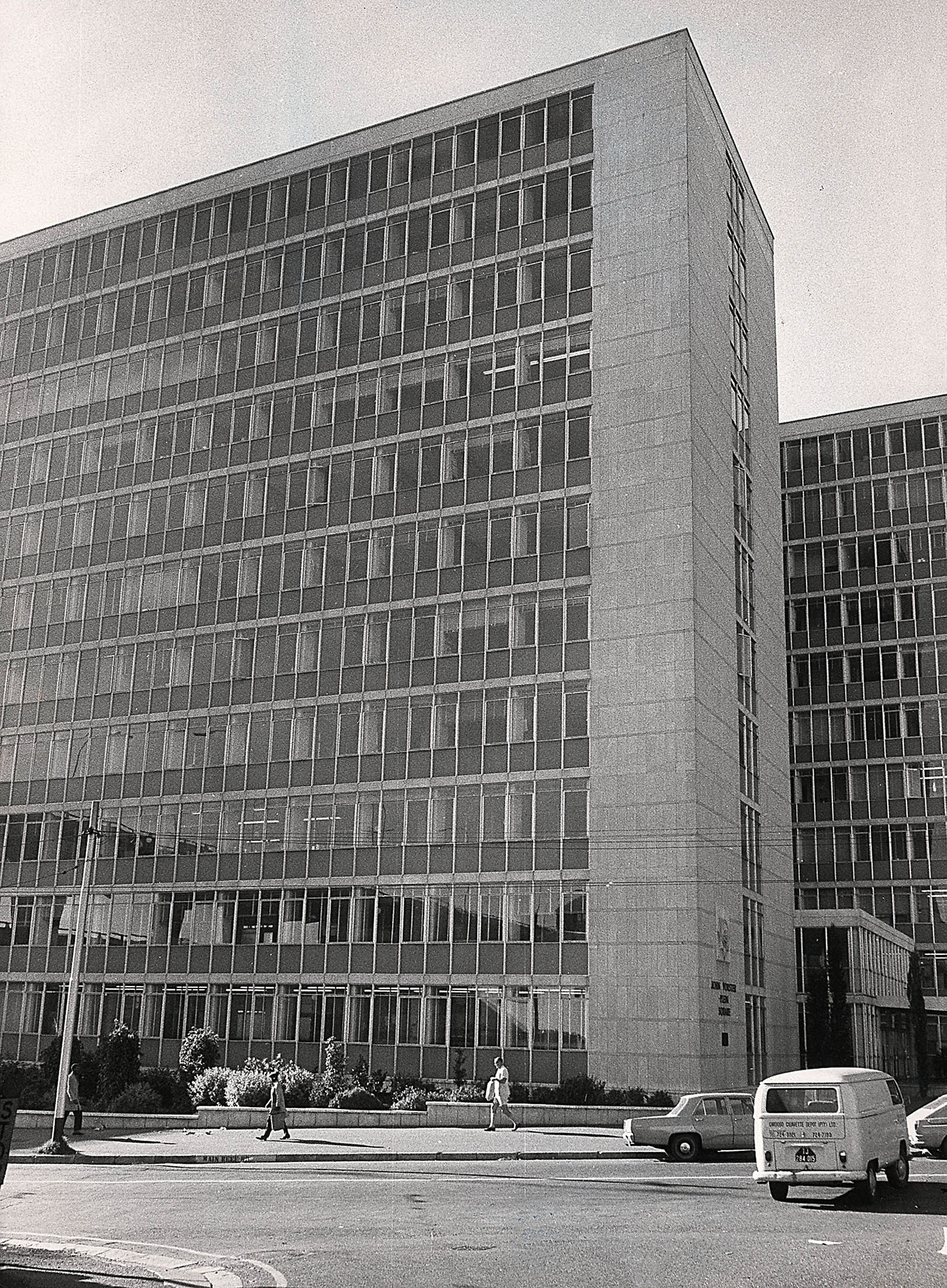
    Neil Aggett and his girlfriend Dr Liz Floyd were not so lucky. Their names, with others, had been found on a list Barbara Hogan had left in a dead-letter box for what she thought was an Umkhonto weSizwe group from Botswana. But it had been infiltrated. The Security Police bust everyone on the list, detaining them initially at the ugly tall blue building next to the M1 highway, the secretive and infamous John Vorster Square, the Johannesburg HQ of the Security Police, who “owned” the 9th and 10th floors, from which detainees who didn’t co-operate could be thrown to the ground below, tossed down stairs, or beaten senseless.

    Dr Floyd was so badly tortured she had to relearn to read and write after she was released. She heard a detainee being electrocuted in the next room screaming. Police refused her permission to attend her longtime boyfriend’s funeral. These were very cruel, evil men.

    What really happened in the early hours of 5 February 1982 may never be known, even after the second inquest, now under way, concludes. The first inquest, that same year, was the usual apartheid whitewash, finding no one responsible for an “induced suicide” while in the courtroom self-satisfied, smirking Security Police looked on, ready to go out and celebrate the death of another “leftie” with some “polisie koffie” (brandy and Coke).

    Joy and Aubrey Aggett at son Neil’s funeral in Johannesburg. (Photo: Gallo Images / Sunday Times / Raymond Preston)

    At the time, I was a sub-editor at the liberal Rand Daily Mail newspaper, working from 2pm to around midnight.

    A friend, Norman Patterton, did the night crime beat for the paper, and often I would join him on his rounds in the early hours, the hospitals, Brixton Murder Robbery squad, Hillbrow Police Station, the Flying Squad, and the morgue.

    The morgue. A silent, eerie, cold place, often with blood smears on the floor, and stainless steel fridges for “white” bodies. The so-called “non-white” morgue rooms (yes, even in death the races were separated) just had shelves around the walls, where the naked bodies were stacked, each with a pathetic little bundle of personal possessions. The loud hum of air conditioners kept the room temperature at a level that made one shiver in the cold, greenish neon light. That building is gone now, replaced by the Constitutional Court precinct buildings, but it held a horror all of its own.

    So, the night after Neil’s death, Norman convinced the morgue attendant to let us see his body. It was touch and go; the attendant was terrified of the Security Police. He could lose his job if the cops found out two journalists (from the Mail, nogal!) had seen Neil’s body. I had hidden a small camera in my jacket (cellphones and small point-and-shoot cameras didn’t exist yet) and we wanted to get a photo to show the torture marks we knew we would find.

    The cagey morgue attendant relented. He nervously took us to the rows of stainless steel doors, looked over his shoulder, and yanked one open, then he pulled out the gurney. A handsome bearded man lay on the tray, very still and silent. It was shocking. A brave and honest professional murdered for his beliefs by the state.

    Norman was trying to draw the attendant away, to distract him so I could quickly snap a photo with the camera I had my hand on under my jacket. But the attendant was so nervous he would not leave me alone. Then he quickly pushed the gurney back into the fridge and slammed the door shut. We thanked him, made some small talk and left.

    Fawu members outside the South Gauteng High Court during a march in support of Neil Aggett in 2020. (Photo: Alet Pretorius / Gallo Images)

    But that image has stayed with me forever. I wrote a poem when I got home to my Bree Street flat just before dawn, “Death of a Detainee”:

    I watched the city awake:
    another detainee had died
    by hanging in a cell.
    I made the calculations
    then – and before –
    we looked at the body
    naked on a cold steel morgue tray.

     – Johannesburg February 1982 

    A day or two later, I was asked by an activist if I could typeset some copy for a poster and have the Mail’s works department print out a bromide (it was before home printers and computers, and commercial printers would never touch anything political). They gave me a photo, and I did the necessary.

    Shortly after this, Rand Daily Mail managing editor Dave Hazelhurst called me into his office. He had the poster on his desk. He said he understood why I had done this, but if the cops got hold of it they could close down the paper.

    What I had done was subversive and illegal, but Dave accepted my apology, and that was the last I heard of it. “Hazey”, as we used to call him, was the ultimate newspaperman, a brilliant layout artist, great headline writer, amazing leader and mentor. He gave me the artwork, and I took it to the activist. It read, above the mugshot: NEIL AGGETT; and, below it: “Lived for his country. Died in Detention”. It was prominent at the funeral a few days later.

    We know there was a massive cover-up to limit this public-relations disaster for the regime. The official verdict was “induced suicide”. The facts contradict this. Uniformed police patrolled the cells 24 hours a day, so the evidence that there had been no patrols between 10.30pm and 1.30am on 5 February was a lie. The Security Police had their own keys, and could remove detainees at any time of the day or night. How Neil could have hanged himself with a kikoi, when personal items were not allowed, is a mystery. There are lots of inconsistencies.

    The infamous John Vorster Square. (Photo: Gallo Images / Sunday Times)

    The 1982 inquest records were destroyed. The post-Truth and Reconciliation Commission prosecution was delayed by active suppression and obstruction by top-ranking ANC and government officials.

    I went to photograph Neil’s funeral for myself. The cathedral was packed to the rafters. After the funeral, comrades carried his coffin from St Mary’s cathedral in downtown Jo’burg to Westpark Cemetery. I ran ahead of the procession, cameras swinging wildly; I’d stop, stoop, take pictures of the toyi-toyi-ing procession, let it pass, then run ahead again.

    I remember at the graveside, the slow, sad and angry singing of Nkosi sikelel’ iAfrika, our fists raised and our eyes wet with tears. This was the national anthem of the struggle, together with Senzeni Na? (What have we done?).

    My negatives were later destroyed in a geyser flood, but the memories remain. For the families of those who were tortured or killed, the pain and suffering is immense, deeply scarring and traumatising. We must never forget the people who paid the ultimate price for South Africa’s liberation. We cannot progress as a nation until we have justice, not rainbows. This inquest is only that beginning. DM168

    This story first appeared in our weekly Daily Maverick 168 newspaper which is available for free to Pick n Pay Smart Shoppers at these Pick n Pay stores.

    Gallery


    Comments – share your knowledge and experience

    Please note you must be a Maverick Insider to comment. Sign up here or sign in if you are already an Insider.

    Everybody has an opinion but not everyone has the knowledge and the experience to contribute meaningfully to a discussion. That’s what we want from our members. Help us learn with your expertise and insights on articles that we publish. We encourage different, respectful viewpoints to further our understanding of the world. View our comments policy here.

    No Comments, yet

    Category: NewsTag: cradock, news, online, south africa
    25 January 2021 by Guest

    Arms caches could be buried all over South Africa by freedom fighters and right-wingers

    Graphic: Rudi Louw The stashes of weapons, the stories go, were to be used when either side felt the time was right to go ahead with a battle. First published in the Daily Maverick 168 weekly newspaper. The saying “There must be something in the water” is often used to describe a situation involving several …


    Graphic: Rudi Louw

    The stashes of weapons, the stories go, were to be used when either side felt the time was right to go ahead with a battle.

    First published in the Daily Maverick 168 weekly newspaper.

    The saying “There must be something in the water” is often used to describe a situation involving several people with similar quirks or traits. It implies the link between them is something in the shared water source they drink from.

    In the Klein Karoo town of Oudtshoorn the saying has taken on a more literal meaning because something intriguing was recently found in a source of water supplying the town: a cache of firearms and ammunition – some of it rusty, some of it in relatively sturdy-looking small cardboard boxes, and some of it shiny and looking quite new.

    For several years, tales have floated around in police and political circles of how, decades ago, those fighting for democracy in South Africa buried mounds of firearms and ammunition in places that included cemeteries and national parks.

    Similar tales of right-wingers having done the same have also surfaced.

    The stashes of weapons, the stories go, were to be used when either side felt the time was right to go ahead with a battle. That point has never been reached and so the caches remain hidden across South Africa.

    If any of these firearms were found today, or within the next week or so, handing them over to police would not necessarily result in prosecution, because SA still has a firearms amnesty in place, which ends on 31 January.

    SA Police Service (SAPS) guidelines describe this as “An opportunity for members of the public to surrender unwanted firearms or firearms they possess illegally, as well as ammunition and/or firearm parts to [SAPS] without fear of being prosecuted for the unlawful possession of this equipment.”

    Intriguing

    This all makes the discovery of the firearms and ammunition in the dam outside Oudtshoorn, home to a military base, especially intriguing.

    It appears that, if the cache was hidden rather than handed over to the police under the amnesty, the items may not be licensed, and the owner may be intentionally trying to avoid scrutiny. But there are other theories about the firearms and ammunition.

    When Southern Cape police spokesperson Malcolm Pojie announced the discovery of the cache, he said a municipal worker had spotted the weapons during a routine inspection of the Koos Raubenheimer Dam in early January. It is understood the dam – which, according to a document on the Western Cape government’s website, was built in 1971 and is managed by the Oudtshoorn Municipality – had been closed to the public.

    The municipal worker returned to the dam on 7 January after the water level had dropped further – and discovered more ammunition.

    The police were alerted and a team of experienced investigators, as well as police divers and bomb disposal experts, were dispatched to the dam where they retrieved the firearms and ammunition. They found more of them.

    According to police, the discovery included three Martini-Henry rifles, a BSA rifle, a .303 rifle, an antique shotgun, two revolvers and 8,820 rounds of ammunition of various calibres.

    Pojie said: “Investigation into this discovery continues and [it] is expected that more ammunition could be retrieved. We appeal to any person that could assist to trace the person responsible for dumping these items to please come forward…”

    Several photographs of the recovered firearms and ammunition were attached to Pojie’s statement that was issued to the media.

    DM168 tried, via firearms industry experts, to identify the age and origin of the discovered items.

    Some said it was not possible to do so, because the serial numbers were not visible in the photographs. They said some of the ammunition looked more modern than the firearms, suggesting police investigators would focus on this. Others provided some clues as to where the items could have originated.

    John Welch, the chair of the National Arms and Ammunition Collectors’ Confederation of South Africa, said he did not want to speculate on how the items had ended up in the dam, but instead focused on what had been discovered.

    Welch said: “The various photos in fact depict rifles, a handgun (revolver), a shotgun pistol, a variety of ammunition, ranging from .22 Rimfire to 12-gauge shotgun, and even a self-propelled rocket, which appears to be an RPG-7 that was fired (discharged) but either failed to detonate or was deactivated.”

    He added that “the Russian/Cuban/Chinese/East German/Romanian/etc RPG-7 was used by Angolan and Cuban forces during the so-called Border War and had (still has) a reputation as an armoured vehicle destroyer”.

    The Martini-Henry rifles were developed in the 1870s.

    “The Martini-Henry was used by both sides during the first Anglo-Boer War and to some extent even during the second Anglo-Boer War,” Welch said. “It also was used extensively by British forces during the Anglo-Zulu War and various conflicts.

    “The revolver also appears to emanate from that era. The ammunition for the Martini-Henry rifle is obsolete, but staunch collectors will reload their own ammunition since most well-looked after rifles are shootable, and … [it] still makes a good hunting rifle.”

    Welch said Lee-Enfield rifles, used in both world wars, were manufactured between 1907 and the 1940s.

    “Good quality Martini-Henri and Lee Enfield rifles are sought after by collectors … Many of these rifles are family heirlooms in the hands of licensed firearm owners … used primarily for target shooting and hunting.”

    He said the shotgun appeared to be a typical farmer’s one dating to the previous turn of the century and that these were most often family heirlooms or to be found in museums.

    The discovered ammunition, Welch said, appeared to be both military and commercial, “some of which is of recent history”. Except for one type found, it appeared none of the ammunition would fit the firearms depicted in the photographs issued by police.

    Training gear

    Sias Fourie, a former police warrant officer involved in tactical training and public order policing, said that there appeared to be R5 rifle ammunition and various single bullets that seemed to be part of a collection for the purposes of training. He said the RPG-7 rocket was not highly significant.

    “In the area where I come from … most of the trainers organised training aids such as that so the trainees could be shown what an RPG-7 rocket looked like in a safe manner.

    “I really believe that [the cache] could have been a collection of old rifles and ammunition from a trainer who most probably died and left his family to try [to] deal with the situation by dumping the lot in the dam…”

    There have been other firearm cache discoveries in SA over the years – some with suspected links to gangs and other crimes. On 2 December last year, a cache of firearms was discovered in a room on a farm in Kouga in the Eastern Cape, and a 58-year-old man was arrested.

    “Several firearms including two different calibres of rifles, two different calibres of shotgun, a pistol, a rifle shotgun combination and … various rounds of ammunition were found,” a police statement said. “Investigators are working with ballistics to determine ownership … as the serial numbers on some of them had been filed off.”

    In December 2019, police in Vanderbijlpark in Gauteng discovered 43 firearms and about 2,000 rounds of ammunition in a home. A 31-year-old was arrested “after he could not provide satisfactory answers or prove the validity of such a large quantity of firearms and ammunition”. DM168

    This story first appeared in our weekly Daily Maverick 168 newspaper which is available for free to Pick n Pay Smart Shoppers at these Pick n Pay stores.

    Gallery


    Comments – share your knowledge and experience

    Please note you must be a Maverick Insider to comment. Sign up here or sign in if you are already an Insider.

    Everybody has an opinion but not everyone has the knowledge and the experience to contribute meaningfully to a discussion. That’s what we want from our members. Help us learn with your expertise and insights on articles that we publish. We encourage different, respectful viewpoints to further our understanding of the world. View our comments policy here.

    All Comments 4

  • Chris Skinner says:

    A rather weak article under an eye catching heading

  • Peter Brierley says:

    What a storm in a teacup. These look like historic weapons at best. Arms cache… what a joke.

  • Chris Skinner says:

    And an inert/blank RPG7 added into the mix for the sensationalism he he

  • Andrew Johnson says:

    Come on Maverick, I expected somethin a bit more juicy on a Monday morning.

  • Category: NewsTag: cradock, graaff reinet, hofmeyer, karoo, news
    24 January 2021 by Guest

    ‘Lackadaisical openers, vulnerable lower order, Australia, whatever happened to you?’: India view

    India scribes have wasted no time in putting the boot in to Australia’s underperforming cricket side that failed to win an unlosable series against a depleted opposition on home soil. With eight front line India stars missing for large chunks of the four Test series it was a miracle it ended 2-1 to India to …

    India scribes have wasted no time in putting the boot in to Australia’s underperforming cricket side that failed to win an unlosable series against a depleted opposition on home soil.

    With eight front line India stars missing for large chunks of the four Test series it was a miracle it ended 2-1 to India to see them hold onto the Border-Gavasker trophy after four enthralling matches.

    India deserve plenty of credit for their fighting spirit and the excellent cricket they played, but even their journalists believe an Australian team far below their best contributed heavily to the shock result.

    Watch Australia v India Test Series Live Ad-Break Free During Play with the Fox Cricket commentary team. New to Kayo? Get your free trial now start streaming instantly

    Form of Paine continues: DRS fail

    Form of Paine continues: DRS fail

    0:49

    Category: NewsTag: cradock, news, online, south africa
    24 January 2021 by Guest

    Saturday’s weather: Thundershowers, heatwaves forecast across the country

    The South African Weather Service is advising of severe thunderstorms in some parts of the country, in what is forecast to be a mostly warm to hot Saturday.  Impact-based warnings Yellow Level 1 warning for severe thunderstorms, with heavy downpours, gusty winds and excessive lightning. It will result in localised damage to settlements (formal/informal), vehicles …

    The South African Weather Service is advising of severe thunderstorms in some parts of the country, in what is forecast to be a mostly warm to hot Saturday. 

    Impact-based warnings

    Yellow Level 1 warning for severe thunderstorms, with heavy downpours, gusty winds and excessive lightning. It will result in localised damage to settlements (formal/informal), vehicles and a short-term disruption to power over the eastern interior, spreading to the coastline.

    Fire danger warning

    Extremely high fire danger conditions are expected over the western and central interior of the Western Cape and southern parts of the Namakwa District of the Northern Cape.

    Advisories

    – Extremely hot conditions are expected over Khai-Ma in the Northern Cape, Central Karoo District, Langeberg municipality of the Western Cape as well as the western half of the Eastern Cape.

    – A heat wave, with persistently high temperatures, is expected over the Matzikama municipality and the southern parts of Namakwa Districts of the Northern Cape, central and the eastern interior of the Western Cape province as well as the western and northern interior of the Eastern Cape.      

    The weather in your province

    Gauteng will be fine and hot.

    The expected UVB sunburn index is low.

    In Mpumalanga, it will be partly cloudy and warm, with isolated showers and thundershowers in the north-east, but scattered in the extreme north-east. 

    Limpopo will be partly cloudy and warm, with isolated showers and thundershowers, except in the south-west, where it will be hot. It will become cloudy, with scattered showers and thundershowers in the lowveld. 

    In the North West, it will be fine and hot, becoming partly cloudy, with isolated showers and thundershowers in the extreme west from the afternoon.

    The Free State will be warm in the east, otherwise fine and hot, but partly cloudy in the west, spreading eastwards in the afternoon. Isolated showers and thundershowers are expected in the west from the afternoon.

    Conditions in the Northern Cape will be cloudy and warm along the coast in the morning, otherwise partly cloudy to fine and hot to very hot, but extremely hot in places over the northern interior.

    There will be isolated evening thundershowers in the north-east.

    The wind along the coast will be moderate to fresh southerly to south-easterly, becoming strong in the afternoon.

    In the Western Cape, it will be cloudy, with fog along the coast in the morning, otherwise partly cloudy and warm to hot, but very hot to extremely hot over the Little and Central Karoo.

    There will be isolated evening thundershowers in places.

    It will become cloudy, with light rain over the south-western parts and south coast from the evening.

    The wind along the coast will be moderate to fresh westerly to south-westerly, but strong along the south-coast in the afternoon.

    The expected UVB sunburn index is extreme.

    The western half of the Eastern Cape will be cloudy, with morning fog along the coast and adjacent interior, but partly cloudy and hot to very hot, with isolated showers and thundershowers from the afternoon.

    The wind along the coast will be light to moderate south-westerly, becoming moderate to fresh from the afternoon.

    In the eastern half of the Eastern Cape, it will be partly cloudy and hot, with scattered showers and thundershowers in the afternoon, but isolated in the north.

    The wind along the coast will be moderate to fresh north-easterly, becoming south-westerly from the south in the afternoon.

    KwaZulu-Natal can expect morning fog over the interior, otherwise fine and hot, but very hot in the north.

    It will become partly cloudy, with isolated showers and thundershowers in the south-west.

    The wind along the coast will be moderate northerly to north-easterly, becoming fresh in places in the afternoon.

    The expected UVB sunburn index is extreme.

    Click here to see the specific forecast for your city over the next few days.

    Category: NewsTag: cradock, graaff reinet, hofmeyer, karoo, news
    22 January 2021 by Guest

    PAN AFRICAN RESOURCES PLC – Operational update for the six months ended 31 December 2020 – SENS

    Operational update for the six months ended 31 December 2020 Pan African Resources PLC (Incorporated and registered in England and Wales under Companies Act 1985 with registered number 3937466 on 25 February 2000) Share code on AIM: PAF Share code on JSE: PAN ISIN: GB0004300496 ADR ticker code: PAFRY (Pan African or the Company or …


    Operational update for the six months ended 31 December 2020

    Pan African Resources PLC
    (Incorporated and registered in England and Wales under Companies Act 1985 with registered
    number 3937466 on 25 February 2000)
    Share code on AIM: PAF
    Share code on JSE: PAN
    ISIN: GB0004300496
    ADR ticker code: PAFRY
    (Pan African or the Company or the Group)

    OPERATIONAL UPDATE FOR THE SIX MONTHS ENDED 31 DECEMBER 2020

    Pan African is pleased to provide shareholders with an operational update for the six months ended
    31 December 2020 (Current Reporting Period).

    Key Operational Results for the Current Reporting Period

    • Industry leading safety performance maintained with improvements in reportable rates
    across all Group operations
    • Group gold production increased by 5.9% to 98,386oz (2019: 92,941oz)
    • Gold production from Barberton Mines for the period was 52,354oz, while Elikhulu and
    Evander Mines produced 26,863oz and 19,169oz respectively
    • Operations have continued to implement and maintain stringent policies and protocols to
    mitigate the effects of the ongoing COVID-19 pandemic on employees and production
    • ESG projects, including the 10MW renewable energy solar photovoltaic plant at Evander
    Mines and large-scale agriculture projects in Barberton Mines, are on track for
    commissioning in Q3 2021
    • Group net debt decreased by 47.3% to US$65.2 million (2019: US$123.7million)
    • Pan African is on track to deliver its full year production guidance of approximately
    190,000oz

    Pan African CEO Cobus Loots commented:

    “Pan African’s financial results and increase in gold production for the first six months of the year
    demonstrates a commendable operational and safety performance, amidst the challenges of the
    ongoing COVID-19 pandemic.

    Barberton Mine’s gold production of 52,354oz for the Current Reporting Period deserves recognition
    and demonstrates the excellent progress that this flagship asset and its operating team have made
    in reserve development and infrastructure optimisation.

    Group net debt decreased by 47.3% to US$65.2 million relative to the six months ended 31 December
    2019 (Corresponding Reporting Period), notwithstanding a record final Rand dividend distribution
    for the June 2020 financial year, paid in December 2020.

    We expect operations at the Evander Mines’ 8 Shaft pillar to deliver a much-improved performance
    during the remainder of the 2021 financial year, as the pillar mining activities gather momentum.

    We have now commenced with early preparation work and limited capital expenditure for the
    execution phase of the Egoli project. We expect to finalise the debt funding package within the first
    quarter of the 2021 calendar year. This organic growth project will contribute considerably to our
    future gold production.
    The construction of the solar photovoltaic plant at Evander Mines will commence during the first
    quarter of the 2021 calendar year, with first power expected to be generated during the third quarter
    of the 2021 calendar year. This plant will be one of the first of its kind in the South African mining
    sector and demonstrates our commitment to ESG initiatives. In conjunction with several other
    projects, it also underpins the Group’s profitability and sustainability.

    The Group remains on track to produce 190,000 oz of gold for the financial year ending 30 June 2021,
    and we are committed to continue creating value for our stakeholders by positioning Pan African as
    a sustainable, safe, high-margin and long-life gold producer. We look forward to presenting our
    interim results on 16 February 2021.”

    Safety

    The Group continued to maintain an industry-leading safety performance with a focus on new safety
    initiatives and interventions in its pursuit of a zero-harm working environment.

    • The lost-time injury frequency rate (‘LTIFR’) improved to 1.64 (2019: 1.69) per million man
    hours
    • The reportable injury frequency rate (‘RIFR’) improved to 0.65 (2019: 0.85) per million man
    hours
    • Regrettably, the Group experienced one fatality at Barberton Mines (2019: Zero) during July
    2020. The details of the fatal accident were discussed in the year end results announcement
    released on 16 September 2020
    • Evander Gold Mine achieved an excellent RIFR of 1.01 (2019:3.71) per million man hours
    • Elikhulu experienced no lost-time and reportable injuries during the past 6 months,
    contributing to the Group’s commendable safety performance

    Barberton Mines

    Barberton Mines’ production increased by 10.6% to 52,354oz (2019: 47,356oz) for the Current
    Reporting Period. Underground production increased by 15.3% to 42,350oz (2019: 36,737oz) and
    Barberton Tailings Retreatment Plant (BTRP) production remained stable at 10,004oz (2019:
    10,619oz) for the Current Reporting Period.

    The increased production from Barberton Mines is principally due to:

    • Improved mining flexibility and available face length with the establishment of three high
    grade platforms at the Fairview mine, as well as the extension of the strike length on the 256
    and 257 platforms through active delineation drilling and systematic development. Fairview
    mine has now established concurrent multiple platform availability.
    • Improved recoveries at BTRP following the implementation of an oxygen Carbon-in-leach
    (CIL) addition project, resulting in the feed sources achieving a higher recovery than
    previously estimated.
    • The high-grade section at New Consort’s Prince Consort (PC) Shaft 42 Level being successfully
    extracted, this orebody remains continuous along the planned strike length and up-dip to 41
    Level.

    Elikhulu tailings retreatment plant (Elikhulu)

    Gold production from Elikhulu decreased by 8.3% to 26,863oz (2019: 29,301oz) during the Current
    Reporting Period, as a result of:

    • Lower gold recoveries from the re-mining activities on Kinross Dam 1 and 2 during the
    Current Reporting Period. As per the mine plan, re-mining activities have subsequently
    moved to Kinross Dam 3, and Kinross Dam 3’s material indicates an improvement in
    recoveries of approximately 5-10%, albeit at a lower head grade, relative to Dam 1 and 2
    recoveries.
    • Plant throughput was constrained by preventative maintenance and improvement work to
    sections of the lower Elikhulu tailings storage facility compartment and the installation of
    elevated drains. This work will be complete in February 2021, where after tonnage
    throughput will again be increased.

    Gold production from Elikhulu is expected to increase in the second half of the 2021 financial year.

    Evander Mines’ 8 Shaft Pillar project (8 Shaft Pillar) and surface sources

    Production from the Evander Mines operations increased by 17.7% to 19,169oz (2019: 16,284oz).

    Underground production increased by 9.1% to 12,607oz (2019: 11,553oz). The ramp-up in
    production of the 8 Shaft Pillar was slower than expected during the Current Reporting Period, as a
    result of:

    • Difficulties encountered with the initial installation of underground support pseudo-packs,
    which have now been resolved following the introduction of dry tailings and additional grout
    ranges for filler use.
    • Production delays due to fracturing of the shaft lining following the establishment of the
    pillar mining in the vicinity of the shaft.

    Production from the 8 Shaft Pillar is expected to further improve during the second half of the 2021
    financial year.

    The increased production from surface sources of 6,562oz (2019: 4,731oz) also contributed
    positively to the Group’s production for the Current Reporting Period.

    Evander Mines Egoli Project (Egoli)

    Early works and preparation for the execution phase of the Egoli project has commenced. Finalisation
    of the legal agreements for the implementation of Egoli’s debt funding package is also currently
    underway. Inception of the project’s construction is expected in the next month, with phase -1
    construction and development expected to be completed in 18 months, followed by phase-2
    development and equipping in the next 18 months thereafter. First gold is expected to be produced
    within 20 months from the project’s inception.

    Group net debt
    The Group’s net debt decreased by 47.3% to US$65.2 million (2019: US$123.7 million). Relative to
    the 30 June 2020 financial year-end, Group net debt decreased by 14.7% from US$76.4 million to
    US$65.2 million. The Group’s debt is denominated in South African Rand and, in US Dollar terms,
    the decline in net debt compared to the 30 June 2020 financial year-end, was impacted by the
    strengthening of the Rand relative to the US Dollar at a closing rate of US$/ZAR14.70 compared to
    US$/ZAR17.33 as at 30 June 2020.

    The reduction in the net debt was achieved notwithstanding the cash outflow associated with the
    record net Rand dividend payment to shareholders in December 2020 of US$18.4 million (2019:
    US$2.9 million).

    Interim results for the six months ended 31 December 2020

    Pan African will announce its interim results on 16 February 2021.

    The information contained in this update is the responsibility of the Pan African board of directors
    and has not been reviewed or reported on by the Group’s external auditors.

    Rosebank

    22 January 2021

    This announcement contains inside information.

    For further information on Pan African and its ESG initiatives, please visit the Company’s website at
    www.panafricanresources.com

    Contact information

    Corporate Office Registered Office

    The Firs Office Building Suite 31

    2nd Floor, Office 204 Second Floor

    Cnr. Cradock and Biermann Avenues 107 Cheapside

    Rosebank, Johannesburg London

    South Africa EC2V 6DN

    Office: + 27 (0)11 243 2900 United Kingdom

    info@paf.co.za Office: + 44 (0)20 7796 8644

    Cobus Loots Deon Louw

    Pan African Resources PLC Pan African Resources PLC

    Chief Executive Officer Financial Director

    Office: + 27 (0)11 243 2900 Office: + 27 (0)11 243 2900

    Phil Dexter/Jane Kirton Ross Allister/David McKeown

    St James’s Corporate Services Limited Peel Hunt LLP

    Company Secretary Nominated Adviser and Joint Broker

    Office: + 44 (0)20 7796 8644 Office: +44 (0)20 7418 8900

    Ciska Kloppers Thomas Rider

    Questco Corporate Advisory Proprietary Limited BMO Capital Markets Limited

    JSE Sponsor Joint Broker

    Office: + 27 (0)11 011 9200 Office: +44 (0)20 7236 1010

    Hethen Hira Website: www.panafricanresources.com
    Pan African Resources PLC
    Head: Investor Relations
    Tel: + 27 (0)11 243 2900
    E-mail: hhira@paf.co.za

    Date: 22-01-2021 09:00:00
    Produced by the JSE SENS Department. The SENS service is an information dissemination service administered by the JSE Limited (‘JSE’).
    The JSE does not, whether expressly, tacitly or implicitly, represent, warrant or in any way guarantee the truth, accuracy or completeness of
    the information published on SENS. The JSE, their officers, employees and agents accept no liability for (or in respect of) any direct,
    indirect, incidental or consequential loss or damage of any kind or nature, howsoever arising, from the use of SENS or the use of, or reliance on,
    information disseminated through SENS.

    Category: NewsTag: cradock, news, online, south africa
    22 January 2021 by Guest

    Friday’s weather: Severe thunderstorms headed for Eastern Cape

    The South African Weather Service has issued a warning to the Eastern Cape for severe thunderstorms, while the rest of the country can look forward to warm to hot conditions with isolated thundershowers. Impact-based warnings Yellow level 2 warning for severe thunderstorms with heavy downpours, gusty winds, hail and excessive lightning resulting in localised damages …

    The South African Weather Service has issued a warning to the Eastern Cape for severe thunderstorms, while the rest of the country can look forward to warm to hot conditions with isolated thundershowers.

    Impact-based warnings

    Yellow level 2 warning for severe thunderstorms with heavy downpours, gusty winds, hail and excessive lightning resulting in localised damages to settlements formal/informal, vehicles and a short-term disruption to power over the eastern interior of the Eastern Cape.

    Fire danger warnings

    Extremely high fire danger conditions are expected over the western and central interior of the Western Cape and southern parts of Namakwa district of the Northern Cape.

    Advisories

    – Extremely hot conditions are expected over Khai-Ma in the Northern Cape, Central Karoo District as well as Langeberg municipality in the Western Cape tomorrow.

    – A heatwave with persistently high temperatures is expected over the Matzikama municipality and the southern parts of Namakwa district in the Northern Cape until tomorrow, but over the central and the eastern interior of the Western Cape, and western and northern interior of the Eastern Cape until Saturday.

    The weather in your province

    Gauteng will be partly cloudy and hot.

    The expected UVB sunburn index is moderate.

    In Mpumalanga, there will be morning fog patches over the escarpment, otherwise partly cloudy and warm.

    In Limpopo, it will be partly cloudy and warm to hot.

    The North West will be fine and warm to hot, becoming partly cloudy with isolated showers and thundershowers, except in the north-east.

    It will be fine in the east of the Free State at first, otherwise partly cloudy and warm to hot with isolated showers and thundershowers, except in the extreme east.

    The Northern Cape will be partly cloudy and hot to very hot with isolated showers and thundershowers in the central and eastern parts. It will be extremely hot in the south. The wind along the coast will be moderate to fresh southerly to south-westerly.

    In the Western Cape, it will be cloudy with morning fog along the south coast at first, otherwise fine and warm along the coastal areas, but hot to very hot over the western interior and extremely hot over the central and eastern interior.

    The wind along the coast will be moderate easterly along the south coast in the morning, otherwise fresh to strong south-easterly.

    The expected UVB sunburn index is extreme.

    The western half of the Eastern Cape will be cloudy and warm with morning fog in places in the south, otherwise partly cloudy and hot to very hot with isolated thunderstorms over the north-east.

    The wind along the coast will be moderate to fresh south-easterly, reaching strong east of Port Elizabeth in the afternoon.

    The eastern half of the Eastern Cape will be cloudy and warm with morning fog south of the escarpment, otherwise partly cloudy and hot with isolated thunderstorms over the interior from the afternoon.

    The wind along the coast will be moderate to fresh north-easterly, and strong in the evening.

    You can expect morning fog over the interior in KwaZulu-Natal, otherwise partly cloudy and warm, but hot in places in the north. Afternoon isolated showers and thundershowers are expected in the south western parts.

    The wind along the coast will be moderate northerly to north-easterly in the morning, becoming fresh.

    The expected UVB sunburn index is extreme.

    w

    Click here to see the specific forecast for your city over the next few days.

    – Compiled by Kamva Somdyala

    Category: NewsTag: cradock, graaff reinet, hofmeyer, karoo, news
    21 January 2021 by Guest

    Cricket: Australia media reacts to series defeat to India

    Australia’s shock test series defeat against depleted India has led to doomsday predictions for a team which ruled the cricket world not too long ago. India’s fourth test win against all odds in Brisbane, giving them a 2 – 1 series triumph, is being portrayed as a watershed moment in the history of cricket. There …

    Australia’s shock test series defeat against depleted India has led to doomsday predictions for a team which ruled the cricket world not too long ago.

    India’s fourth test win against all odds in Brisbane, giving them a 2 – 1 series triumph, is being portrayed as a watershed moment in the history of cricket.

    There has been widespread praise for India in the Australian media and among the fans, along with some despair over Australia’s prospects.

    What India’s remarkable test win over Australia means for the Black Caps’ World Test Championship chances

    Writing in the Telegraph, Robert “Crash” Craddock said Australia got “knocked cold”.

    “Mark it down as one of the truly chastening results in Australian cricket history,” Craddock wrote.

    “When an opposition team loses all four tosses, their captain, seven players through injury and still spank your regal backside you’ve got problems.

    “But the real problem is that there are no answers.

    “Apart from that rousing, bolt from the blue morning in Adelaide when India were bowled out for 36, Australia looked flat for most of the series.

    “They had no presence in the field. No growl or snarl. No stare. No intent. India were the louder team on stump microphones and that is unheard of in Australia.

    Related articles

    “India have raised the bar in cricket. The scary thing is it is likely to keep going up.”

    He said India had “inspired the entire cricket world”.

    “Australia have been Pantsed,” he enthused, in reference to star Indian wicketkeeper batsman Rishabh Pant.

    One headline screamed: “The day India bullied the bullies out of Fortress Gabba”.

    The Telegraph also reckoned captain Tim Paine was left with egg on his face after calling Indian spinner Ravi Ashwin a “d***head” in the third test, and saying “can’t wait to get you to the Gabba”.

    Australia’s hopes of making the world test final had been dealt a “hammer blow”.

    Sydney Morning Herald columnist Greg Baum thanked India for “one of the classic series (and) one of the more extraordinary days.”

    Writing in The Australian, Peter Lalor said a “ragged, embattled and depleted group has embarrassed a full strength Australia”.

    “They shifted the cricket world on its axis,” he continued.

    “India was as fearless as Australia was nervous.”

    India’s Ravichandran Ashwin shared an image on Twitter of former Australian players, now pundits, playing down his side’s chances after the first test defeat.

    “There could be a good chance (of a whitewash)…with Kohli not being there…there’s almost no one to pick them up after a loss like that,” said former skipper Ricky Ponting.

    Fellow ex-captain Michael Clarke also predicted a tame Indian response.

    “Can you imagine this Indian batting line-up without Virat Kohli for the next two matches? They are in deep trouble,” he said.

    “Four-nil to Australia,” predicted Mark Waugh, which was the same prediction by former England captain Michael Vaughan.

    LHS ( not = ) RHS !

    Yours happily
    India tour of OZ 2020/21

    Humbled by all the love and support we have received over the last 4 weeks!? pic.twitter.com/nmjC3znglx

    — Ashwin ?? (@ashwinravi99) January 19, 2021

    “I’m going to cop a lot of flak.”

    Paine probably knows what is coming his way after becoming the first Australian captain to lose a test match at the Gabba since 1988, and somehow losing another test series to India on home soil.

    The first time, in 2018-19, it was not long after he’d been elevated to lead the national team in a re-building phase after a ball-tampering scandal in South Africa that resulted in then-captain Steve Smith and vice-captain David Warner being banned for 12 months.
    Virat Kohli’s squad won that series 2-1 to claim India’s first test series win on Australian soil.

    This time Australia had the settled combination — the top-rated bowling attack in test cricket, Smith and Warner back — and India was missing a team full of regular starters because of injuries and Kohli’s unavailability for three-quarters of the series. And yet India won 2-1, again.

    Somehow, India found a way to rebound from one of its worst batting collapses — all out for 36 in an eight-wicket loss at Adelaide in the first test last month — to win the second test in Melbourne and get the emotional better of a drawn third test in Sydney.

    When all it needed was a draw in Brisbane to retain the Border-Gavaskar trophy, stand-in captain Ajinkya Rahane’s injury-plagued India squad never had any intention other than to produce an upset win in the fourth and final test at the Gabba.

    They did it with three overs, three wickets and only minutes to spare.

    “I’m going to cop heaps of flak, I know that,” Paine said Tuesday in the wake of India’s remarkable three-wicket win. “I’ve been absolutely belted by (critics) for about seven days.”

    Australia was in a strong position to win the third test last week but was unable to take eight wickets on the last day as India’s batting lineup dug in. The Australian fielders put down regulation catches — Paine was responsible for three of those in Sydney. And he was widely criticized for losing his cool and verbally attacking Ravichandran Ashwin as the India allrounder was batting to salvage a draw.

    Paine, who’d considered giving up professional cricket not long before his test recall in 2017, was considered a calming influence when he first took over the test captaincy at a tumultuous time for the team in March 2018. He’d played his first four tests in 2010, then spent seven years out of the team in which he’d learned a lot about patience and resilience. He was firm but fair. Cool and composed.

    Those traits abandoned him late in this series, and pundits picked up on it.

    “That’s par for the course for this job. There’s people out there who’re paid to critique the game, and critique my performance as a player and a captain,” he said. “I’m totally fine with that. I’m very honest with myself. I know when I make mistakes.

    “This has been slightly different for me the last two weeks with lots of criticism coming my way (but) you’ve got to have thick skin.”

    He’s won 11, lost eight and drawn four of his 23 tests as captain.

    Paine said his focus now is on winning Australia’s next test series against South Africa — likely to be in March — and on the team’s chances of qualifying for the World Test Championship final in England later in the year.

    “Still looking forward to going to South Africa … we had a goal to make this test championship final and I think that’s still achievable,” the 36-year-old wicketkeeper said.
    “We’ve got some unfinished business … I intend to finish that.”

    – With AP

    Category: NewsTag: cradock, news, online, south africa
    21 January 2021 by Guest

    Map: COVID-19 hotspots in South Africa

    On Monday, President Cyril Ramaphosa declared various districts across the country as COVID-19 hotspots. He said municipalities defined as hotspots will be subject to additional restrictions until there is a clear and sustained decline in infections. “Those living in the hotspot districts are strongly encouraged to minimise their travel within the district to essential travel …

    On Monday, President Cyril Ramaphosa declared various districts across the country as COVID-19 hotspots. He said municipalities defined as hotspots will be subject to additional restrictions until there is a clear and sustained decline in infections.

    “Those living in the hotspot districts are strongly encouraged to minimise their travel within the district to essential travel so as to minimise contact with other people,” said the President.

    Provincial COVID-19 hotspots 

    EASTERN CAPE:

    Chris Hani District, Buffalo City, Amathole District, Alfred Nzo District and the OR Tambo District. These are in addition to the Nelson Mandela Bay Metro and the Sarah Baartman District, which have already been declared hotspots.

    WESTERN CAPE:

    The West Coast District, Overberg District, Winelands District, Cape Town, Central Karoo District. This is in addition to the Garden Route District.

    KWAZULU-NATAL:

    eThekwini, Umgungundlovu District, Ugu District, Harry Gwala District, King Cetshwayo District and Ilembe District.

    GAUTENG:

    The West Rand District, Tshwane, Ekurhuleni and Johannesburg are declared hotspots.

    NORTH WEST:

    Bojanala District

    LIMPOPO:

    The Waterberg District and the Capricorn District.

    Loading...

    Loading…

    Category: NewsTag: cradock, graaff reinet, hofmeyer, karoo, news
    19 January 2021 by Guest

    V8 Toyota Land Cruiser pickup offers farm truck alternative

    You won’t spot many 70-series Toyota Land Cruisers on UK roads, but venture beyond Europe’s borders and this tough-as-old-boots workhorse is the go-to machine for those operating in harsh environments. Australasia is one of the strongholds, along with South Africa, the Middle East and South America, where it can be found working anywhere from a …

    You won’t spot many 70-series Toyota Land Cruisers on UK roads, but venture beyond Europe’s borders and this tough-as-old-boots workhorse is the go-to machine for those operating in harsh environments.

    Australasia is one of the strongholds, along with South Africa, the Middle East and South America, where it can be found working anywhere from a farm to an oil field.

    Key features are a V8-diesel engine that develops up to 268hp, a five-speed manual transmission, part-time four-wheel drive system with locking front and rear axle diffs, a 3.5t towing capacity and 1.4t payload.

    See also: Tips for buying a second-hand pickup: Toyota Hilux

    Tight UK emissions rules mean it isn’t available to buy here, save for a few examples that have been brought in by keen individuals willing to put in the effort.

    However, thanks to a tie-up between a Land Cruiser importer and an overland vehicle specialist in Wiltshire, the process of buying and running one has been made considerably simpler.

    Rowlands and Hordon Automotive Solutions takes on the job of sourcing the vehicle and getting it into the country, while RH and IR Cradock prepares it for UK roads, carries out any modifications the customer wants and maintains it in the future.

    Watch a short clip of the Land Cruiser in action and read the rest of the report below.

    What is available?

    The 70 series is available as a five-door station wagon, three-door troop carrier and single- or double-cab pickup.

    Each variant has its own series number, with the station wagons referred to as the 76 series, the troop carrier as the 78 series and the pickups as the 79 series.

    The double-cab pickups are available in two standard specifications, starting with the simple Workmate that features steel wheels and rudimentary dash.

    GXL versions are blessed with a few more trinkets, such as a rev counter, alloy wheels, flared wheel arches, front and rear axle diff-locks and occasionally a front winch bumper.

    If that’s still a little basic for your liking, there’s a vast array of aftermarket equipment available to get the spec just so.

    Prices vary according to exchange rates and import duty, but as a rough guide, single-cab pickups range from £36,000-£40,000 in left-hand drive and £45,000-£55,000 in right-hand drive.

    Double cabs are a little pricier, ranging from £37,000-£41,000 in left-hand drive and £48,000-£58,000 in right-hand drive.

    All pickup models are classed as commercial vehicles, which means they’re subject to the flat road tax rate of £265/year.

    Rear view of V8 Land Cruiser pickup

    © Benjy Cradock

    The fact the trucks are grey imports means they don’t come with a manufacturer warranty.

    However, RH and IR Cradock can source all of the parts and carry out any work that is required.

    For those looking to spend less, it is possible to import and modify used trucks.

    Buyers that are happy with a standard vehicle can approach either Rowlands and Hordon Automotive Solutions or RH and IR Cradock and the price will be the same.

    However, those that are looking for upgrades and ongoing support are best going through the Cradock business, which is run by Ian, Joanne, Benjy and Ashley Cradock.

    Once the vehicle arrives in the country, it is adapted to meet UK road regulations and goes through UK Individual Vehicle Approval (IVA) testing before a V5 registration certificate is issued.

    The Cradocks will then carry out any modifications that are required.

    This can be as simple as waxing the chassis to protect against corrosion, through to major component upgrades.

    Modified pickup

    The pickup pictured was commissioned by Hertfordshire-based Pursley Plant Hire and started out as a standard truck imported from Dubai, before receiving extensive modifications.

    At the front, the stock suspension was replaced with Ironman coils and large-bore shock absorbers that give a 2in lift.

    The original rear leaf springs were also upgraded to smoother-riding Terrain Tamer parabolic springs, which were teamed with Boss air bags to help correct the ride height when carrying or towing heavy loads.

    To give some extra load space, the stock rear tub was removed and a custom aluminium tray conversion with drop sides and underslung toolboxes added.

    One of the toolboxes was fitted with a 12V twin air compressor plumbed into a 2gal tank with gauges and a switch for the rear air bags.

    A stainless-steel 3in custom exhaust system was also fabricated to the customer’s design.

    All of these parts were built or sourced by Benjy Cradock under his own brand NBF Bespoke.

    Final exterior touches include an Ironman 4×4 winch bumper with LED spotlights and alloy wheels shod with Cooper STT Pro mud terrain tyres.

    A Tunit chip was also fitted to boost power by 45hp and improve the torque curve.

    Interior

    As for the interior, the original bench was replaced with a pair of leather Recaro sports seats and the rears were reupholstered to match.

    Interior of V8 Land Cruiser pickup

    © Benjy Cradock

    A centre cubby box, overhead roof storage and door pockets with speaker pods were also added.

    These were all Cruiser Consoles products, which were specially imported from Australia.

    Finally, it was treated to some upgraded speakers and an Apple Car Play head unit.

    Category: NewsTag: cradock, news, online, south africa
    19 January 2021 by Guest

    Researchers make astonishing galactic find with SA’s MeerKAT telescope

    By Robin-Lee Francke 17h ago Share this article: ShareTweetShareShareShareEmailShare Cape Town – Researchers are floating on cloud nine after two giant radio galaxies were discovered using South Africa’s powerful MeerKAT telescope. The MeerKAT telescope is located in the Karoo region of South Africa and comprises 64 radio dishes. It was inaugurated in July 2018. MeerKAT …

    By Robin-Lee Francke 17h ago

    Share this article:

    Cape Town – Researchers are floating on cloud nine after two giant radio galaxies were discovered using South Africa’s powerful MeerKAT telescope.

    The MeerKAT telescope is located in the Karoo region of South Africa and comprises 64 radio dishes. It was inaugurated in July 2018.

    MeerKAT is managed by the South African Radio Astronomy Observatory (SARAO), which is a facility of the National Research Foundation.

    In a statement, the University of Cape Town (UCT) said these galaxies are among the largest single objects in the universe and are thought to be quite rare.

    The discovery has been published in the Monthly Notices of the Royal Astronomical Society.

    It is said the discovery of these galaxies in a small patch of the sky may suggest these scarce giant radio galaxies may be more common than previously thought.

    The discovery will give astronomers essential clues about how galaxies have evolved and changed throughout history.

    “Many galaxies have supermassive black holes residing in their midst. When large amounts of interstellar gas start to orbit and fall in towards the black hole, the black hole becomes active and huge amounts of energy are released from this region of the galaxy.

    “In some active galaxies, charged particles interact with the strong magnetic fields near the black hole and release huge beams, or ‘jets’ of radio light.

    “The radio jets of these so-called ‘radio galaxies’ can be many times larger than the galaxy itself and can extend vast distances into intergalactic space,” the university said in the statement.

    Research fellow at UCT and lead author of the work Dr Jacinta Delhaize said many hundreds of thousands of radio galaxies have already been discovered, but only 800 of these have radio jets exceeding 700 kilo-parsecs in size or around 22 times the size of the Milky Way, and the truly enormous systems are called giant radio galaxies.

    “We found these giant radio galaxies in a region of sky which is only about four times the area of the full moon. Based on our current knowledge of the density of giant radio galaxies in the sky, the probability of finding two of them in this region is extremely small.

    “This means that giant radio galaxies are probably far more common than we thought,” Delhaize said.

    Part of the MIGHTEE radio map of the sky. A zoom-in of each giant radio galaxy is shown in grey scale. Photo: Dr Ian Heywood (Oxford/Rhodes/SARAO)

    Research fellow at the University of the Western Cape and co-author Dr Matthew Prescott said these two galaxies are special because they are much bigger than many other radio galaxies.

    “They are more than 2 mega-parsecs across, which is around 6.5 million light years or about 62 times the size of the Milky Way. Yet they are fainter than others of the same size.

    “We suspect that many more galaxies like these should exist, because of the way we think galaxies should grow and change over their lifetimes,” Prescott said.

    The giant radio galaxies were spotted in new radio maps of the sky created by the MeerKAT International Gigahertz Tiered Extragalactic Exploration (MIGHTEE) survey.

    It is one of the large survey projects under way with South Africa’s MeerKAT radio telescope and involves a team of astronomers from around the world. Its overall goal is to study the evolution and formation of galaxies.

    The sky region in which the two giant galaxies were discovered have been observed before by other radio telescopes from the USA and India but have never been identified.

    Co-author at the University of Oxford, Dr Ian Heywood, said the MeerKAT telescope is the best of its kind in the world and that because of MeerKAT they have managed to identify these giant radio galaxies for the first time. This is due to MeerKAT’s unprecedented sensitivity to faint and diffuse radio light.

    “This made it possible to detect features that haven’t been seen before. We found large-scale radio jets coming from the central galaxies, as well as fuzzy cloud-like lobes at the ends of the jets.

    “We know that these galaxies are several billion light years away, and so it was the discovery of these jets and lobes in the MIGHTEE map that allowed us to confidently identify the objects as giant radio galaxies,” Heywood said.

    Delhaize said the existence of the two MIGHTEE giant radio galaxies provide tantalising evidence that a large population of faint, very extended giant radio galaxies may exist.

    She said that in the past this population of galaxies had been hidden from sight by the technical limitations of radio telescopes. However, it is now being revealed thanks to the capabilities of new-generation telescopes.

    “We hope to uncover more of these giant galaxies in the MIGHTEE survey as it progresses.

    “We also expect to find many more with the future Square Kilometre Array (SKA) telescope. The SKA will reveal larger populations of radio galaxies than ever before and revolutionise our understanding of galaxy evolution,” Delhaize added.

    Construction of the transcontinental SKA telescope is expected to commence in South Africa and Australia in 2021 and will continue until 2027.

    The giant radio galaxies discovered are 2.08 billion light-years and 3.8 billion light-years in distance, respectively.

    African News Agency (ANA)

    Category: NewsTag: cradock, graaff reinet, hofmeyer, karoo, news
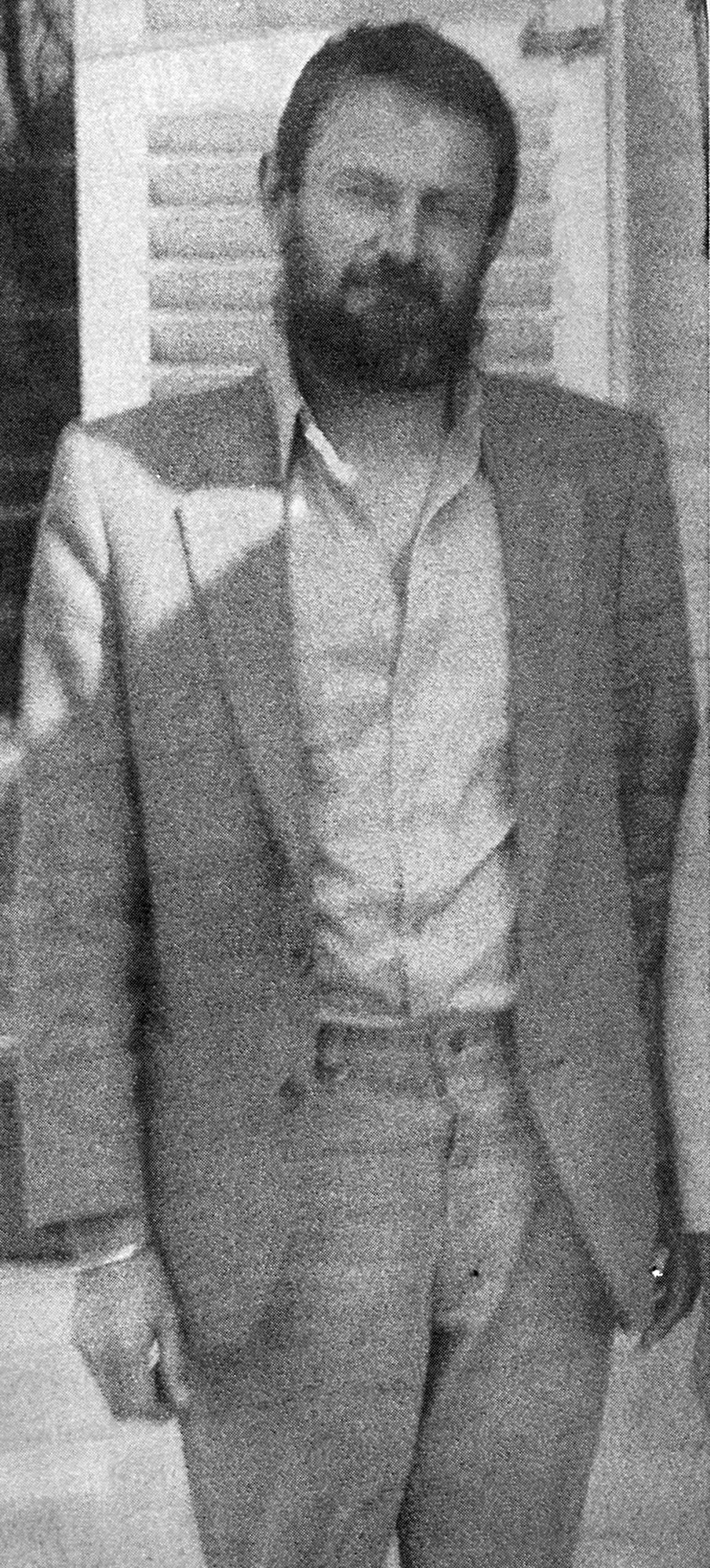
    18 January 2021 by Guest

    Medical oxygen: Afrox recalls industrial cylinders for conversion amid skyrocketing Eastern Cape demand
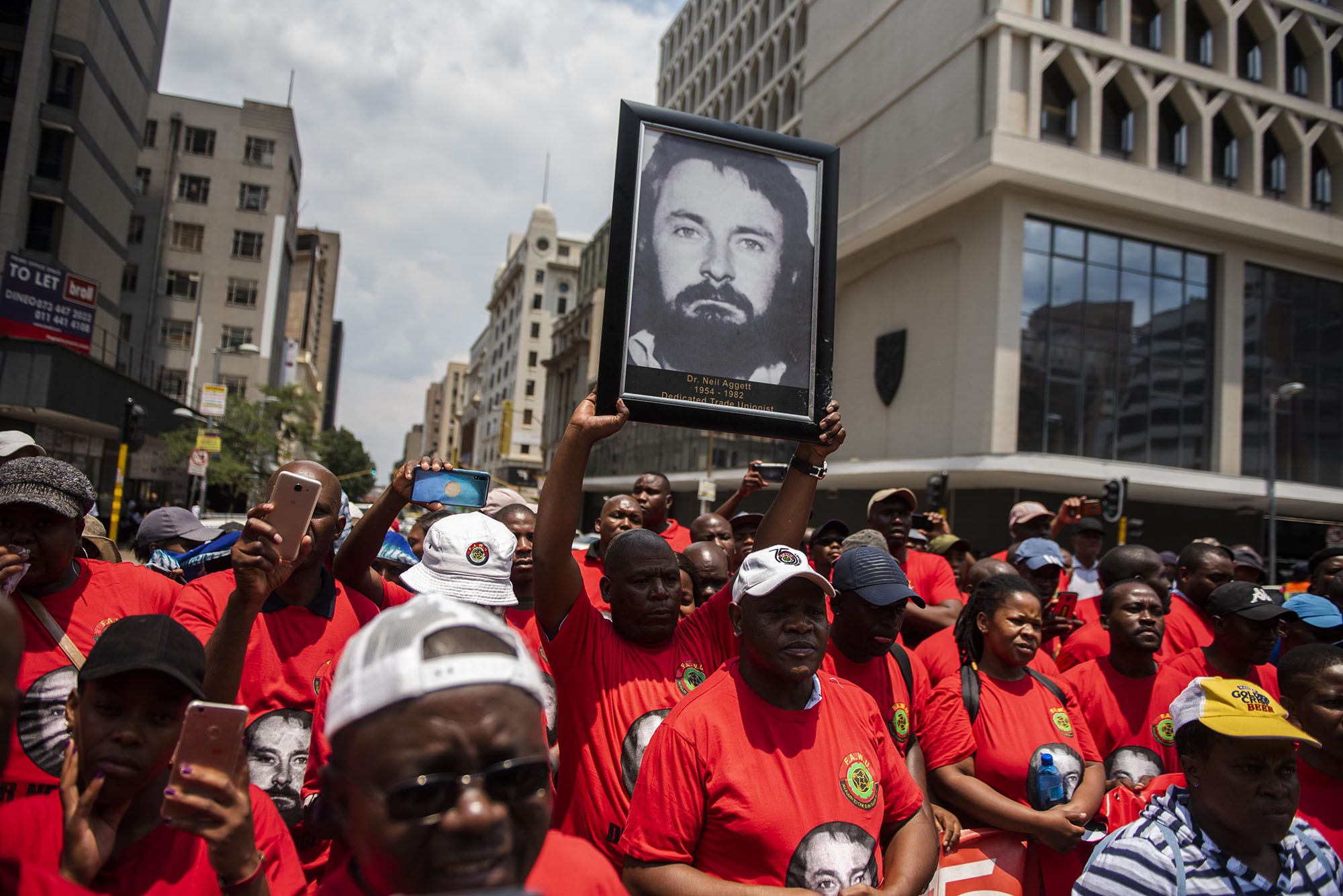
    The Eastern Cape government has ramped up oxygen provision to its smaller hospitals and clinics as a second Covid-19 outbreak tears through the province. (Photo: Gallo Images) As a brutal second wave of Covid-19 infections ripped through the Eastern Cape, the demand for oxygen cylinders became so great that oxygen supplier Afrox recalled cylinders from …


    The Eastern Cape government has ramped up oxygen provision to its smaller hospitals and clinics as a second Covid-19 outbreak tears through the province. (Photo: Gallo Images)

    As a brutal second wave of Covid-19 infections ripped through the Eastern Cape, the demand for oxygen cylinders became so great that oxygen supplier Afrox recalled cylinders from its industrial clients to convert them for medical purposes.

    As the second Covid-19 wave rips through the Eastern Cape and the country, medical oxygen manufacturer Afrox has confirmed that it has invoked the force majeure clause in its contracts with industrial manufacturers to enable it to recall industrial oxygen cylinders to be converted for medical oxygen. 

    In a presentation to the parliamentary health committee this week, Dr Sibongile Zungu, acting head of the Eastern Cape Department of Health, said the department had received a letter from Afrox, the sole supplier of medical oxygen in the Eastern Cape, saying its capacity to supply oxygen was under strain and that it had therefore released the department from parts of its contract barring it from procuring supplies elsewhere.

    Zungu said this was “a little bit of a challenge at this point because the other suppliers are also stretched. We have engaged our treasury for this work.” Zungu, who is also the head of the Covid-19 project team, said the Joe Gqabi district (around Aliwal North) and Chris Hani District (including Cradock and Komani) were mainly affected.

    By 15 December, 4,000 cylinders had been converted.

    Zungu said that to cut down on the need for oxygen cylinders the department had commissioned bulk tanks at hospitals including Mthatha Regional, Victoria, Stutterheim, Butterworth, Settlers, St Barnabas, Bhisho and Grey, so that cylinders could be reallocated to other hospitals. 

    Installations and commissioning of bulk oxygen tanks at Stutterheim Hospital had been delayed due to copper and component shortages. There had been a delay at St Barnabas Hospital as an access road for contractors had to be constructed. Installation of tanks at Madzikane Ka Zulu and St Patrick’s hospitals were also scheduled to begin this week, depending on the availability of copper components.

    There are also plans to install bulk tanks at the hospital in Aliwal North and the All Saints Hospital.

    Zungu told Parliament this week that Afrox had to invoke the force majeure clause in its contracts with industrial oxygen customers so that it could convert industrial oxygen cylinders to medical cylinders.

    “Bhisho and Settlers hospitals were using in excess of 150 cylinders of 9.2kg… every two days,” she said. 

    She said a WhatsApp group had been set up for hospital CEOs to raise urgent oxygen issues.

    Zungu said insufficient stock of oxygen and availability of fleet at the Queenstown and Mthatha depots had hospitals sending their drivers to help transport oxygen cylinders. She said there were concerns about drivers’ safety and occupational health and safety requirements. 

    As a contingency plan, oxygen concentrators had been supplied to some facilities to enable interventions for patients having trouble breathing while awaiting transfer to facilities where oxygen is available, said Zungu.

    “We have provided oxygen concentrators to primary healthcare facilities and district hospitals to ensure that they can do some kind of intervention,” she said.

    Afrox communication manager Nolundi Rawana confirmed that Afrox declared a “force majeure” to its industrial oxygen clients in December.

    “Due to the large number of hospitalised patients requiring oxygen therapy certain hospitals administer up to 400% more oxygen via bulk tanks and oxygen delivery systems to patients than the designed capacity at the hospital.

    “Afrox monitors hospital tank levels nationwide via telemetry (all installed bulk tanks at hospitals have telemetry systems), and schedule deliveries accordingly,” said Rawana.

    “In some instances, deliveries are now scheduled twice a day instead of twice a week. This additional demand requires Afrox to have flexibility on bulk delivery tankers to transport the oxygen to hospitals. Afrox allocated a portion of the industrial tanker fleet to medical oxygen tankers to enable fast delivery to hospitals.

    “Afrox is also converting additional tankers used to transport other liquid gases to liquid oxygen tankers and will have additional distribution capacity available soon,” said Rawana. 

    “Afrox has experienced an unprecedented demand for cylinders due to infection spread and has converted 8,000 industrial cylinders to medical oxygen cylinders. Another 7,000 will be converted to bring the total to 15,000 cylinders. Afrox cooperates with hospitals and the Department of Health to ensure fast turnaround times for cylinders.

    Rawana said that the impact of converting 15,000 cylinders meant that Afrox could not guarantee deliveries to industrial customers “during these unprecedented times”.

    “The impact is on all manufacturing market sectors Afrox supplies,” she said.

    She said Afrox had supplied adequate medical oxygen in South Africa to contracted customers. “Afrox has successfully cooperated with the medical fraternity, and together with the impact of the actions taken above, managed the situation to meet unprecedented medical demand,” said Rawana.

    Zungu said that given the demand for oxygen cylinders in the Eastern Cape, the department was thinking of asking the South African National Defence Force to help with the collection of oxygen from Queenstown and transporting it 200km to the hospital in the Joe Gqabi District (around Aliwal North) “in case of our own capacity becoming exhausted”.

    She said Afrox had kept its distribution centres open during the festive season and weekends to meet hospital oxygen needs. DM/MC

    Like what you’re reading? Sign up to the Maverick Citizen newsletter and get a weekly round-up sent to your inbox every Tuesday. Free. Because paywalls should not stop you from being informed.

    Gallery


    Comments – share your knowledge and experience

    Please note you must be a Maverick Insider to comment. Sign up here or sign in if you are already an Insider.

    Everybody has an opinion but not everyone has the knowledge and the experience to contribute meaningfully to a discussion. That’s what we want from our members. Help us learn with your expertise and insights on articles that we publish. We encourage different, respectful viewpoints to further our understanding of the world. View our comments policy here.

    No Comments, yet

    Category: NewsTag: cradock, news, online, south africa
    • Page 1
    • Page 2
    • Page 3
    • Interim pages omitted …
    • Page 157
    • Next
    WE LOVE CRADOCK.

    COPYRIGHT MyCradock · DESIGN BY REACH TRUST
    All Rights Reserved · Powered by Straton Solar