• Skip to main content
  • Skip to header right navigation
  • Skip to site footer

My Cradock

My Cradock

Cradock News Classifieds and Directory

  • Home
  • About
  • Accommodation
  • Business
  • Events
  • Free Business Advert
  • Submit News
You are here: Home / Archives for news

news

13 August 2020 by Guest

South Africa: Destitute Karoo Residents Barely Survive Covid-19

Living lives of desperation in rural areas where food is almost as scarce as work, the Eastern Cape Karoo’s impoverished are struggling to make it through the pandemic. Small Karoo towns in the Eastern Cape that have been spared the worst of the coronavirus infections and deaths have not been spared the other devastating impacts …

Living lives of desperation in rural areas where food is almost as scarce as work, the Eastern Cape Karoo’s impoverished are struggling to make it through the pandemic.

Small Karoo towns in the Eastern Cape that have been spared the worst of the coronavirus infections and deaths have not been spared the other devastating impacts of the lockdown. The towns are filled with starving people who cannot take their chronic medication without food, and as a result they get sicker every day.

Phumla Seane, a senior nurse at the Wongalethu Clinic in Klipplaat, has seen dozens of patients defaulting on their treatment for high blood pressure, heart disease, tuberculosis and HIV since the lockdown began, when all possibilities of casual work in the town came to an abrupt halt. But the situation was bad even before then.

“There is no work in this place. There is nothing that makes people feel they should wake up in the morning,” she said. “I have seen cases that are not getting better for more than two years, to the point where I ask where are the resources of this country and where is anyone who is kind?”

Klipplaat is about 184km inland from Port Elizabeth. According to the 2011 census, it had fewer than 3 000 residents. A rusting train lies abandoned at its entrance, mirroring the sense of abandonment of the town itself, with its tiny three-room dwellings built during apartheid, newer RDP houses and empty, dusty streets.

When disaster relief organisation Gift of the Givers pulled into the town, the only signs of life were municipal workers filling two tanks with water, which is trucked in daily for residents to collect in buckets. About 200 people quickly emerged from run-down houses when they saw the food aid truck.

Life in the town was unfathomably difficult even before the lockdown, but now it had become unsurvivable, said Seane who had asked Gift of the Givers to distribute food aid in Klipplaat so that sick residents could take their medication. It was the first time the organisation visited this town, but it has a 28-year track record of providing emergency relief to communities all over the world.

Its Eastern Cape coordinator, Corene Conradie, said Deputy Minister of Human Settlements, Water and Sanitation Pam Tshwete contacted her to say there had not been a single case of Covid-19 in Klipplaat and Gift of the Givers should take special care with social distancing and sanitation.

Staving off hunger

In total, the organisation delivered more than 1 000 food parcels to seven small Karoo towns over two days. Each parcel contained tinned fish, tinned beans, jam, beef-flavoured noodles, porridge, tea, salt, oil and 10kg of rice and maize each. But in Klipplaat, when the Gift of the Givers truck arrived on Thursday 6 August, the process was fraught with difficulty.

Seane had compiled an exhaustive list of 400 families who do not get grants and have no work or food, but with the entire town devastated by the lockdown, there was never going to be enough food for everybody. Only 11 food parcels had been provided by the government during the lockdown. So when ANC ward councillor Louis Langeveldt and the ward committee arrived to marshal people into lines, the residents who had already gathered in the street when they saw the truck became angry.

“The councillors of this town, the ANC and the DA, don’t do anything for us. Our youngsters are jobless, school-less, suffering! We are very angry. It is outrageous. We are fed up!” said resident Chyne Jacodusa. “I already know I am not getting a parcel. I won’t even look for my name on that list. I will rather just continue suffering. You will see for yourself today how it is here in Klipplaat. That is why I am not going to vote.”

Another resident walked past and yelled: “Don’t take a photo of me as I didn’t get a food parcel!” “I am very hungry and that is the main problem!” another shouted.

Single mother of three Felicity Johnson, 37, said the lockdown had been terrible. “It affected our lifestyle because, in the lockdown, food prices are rising and the grant we get is no longer enough. We are jobless because there are no more char jobs or washing jobs. A R5 half loaf of bread is now R8.”

Johnson was thankful there had been no Covid-19 cases in the town. “I have no idea how we would get tested. You can see for yourself that it is a small town.”

No grants, no casual work

Both Jacodusa and Johnson said thousands of people in Klipplaat do not get grants and survive on casual work in town and on neighbouring farms. Most of the white commercial livestock farmers in the Eastern Cape Karoo shut their gates to outsiders during the lockdown and barred even permanent farm workers from leaving the farms to prevent the spread of the virus. This negatively affected residents who lost the opportunity of casual work.

At another food-aid drop-off point in Klipplaat, close to a monument bearing the names of 16 anti-apartheid activists who were killed in the struggle, elderly people arrived on crutches and in wheelchairs, their grandchildren pushing wheelbarrows to carry the food home.

“I am so pleased today. This is more food than I have had at home in many years,” said Sindiswa Phakathi, 58. There is only one child grant of R470 a month in her family, of which R180 is spent on a 25kg bag of maize meal and the rest on sugar, salt, electricity and transport to Jansenville, 33km away, where the shops are. The family buys tinned food throughout the month and more maize meal if they earn anything from casual jobs, which have dried up during the lockdown.

A resident, who did not want to be named, said: “We don’t only like the Givers because they bring food. Yes, we love the food, but we like the Givers because they are not corrupt. They don’t steal from the people. We wish they could be the government.”

Ellen Kamp, 60, said life had always been bad in Klipplaat, but now it was worse. “Our children usually drop out of school and go to work on the farms. Now, in lockdown, the children have no more work and they have to steal things that they can sell for food. Life in Klipplaat is so difficult – there is no shop here, no butchery, no bank or post office. Every time we need to pay R50 to go to Jansenville. Look at these houses that we have to live in!” Kamp said.

“Hunger here is a virus on its own,” said Conradie. “So many businesses have closed and people have no jobs and nowhere to turn to.”

Hunger worse than the virus

In Jansenville, the local hospital has set up an 11-bed Covid-19 unit and workers from the Department of Public Works are building an extension. During New Frame’s visit, hospital CEO Gillian January said the unit had only two patients and had not yet been full. But again, hunger and starvation plague the hospital’s outpatients, many of whom have also stopped taking their medication because they have no food.

At the Graaff-Reinet municipal dump, about 88 kilometres away, 15 families who survive on recycling also received emergency food aid from Gift of the Givers. They each earn between R50 and R100 a week for recycling cans and clear plastic, and had no income at all for the first three months of lockdown when the recycling depot was closed.

Two of the families live in bleak and rickety shacks at the foot of the Sneeuberg mountain range. During New Frame’s visit, snow was visible on mountains and it was bitterly cold. Recycler Geraldine Engelbrecht, 18, who has a one-year-old son, Eroldine, said: “Lockdown hasn’t gone well. It was extremely cold here and we have no water or food except what the Givers bring.”

She said she has never received a child grant for Eroldine and when she made her most recent enquiry, the South African Social Security Agency told her to check again after the lockdown. Her neighbour, Felicity Engelbrecht, 48, said: “We are so scared of the virus that we have not left this place. We are glad that not one of us has caught coronavirus.”

The families moved here after they could not afford to pay for water and electricity in town, and said they were just “camping” for a while. But there was no sign that they would ever find a better income that would allow them to move into a house. An old 5 000-litre concrete water tank, which Gift of the Givers fills regularly, is their only water supply. There is no electricity and no useful vegetation – just miles and miles of dry brown grass and a few hardy bushes. Because they can only cook on fires, Gift of the Givers brings cooked meals twice a week.

At the dump, Piet Oormeyer, 37, and Calvin Ligman, 20, worked together to fill large white sacks with plastic and cans. Used disposable nappies lay strewn across the ground. Oormeyer and Ligman have only ever made R400 a week at most, which they split between them. For the first three months of the lockdown, when the depot was closed, they survived on the Gift of the Givers meals.

“This is first-class work. We are keeping the community clean but we also get sick from the burning garbage smoke and we have no gloves or boots,” said Oormeyer, referring to the garbage that is set alight in small piles after the recyclable products are removed.

Both are dependent on a man only known as “Oom Pottie”, who sells what they collect to a waste company. They are the children of recyclers and first came to the dump with their fathers when they were children. “Every day it is harder for us to get out of the suffering of this life,” said Oormeyer.

Another kind of pandemic

On the same night in Umasizakhe, Graaff-Reinet’s 180-year-old township, community leader and father of three Xolile Galada, 33, had arranged with Gift of the Givers to bring food aid to the parents of disabled children. “Our people can wash hands, wear masks, sanitise, but if they have got nothing to eat that becomes a major pandemic,” he said.

About 100 Umasizakhe residents were retrenched during lockdown from a major local employer, the Montego animal feed factory, and others were retrenched from farms and even non-profit organisations.

“We have taken two steps backwards in terms of poverty,” said Galada. “I am a socialist and that is why I am here – because I can’t sleep at night. I can’t smile knowing that I have a bowl but not knowing what my neighbour is eating.”

Working closely with grassroots community leaders and nurses to devise a list of the people in greatest need and arrange the best drop-off points takes time and consideration – the delivery of 500 food parcels took 14 hours on the first day.

On the second day, Friday 7 August, Gift of the Givers provided emergency aid to 500 retrenched farm and other workers. At 55 farms in the Nieu-Bethesda and Sneeuberg area, farm workers have continued working throughout lockdown as essential service workers, but their partners and family members have lost their jobs elsewhere and they have all been hit hard by the rising cost of food.

“We are taking it easy and obeying the lockdown rules for our safety, and we don’t have coronavirus here. We are safe. But the prices of food are our fear,” said Katrina Tromp. She was working as a labourer on a construction project, but lost her job and her wage of R1 100 a month. Her husband earns the same, meaning they now have half their previous income and can no longer survive without food aid.

The Gift of the Givers philosophy, honed by decades of disaster relief aid, is to assist the “absolutely destitute”, even if there are others, like the government or employers, who should be helping.

“We never wait for the government or anyone else to help. We cannot ignore people and wait for someone else to take responsibility. If we do not turn up to assist them, what will happen?” said Conradie.

Sign up for free AllAfrica Newsletters

Get the latest in African news delivered straight to your inbox

By submitting above, you agree to our privacy policy.


Success!

Almost finished…

We need to confirm your email address.

To complete the process, please follow the instructions in the email we just sent you.


Error!

There was a problem processing your submission. Please try again later.

Isolation and poverty

At Bethesda Junction, a former railway junction 20km past Nieu-Bethesda, three women live in the abandoned railway homes and pay R380 a month each from their pensions to a local farmer for water.

“We have no electricity. We use candles and we collect small sticks to make fire. Our husbands have passed on. We are just old ladies and kids. We are really feeling the strain,” said Rachel Jacobus, 65. They hike the 30km to Graaff-Reinet when they want to go to the supermarket or draw their pension money, and it can take many hours before anyone drives past and picks them up.

The final batch of food aid was delivered in the small town of Pearston. Here, the Soqaqamba community organisation started a soup kitchen at the beginning of the lockdown and now feeds hundreds of people twice a week. Gift of the Givers provides food to the soup kitchen, but people are still not able to survive. This time, the drop-off was dedicated to retrenched workers.

Pearston resident Luthando Dunster, 36, was part of a large group of workers who used to erect fences as far away as the Free State and Gauteng, but he was laid off at the start of lockdown. He used to earn R1 100 a month. “It was a slave wage. We used to go away for work for months at a time. The foreman used to deduct money for our food, but he also used to eat that food. But now it is worse,” Dunster said.

A devastating drought

In this part of the Karoo, the pandemic came hot on the heels of a devastating drought, which has still not ended. It has been ongoing for years and resulted in the huge Nqweba Dam in Graaff-Reinet emptying completely in 2019 and then being vandalised to the point where it is no longer operational, said Conradie.

Much of the region still depends on borehole water, and subsistence farmers and people living in isolated areas, like the three women of Bethesda Junction, have been unable to grow vegetables. Many emerging and commercial farmers have been almost bankrupted by the high cost of buying bales of grass to feed their animals.

This, and existing poverty levels, form the harsh background to the Covid-19 pandemic in the Eastern Cape Karoo. Throughout the visit to the small towns and farms spread across 550km, it was clear that many people had only ever earned as little as R1 100 a month, or they survive on grants alone. The working class and impoverished people all said the same thing – life had always been bad, but now it was much, much worse, and there was no sign that it would ever go back to its pre-pandemic state.

“Unlike Covid-19, hunger is a silent war that nobody talks about,” said Conradie. “You can put on PPE [personal protective equipment] to protect yourself from the virus, but you can’t protect yourself from hunger. People here are highly destitute. They literally have nothing.”

Category: NewsTag: cradock, graaff reinet, hofmeyer, karoo, news
12 August 2020 by Guest

Explore Joburg’s sights, sounds, and more this August

Share this article Click here to Book Accommodation in Cradock, Graaf Reinett, Hofmeyer or surrounds. Article source: https://www.joburg.org.za/media_/Newsroom/Pages/2020%20News%20Articles/August%202020/Explore-Joburg%E2%80%99s-sights,-sounds,-and-more-this-August.aspx

Share this article


Category: NewsTag: cradock, news, online, south africa
12 August 2020 by Guest

Deary4 with Karoo King

Singer, songwriter, rapper, producer; Karoo King all the way from Ladismith in the Western Cape shares his story with us. Karoo King who was born Michael Roodtman released his latest album called ‘Deary4’, which is a trap soul-inspired album. The artist identifies as an African of the legendary Southern African Khoikhoi people, and in his …

Singer, songwriter, rapper, producer; Karoo King all the way from Ladismith in the Western Cape shares his story with us. Karoo King who was born Michael Roodtman released his latest album called ‘Deary4’, which is a trap soul-inspired album.

The artist identifies as an African of the legendary Southern African Khoikhoi people, and in his music, he uses mostly Afrikaans, English, and other indigenous South African words. The title of his album ‘Deary4’ means ‘deur die vuur’ in Afrikaans and in direct English translation ‘through the fire’.

This comes after the artist’s whole studio and everything he owned burned down in 2018. He rose like a phoenix from the ashes as explained in one of his songs and began to record again two years later.


[also read] – Join our WhatsApp community to get the Soweto Urban Newspaper delivered to your phone


The devasting fire inspired the whole album that there is light at the end of the tunnel. Kharshay Oliphant who is Karoo King’s public relations officer said: “This album has a pick-me-up feel to it and will inspire numerous people, especially during this trying times of this pandemic.”

Growing up in the church, Karoo King learned how to play the drums and basic beginner chords on the guitar.

The artist got introduced to songwriting and live musical shows by his brother-in-law Eloff Jacobs also known as ejaycooljay.


Tracklist.


After living in the United Nations for a while, Karoo King released his first mixtape in 2005, and in 2007 he moved back to South Africa. Karoo King performed in Dubai in a band and then bought all of his equipment to start his own studio called Ram Klan Productions in his father’s garage.

The artist won the Showville (Ladysmith) talent competition in 2015 performing an original composition called Pittekop. After the devasting fire, and no insurance, Karoo King was set back until this year where he is now releasing his album ‘Deary4’.

Karoo King’s music is now available on all music stores and if you need to know more information on the artist, you can email; [email protected] or social media: barbarr_records_media.


Follow Us Here:

Catch the latest news by visiting our other platforms:

  • Facebook
  • Soweto Urban News
  • Twitter
  • Youtube
Category: NewsTag: cradock, graaff reinet, hofmeyer, karoo, news
10 August 2020 by Guest

Roads in Eastern Cape Open Again after Snow Closures

With the weather service predicting more snow tomorrow, some roads in the Eastern Cape, especially near Graaff-Reinet, were temporarily closed. Lootsberg Pass. The N9 from Graaff-Reine to Middelburg and the R61 from Cradock towards the N9 were closed as the result of dangerous driving conditions due to snowfall, but according to news reports have been …

With the weather service predicting more snow tomorrow, some roads in the Eastern Cape, especially near Graaff-Reinet, were temporarily closed.

snow lootsberg pass south africa
Lootsberg Pass.

The N9 from Graaff-Reine to Middelburg and the R61 from Cradock towards the N9 were closed as the result of dangerous driving conditions due to snowfall, but according to news reports have been opened again this morning.

Snow South Africa Winter
PHOTO: SA Gov News

In a video (see below) posted of a woman driving near Graaff-Reinet on the Lootsberg Pass, she said it was very beautiful, “but very scary.”

“Another cold front will be arriving in the Western Cape tomorrow (Thursday 28 May 2020) with some good falls possible especially over the SW-Cape,” the SA Weather Service tweeted.

More snow. This time near Graaff Reinet (Lootsberg Pass) this evening (Eastern Cape). Video courtesy of StormReportSA (FB account). pic.twitter.com/HQ0xcdNiEi

— SA Weather Service (@SAWeatherServic) May 26, 2020

Category: NewsTag: cradock, news, online, south africa
10 August 2020 by Guest

TAKE A LOOK | Spectacular ‘tiny homes’ are popping up all over South Africa

Across the world, small, luxurious houses are in hot demand as aspiring home-owners seek cheaper, eco-friendly abodes.    In South Africa, many of these high-end tiny homes are created using converted shipping containers. Business Insider looked at some of the options now popping up in South Africa. For more articles, go to www.BusinessInsider.co.za.  As the “tiny …

Photo supplied by Copia Eco Cabins.

  • Across the world, small, luxurious houses are in hot demand as aspiring home-owners seek cheaper, eco-friendly abodes.   
  • In South Africa, many of these high-end tiny homes are created using converted shipping containers.
  • Business Insider looked at some of the options now popping up in South Africa.
  • For more articles, go to www.BusinessInsider.co.za. 

As the “tiny house” movement sweeps across the world, the demand for luxurious, small homes is also growing in South Africa. 

Top-end tiny houses are popular because they offer a cheaper way to get on the property ladder, and a way to pare down your life to the essentials – while still enjoying luxuries. 

They are often immaculately designed, surprisingly extravagant, and optimised to use every square centimetre of space.

READ | 35 incredible tiny homes from around the world

Simply put, a tiny home is a fully functioning house, but on in a much smaller scale. They are part of a global architectural trend, which is still growing in the US, Canada, Australia, and New Zealand. Called the Tiny Movement, the trend embraces simple living by decluttering homes and downsizing on space.

In South Africa, high-end tiny homes are increasingly being erected in rural areas, often using shipping containers.  

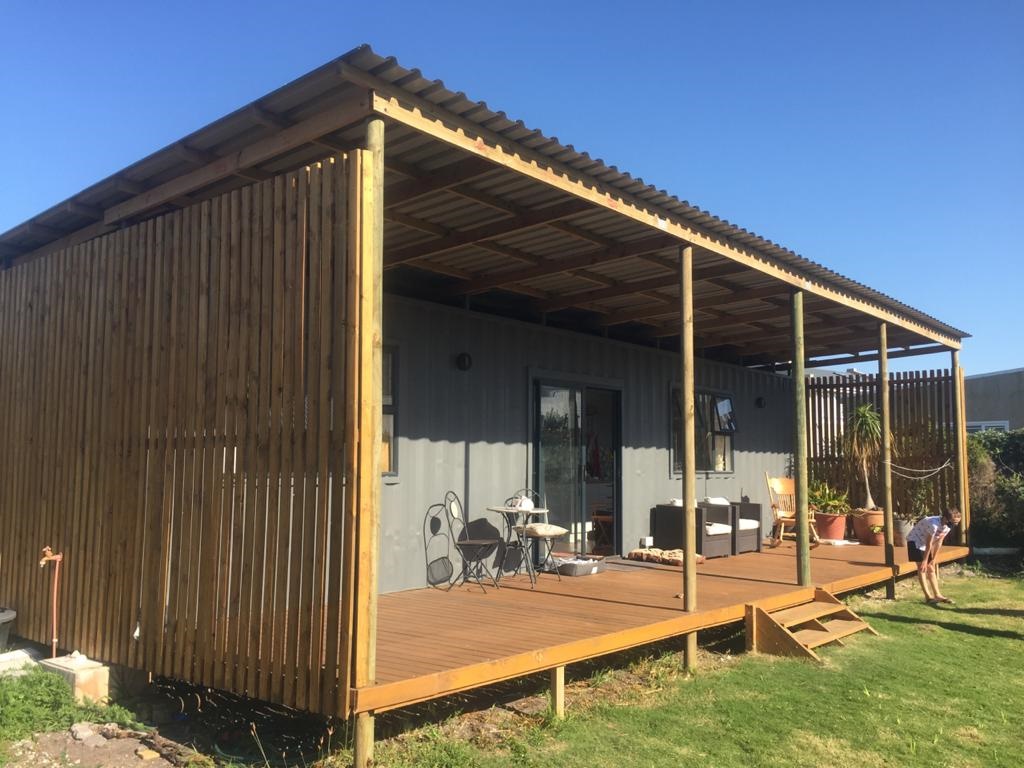
“Even though shipping container homes have been around for years, it has only been in the last five years that the building technique has become a viable alternative option,” says Deon van Deventer, founder of Container Home SA. His company has been making container homes from recycled containers in both Johannesburg and Cape Town since 2018.  

Innovations like smarter power generation via solar and battery capacity storage, as well as low-energy LED lighting, dry toilets, improved insulation, and better water filtration systems have made for viable off-the-grid solutions.

Photo supplied by Container Home SA.

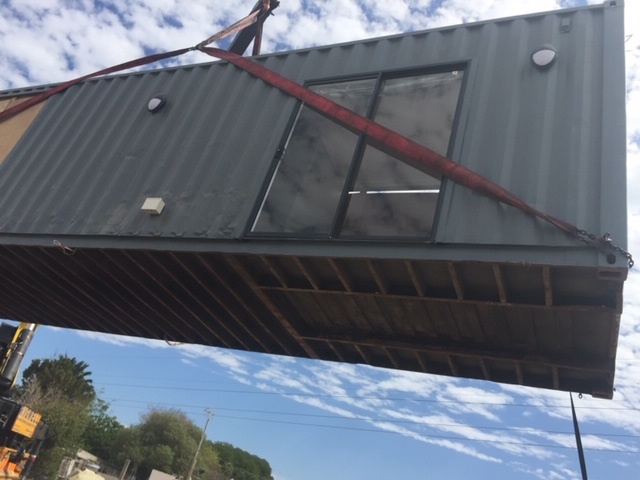
The homes are also fast to build. And with most of the manufacturing being off-site, there is less mess on-site.

“There’s been quite a lot of demand for people looking to build holiday homes or add a separate flat in their backyard. We’re also getting requests from people that live far out of the city, where home owners have struggled to get a building contractor. Or it’s on a near impossible place to build – like plots that stand at a 45-degree angle – and a conventional build would cost a fortune to lay foundations,” says Van Deventer.

Homes can also be expanded in much the same way as Lego fits together.

While the average price of building a home from scratch can be anywhere from R6,000 to R8,000 per square metre, basic container units are usually much cheaper. In some cases, basic units can be comparable in cost to RDP housing, which starts from around R1,500 per square metre.  

Photo supplied by Container Home SA.

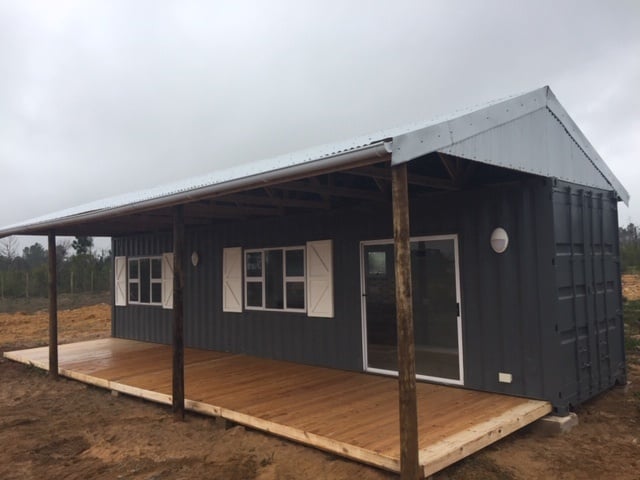
Van Deventer keeps costs low by recycling used containers and refurbishing them locally. 

“We’re looking at between R70,000 and R80,000 for a brand-new container,” while a second-hand unit may cost around R20,000.

Fitted out, a basic studio container home can come in at around R170,000.

Photo supplied by Container Home SA.

Fancier container homes will be much more expensive, though.  

Photo supplied by Container Home SA. Photo supplied by Container Home SA.

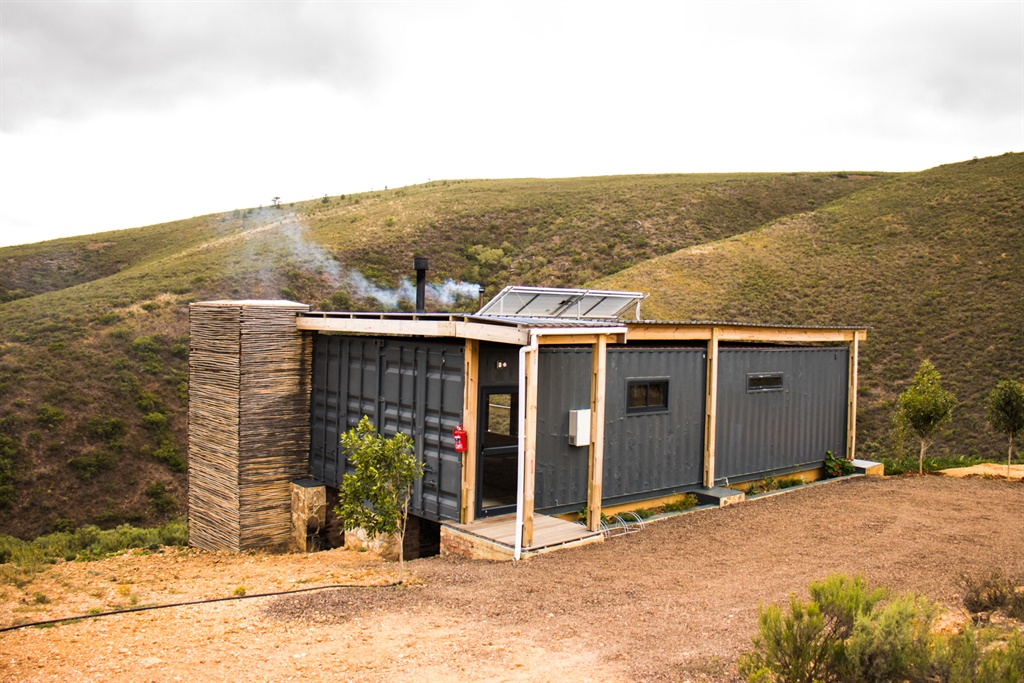
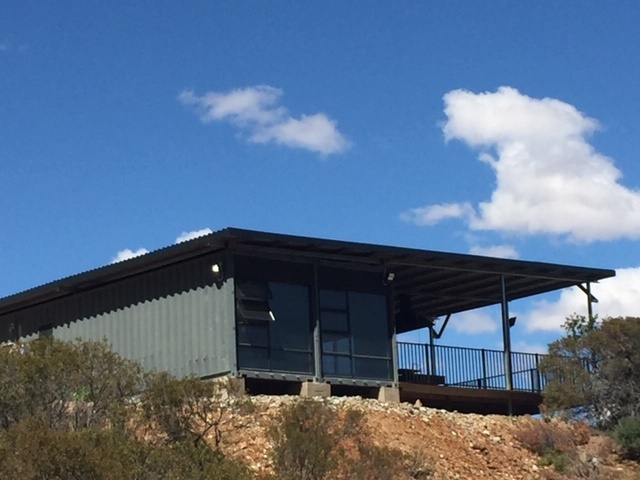
Take a look at this luxurious home made from four containers, recently erected in the Klein Karoo.

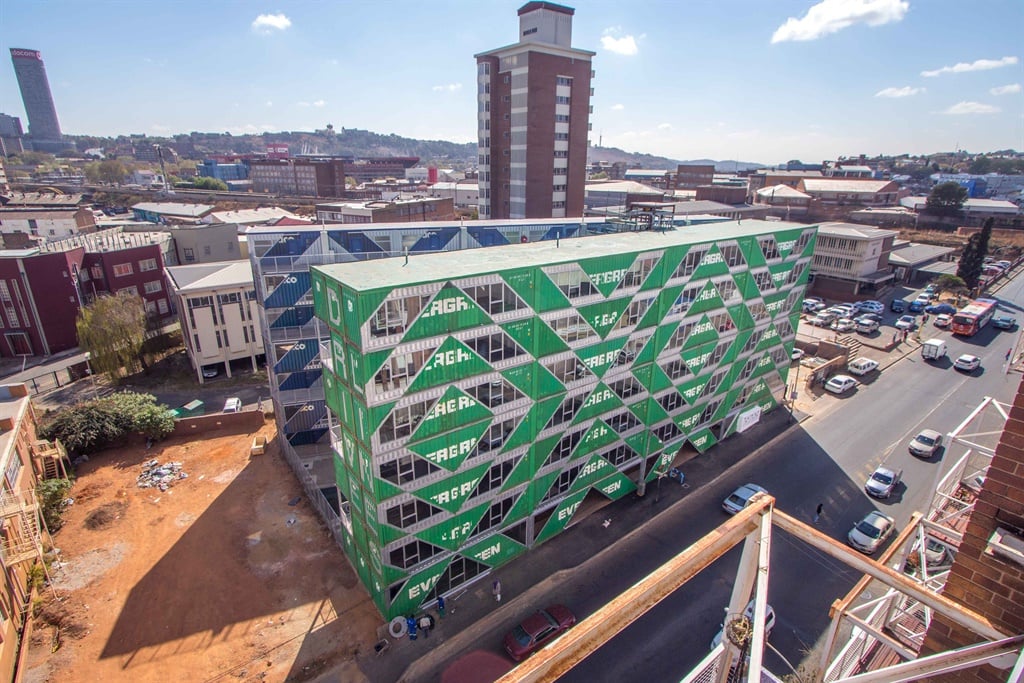
Containers have also been used to construct an apartment complex in Joburg’s Maboneng Precinct.

Photos supplied by QHoldings.

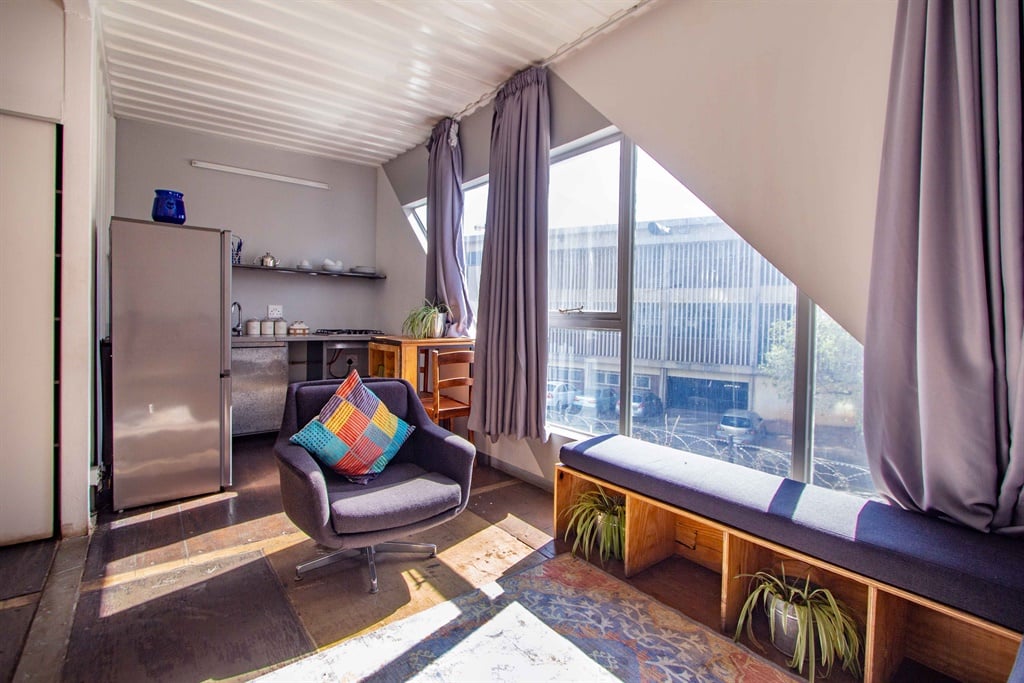
Built in 2017 by architects LOT-EK, Drivelines Studios’ furnished units can be rented for R3,000 a month.

The upcycled ISO shipping containers are organised in a V, with a triangular open yard with swimming pool and sundeck.

Photos supplied by QHoldings.

Here are some other tiny home options in South Africa.

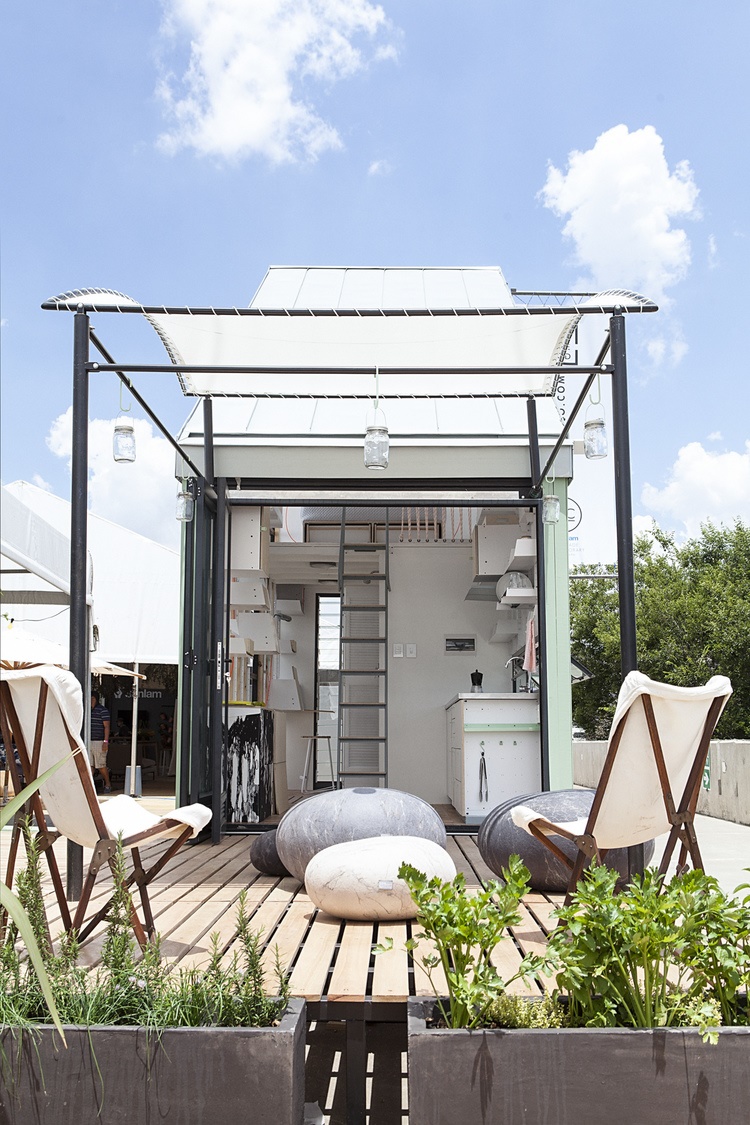
Plant your Pod Idladla on an open piece of land.

Manufactured in Johannesburg, the Pod Idladla is a prefabricated nano-home, starting from R270,000. Several 17-square-metre units can be positioned in various configurations to form larger, multi-use living areas.

Tiny, portable homes in KZN

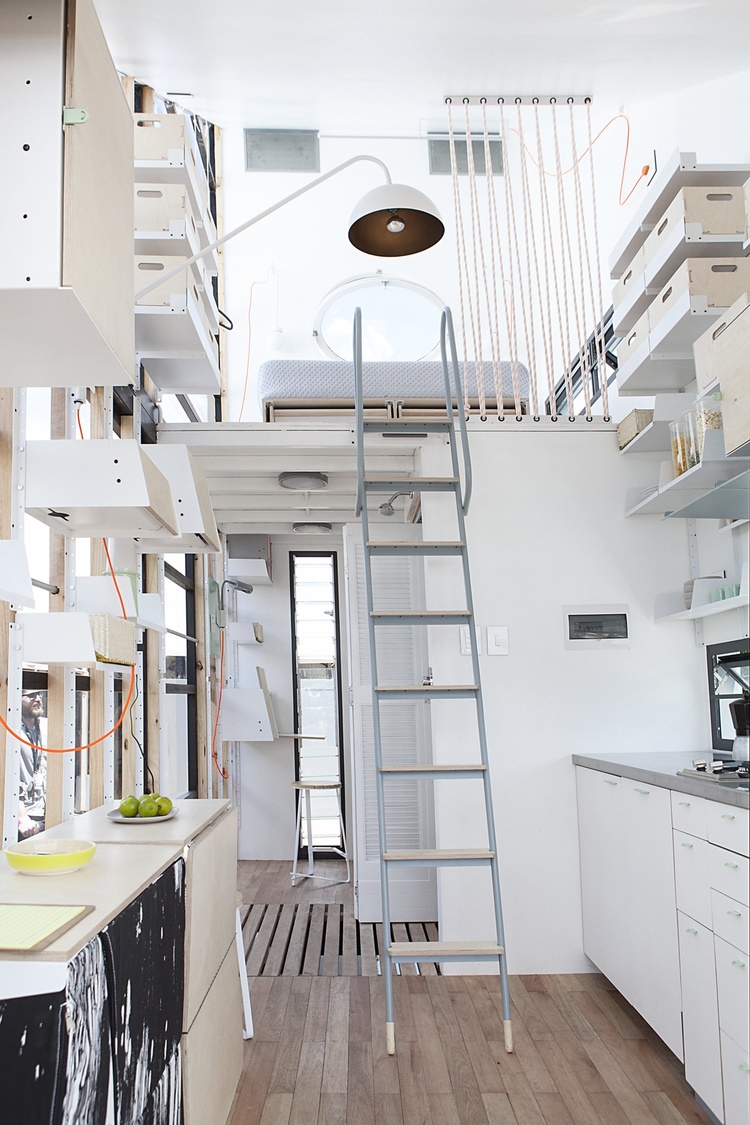
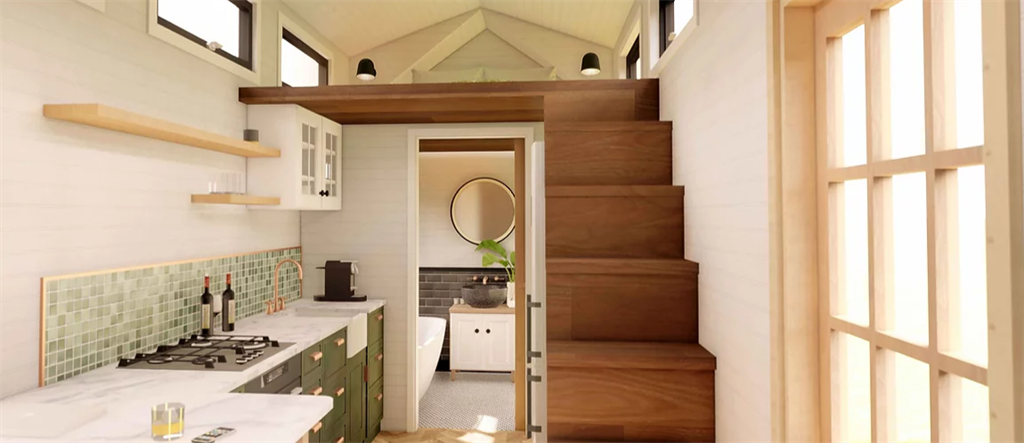
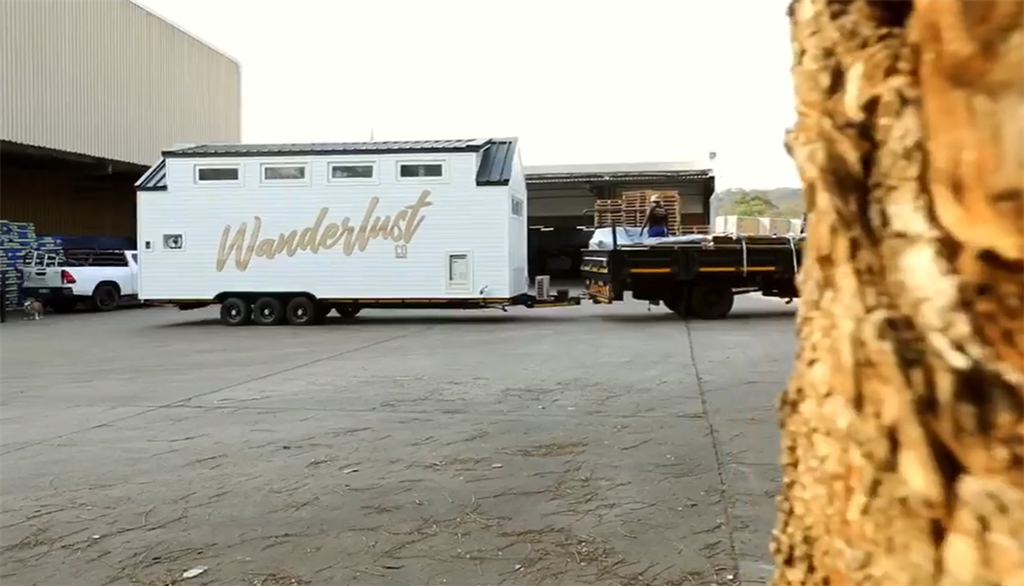
In order to prove tiny home living was easy, Matt and Kendal Bower moved into their own tiny home. They now manufacture their own range as Wanderlust Co.

Based in Tongaat, KwaZulu-Natal, they make a variety of houses that can sleep up to six people, with the aim of reducing living costs and the negative impact on the environment.

The tiny homes can be easily towed to their next destination.

The base cost is from R350,000.

Live in a PangoPod

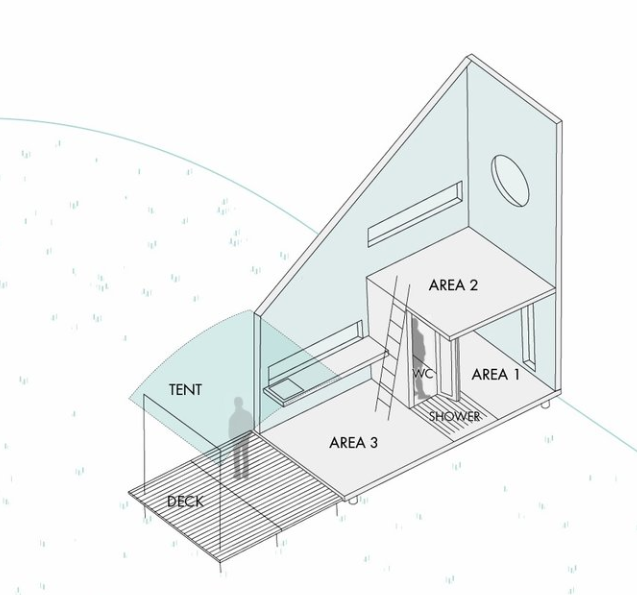
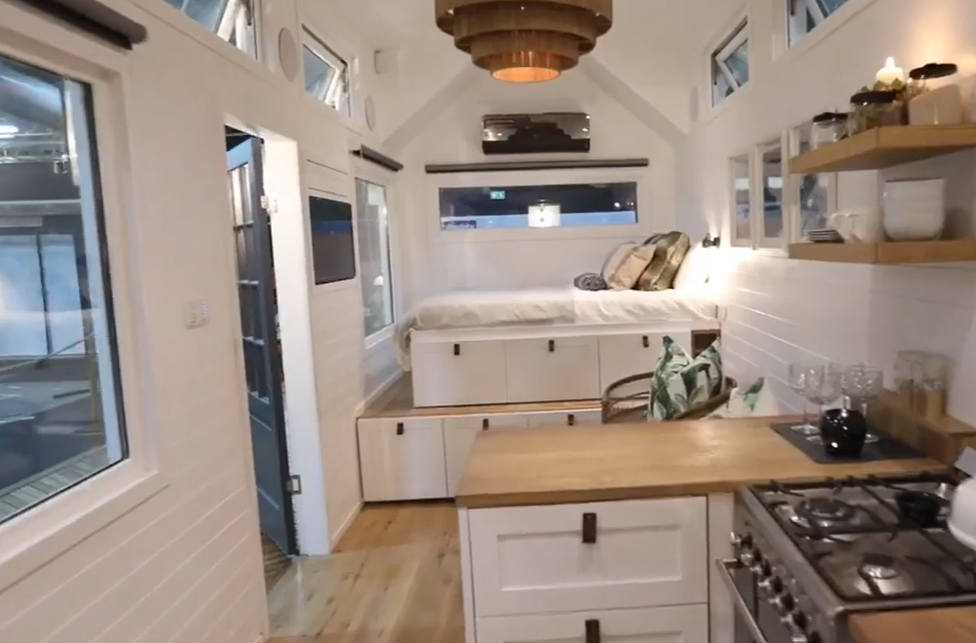
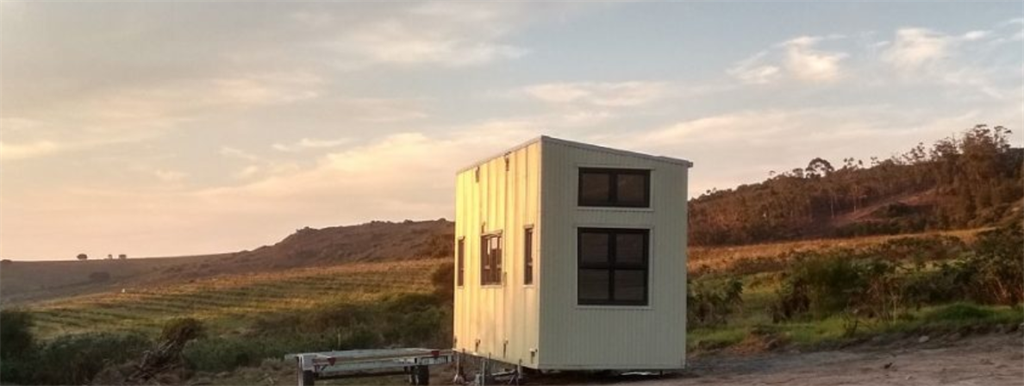
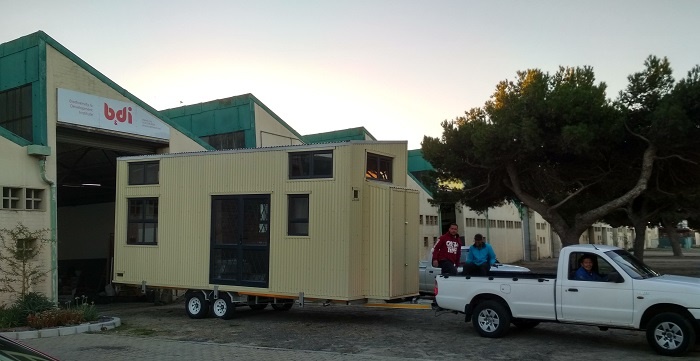
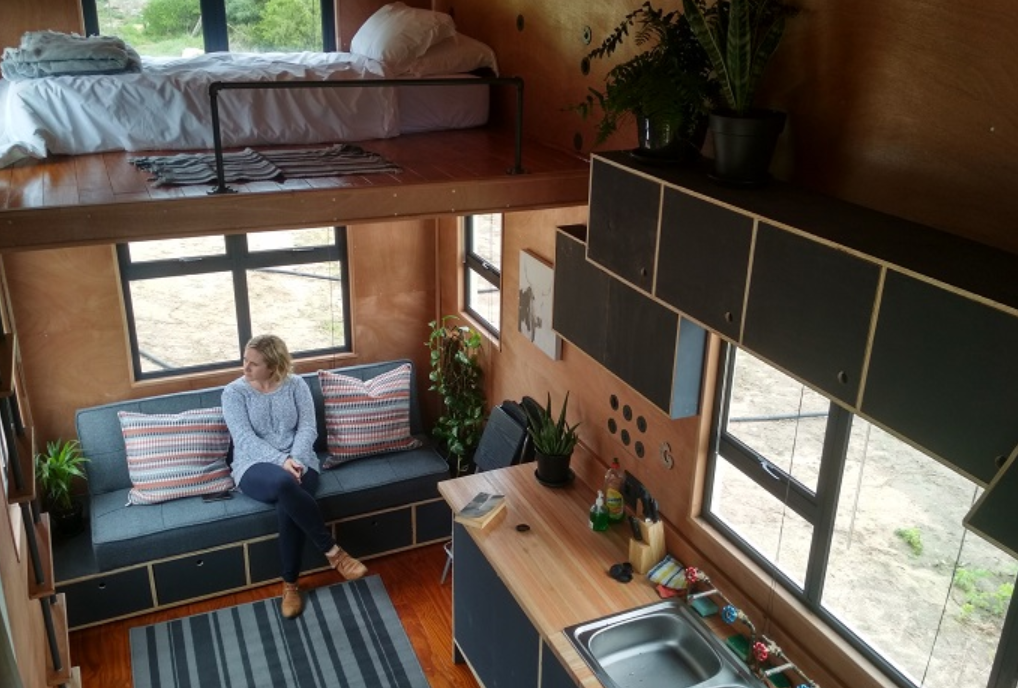
Built by the Biodiversity and Development Institute (BDI), a non-profit company focused on research related to biodiversity conservation, PanGoPods are off-grid, eco-friendly mobile homes. The houses draw inspiration from the pangolin, which can roll up into a tight ball. 

PanGoPods weight just 3,500kg and can be towed by a large 4×4. They run off of solar power, using water from rainwater harvesting tanks, and have a dry toilet.

Pangopods have a ground floor of roughly 16 square metres and two mezzanine lofts, each of just over 4 square metres, for a total area of nearly 25 square metres.

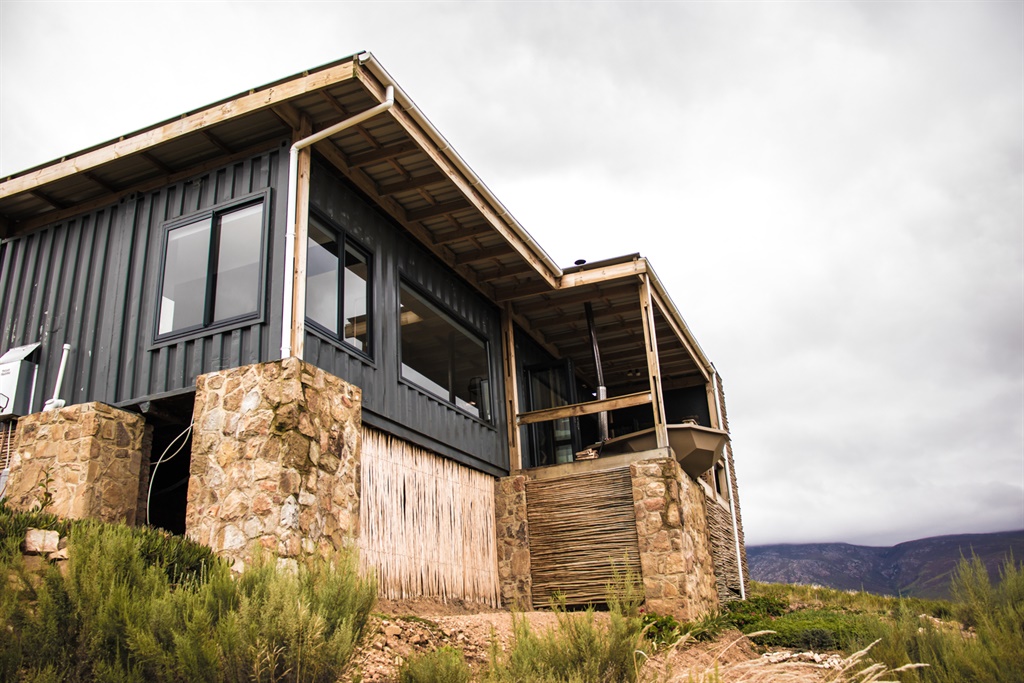
Shipping container cabins in Bot River valley

Photo supplied by Copia Eco Cabins.

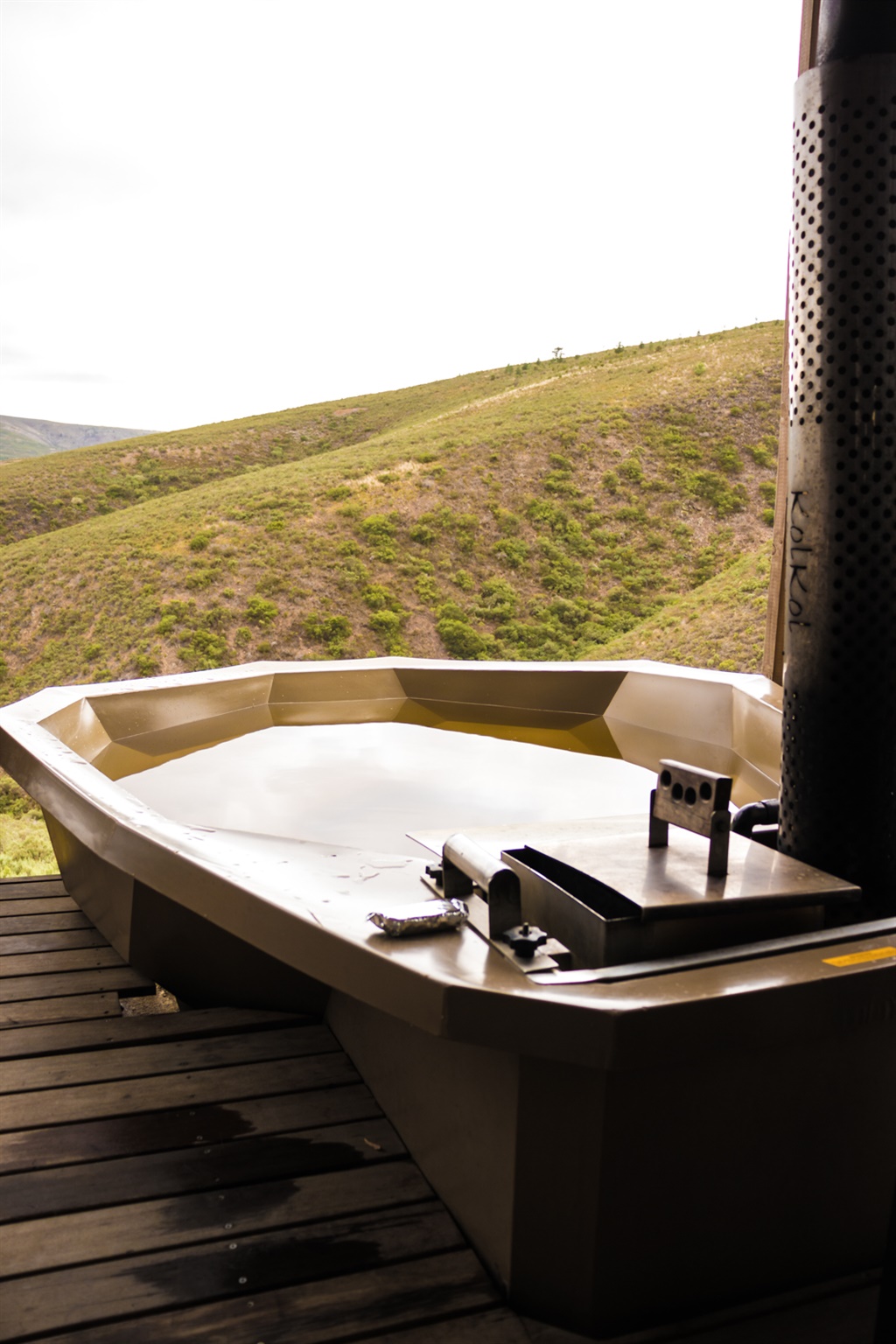
In the Bot Rivier valley on a working farm, the luxurious Copia Eco Cabins can be rented out from R1,650 per night to see if you’ve got a taste for tiny living.

Made from two shipping containers, they each come with a hot tub and a deck.

Photo supplied by Copia Eco Cabins.Photo supplied by Copia Eco Cabins.

The cabins were designed by South African company Berman-Kalil, which manufactures bespoke tiny homes, shops and even classrooms. 

Stylish prefab house

This stunning house in Northcliff was designed by architects A4ac. The small container house was fully prefabricated, and it can be placed on any site which a truck can access. It’s fitted with a kitchen, bathroom, bed, built-in cupboards, gas geyser and stove, and television.

Receive a daily update on your cellphone with all our latest news: click here.

Get the best of our site emailed to you daily: click here.

Also from Business Insider South Africa:

  • Namibia should have a huge pile of cigarettes. Mysteriously, they are nowhere to be found.
  • Have you tried to quit? SA to take part in a big tobacco survey ahead of planned new restrictions
  • Nasa says never again after a Trump-flagged boat approached SpaceX’s splashed down ship
  • TikTok is at the heart of a wild geopolitical fight. Here’s what’s going on.
  • Low interest rates suck for savers, but you still have options
  • Electricity prices are going up by 15% next year – here’s how it affects you

Category: NewsTag: cradock, graaff reinet, hofmeyer, karoo, news
9 August 2020 by Guest

Eastern Cape woman infected with Covid-19 dies after being sent from pillar to post

By Bongani Hans May 8, 2020 Share this article: ShareTweetShareShareShareEmailShare Durban – UDM deputy president Nqabayomzi Kwankwa has revealed shocking details of how his sickly aunt died after being sent from pillar to post by healthcare workers in the Eastern Cape.  Kwankwa alleges that the nurses allegedly refused to treat his aunt as they feared …

By Bongani Hans May 8, 2020

Share this article:

Durban – UDM deputy president Nqabayomzi Kwankwa has revealed shocking details of how his sickly aunt died after being sent from pillar to post by healthcare workers in the Eastern Cape. 

Kwankwa alleges that the nurses allegedly refused to treat his aunt as they feared that she might infect them with Covid-19.

Kwankwa believes that the healthcare workers did not have Covid-19 personal protective equipment (PPEs) to protect themselves from being infected by patients who have the disease.

In a letter of complaint to Eastern Cape Premier Oscar Mabuyane on Wednesday, Kwankwa said her aunt Nomathamsanqa Joyce Banzi, succumbed to illness on Tuesday, May 5. 

He said the Bisho Provincial Hospital had refused to admit her as her coronavirus test result was pending.

Kwankwa said Banzi had first been admitted to Grey Provincial Hospital in King Williams Town but was discharged after nurses had suspected that she had the killer disease and sent her away on a claim that the hospital was temporarily closed to undergo fumigation.

“As we understand it, some of the staff at Grey Provincial Hospital refused to attend to patients who might have contracted the coronavirus, because they were not supplied with PPEs.

“Upon arrival (from Grey hospital), the matron at Bisho Provincial Hospital refused to admit my aunt, because the results of her Covid-19 test, taken on April 30, were not yet available,” Kwankwa wrote.

He said a doctor had told the family that Banzi should be admitted, “but that there was no other choice as Bhisho Provincial Hospital refused her admission due to her pending Covid-19 test result.

Kwankwa said her cousin was forced to push her sickly mother in a wheelchair to a relative’s house in Dimbaza, King William’s Town. 

Then on May 3, Banzi, who had developed severe breathing problems, was taken to Dimbaza Clinic, which then transferred her to S.S. Giba Hospital in Keiskammahoek, where she was placed in isolation after the family had been told that she had tested positive.

“She was left to die on her own on 5 May 2020… As the family we are sad, but we are angry too as we were sent from pillar to post by what seems an incompetent Eastern Cape healthcase system, which resulted in my aunt paying with her life,” he said.

Kwankwa said he was also concerned that Banzi might have passed the virus to other people who came into contact with her.

“There are several family members who regularly visited my sickly aunt at the various medical facilities and no precautionary measures were taken in the likelihood that my aunt had indeed contracted the coronavirus.

“They could have possibly been infected and could already, unwittingly have spread the virus,” said Kwankwa.

In response to Kwankwa’s letter, Mabuyane’s Office said he had referred the alleged treatment of Banzi by public healthcare institutions to the office of the Health Ombudsman for a full investigation.

“Premier Mabuyane takes this decision to ensure an independent investigation of each complaint sent by members of the public to his office.

“He strongly believes that referring complaints to the Health Ombudsman for a full investigation is in the best interest of the people of the province receiving health services from the provincial government hospital and clinics,” read the statement from Mabuyane’s office.  

Political Bureau

Category: NewsTag: cradock, news, online, south africa
9 August 2020 by Guest

Coronavirus – South Africa: Premier Alan Winde on Coronavirus COVID-19 cases for 7 August

Content provided by APO Group. CNBC Africa provides content from APO Group as a service to its readers, but does not edit the articles it publishes. CNBC Africa is not responsible for the content provided by APO Group. Download logo As of 1pm on 7 August, the Western Cape has active 8631 cases of COVID-19, …

Content provided by APO Group. CNBC Africa provides content from APO Group as a service to its readers, but does not edit the articles it publishes. CNBC Africa is not responsible for the content provided by APO Group.
Download logo

As of 1pm on 7 August, the Western Cape has active 8631 cases of COVID-19, with a total of 97506 confirmed cases and 85528 recoveries.

Total confirmed COVID-19 cases

97506

Total recoveries

85528

Total deaths

3347

Total active cases (currently infected patients)

8631

Tests conducted

433443

Hospitalisations

1266 with 277 in ICU or high care

Cape Metro Sub-districts:

 Sub-district

Cases

Recoveries

Western

8248

 7351

Southern

8539

 7486

Northern

5721

 5190

Tygerberg

12087

 10806

Eastern

8936

 7927

Klipfontein

8480

 7477

Mitchells Plain

7739

 6890

Khayelitsha

7873

 7226

Total

67623

60353

Sub-districts:

 District

 Sub-district

Cases

Recoveries

Garden Route

Bitou

475

353

Garden Route

Knysna

1140

854

Garden Route

George

2869

2248

Garden Route

Hessequa

207

168

Garden Route

Kannaland

61

47

Garden Route

Mossel Bay

1652

1181

Garden Route

Oudsthoorn

686

378

Cape Winelands

Stellenbosch

1860

1629

Cape Winelands

Drakenstein

3951

3551

Cape Winelands

Breede Valley

2920

25551

Cape Winelands

Langeberg

1032

886

Cape Winelands

Witzenberg

1355

1147

Overberg

Overstrand

1405

1269

Overberg

Cape Agulhas

224

171

Overberg

Swellendam

246

226

Overberg

Theewaterskloof

1031

890

West Coast

Bergrivier

365

321

West Coast

Cederberg

134

97

West Coast 

Matzikama

248

195

West Coast

Saldanha Bay Municipality

1202

1050

West Coast

Swartland

1286

1037

Central Karoo

Beaufort West

338

198

Central Karoo

Laingsburg

45

22

Central Karoo

Prince Albert

9

4

Unallocated: 5133 (4687 recovered)

Data note: It is not always possible to check and verify that the address data supplied for each new recorded case is correct, within the time frames required to provide regular and timely updates. This means that in some instances, cases could be allocated to the wrong sub-districts. We are working with the sub-districts to clean and verify the data and where errors are picked up locally, cases will be re-allocated to the correct areas. 

More data is available here: https://bit.ly/2BsfdXt

The Western Cape has recorded an additional 34 deaths, bringing the total number of COVID-19 related deaths in the province to 3347. We send our condolences to the loved ones of all the deceased at this time.

Western Cape cabinet adopts position on business opening and alcohol sales:

The Western Cape cabinet has concluded its two day bosberaad where we have adopted the position that where business can open safely, they should be allowed to do so. Additionally, we have also adopted the position that domestic alcohol sales should be allowed, with smart recommendations in place. These positions have been taken with a view to reducing the impact of a second, equally dangerous pandemic- unemployment. We will now engage the national government on these positions.

Issued by: Western Cape Provincial Government

Distributed by APO Group on behalf of South African Government.

Category: NewsTag: cradock, graaff reinet, hofmeyer, karoo, news
7 August 2020 by Guest

Sewage overflows into Cradock Four cemetery

Cradock’s sewage problems have erupted again, with effluent this time overflowing into Lingelihle Cemetery, resting place of anti-apartheid struggle heroes the Cradock Four and Canon James Calata. Photographs shared by councillor Zixolisiwe Mankamani on Wednesday quickly appeared on the Cradock Speakout Facebook page, the situation continuing to worsen unabated on Friday… This article is reserved …

Cradock’s sewage problems have erupted again, with effluent this time overflowing into Lingelihle Cemetery, resting place of anti-apartheid struggle heroes the Cradock Four and Canon James Calata.

Photographs shared by councillor Zixolisiwe Mankamani on Wednesday quickly appeared on the Cradock Speakout Facebook page, the situation continuing to worsen unabated on Friday…

This article is reserved for HeraldLIVE subscribers.

A subscription gives you full digital access to all our content.

Already subscribed? Simply sign in below.

Already registered on DispatchLIVE, BusinessLIVE, TimesLIVE or SowetanLIVE? Sign in with the same details.

helpdesk@heraldlive.co.za or call 0860 52 52 00.

Would you like to comment on this article or view other readers’ comments? Register (it’s quick and free) or sign in now.

Please read our Comment Policy before commenting.

Please enable JavaScript to view the comments powered by Disqus.

Category: NewsTag: cradock, news, online, south africa
7 August 2020 by Guest

WHAM BAM! Release Debut Single ‘On Your Own’

We use cookies on our website. Some of them are essential for the operation of the site, while others help us to improve this site and the user experience (tracking cookies). You can decide for yourself whether you want to allow cookies or not. Please note that if you reject them, you may not be …

We use cookies on our website. Some of them are essential for the operation of the site, while others help us to improve this site and the user experience (tracking cookies). You can decide for yourself whether you want to allow cookies or not. Please note that if you reject them, you may not be able to use all the functionalities of the site.

Category: NewsTag: cradock, graaff reinet, hofmeyer, karoo, news
6 August 2020 by Guest

#LivingtheLegacy: NGO’s in South Africa making a change

The COVID-19 pandemic is causing chaos all over the world and has seen people use different hand-washing techniques, retreat indoors and distance themselves from others in an attempt to prevent the spread of the virus. What happens to those who don’t have water readily available to wash their hands, who don’t have the online resources …

The COVID-19 pandemic is causing chaos all over the world and has seen people use different hand-washing techniques, retreat indoors and distance themselves from others in an attempt to prevent the spread of the virus.

What happens to those who don’t have water readily available to wash their hands, who don’t have the online resources to learn, who can’t social distance and who can’t stay at home? This is a very real predicament in South Africa, where poverty and unemployment are prevalent.

As we wrap up Mandela Month we have a look at three non-governmental organisations (NGO) who are getting involved and living Madiba’s legacy by helping those in need during this crisis. These local NGOs have set up Covid-19-specific campaigns to help bring relief to the communities and individuals who need it most.

Kagiso Trust

Kagiso Trust is one of South Africa’s leading development agencies working towards a prosperous, peaceful, equitable and just society. Education is one of their core pillars and year after year they commit to supporting Grade 12 learners. During the stage 5 lockdown period, the agency partnered with the Limpopo Provincial Department of Education to provide learner support, through live broadcast lessons on Capricorn FM radio. These radio lessons have been extended and learners can also tune into Tubatse FM and Sekhukhune FM to engage with the Kagiso Radio Teachers.

As part of their ongoing support for development in Limpopo, the agency has made provision for personal protective equipment for learners and teachers, enabling them to attend classes while adhering to and practicing strict health and safety protocols. Through its strategic partnership with the Limpopo Department of Education, the agency has been developing comprehensive and tailored programmes to address the challenges schools face in Limpopo.

Gift of Givers South Africa

The Gift of the Givers Foundation is the largest disaster response NGO of African origin on the African continent. On the 23rd of July the organisation drove more than 100km to install Jojo Tanks in South Africa’s high-lying areas which were stranded without a water source for days. A community of Cradock was one of the beneficiaries, and as soon as they put up the tankers, residents appeared on site to get their buckets and containers filled. Gift of the Givers were able to provide the community with 34 000 litres of water in just one day.

In support of frontline workers and those who work in the emergency services, the organisation visited the Limpopo Emergency Medical Services and the Department of Health to deliver much needed protective equipment and other medical disposables. A variety of safety wear, face shields sponsored by Ford South Africa, and high energy supplements, were distributed to 2000 rescue staff members in 5 districts namely: Capricorn, Waterberg, Sekhukhune, Vhembe and Mopani.

Imbumba Foundation

The Imbumba Foundation is a non-profit organisation founded by innovative social entrepreneur, Richard Mabaso in 2010. The Foundation has partnered with Dischem Pharmacies to collect 10 Million pads by the middle of August to keep a girl child in school. The #MillionComforts campaign has collected just over 5,2 million packets of sanitary towels and is still requesting the public to help attain the goal. Their motivation for this campaign is that sanitary care helps restore dignity, creates equal opportunity, and keeps girls in school. As part of the Foundation’s #Caring4Girls initiative, it has also provided sanitary pads and menstrual hygiene education to an additional 67 000 girls across South Africa during July to commemorate Mandela month.

The Foundation has also enabled 27 000 Grade 12’s across the country with bursary applications, NSFAS funding support and career guidance. Furthermore, the Foundation will work with the Thuli Madonsela Foundation to provide 67 000 gigs of data for the class of 2020 to allow them to access all study material to reduce the impact that COVID-19 has had on education and more so underprivileged students.

The one lesson to take from these NGO’s is that collaboration is key. Change can never be implemented effectively in isolation. The organisations have internalized the socio-economic issues of South Africa and illustrated that the socio-economic issues of the country are not a government problem but a societal problem.  As Mandela month comes to an end may we can take his spirit and use it as inspiration for the challenges that lie ahead. “Unity is strength… when there is teamwork and collaboration, wonderful things can be achieved.” – Mattie Stepanek

Category: NewsTag: cradock, news, online, south africa
6 August 2020 by Guest

Seed companies join forces to form Limagrain Zaad South Africa

Three of South Africa’s agricultural seed companies, Link Seed, Klein Karoo Seed Marketing (K2) and Seed Co South Africa, have joined forces to create a joint venture (JV) company ? Limagrain Zaad South Africa ? to provide multi crop alternatives for farmers in Southern Africa. K2 offers an agronomical and forage seed product range, as …

Three of South Africa’s agricultural seed companies, Link Seed, Klein Karoo Seed Marketing (K2) and Seed Co South Africa, have joined forces to create a joint venture (JV) company ? Limagrain Zaad South Africa ? to provide multi crop alternatives for farmers in Southern Africa.

K2 offers an agronomical and forage seed product range, as well as vegetable seeds across the region.

Seed Co is involved in the creation, multiplication and distribution of improved hybrid seed varieties such as maize, wheat, soybeans, sugar beans, cowpeas, sorghum, groundnuts and vegetables across the continent.

Link Seed, a Limagrain affiliate, offers a range of maize and soybean cultivars in South Africa.

Limagrain Zaad South Africa has a unified sales team selling three brands of seeds – Limagrain, K2 and Seed Co – enabling it to market a complete offering to producers in South Africa, Lesotho, eSwatini and Namibia.

With the farming market in Southern Africa dominated by multinational companies, the size of the JV company and its access to technologies is expected to give farmers an alternative for all major field and pasture crops.

The head office of the new company will be in Greytown, with research and development stations in Potchefstroom and Bapsfontein.

Seed production will be done in various locations across the country. Seed processing facilities are in Greytown and Bethal.

Category: NewsTag: cradock, graaff reinet, hofmeyer, karoo, news
4 August 2020 by Guest

Tazne van Wyk’s parents upset at being locked out of court as alleged killer appears

By Monique Duval 22h ago Share this article: ShareTweetShareShareShareEmailShare Cape Town – The heartbroken parents of Tazne van Wyk were left disappointed on Friday after they were locked out of court proceedings as the man accused of murdering their little girl made his third appearance. After waiting months during the lockdown to hear what exactly …

By Monique Duval 22h ago

Share this article:

Cape Town – The heartbroken parents of Tazne van Wyk were left disappointed on Friday after they were locked out of court proceedings as the man accused of murdering their little girl made his third appearance.

After waiting months during the lockdown to hear what exactly led to the death of the eight-year-old from Ravensmead, her parents Carmen van Wyk and Terence Manuel were told by security guards at Goodwood Magistrate’s Court they may not enter.

Accompanied by family, the couple stood eagerly outside the court building shortly before 9am hoping to get a glimpse of her alleged killer, Moehydien Pangaker, 54, and information about the progress of the investigation, but were turned away.

When the Daily Voice questioned this, the court manager and prosecutor came to the front door and explained the matter had been postponed to 17 August for the completion of the indictment and for the case to be transferred to the Western Cape High Court.

No further explanations were given.

Tazne’s disappearance in February sparked an outcry on the Cape Flats as police launched a massive manhunt for Pangaker, who is accused of snatching the little girl just metres from her home in Clare Street.

Cops caught Pangaker hiding in Cradock where he appeared on kidnapping charges at the Cradock Magistrates’ Court.

While being escorted to Cape Town to face murder charges, he took cops to a drain in Worcester where he allegedly dumped Tazne’s body.

Carmen says on 20 July, Tazne would have celebrated her ninth birthday.

“Every year just before her birthday she would always come and remind us days ahead,” the mom says.

“This year we just sat at home thinking about all the things she would have done and asked for.

“Going to court today, I was hoping to get some answers about what happened to my child.

“When we went to the mortuary, we could only see her face. It was so badly decomposed we couldn’t even recognise her. They had to confirm it using her fingerprints.”

Terence says their lives will never be the same, but they hope they can find some peace in knowing the truth.

“He took the police to where her body was so he knows what happened. It’s very hard for us because sometimes I feel like they are protecting him,” he says.

Daily Voice

Category: NewsTag: cradock, news, online, south africa
4 August 2020 by Guest

Coronavirus – South Africa: Premier Alan Winde on Coronavirus COVID-19 update for 3 August

Content provided by APO Group. CNBC Africa provides content from APO Group as a service to its readers, but does not edit the articles it publishes. CNBC Africa is not responsible for the content provided by APO Group. Download logo As of 1pm on 3 August, the Western Cape has 10 955 active cases of COVID-19, …

Content provided by APO Group. CNBC Africa provides content from APO Group as a service to its readers, but does not edit the articles it publishes. CNBC Africa is not responsible for the content provided by APO Group.
Download logo

As of 1pm on 3 August, the Western Cape has 10 955 active cases of COVID-19, with a total of 95 407 confirmed cases and 81309 recoveries.

Total confirmed COVID-19 cases

95407

Total recoveries

81309

Total deaths

3143

Total active cases (currently infected patients)

10955

Tests conducted

423234

Hospitalisations

1387 with 295 in ICU or high care

Cape Metro Sub-districts:

 Sub-district

Cases

 Recoveries

Western

7978

 6927

Southern

8280

 7166

Northern

5478

 4925

Tygerberg

11648

 10261

Eastern

8638

 7536

Klipfontein

8309

 7243

Mitchells Plain

7481

 6475

Khayelitsha

7795

 7077

Total

65607

57610 

Sub-districts:

 District

 Sub-district

Cases

Recoveries

Garden Route

Bitou

426

288

Garden Route

Knysna

1049

698

Garden Route

George

2664

1887

Garden Route

Hessequa

173

104

Garden Route

Kannaland

55

44

Garden Route

Mossel Bay

1431

911

Garden Route

Oudsthoorn

561

304

Cape Winelands

Stellenbosch

1819

1570

Cape Winelands

Drakenstein

3873

3403

Cape Winelands

Breede Valley

2815

2416

Cape Winelands

Langeberg

1003

834

Cape Winelands

Witzenberg

1320

1034

Overberg

Overstrand

1380

1211

Overberg

Cape Agulhas

214

152

Overberg

Swellendam

244

208

Overberg

Theewaterskloof

994

825

West Coast

Bergrivier

359

278

West Coast

Cederberg

118

78

West Coast 

Matzikama

234

158

West Coast

Saldanha Bay Municipality

1170

983

West Coast

Swartland

1222

962

Central Karoo

Beaufort West

296

130

Central Karoo

Laingsburg

31

19

Central Karoo

Prince Albert

5

1

Unallocated: 6344 (5201recovered)

Data note: It is not always possible to check and verify that the address data supplied for each new recorded case is correct, within the time frames required to provide regular and timely updates. This means that in some instances, cases could be allocated to the wrong sub-districts. We are working with the sub-districts to clean and verify the data and where errors are picked up locally, cases will be re-allocated to the correct areas.

More data is available here: https://bit.ly/2BsfdXt

The Western Cape has recorded an additional 38 deaths, bringing the total number of COVID-19 related deaths in the province to 3105. We send our condolences to their family and friends at this time.

Message to healthcare workers:

It has been almost five months since the first case of COVID-19 was detected in the Western Cape. Over this period of time, thousands of healthcare workers have gone to work on the frontline every day, in service of the people of this country. This service was often at great personal risk to themselves and we acknowledge and pay tribute to all of those who have lost their lives in this fight.

I would like to convey a special thank you to the doctors, nurses, porters, cleaners, technicians, administrative staff and all of those people who work in our healthcare system. For many patients, contracting COVID-19 is scary, and having the expertise, support and guidance of this province’s healthcare workers, has helped thousands of people recover.

Whether it’s the people doing the testing in our testing and triage centres, or the ICU nurses who see to the most vulnerable, we thank you for the hard work, the long hours, and the courage and commitment you have shown during this time.

Over the past few weeks, we have seen a flattening in some of our key indicators of infections: case positivity rates, healthcare worker infections, hospitalisations and deaths which indicate that we have reached a plateau in new infections- with indications of a decline in certain areas. We owe a debt of gratitude to the healthcare workers who have helped us reach this point.

We all need to take personal responsibility now to ensure that we are able to maintain this, to reduce the number of new infections and ensure that we can continue to save lives and to protect our frontline workers.

PPE procurement transparency:

We welcome the fact that members of the public have been engaging with the PPE procurement disclosure report, released by the Western Cape Government last week. The ultimate goal of releasing these details was to ensure full transparency and accountability in our procurement processes. We also note the call by national Finance Minister Tito Mboweni for provinces to make this information available following the publication of this report. This report is not a once-off, and we have committed to regularly publishing these details.

Anyone seeking to study the report can do so here: https://bit.ly/3a6A5k5.

Members of the public are also welcome to share suggestions on improvements, or raise concerns about the information presented in the report by emailing.

For further information, to share suggestions on improvements, or to raise concerns with regards to the information presented in the report, you send an email to our supplier helpdesk at [email protected]

Issued by: Western Cape Office of the Premier

Distributed by APO Group on behalf of South African Government.

Category: NewsTag: cradock, graaff reinet, hofmeyer, karoo, news
3 August 2020 by Guest

Desperate WhatsApp messages tell story of farm attack in Cradock

A series of terrifying WhatsApp one-liners have surfaced in the wake of the latest farm attack in Cradock, revealing the trauma experienced by residents in SA’s rural heartland and also the efforts of ordinary people working to counter the threat. The WhatsApps were sent by disabled Anita de Lange from their farm De Kloof, west …

A series of terrifying WhatsApp one-liners have surfaced in the wake of the latest farm attack in Cradock, revealing the trauma experienced by residents in SA’s rural heartland and also the efforts of ordinary people working to counter the threat.

The WhatsApps were sent by disabled Anita de Lange from their farm De Kloof, west of Cradock, where she lives with her mother, Ena de Lange, 74.   ..

This article is reserved for HeraldLIVE subscribers.

A subscription gives you full digital access to all our content.

Already subscribed? Simply sign in below.

Already registered on DispatchLIVE, BusinessLIVE, TimesLIVE or SowetanLIVE? Sign in with the same details.

helpdesk@heraldlive.co.za or call 0860 52 52 00.

Please enable JavaScript to view the comments powered by Disqus.

Category: NewsTag: cradock, news, online, south africa
3 August 2020 by Guest

Weather forecast, alerts and UVB index for all South African provinces, 3 August 2020

Weather data provided by the South African Weather Service. For a detailed forecast of your province, click here. Weather Warnings Extremely high fire danger conditions are expected over the central parts of the Northern Cape, the eastern parts of the Western Cape as well as the central and western interior of the Eastern Cape. Weather …

Weather data provided by the South African Weather Service. For a detailed forecast of your province, click here.

Weather Warnings

  1. Extremely high fire danger conditions are expected over the central parts of the Northern Cape, the eastern parts of the Western Cape as well as the central and western interior of the Eastern Cape.

Weather Watches

Nil.

Special Weather Advisories

  1. Strong interior winds (50-60km/h) with gusts (65-75km/h) are expected over the southern part of the Namakwa District of the Northern Cape, as well as the Cape Winelands, Central Karoo and interior of the Garden Route Districts of the Western Cape.

Gauteng:

Temperature: Fine and cool.

The expected UVB Sunburn Index: High.

Mpumalanga:

Temperature: Fine and cool but warm in the Lowveld.

The expected UVB Sunburn Index: –

Limpopo:

Temperature: Fine and cool to warm.

The expected UVB Sunburn Index: –

North-West Province:

Temperature: Fine and cool to warm.

The expected UVB Sunburn Index: –

Free State:

Temperature: Fine and cool to warm.

The expected UVB Sunburn Index: –

Northern Cape:

Temperature: Fine and cool in the south, otherwise warm, becoming cloudy in the evening along the coast and adjacent interior, with morning frost over the southern high ground.

Wind: The wind along the coast will be moderate southerly becoming fresh in the afternoon.

The expected UVB Sunburn Index: –

Western Cape:

Temperature: Fog in places along the south and southwestern coastal areas in the morning, otherwise fine and warm over the interior but cool along the coast. Light rain is expected over the southwestern parts in the evening.

Wind: The wind along the coast will be moderate westerly to northwesterly becoming fresh to strong from late morning. It will be moderate southwesterly in then south becoming fresh westerly in the evening.

The expected UVB Sunburn Index: Low.

Eastern Cape:

The Western half – Temperature: Fine and warm, becoming partly cloudy with mist in places along the coast and adjacent interior from late afternoon.

The Western Half – Wind: The wind along the coast will be Moderate north westerly, becoming fresh south westerly in the afternoon.

The Eastern half – Temperature: Fine and warm, becoming partly cloudy with mist south of Kei Mouth from late afternoon.

The Eastern half – Wind: The wind along the coast will be Moderate north westerly, becoming fresh south westerly in the evening.

The expected UVB Sunburn Index: –

Kwazulu-Natal:

Temperature: Fine and warm but hot in places in the east.

Wind: The wind along the coast will be moderate northerly to north-easterly becoming fresh in the north by afternoon.

The expected UVB Sunburn Index: Moderate.


DMCA.com Protection Status

Category: NewsTag: cradock, graaff reinet, hofmeyer, karoo, news
1 August 2020 by Guest

Nose to Tail: A toast to the lesser-loved Fifth Quarter

Bone marrow, served with steak. The rich marrow makes a great umami flavoured substitute for creamy sauces. (Photo: Louzel Lombard Steyn) Afval. Offal. Tripe. Synonyms for words like garbage, trash, rubbish. The word ‘offal’ even sounds like ‘awful’. What a shame. It’s no wonder many people curl their upper lip when the topic steers to …


Bone marrow, served with steak. The rich marrow makes a great umami flavoured substitute for creamy sauces. (Photo: Louzel Lombard Steyn)

Afval. Offal. Tripe. Synonyms for words like garbage, trash, rubbish. The word ‘offal’ even sounds like ‘awful’. What a shame. It’s no wonder many people curl their upper lip when the topic steers to this integral South African speciality.

You’re either an afval eater or you’re not. (I can already hear the afval lovers saying, “More for us!”) However, saying you don’t eat offal if you’re a hot-blooded South African meat-eater is simply untrue. “Afval”, in Afrikaans, refers to the rich and wholesome “pens en pootjies” stew of the same name. In a broader sense, however, the term offal refers to many parts of meat and poultry that sketch a holistic and wholesome picture of South Africa’s food culture.

Boerewors, for example, that heavenly blend of ground beef and spices, is stuffed in pig’s intestines. Washed and cleaned until translucent, intestinal tubes are a flavoursome, 100% natural and no-waste wrapper for South Africa’s favourite braai staple.

Then there’s oxtail. Technically offal, like skaapstertjies. And crackling. Or the marrow shucked and sucked from the bones of a good lamb knuckle stew. Speaking of oysters, how about braaied “skilpadjies”: those seasoned lamb liver morsels wrapped in caul fat we love to devour hot off the braai. I’m yet to meet a meat-lover who’d turn down a “Karoo Oyster”, as they’re also known.

The names for these interesting foods are as ingenious as the dishes themselves. Whole baked “skaapkop” is known as a Smiley, for obvious reasons. A combo of crispy fried chicken feet and heads – a more-ish delicacy in many takeaway establishments in the rural Eastern Cape – goes by the name “Walky Talky”.

The traditional way to cook a ‘Smiley’ – over the coals on a steady heat. This ‘skaapkop’ braai was hosted by Cradock’s legendary ‘Afval Guild’. (Photo: Arlo Slabbert, President of the Cradock Afval Guild)

There’s Kaiings, a traditional Platteland delicacy served over pap, made from small bits of internal fat. “Pofadder”, again, refers to the large intestine or “vetderm” of lamb or venison, stuffed with a mixture of seasoned ground liver, spices and sometimes cheese. It can also be curried. The dish gains its name from a South African snake of the same name, which it resembles after braaiing.

The list of South African offal classics is vast and present on many a South African table. There’s the Christmas staple beef tongue, typically served with sweet mustard. The Karoo breakfast classic of lamb’s liver pan-fried with onions in a sweet-and-sour sauce. Steak and kidney pie, made from beef kidneys and carefully baked in an all-butter crust, nods to our British colonial roots.

A traditional curried afval stew made from head, tripe and trotters and served on samp. (Photo: Elanie Lombard)

More recently we’ve seen bone marrow make a comeback. Now high-end steakhouses swop the Béarnaise for a royal-looking marrow bone to crown a perfectly cooked fillet of beef. It cleans up well, so to speak. But did you know that the same marrow found in that juicy bone is also the brains… more about that later.

Knowing how to utilise the less desirable parts of a slaughtered animal is the most resourceful and responsible approach one can have to food. Especially in a modern food system where resources are already stretched to the utmost, while wastefulness runs rife.

Simply put, cattle and lamb aren’t made of steaks and chops, and choosing only to consume these parts is wasteful.

Giles Edwards from the famed La Tetê in Bree Street, Cape Town, says the main reason why people are hesitant of offal is because of old-fashioned techniques and prejudices. “Many people have horrid memories of eating offal in boarding school. Oftentimes, cuts like liver and kidneys or tripe were boiled and braised until pale and grey, prepared with no real thought or respect for the actual product.”

La Tetê, literally meaning “The Head”, has shifted the perception away from those boarding school livers and pioneered the nose-to-tail movement in South Africa’s fine dining food scene.

Creating dishes that allow these ingredients to shine shows respect for the animals and for the farmers, Giles says. And people are starting to really appreciate the unique and diverse flavours of offal.

“Once you treat these cuts with the needed respect, it can be one of the finest foods to eat. It is varied. The flavours, so unique to each little bit of the animal, much more enjoyable than just a piece of steak. Prime lamb cuts, for example, all closely resemble one another whereas lamb liver has a far more delicate taste. Kidneys, again, are intense, but beautiful. Lamb heart, which is technically a muscle, is one of the best cuts of lean meat you can ever eat, with loads of flavour.”

Giles Edwards’ all-time favourite lamb brains on toast with green sauce, a highly sought-after La Tête speciality. (Photo: La Tête)

The health benefits also far outweigh their sexier counterparts, Giles says.

“Eating a lean piece of calf liver as opposed to a fatty steak is better in terms of iron content and flavour.” Nutritionally speaking, offal is far richer in certain vitamins, minerals, and forms of protein than typically muscle tissue meats like steak. Liver, for example, is a major dietary source of iron, and sweetbreads (from the pancreas or thymus) are considerably higher in the water-soluble protein albumin than any other parts of beef.

Giles’ all-time favourite offal dish to eat is lamb brains on toast. Creamy, buttery, delicious.

In my family recipe afval stew, they’re typically wrapped up in a piece of the stomach lining and cooked with the head, tripe and trotters. Whoever scoops it up as part of their serving is always the envy of the table as this morsel – a pocket of perfectly cooked bone marrow – is most delicious.

Xhosa food expert Ncumisa Dywili says lamb brains – known as “Ubuchopho” – are as highly revered in Xhosa culture, typically steamed in a bit of water with salt to highlight the pure, creamy taste. They’re eaten as is, no bread needed. As always, South Africa’s oldest food cultures are way ahead of the trend curve and no strangers to offal delicacies.

Still, brains are a big divider, less so than the better-known afval stew.

“Xhosa culture has always included all kinds of offal. Afval stew is a firm favourite, especially in winter,” Ncumisa says.

“In Xhosa culture, the entire process make up the cuisine – from the slaughtering, the preparation and cleaning of the raw offal, the cooking and finally, the eating.” The offal is usually prepared and cleaned around a large black pot of boiling water, set over a fire, Ncumisa explains. The water is used to soak the stomach lining in, which makes cleaning and scraping the tripe easier. The fire also heats long, steel irons that are used to scorch hairs from the head and trotters.

“Often, delicious bits like ears are braaied and eaten around the fire while prepping the rest of the offal,” Ncumisa says. There is nothing that goes to waste.

While Afrikaans cooks would always recommend a completely, almost overly-washed tripe, many Xhosa cooks prefer their afval stew made with a darker offal. “It doesn’t need to be washed and scraped beyond recognition,” Ncumisa says. “Some Xhosa cooks believe there is more flavour in an afval with more texture. It’s traditionally cooked only with salt and onions, topped with dumplings and served on samp.”

The Afrikaans “Vaal Afval” resembles this method, cooked only with salt and pepper and a little vinegar. There’s also a curried version, which is made with a sweet and mild curry paste and typically served on samp.

From beef offal comes curried brawn or “sult”; the processed version of afval stew, made by cutting up the pieces of tripe, trotters and extra beef shin in tiny pieces and then allowing it to set in the gelatinous jelly that naturally occurs in the offal and bones. The process not only allows easy consumption but keeps the ingredients preserved for longer. It’s the perfect addition to a real “padkos” with boiled eggs and fresh sandwiches. It can be sliced like ham, or reheated to stew-like consistency as the gelatine melts.

There’s always an ice-cream container of the stuff in my grandmother’s fridge. Thankfully, as it’s my gateway drug to real Farm to Table eating…

Whenever I get too comfortable with buying my steak from a butcher or feel squeamish when writing about how offal is cleaned and scraped, and the ears or brains consumed, a bite of brawn is a hearty reminder that our collective South African food culture is neither wasteful nor snobbish. Our people know food; we grow it ourselves and we process it ourselves and then we consume it with the utmost respect for life and for the privilege we have to eat so well.

For me, that’s what the presence of offal in our most loved South African dishes represent. And I love it. There, I said it.


Curried Brawn

Ingredients

4 beef shins and trotters, cleaned and cut into chunks

Tripe (use the smaller section of the stomach), cleaned

4 onions, finely chopped

Oil, for frying

3 Tbsp curry powder

1 cardamom pod, ground and husks removed

1 cinnamon stick

1 tsp ground coriander

1 tsp dried thyme

Salt

Pepper

Method

In a large pot, fry the onions in the oil and spices until fragrant. Season the meat with salt and pepper and add to the pot. Cover with water and bring to a boil.

Cook in the oven for at least 6 hours or until the meat is falling off the bones. Remove the bones and cinnamon stick and transfer to a roasting dish to set.

Cool completely and refrigerate for at least 8 hours before cutting into slices for serving. DM/TGIFood

Gallery


Category: NewsTag: cradock, news, online, south africa
1 August 2020 by Guest

Coronavirus – South Africa: Premier Alan Winde on Coronavirus COVID-19 cases for 31 July

Content provided by APO Group. CNBC Africa provides content from APO Group as a service to its readers, but does not edit the articles it publishes. CNBC Africa is not responsible for the content provided by APO Group. Download logo As of 1pm on 31 July, the Western Cape has 10 532 active cases of …

Content provided by APO Group. CNBC Africa provides content from APO Group as a service to its readers, but does not edit the articles it publishes. CNBC Africa is not responsible for the content provided by APO Group.
Download logo

As of 1pm on 31 July, the Western Cape has 10 532 active cases of COVID-19, with a total of 93 413 confirmed cases and 79 841 recoveries.

Total confirmed COVID-19 cases

93 413

Total recoveries

79841

Total deaths

3040

Total active cases (currently infected patients)

10532

Tests conducted

414 304

Hospitalisations

1433 with 281 in ICU or high care

Cape Metro Sub-districts:

 Sub-district

Cases

Recoveries

Western

7832

 6826

Southern

8107

 7047

Northern

5357

 4836

Tygerberg

11451

 10101

Eastern

8375

 7417

Klipfontein

8174

 7189

Mitchells Plain

7318

 6369

Khayelitsha

7709

 7026

Total

64323

 56811

Sub-districts:

 District

 Sub-district

Cases

Recoveries

Garden Route

Bitou

385

280

Garden Route

Knysna

964

647

Garden Route

George

2430

1785

Garden Route

Hessequa

140

87

Garden Route

Kannaland

49

43

Garden Route

Mossel Bay

1293

852

Garden Route

Oudsthoorn

475

281

Cape Winelands

Stellenbosch

1748

1538

Cape Winelands

Drakenstein

3779

3358

Cape Winelands

Breede Valley

2727

2370

Cape Winelands

Langeberg

959

814

Cape Winelands

Witzenberg

1261

998

Overberg

Overstrand

1338

1178

Overberg

Cape Agulhas

191

144

Overberg

Swellendam

238

203

Overberg

Theewaterskloof

945

794

West Coast

Bergrivier

346

268

West Coast

Cederberg

110

75

West Coast 

Matzikama

223

151

West Coast

Saldanha Bay Municipality

1135

963

West Coast

Swartland

1116

929

Central Karoo

Beaufort West

242

116

Central Karoo

Laingsburg

25

18

Central Karoo

Prince Albert

2

1

Unallocated: 6969 (5137 recovered)

Data note: It is not always possible to check and verify that the address data supplied for each new recorded case is correct, within the time frames required to provide regular and timely updates. This means that in some instances, cases could be allocated to the wrong sub-districts. We are working with the sub-districts to clean and verify the data and where errors are picked up locally, cases will be re-allocated to the correct areas. 

More data is available here: https://bit.ly/2BsfdXt

The Western Cape has recorded an additional 31 deaths, bringing the total number of COVID-19 related deaths in the province to 3040. We send our condolences to their family and friends at this time.

Safety in the “new normal”:

The Western Cape has started to see a stabilisation in the number of COVID-19 infections, hosptalisations and deaths in certain parts of the province. I would like to thank all of our residents who have played their part in making this happen by staying at home as much as possible, wearing their masks and practicing social distancing when they go out, and keeping up with hygiene protocols like hand washing, keeping surfaces clean and coughing and sneezing into an arm or an elbow. These are small things that we can all do, which have a collective impact. We must continue these behaviours, especially now that the numbers have started to stabilise in order to ensure that we don’t see second waves of infections forming. 

COVID-19 will be around for many more months to come, and adapting how we live now, will not only help us avoid becoming sick or infecting our loved ones, but will also allow more businesses to start to operate fully again, and save thousands of jobs which currently hang in the balance. 

We expect that the new tourism regulations will be gazetted in the next few days, which will allow intra-provincial tourism accommodation establishments to begin operating. The tourism sector is one of the biggest job creators in the Western Cape, especially in our small towns and rural areas and we are pleased that these establishments will be able to allowed to open for business. 

We still intend to engage with the national government on ways that we can support other businesses in the province that are being negatively impacted by the alert level 3 regulations.

We must put all of our energy into averting the second pandemic of unemployment. I therefore call on all of these businesses to be responsible when you re-open and ensure that you are following all of the rules and guidelines set out for safe operations. We do not want businesses to become sites of infection, putting their staff and clients at risk, and which will ultimately only further negatively impact the sector.

For those residents who will be booking trips and stays once business has re-opened, we thank you for supporting this sector at this time but urge you to travel responsibly, and to continue taking the same precautions you would at home, while on your holidays and weekends away. 

Issued by: Western Cape Provincial Government

Distributed by APO Group on behalf of South African Government.

Category: NewsTag: cradock, graaff reinet, hofmeyer, karoo, news
31 July 2020 by Guest

PAN AFRICAN RESOURCES PLC – Pan African Resources’ Egoli Project Feasibility Study Presentation – SENS

Pan African Resources’ Egoli Project Feasibility Study Presentation Pan African Resources PLC (Incorporated and registered in England and Wales under Companies Act 1985 with registered number 3937466 on 25 February 2000) Share code on AIM: PAF Share code on JSE: PAN ISIN: GB0004300496 ADR ticker code: PAFRY (“Pan African” or ‘the Company’) PAN AFRICAN RESOURCES’ …


Pan African Resources’ Egoli Project Feasibility Study Presentation

Pan African Resources PLC
(Incorporated and registered in England and Wales under Companies Act 1985 with registered number
3937466 on 25 February 2000)
Share code on AIM: PAF
Share code on JSE: PAN
ISIN: GB0004300496
ADR ticker code: PAFRY
(“Pan African” or ‘the Company’)

PAN AFRICAN RESOURCES’ EGOLI PROJECT FEASIBILITY STUDY PRESENTATION

On 10 July 2020, Pan African released its operational update for the year ended 30 June 2020, wherein
shareholders were advised that an independent review had been completed on the feasibility study
at Evander Mine’s Egoli Project (“Egoli Project”). A copy of the presentation summarising the findings
of this study, is now available on Pan African’s website at
www.panafricanresources.com/investors/company-presentations/

The Egoli Project is a long life, low cost brownfield project, that will capitalise on the Evander mine’s
existing established infrastructure during its development and exploitation. This synergy has
materially reduced Egoli’s upfront capital investment, when benchmarked against other development
projects of similar scale, and contributed to its compelling and robust economic returns. The project
has an initial life of mine of 9 years, with annual gold production of approximately 72koz at an average
head grade of 6.61g/t (LOM gold production of 17,771 kg (c.570koz)). First gold is expected to be
produced approximately 20 months after construction commences, with ramp up to steady state
production over the following 16 months. Additional geological and operational upside exists when
the Inferred Resources are accessed as underground development proceeds, potentially increasing
LOM to 14 years.

The feasibility study demonstrates a compelling organic growth project, with the following salient
financial parameters:

• Peak funding: R1,05 billion (US$66m)
• Capital payback period: 3.8 years (from project inception)
• NPV10.71: R2,01 billion/USD 131,25 million, at a gold price of R850,000/kg (US$1,650/oz) and
an exchange rate of ZAR/US$:16.00)
• IRR (post tax real): 50.1%
• AISC: R399,600/kg (US$777/oz)

Detailed project scheduling and planning is in progress and is expected to be completed in the first
quarter of the 2021 financial year. Non-dilutive funding options are currently being explored following
receipt of a number of financing offers from investors and institutions. Funding is expected to be
finalised in the second quarter of the 2021 financial year.

Inception of the Egoli project is scheduled to commence in the second quarter of the 2021 financial
year with the dewatering of the decline followed by re-quipping, standard footwall development,
further deeping of the decline and on-reef development.

Egoli is expected to directly employ approximately 1,200 people, mainly from the local communities
surrounding Evander and will provide additional economic and supplier development opportunities
for this region of the Mpumalanga Province.
The project has strong Environmental Social Governance credentials, as it is already fully licenced
and empowered, the closure cost rehabiliation liability is fully funded and the Company intends to
utilise the existing TSF at Evander for the project, resulting in there being no additional environmental
footprint. The Evander solar plant, which will be completed in the next year, is expected to also
contribute to cost savings and reduced emissions at Evander’s operations.

The Mineral Reserves and Mineral Resources on which the feasibility study is based is shown in the
tables below:

Egoli Mineral Reserve Statement* (as at 30 November 2019)

Reserve Category Mt Grade (g/t) Tonnes gold Ounces (Moz)

Proved 0.45 5.90 2.64 0.08

Probable 2.99 6.72 20.08 0.65

Total Reserve 3.44 6.61 22.72 0.73

Egoli Mineral Resource Statement* (as at 30 June 2019)

Resource Category Mt Grade (g/t) Tonnes gold Ounces (Moz)

Measured 0.44 8.60 3.80 0.123

Indicated 2.94 9.85 28.93 0.930

Inferred 6.26 9.68 60.58 1,948

Total Resource 9.64 9.69 93.33 3.001

*Mineral Resources and Mineral Reserves are reported in accordance with the SAMREC Code

The Competent Person for Pan African, Mr Hendrik Pretorius, the Group Mineral Resource Manager,
has reviewed and approved the information contained in this announcement. Mr Pretorius is a
member of the South African Council for Natural Scientific Professions as well as a member in good
standing of the Geological Society of South Africa.

Rosebank

30 July 2020

For further information on Pan African, please visit the Company’s website at
www.panafricanresources.com
Contact information

Corporate Office Registered Office

The Firs Office Building Suite 31

2nd Floor, Office 204 Second Floor

Cnr. Cradock and Biermann Avenues 107 Cheapside

Rosebank, Johannesburg London

South Africa EC2V 6DN

Office: + 27 (0)11 243 2900 United Kingdom

info@paf.co.za Office: + 44 (0)20 7796 8644

Cobus Loots Deon Louw

Pan African Resources PLC Pan African Resources PLC

Chief Executive Officer Financial Director

Office: + 27 (0)11 243 2900 Office: + 27 (0)11 243 2900

Phil Dexter/Jane Kirton Paul Gillam

St James’s Corporate Services Limited Numis Securities Limited

Company Secretary Nominated Adviser and Joint Broker

Office: + 44 (0)20 7796 8644 Office: +44 (0)20 7260 1000

Ciska Kloppers Ross Allister/David McKeown

Questco Corporate Advisory Proprietary Limited Peel Hunt LLP

JSE Sponsor Joint Broker

Office: + 27 (0)11 011 9200 Office: +44 (0)20 7418 8900

Hethen Hira Thomas Rider/Neil Elliot
Pan African Resources PLC BMO Capital Markets Limited

Head : Investor Relations Joint Broker

Tel: + 27 (0)11 243 2900 Office: +44 (0)20 7236 1010

E-mail: hhira@paf.co.za

Website: www.panafricanresources.com
Glossary of Technical Terms

“AISC” All In Sustaining Costs

‘g/t’ grammes per tonne, equivalent to parts per million
‘Inferred Resource’ that part of a Mineral Resource for which tonnage, grade and mineral content
can be estimated with a low level of confidence. It is inferred from geological
evidence and assumed but not verified geological and/or grade continuity. It
is based on information gathered through appropriate techniques from
locations such as outcrops, trenches, pits, workings and drill holes which may
be limited or of uncertain quality and reliability
‘Indicated that part of a Mineral Resource for which tonnage, densities, shape, physical
Resource’ characteristics, grade and mineral content can be estimated with a reasonable
level of confidence. It is based on exploration, sampling and testing
information gathered through appropriate techniques from locations such as
outcrops, trenches, pits, workings and drill holes. The locations are too widely
or inappropriately spaced to confirm geological and/or grade continuity but
are spaced closely enough for continuity to be assumed
“kg” kilogram
‘koz’ thousand troy ounces of gold

‘Measured that part of a Mineral Resource for which tonnage, densities, shape, physical
Resource’ characteristics, grade and mineral content can be estimated with a high level
of confidence. It is based on detailed and reliable exploration, sampling and
testing information gathered through appropriate techniques from locations
such as outcrops, trenches, pits, workings and drill holes. The locations are
spaced closely enough to confirm geological and grade continuity
‘Mineral Resource’ a concentration or occurrence of material of intrinsic economic interest in or
on the Earth’s crust in such form, quality and quantity that there are reasonable
prospects for eventual economic extraction. The location, quantity, grade,
geological characteristics and continuity of a Mineral Resource are known,
estimated or interpreted from specific geological evidence and knowledge.
Mineral Resources are sub-divided, in order of increasing geological
confidence, into Inferred, Indicated and Measured categories when reporting
under JORC
‘Mt’ million tonnes
‘oz’ troy ounce (= 31.103477 grammes)
‘Reserve’ the economically mineable part of a Measured and/or Indicated Mineral
Resource
‘t’ tonne (= 1 million grammes)

Date: 30-07-2020 10:00:00
Produced by the JSE SENS Department. The SENS service is an information dissemination service administered by the JSE Limited (‘JSE’).
The JSE does not, whether expressly, tacitly or implicitly, represent, warrant or in any way guarantee the truth, accuracy or completeness of
the information published on SENS. The JSE, their officers, employees and agents accept no liability for (or in respect of) any direct,
indirect, incidental or consequential loss or damage of any kind or nature, howsoever arising, from the use of SENS or the use of, or reliance on,
information disseminated through SENS.

Category: NewsTag: cradock, news, online, south africa
31 July 2020 by Guest

PAN AFRICAN RESOURCES PLC – Pan African Resources’ Egoli Project Feasibility Study Presentation – SENS

Pan African Resources’ Egoli Project Feasibility Study Presentation Pan African Resources PLC (Incorporated and registered in England and Wales under Companies Act 1985 with registered number 3937466 on 25 February 2000) Share code on AIM: PAF Share code on JSE: PAN ISIN: GB0004300496 ADR ticker code: PAFRY (“Pan African” or ‘the Company’) PAN AFRICAN RESOURCES’ …


Pan African Resources’ Egoli Project Feasibility Study Presentation

Pan African Resources PLC
(Incorporated and registered in England and Wales under Companies Act 1985 with registered number
3937466 on 25 February 2000)
Share code on AIM: PAF
Share code on JSE: PAN
ISIN: GB0004300496
ADR ticker code: PAFRY
(“Pan African” or ‘the Company’)

PAN AFRICAN RESOURCES’ EGOLI PROJECT FEASIBILITY STUDY PRESENTATION

On 10 July 2020, Pan African released its operational update for the year ended 30 June 2020, wherein
shareholders were advised that an independent review had been completed on the feasibility study
at Evander Mine’s Egoli Project (“Egoli Project”). A copy of the presentation summarising the findings
of this study, is now available on Pan African’s website at
www.panafricanresources.com/investors/company-presentations/

The Egoli Project is a long life, low cost brownfield project, that will capitalise on the Evander mine’s
existing established infrastructure during its development and exploitation. This synergy has
materially reduced Egoli’s upfront capital investment, when benchmarked against other development
projects of similar scale, and contributed to its compelling and robust economic returns. The project
has an initial life of mine of 9 years, with annual gold production of approximately 72koz at an average
head grade of 6.61g/t (LOM gold production of 17,771 kg (c.570koz)). First gold is expected to be
produced approximately 20 months after construction commences, with ramp up to steady state
production over the following 16 months. Additional geological and operational upside exists when
the Inferred Resources are accessed as underground development proceeds, potentially increasing
LOM to 14 years.

The feasibility study demonstrates a compelling organic growth project, with the following salient
financial parameters:

• Peak funding: R1,05 billion (US$66m)
• Capital payback period: 3.8 years (from project inception)
• NPV10.71: R2,01 billion/USD 131,25 million, at a gold price of R850,000/kg (US$1,650/oz) and
an exchange rate of ZAR/US$:16.00)
• IRR (post tax real): 50.1%
• AISC: R399,600/kg (US$777/oz)

Detailed project scheduling and planning is in progress and is expected to be completed in the first
quarter of the 2021 financial year. Non-dilutive funding options are currently being explored following
receipt of a number of financing offers from investors and institutions. Funding is expected to be
finalised in the second quarter of the 2021 financial year.

Inception of the Egoli project is scheduled to commence in the second quarter of the 2021 financial
year with the dewatering of the decline followed by re-quipping, standard footwall development,
further deeping of the decline and on-reef development.

Egoli is expected to directly employ approximately 1,200 people, mainly from the local communities
surrounding Evander and will provide additional economic and supplier development opportunities
for this region of the Mpumalanga Province.
The project has strong Environmental Social Governance credentials, as it is already fully licenced
and empowered, the closure cost rehabiliation liability is fully funded and the Company intends to
utilise the existing TSF at Evander for the project, resulting in there being no additional environmental
footprint. The Evander solar plant, which will be completed in the next year, is expected to also
contribute to cost savings and reduced emissions at Evander’s operations.

The Mineral Reserves and Mineral Resources on which the feasibility study is based is shown in the
tables below:

Egoli Mineral Reserve Statement* (as at 30 November 2019)

Reserve Category Mt Grade (g/t) Tonnes gold Ounces (Moz)

Proved 0.45 5.90 2.64 0.08

Probable 2.99 6.72 20.08 0.65

Total Reserve 3.44 6.61 22.72 0.73

Egoli Mineral Resource Statement* (as at 30 June 2019)

Resource Category Mt Grade (g/t) Tonnes gold Ounces (Moz)

Measured 0.44 8.60 3.80 0.123

Indicated 2.94 9.85 28.93 0.930

Inferred 6.26 9.68 60.58 1,948

Total Resource 9.64 9.69 93.33 3.001

*Mineral Resources and Mineral Reserves are reported in accordance with the SAMREC Code

The Competent Person for Pan African, Mr Hendrik Pretorius, the Group Mineral Resource Manager,
has reviewed and approved the information contained in this announcement. Mr Pretorius is a
member of the South African Council for Natural Scientific Professions as well as a member in good
standing of the Geological Society of South Africa.

Rosebank

30 July 2020

For further information on Pan African, please visit the Company’s website at
www.panafricanresources.com
Contact information

Corporate Office Registered Office

The Firs Office Building Suite 31

2nd Floor, Office 204 Second Floor

Cnr. Cradock and Biermann Avenues 107 Cheapside

Rosebank, Johannesburg London

South Africa EC2V 6DN

Office: + 27 (0)11 243 2900 United Kingdom

info@paf.co.za Office: + 44 (0)20 7796 8644

Cobus Loots Deon Louw

Pan African Resources PLC Pan African Resources PLC

Chief Executive Officer Financial Director

Office: + 27 (0)11 243 2900 Office: + 27 (0)11 243 2900

Phil Dexter/Jane Kirton Paul Gillam

St James’s Corporate Services Limited Numis Securities Limited

Company Secretary Nominated Adviser and Joint Broker

Office: + 44 (0)20 7796 8644 Office: +44 (0)20 7260 1000

Ciska Kloppers Ross Allister/David McKeown

Questco Corporate Advisory Proprietary Limited Peel Hunt LLP

JSE Sponsor Joint Broker

Office: + 27 (0)11 011 9200 Office: +44 (0)20 7418 8900

Hethen Hira Thomas Rider/Neil Elliot
Pan African Resources PLC BMO Capital Markets Limited

Head : Investor Relations Joint Broker

Tel: + 27 (0)11 243 2900 Office: +44 (0)20 7236 1010

E-mail: hhira@paf.co.za

Website: www.panafricanresources.com
Glossary of Technical Terms

“AISC” All In Sustaining Costs

‘g/t’ grammes per tonne, equivalent to parts per million
‘Inferred Resource’ that part of a Mineral Resource for which tonnage, grade and mineral content
can be estimated with a low level of confidence. It is inferred from geological
evidence and assumed but not verified geological and/or grade continuity. It
is based on information gathered through appropriate techniques from
locations such as outcrops, trenches, pits, workings and drill holes which may
be limited or of uncertain quality and reliability
‘Indicated that part of a Mineral Resource for which tonnage, densities, shape, physical
Resource’ characteristics, grade and mineral content can be estimated with a reasonable
level of confidence. It is based on exploration, sampling and testing
information gathered through appropriate techniques from locations such as
outcrops, trenches, pits, workings and drill holes. The locations are too widely
or inappropriately spaced to confirm geological and/or grade continuity but
are spaced closely enough for continuity to be assumed
“kg” kilogram
‘koz’ thousand troy ounces of gold

‘Measured that part of a Mineral Resource for which tonnage, densities, shape, physical
Resource’ characteristics, grade and mineral content can be estimated with a high level
of confidence. It is based on detailed and reliable exploration, sampling and
testing information gathered through appropriate techniques from locations
such as outcrops, trenches, pits, workings and drill holes. The locations are
spaced closely enough to confirm geological and grade continuity
‘Mineral Resource’ a concentration or occurrence of material of intrinsic economic interest in or
on the Earth’s crust in such form, quality and quantity that there are reasonable
prospects for eventual economic extraction. The location, quantity, grade,
geological characteristics and continuity of a Mineral Resource are known,
estimated or interpreted from specific geological evidence and knowledge.
Mineral Resources are sub-divided, in order of increasing geological
confidence, into Inferred, Indicated and Measured categories when reporting
under JORC
‘Mt’ million tonnes
‘oz’ troy ounce (= 31.103477 grammes)
‘Reserve’ the economically mineable part of a Measured and/or Indicated Mineral
Resource
‘t’ tonne (= 1 million grammes)

Date: 30-07-2020 10:00:00
Produced by the JSE SENS Department. The SENS service is an information dissemination service administered by the JSE Limited (‘JSE’).
The JSE does not, whether expressly, tacitly or implicitly, represent, warrant or in any way guarantee the truth, accuracy or completeness of
the information published on SENS. The JSE, their officers, employees and agents accept no liability for (or in respect of) any direct,
indirect, incidental or consequential loss or damage of any kind or nature, howsoever arising, from the use of SENS or the use of, or reliance on,
information disseminated through SENS.

Category: NewsTag: cradock, news, online, south africa
31 July 2020 by Guest

Hartswater Farm Murders: Hundreds Show Up to Murder Suspects’ First Appearance

Hundreds of community members turned up today outside the magistrate’s court in Hartswater in the Northern Cape of South Africa, where five suspects appeared for the murders of Breggie (73) and Danie Brand (83) and their daughter Elzabie (54) which has shocked the nation. Photo supplied The peaceful protesters from Hartswater and surrounding communities carried …

Hundreds of community members turned up today outside the magistrate’s court in Hartswater in the Northern Cape of South Africa, where five suspects appeared for the murders of Breggie (73) and Danie Brand (83) and their daughter Elzabie (54) which has shocked the nation.

hartswater farm murders protest outside court today
Photo supplied

The peaceful protesters from Hartswater and surrounding communities carried posters condemning these and farm murders in general.

According to Johan Kruger, AfriForum’s Head of Community Development, there was a sense of unity and solidarity among community members. He and Lize-Mari Smit, AfriForum’s District Coordinator for the Karoo, attended the court proceedings.

The local AfriForum branch were part of the team (with SA Police and the local farming community) that helped track down the five suspects – being the first to spot the stolen car in which the suspects were fleeing. AfriForum’s Trauma Support Unit also arranged counselling for the family and neighbours of the victims.

IT IS PAINFUL??????

Murderers of Danie,Breggie and Elzabe Brand. pic.twitter.com/TBMkrZkQYD

— cabonena alfred (@alfred_cabonena) July 30, 2020

Kruger said in a statement Thursday: “The community united today to stand together. People have had enough – they want President Cyril Ramaphosa here. He must look the community squarely in the eye and explain why farm attacks and murders are still considered ordinary crimes. Communities are tired of feeling unsafe, saying loud and clear that enough is now enough.”

AfriForum launched an intensified campaign against farm murders on 8 July after the recent months saw an upsurge in farm attacks. This year has so far witnessed 186 farm attacks and 29 farm murders. In July alone, 39 attacks occurred, in which nine people were murdered. Many more people who are not on farms are murdered in just one day in SA – an average of 58, but according to the DA statistics show that it is four times more dangerous to live on a farm in South Africa than anywhere else in the country.

Both the DA and AfriForum have written open letters to President Ramaphosa.

Ernst Roets, Head of Policy and Action at AfriForum, says that AfriForum is not asking for special treatment for farm attacks, but for equal treatment. “The South African government has no qualm about developing focused counter-strategies to curb a number of unique crimes. including violence against women and children, gang-related violence, copper cable theft, cash-in-transit heists and rhino poaching, to name a few. It is only in the case of farm murders that we are suddenly confronted with Cabinet members who – at worst – justify these crimes, or – at best – downplay the existence of the crisis.”

pic.twitter.com/Z2JpWOZ0t0

— Mariska Schalekamp (@MariskaSchalek1) July 30, 2020

Farmers and farmworkers are taking over the town of Hartswater to protest against the murders of 3 farmers there.

Posted by Johann Abrie on Thursday, July 30, 2020

Category: NewsTag: cradock, graaff reinet, hofmeyer, karoo, news
  • Previous
  • Page 1
  • Interim pages omitted …
  • Page 11
  • Page 12
  • Page 13
  • Page 14
  • Page 15
  • Interim pages omitted …
  • Page 157
  • Next
WE LOVE CRADOCK.

COPYRIGHT MyCradock · DESIGN BY REACH TRUST
All Rights Reserved · Powered by Straton Solar