• Skip to main content
  • Skip to header right navigation
  • Skip to site footer

My Cradock

My Cradock

Cradock News Classifieds and Directory

  • Home
  • About
  • Accommodation
  • Business
  • Events
  • Free Business Advert
  • Submit News
You are here: Home / Archives for news

news

11 October 2020 by Guest

SANParks puts down seven Karoo NP lions that posed threat to humans and livestock

A lion from the Karoo National Park at the Kazuko Lodge in Addo on May 27, 2016. (Photo: Gallo Images/ Foto24 / Werner Hills) South African National Parks (SANParks) has put down seven lions from the Karoo National Park on the grounds that they posed a threat to livestock and humans. A public outcry may …


A lion from the Karoo National Park at the Kazuko Lodge in Addo on May 27, 2016. (Photo: Gallo Images/ Foto24 / Werner Hills)

South African National Parks (SANParks) has put down seven lions from the Karoo National Park on the grounds that they posed a threat to livestock and humans. A public outcry may be in the offing, but the incident underscores the challenges of managing populations of dangerous megafauna.

SANParks said in a statement on Friday 2 October that the decision was “not taken in haste.” The park has 14 lions remaining.

The all-female group had escaped the park and killed sheep on a neighbouring farm and was “a threat to human beings,” SANParks said. “The pride had familiarised themselves with a specific area from which they escaped and one of the members of the pride had developed a habit of digging underneath fences.”

“… lions that pose threats to livestock and people have a high level of urgency and are executed after a thorough assessment and observation of the circumstances over time,” the statement said.  

The incident has echoes of Sylvester the lion’s escapades.

A Tale of Two Cats, Cecil and Sylvester

Sylvester had two breakouts from the park, the first in 2015 that triggered a madcap 24-day chase and left a trail of dead sheep in its wake. After the big cat’s second escape, he was slated to be euthanised but a public hue and cry in the wake of the media frenzy around Cecil the lion’s killing in Zimbabwe led SANParks to find a new home for Sylvester in Addo National Park, where he resides to this day. 

A handful of people on Twitter have already expressed their outrage at the decision to put the seven cats down. “Relocate lions. Do not kill them!,” said one Twitter user responding to the SANParks media release. 

But finding a new home for the pride of seven was not so easy. Times, it seems, have changed since Sylvester was spared. 

“The option of moving the lions to other state or privately owned reserves that form part of South Africa’s lion meta-population was not viable due to their own space constraints and the pride’s history of catching livestock,” the SANParks statement said.  

“SANParks annually offers lions for donations to South African reserves, however, there has been a demonstrable decline in reserves that can comfortably accommodate further numbers; the donation drive in the past year resulted in nought takers.” 

So SANParks currently cannot even give lions away to the private game reserves or provincial parks that typically absorb this off-take. There are probably various issues at play here. The statement pointedly noted “space constraints” which suggests that they simply no longer have room for more big cats – as fenced-off territories, there is a limit to how many animals such places can sustainably accommodate. SANParks estimates that lion populations in smaller reserves can grow by 22% annually, reducing the number of available prey and raising the prospects of an attempt to break through the boundary.

Private reserves may also be shying away from the risks and costs of maintaining lions. The private game and ecotourism industry was hard hit by the hard lockdown imposed from late March to contain the Covid-19 pandemic, which may have limited its ability to take on additional lions given the costs involved. 

South African game-farming industry on the ‘brink of collapse’

On another megafauna front, at least half of South Africa’s white rhino population is now in private hands. But security costs and poaching concerns have pushed smaller players out of the game, concentrating the population in the hands of larger ranchers who can absorb the costs.

White rhino monopoly capitalism? 28% of SA’s private rhino owners are ‘getting out’ of the species

Another issue was the behaviour of the lions. They had become dangerous with a penchant for getting through fences where easier game was to be had.

“Lions as a species are generally opportunistic, they prefer easy prey, are extremely fast learners and could easily become habitual livestock raiders when circumstances allow. In most instances when lions start catching livestock, they also tend to lose their fear of humans; such lions present a danger to human life,” SANParks said. 

This is the key point. Fences are there not just to conserve wildlife, but to minimise human/wildlife conflict and protect human life. What virtually none, if any, of Sylvester’s backers knew at the time they campaigned against his death sentence after his second escape was that he had twice come within 200 metres of a farm school when children were present. Imagine the outcry if Sylvester, or one of the seven lions that were just put down, had killed a child? 

Or let’s frame the issue this way: what parent would want to expose their child to the risk of lion attack? 

There are conservationists and animal welfare organisations who will no doubt take issue with the action SANParks has taken here. But who was willing to take these lions and provide guarantees that they would remain contained? 

Critics may say SANParks should do more to maintain its fences, but that is costly and South Africa’s government in the wake of the Covid-19 lockdown economic collapse is hardly flush. And fencing in the Karoo, with its many small gullies and treacherous terrain, is arduous, and provides opportunities for escape. 

The fact that lions were reintroduced into the Karoo in 2010 after an absence from the region of almost 170 years is a cause for conservation celebration, a “rewilding” of the landscape with deep roots in South Africa, where megafauna have been repopulated in many areas where big critters were wiped out. But maintaining them requires a delicate balance that must also consider the potential human cost. One child would be one too many. DM

Gallery


Comments – share your knowledge and experience

Please note you must be a Maverick Insider to comment. Sign up here or sign in if you are already an Insider.

Everybody has an opinion but not everyone has the knowledge and the experience to contribute meaningfully to a discussion. That’s what we want from our members. Help us learn with your expertise and insights on articles that we publish. We encourage different, respectful viewpoints to further our understanding of the world. View our comments policy here.

No Comments, yet
Category: NewsTag: cradock, graaff reinet, hofmeyer, karoo, news
10 October 2020 by Guest

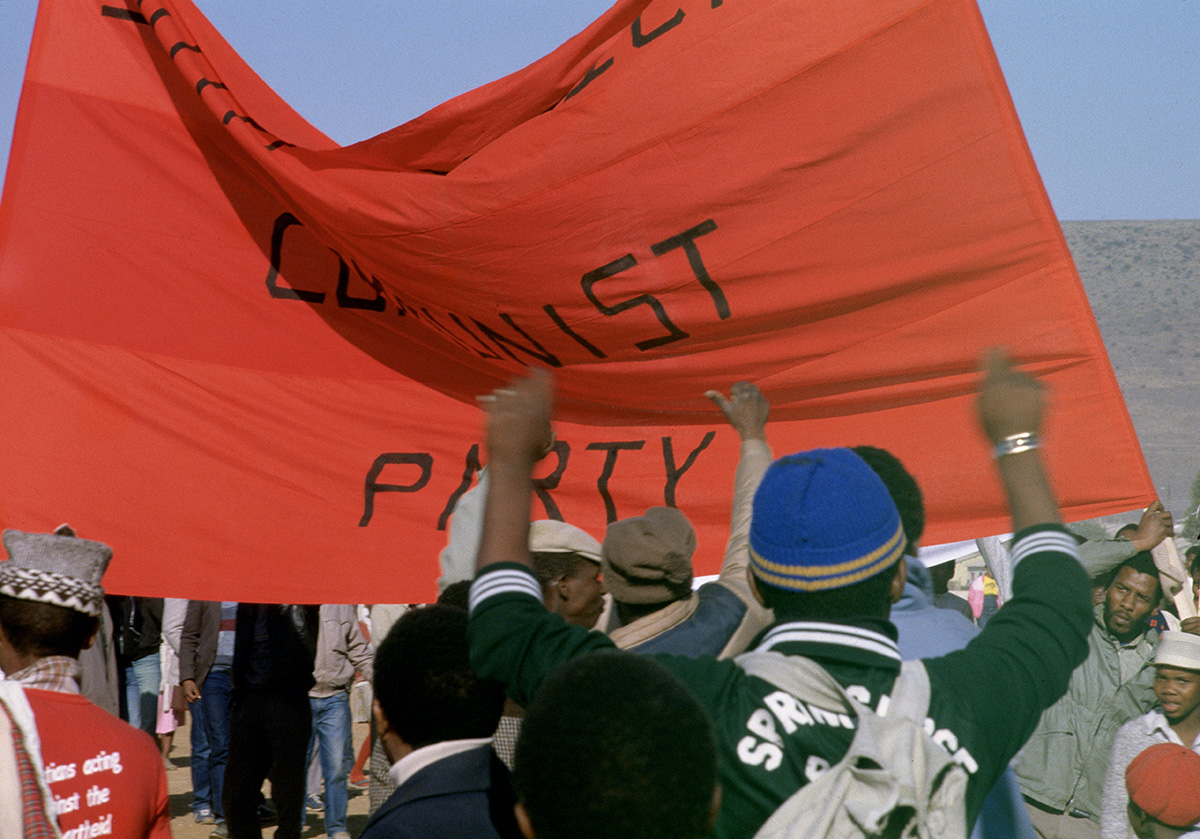
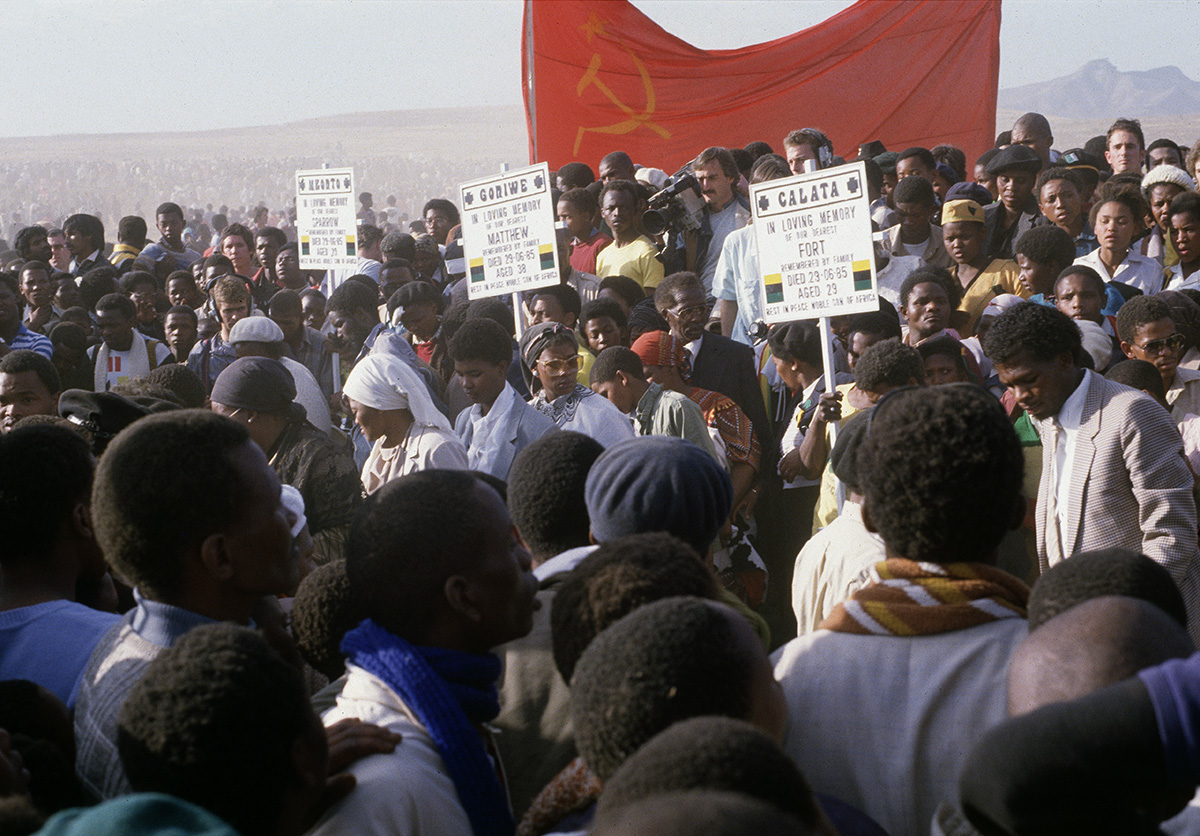
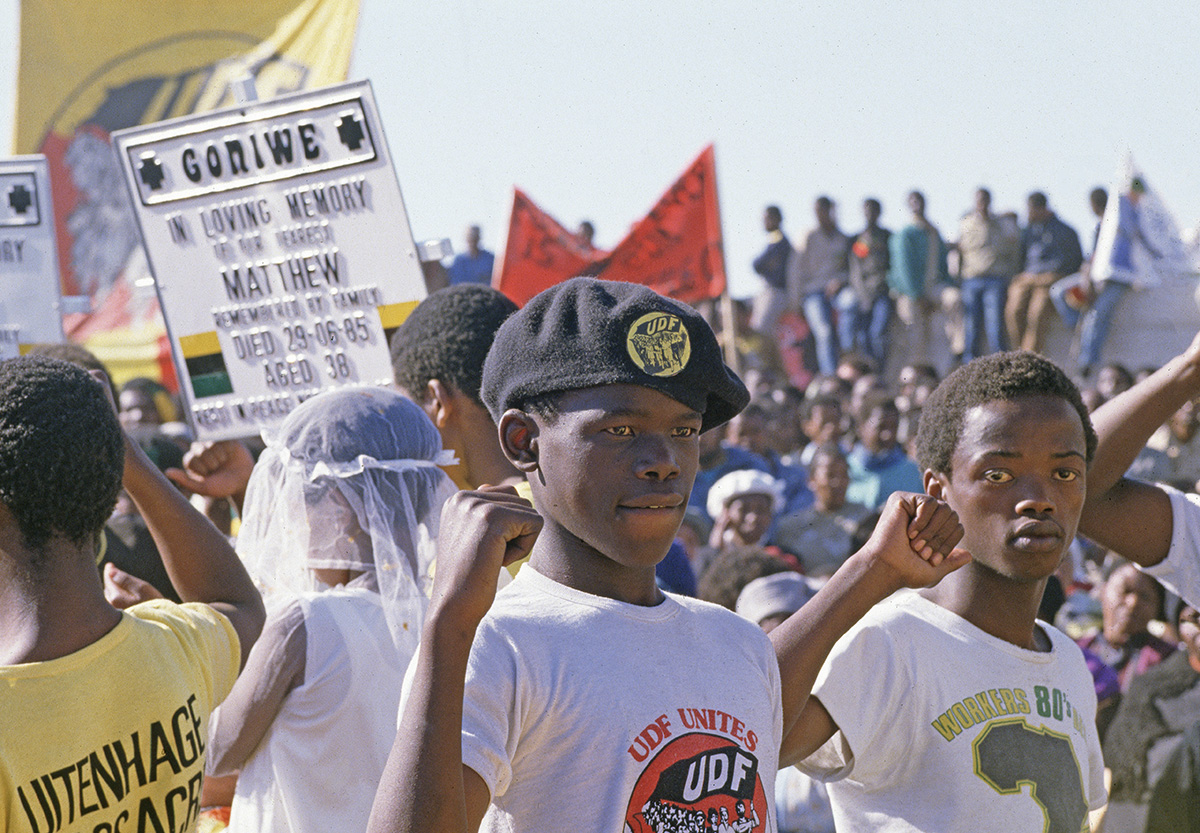
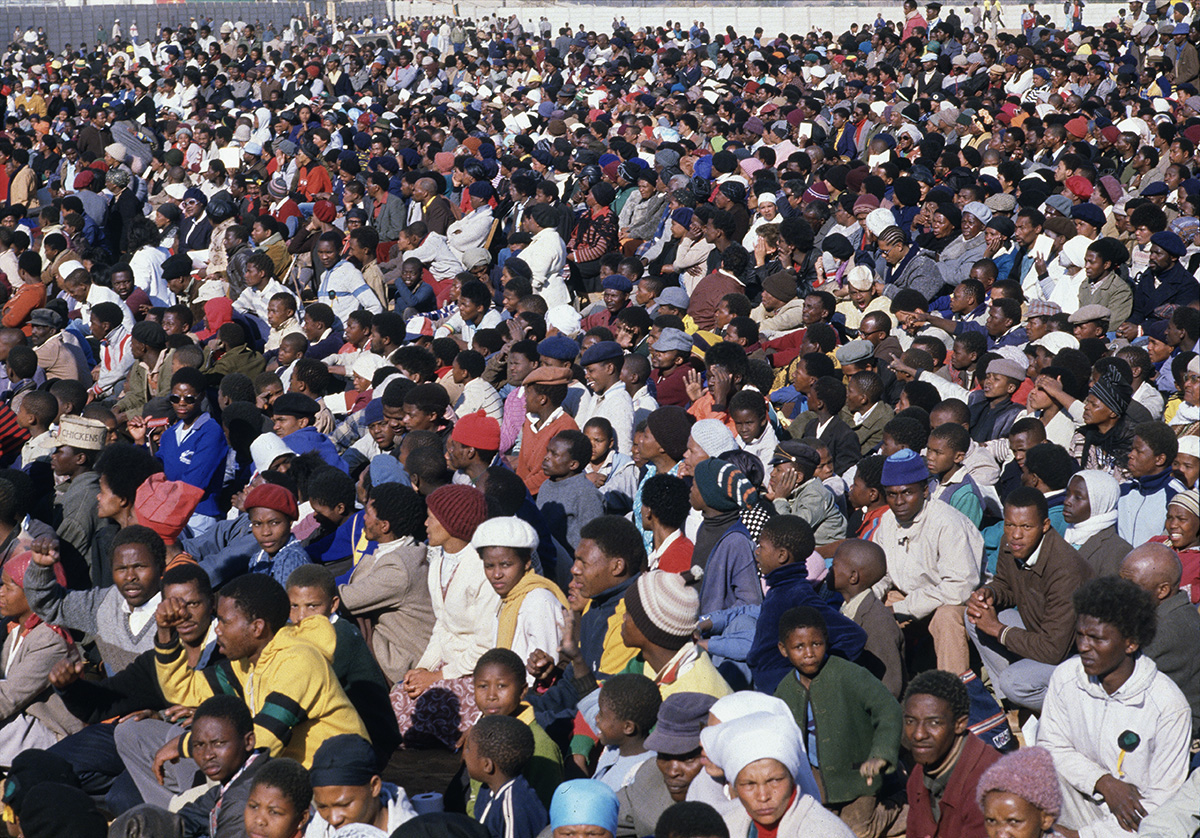
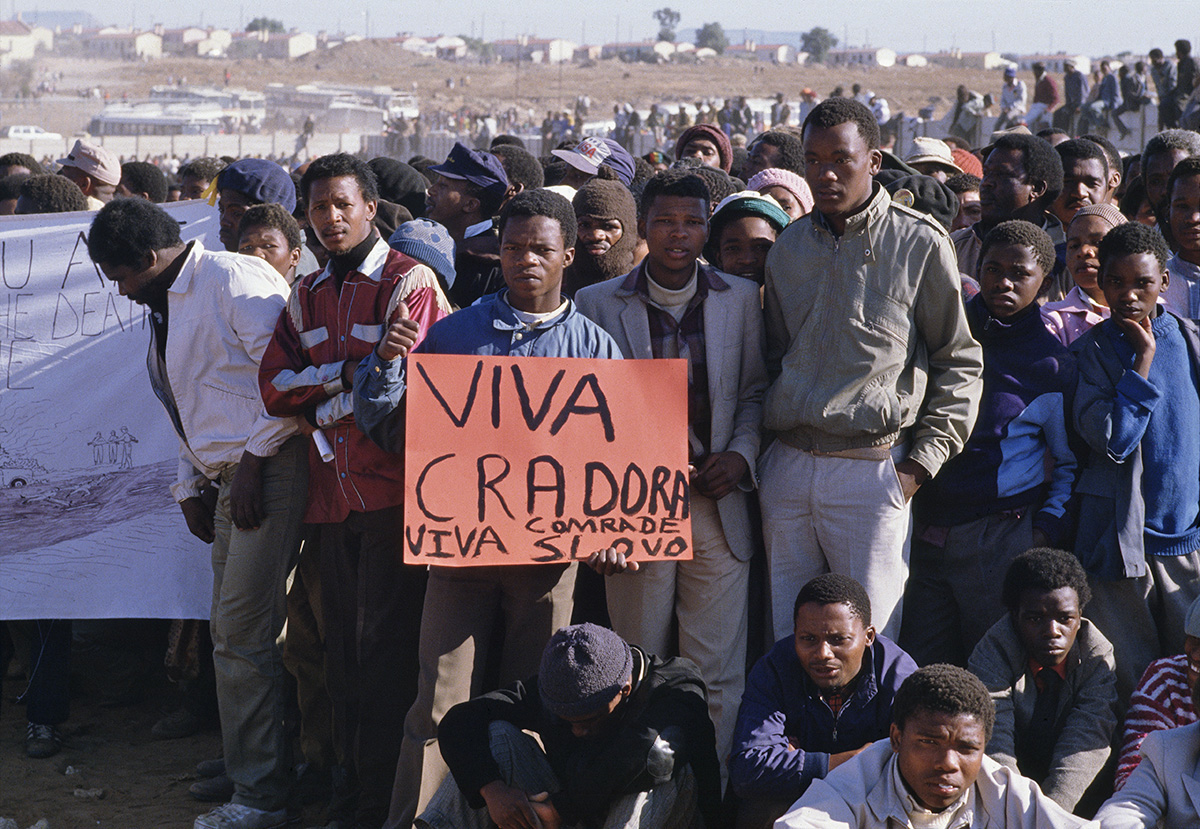
Matthew Goniwe’s Funeral Remembered: Here are Previously Unpublished Photos from 1985

I drove into Cradock on a Friday. As I neared the town, I drove through several military roadblocks, set up in an attempt to stop buses carrying people from Johannesburg and elsewhere from entering the town. The town was jammed with military vehicles, and sandbagged military strongpoints had been set up at its entrances. I …

I drove into Cradock on a Friday. As I neared the town, I drove through several military roadblocks, set up in an attempt to stop buses carrying people from Johannesburg and elsewhere from entering the town. The town was jammed with military vehicles, and sandbagged military strongpoints had been set up at its entrances. I booked into a small local hotel.

Crowds started gathering in Lingelihle the next morning. First, people congregated outside the Goniwe home, where a brief ceremony was held. The main event got underway later in the morning, on a soccer field in the township. Groups representing various local and national organisations marched past, holding placards, standards and banners.

The gathering was addressed by Allan Boesak, Beyers Naudé and Steve Tshwete, among others, and a message from the then president of the ANC, Oliver Tambo, was read out.

A major surprise came when mourners unfurled a giant red South African Communist Party banner – an act of defiance which was unprecedented at that time. It was very cold, and the flags and banners stood out vividly against the drab backdrop of the township and under the clear Karoo winter sky.

The gathering was peaceful, and the security forces did not intervene. Armoured vehicles were visible in the distance, with commanders peering at the proceedings through binoculars.

I returned to the hotel in the afternoon. It was packed with off-duty servicemen, eating in the dining room and drinking in the bar. In the early evening, then president PW Botha declared the first state of emergency, in 36 of the country’s 260 magisterial districts. As he spoke on television, servicemen and other patrons burst out cheering.

I took these photographs in the course of the funeral. They have never been published. Today, some three and a half decades later, I look at them with mixed feelings. Among others, Cradock and Lingelihle, have had a troubled post-apartheid history. I wonder whether the people in these images would feel they have really been liberated, and, if not, who or what they would now regard as their enemy.

Riaan de Villiers is a writer, journalist and publisher.

Images shot on Fuji colour transparency film; scanned and retouched by Orms, Cape Town.

Category: NewsTag: cradock, news, online, south africa
10 October 2020 by Guest

‘The bullet is the easy way out’ – SANParks slammed over killing of Karoo lions

South African National Parks (SANParks) has come under fire for its decision to ‘put down’ seven lions in the Karoo National Park. A pride of seven lions in the Karoo National Park was shot dead after escaping from the park and killing 10 sheep from a neighbouring farm. SANParks has defended the decision to put …

South African National Parks (SANParks) has come under fire for its decision to ‘put down’ seven lions in the Karoo National Park.

A pride of seven lions in the Karoo National Park was shot dead after escaping from the park and killing 10 sheep from a neighbouring farm.

SANParks has defended the decision to put down the lions which it management deemed to be “damage-causing animals”.

In a statement issued last week, the conversation group said that the decision “was not taken in haste nor lightly”.

Wildlife activist Linda Park has slammed SANParks for failing to address the root causes of the incident.

She says poor fencing and population control are among the core issues that park management must be held responsible for.

Park, the director of animal rights group Voice4Lions, says SANParks took the easy way out by killing the lions.

She says other nature reserve authorities, including Ezemvelo Nature Reserve in Gauteng and CapeNature in the Western Cape, are also guilty of similar shortcomings.

They are dealing with the symptoms, and very badly at that, instead of dealing with the cause of these issues.

Linda Park, Director – Voice4Lions

Lions carrying captivity in fenced areas is crucial. In these smaller parks, lions breed [a lot], your numbers go up exponentially and you have a problem. You are going to have dispersments of young males. Groups of females often go out.

Linda Park, Director – Voice4Lions

Your cause is poor fencing, population management which isn’t happening, sterilisation which should be happening in small parks to control the breeding, and there is also a reduction in prey when you have a higher carrying capacity than you should.

Linda Park, Director – Voice4Lions

Instead of addressing the cause of the animals, they shoot them and kill them off. But there’s a bigger picture there.

Linda Park, Director – Voice4Lions

We know that there’s very little space left in the wild for lions due mainly to habitat loss. It’s incumbent upon us to recongise the mess that we are responsible for this and to manage the mess that we have made.

Linda Park, Director – Voice4Lions

SANParks have taken the easy way out to just kill the animals, issue a statement and be done with it. In this day and age, it’s unacceptable.

Linda Park, Director – Voice4Lions

Listen to the discussion on Afternoon Drive with John Maytham:


More from Local

Former President Jacob Zuma at the state capture commission on 17 July 2019


Great White shark 123rf 123rflifestyle


clowns-without-borders-sajpg


Rugby ball on field 123rf


dagga-weed-marijuana-joint-smoke-smoking-123rf


Senekal


school-learner-child-pupil-writing-notebook-classroom-pencil-stationery-123rf


Public Protector Busisiwe Mkhwebane.


FlySafair


Shamila Batohi


Category: NewsTag: cradock, graaff reinet, hofmeyer, karoo, news
8 October 2020 by Guest

The memories in the walls of forlorn Karoo houses

Verbyganger, by Willem Pretorius, oil on canvas. (Image supplied by Willem Pretorius) I chanced upon an image of a painting by Willem Pretorius of a derelict house. It transported me to other houses on other roads, and the intrigue they hold. There’s an abandoned house on the road from Cradock to Graaff-Reinet as you’re heading …


Verbyganger, by Willem Pretorius, oil on canvas. (Image supplied by Willem Pretorius)

I chanced upon an image of a painting by Willem Pretorius of a derelict house. It transported me to other houses on other roads, and the intrigue they hold.

There’s an abandoned house on the road from Cradock to Graaff-Reinet as you’re heading towards the Wapadsberg pass, aiming for the Merino Slaghuis in Graaff-Reinet to buy some doodvreters and a nice slab of brisket to roast for many hours with garlic and too much paprika. They say people were murdered there.

On any long journey somewhere in the Platteland there is that derelict house, just off the road, holding its mysteries close. No one seems to dare interfere with it. They’re never bought, done up and turned into precious Airbnbs with faux-French finishes and pictures of sheep behind the toilet doors. They stand resplendent in their decay, as if it’s a badge of honour. 

The wind chafes at the faded red paint on the roof, the afdakkie seems held up by a pole leaning against it. The plaster has fallen away on a side wall leaving great red-brown slashes. The cracked chimney looks as though it might fall down at any moment. The mind takes you to Scorched Earth; to Kitchener’s men putting flame to a farmhouse while a mother holds her children to her skirts and the dogs bark madly, the pages of the big family Bible burning on the stoep where Ma dropped it while fleeing the house. What dark secrets this house must keep in its walls; what heartache it must have seen.

The dilapidated houses of the Karoo seem impervious to everything around them as if able to withstand most of the weather, oblivious to the passing gaze of every eye in every car that ever went by. Maybe a superstition hangs over them; the suggestion that something happened to the people who once lived here. You wouldn’t want to come in here; bad things lie buried in these walls. An invisible Keep Out sign. You look for the sign that says Private Property, but none seems to be necessary. You’re near; you’re the intruder.

The most famous of South Africa’s deserted houses may well be the red-roofed beauty outside Leeu-Gamka on the N1. Strange how something so decayed can be strangely beautiful. Photographers love them; artists paint them. A sheet of rusted zinc roof hangs akimbo; a collapsed lean-to, as if further evidence were needed that this house has seen all of its better days. A misplaced palm tree hugs the curved afdak to one side, trying vainly to support it. The wooden kitchen door still manages to keep its once bright green, now a faded teal, like an ageing actress reluctant to wipe off the last of the rouge. 

On my Facebook page last week I chanced upon an image of a painting by Willem Pretorius; an oil on canvas of a house seemingly in the middle of nowhere, with an empty booze bottle in the foreground as if to suggest someone had sauntered by at some stage and, draining the dregs, dropped it there as he walked. 

The painting is titled Verbyganger. It tells its story in paint and an artist’s private thoughts.

I know nothing about that particular house, nor where it is, but I don’t need to. Some houses just have that aura about them, that sense of mystery and intrigue, and a suspicion that there were finer times here once, back in the day, nobody quite remembers when. That house, the artist’s house, painted as he sees it – and no two eyes are the same – that house took my mind to other houses on other roads, and the intrigue they hold.

Whenever I drive past the house on the road to Graaff-Reinet I yearn to stop and go inside and snoop around. There are holes in the zinc roof and a part of the afdakkie at the front looks like you wouldn’t want to walk under it, just in case you didn’t survive. You can imagine a series of American Horror Story being set behind those double front doors where nobody has seen for many years, ever since whatever happened in there happened. One night, when all were asleep, and all but one never to awake again. So they say. 

African Horror Story: Karoo Death House. Did death really stalk those dank halls? Hearsay fabricates and replicates itself in houses like that; whether it’s true or not hardly seems the point. It’s the intrigue, the wonder, the what-if, the could-it-be… as somebody wise once said, never spoil a good story with mundane facts.

Melktert and mosbolletjies were made on that kitchen table; rusks and oblietjies, quince jelly and pumpkin fritters. The spice cupboard smelt of vinkel en koljander, cinnamon and ginger. Naartjie peel lay drying in a dish somewhere on a ledge; biltong hung in an outhouse.

Maybe I’ll stop there one day, once I’ve checked the road ahead and the rearview mirror to see if anyone can see what I’m up to. Park a little down the road to avoid suspicion, climb over the barbed wire fence, check my peripheral vision, then saunter over to the stoep, like a teenage boy sneaking up to the school playground shed for a smoke. Harry casual, like.

Listen to my own heavy footsteps as I trudge up to the front door, as if I were my own voyeur. Some leaves scatter, pitter-patter. Something scurries away from my foot, disappears into a hole in the wall. Something creaks, a window shutter on its rusty hinge. The left-hand front door is lopsided. I reach out and push. It moves. It creaks. Something flutters, something else breathes out. A glance over your shoulder finds the breather gone. You give the door another gentle shove. It opens as if an unseen hand is pulling it open from inside. The passage is somber, dark doors along each side urging you to leave now. At the end, dim light in an arc from a filthy window last cleaned in 1993. The day before the night when everything happened, that happened. That night.

My footsteps follow me, creaking floorboards showing me the way through the old voorkamer with its once red sofa now brown with years of dust, and into the kitchen. A rat darts across the Oregon floor, leaving tiny paw prints. Rat drolletjies punctuate my progress. Crunch crunch. And there it is, the thing that I thought surely must be there, unless an earlier intruder had managed to remove it in the dead of a long-ago night, load it onto a bakkie and make off. But my prize is there. 

It’s now red with dust, but a quick wipe with your palm and there it is: the swipe of a hand reveals the shiny green finish of a lovely old Aga. You can smell its history, in the air the remnants of the meals it once was proud to produce, day after night after week after month after year, as young brides grew into mothers and old ladies, as little boys grew into strapping lads who’d go to Marlow to learn how to farm, and little girls grew up to know the right way to embroider, be a good hostess when anybody comes to kuier, make nastergal konfyt and makataan for the church bazaar and slaphakskeentjies for the tuisnywerheid. 

The kids who grew up at that old kitchen range were unlikely to be feminists or vegan or gluten free, whatever that is. The elder son became the next farmer, the younger boy was set free and hope-for-the-best. The girls learnt how to manage a household and don’t forget the chops for lunch.

Pa must have sat at that kitchen table with its turned legs, and his pa before him, and his, and… and ma would have set down the enamel pot of coffee and poured for him when he’d come back from his morning’s labour with the sheep and the fences, the ever needy fences, and she would have made him chops and he could already smell the supper he’d have tonight. 

There was spice in the air, turmeric and cloves, she must have been making curry with the mutton that was defrosted overnight. Now there was something for a farmer to salivate over all afternoon, and no farmer who ever existed did not have a renewed and massive appetite once supper time came.

Melktert and mosbolletjies were made on that kitchen table; rusks and oblietjies, quince jelly and pumpkin fritters. The spice cupboard smelt of vinkel en koljander, cinnamon and ginger. Naartjie peel lay drying in a dish somewhere on a ledge; biltong hung in an outhouse.

Do the things we once did still hover in the rooms of the houses of our lives; like the scars on an old table top, evidence of a little girl having eaten her porridge there and scraped the table with her spoon; a dark circle in the wood where ma once dropped a pot because it was too hot. 

Will their eyes follow me out of the kitchen as I step into the passage, and other eyes follow me towards the front door, and glance at each other as I close it behind me. And hear the car door shut and the engine start as I drive off back to a life still being lived. 

Like those they once lived. DM/TGIFood

Gallery


Comments – share your knowledge and experience

Please note you must be a Maverick Insider to comment. Sign up here or sign in if you are already an Insider.

Everybody has an opinion but not everyone has the knowledge and the experience to contribute meaningfully to a discussion. That’s what we want from our members. Help us learn with your expertise and insights on articles that we publish. We encourage different, respectful viewpoints to further our understanding of the world. View our comments policy here.

All Comments 1

  • William Kelly says:

    Fantastic writing! Loved every word.

  • Category: NewsTag: cradock, news, online, south africa
    8 October 2020 by Guest

    Mining Weekly Council for Geoscience starts deep drilling in Karoo Basin

    The Council for Geoscience (CGS) on September 21 launched Phase 2 of the Karoo Deep Drilling and Geo-environmental Base Programme (KDD), in Beaufort West. The council, as mandated by the Department of Minerals and Energy, in 2016 initiated the research programme to investigate the resource potential of the Karoo basin, which is anticipated to have …

    The Council for Geoscience (CGS) on September 21 launched Phase 2 of the Karoo Deep Drilling and Geo-environmental Base Programme (KDD), in Beaufort West.

    The council, as mandated by the Department of Minerals and Energy, in 2016 initiated the research programme to investigate the resource potential of the Karoo basin, which is anticipated to have between 30-trillion and 500-trillion cubic feet (tcf) of shale gas, and possibly uranium, methane or coal resources, according to the Petroleum Agency of South Africa.

    The United States Energy Information Administration in 2013 estimated that South Africa has the eighth-largest shale gas reserve in the world, at about 390 tcf of technically recoverable shale gas.

    The KDD programme is also targeted at identifying the potential environmental impacts that could arise from shale gas development in the Karoo.

    The KDD will provide scientific evidence to inform policy development and regulatory frameworks on shale gas exploration and extraction, which CGS CEO Mosa Mabuza says can be a significant addition to South Africa’s energy mix and the economy as a whole.

    Shale gas is a natural gas consisting primarily of methane and about 20% higher hydrocarbons, such as ethane.

    Finding domestic gas feedstock will diversify South Africa’s energy mix and reduce carbon emissions. However, South Africa cannot make an environmental assessment of the Karoo’s shale gas exploitation by hydraulic fracturing within the current legal framework.

    Therefore, the KDD serves as a baseline study for future shale gas research work and plays a vital role in the review of petroleum regulations.

    Phase 2 of the programme involves CGS establishing a geo-environmental baseline and putting in place environmental monitoring mechanisms.

    The council had contracted Major Drilling to undertake drilling for a 3.5-km-deep vertical stratigraphic core borehole over the next 10 to 12 months. This borehole is aimed at intersecting the formation earmarked to have the highest potential for shale gas.

    CGS also aims for the drilling to intersect deep brackish groundwater to understand its location and advise how it can be managed to avoid contamination with fresh water during further exploration and exploitation activities.

    During Phase 1 of the KDD, CGS consulted with local communities, the Beaufort West municipality and other interested parties, and have since been given the “thumbs up” to proceed with the programme.

    Phase 1 comprised geological and structural mapping activities at a regional scale, including hydrogeology, airborne and ground geophysics, environmental screening and seismic monitoring.

    Environmental consultants were part of the CGS’s stakeholder engagement process and had given the green light for the council to proceed with Phase 2 of the programme.

    The initial drilling stages of the project had already proven beneficial to the Beaufort West communities, with CGS having discovered five 169-m-deep shallow observation wells in November 2017 – two of which have the capacity to yield good quality groundwater of up to 33-million litres a month.

    This discovery coincided with the unprecedented drought that the Western Cape experienced at the time. CGS subsequently donated the two boreholes to the Beaufort West municipality to alleviate the humanitarian crisis.

    To date, the municipality had pumped almost 400-million litres of water to the people of Beaufort West.

    Phases 3 and 4 of the KDD will involve borehole results analyses and post-drilling monitoring.

    GREAT DEBATE
    There remains concern about the impact of shale gas exploration and production in South Africa and questions about whether South Africa has sufficient viable shale gas reserves.

    Nelson Mandela University Africa Earth Observatory’s Maarten de Wit in the South African Journal of Science in 2011 wrote about his concerns around shale gas discovery and extraction in South Africa.

    At the time, he said it was not known with any degree of certainty how much gas may be beneath the Karoo and that, even if there was enough, it was uncertain whether the gas could be tapped without damaging other subsurface resources.

    “Conservationists argue that extraction of the gas will leave massive irreparable environmental scars on one of South Africa’s iconic landscapes, while there may well be human health hazards pending from associated chemical pollution.”

    However, he also acknowledges that gas is generally considered to be a cleaner source of energy than coal. This is especially welcome, given carbon emission targets that South Africa has, in light of climate change.

    De Wit stated that shale gas is a bridging fuel toward renewable energy sources and an opportunity to wean the country’s grid off coal. “This approach will require holistic valuations that are yet to be attempted in either of the Karoo camps.”

    Professor Bob Scholes of the University of the Witwatersrand’s Global Change Institute says studies by the Academy of Science of South Africa suggest that it is increasingly unlikely that economically and technically viable gas can be found in the Karoo.

    In the absence of new exploration and testing up to now, the upper limit of gas in the Central Karoo had been estimated at 20 tcf.

    Scholes points out that this is a tiny resource by global standards. In terms of energy content, 20 tcf of gas is about 40 times smaller than the known remaining coal reserves in South Africa.

    Conventional gas reserves offshore of Mozambique have been estimated at 75 tcf, he adds.

    Nonetheless, even a small viable gas find in South Africa can transform the national energy economy.

    Mabuza tells Engineering News Mining Weekly that even 1 tcf of gas can be economically exploited and benefit the national power grid and the economy. He expressed confidence in the KDD proving the safety and viability of the Karoo’s shale gas resource over the next few years.

    *Arnoldi visited one of the drilling sites in Beaufort West as a guest of the CGS.

    Category: NewsTag: cradock, graaff reinet, hofmeyer, karoo, news
    7 October 2020 by Guest

    Beyond the Stainless Blue: Out of Africa, into the Rabbit Hole

    (Image by Hulki Okan Tabak from Pixabay) Even being the child of British parents is not enough to understand what it is like to live among the English, eat their food and observe their puzzling ways, like rhyming yoghurt with doggett and not eating gem squash. You come out of the rabbit hole and you’re …


    (Image by Hulki Okan Tabak from Pixabay)

    Even being the child of British parents is not enough to understand what it is like to live among the English, eat their food and observe their puzzling ways, like rhyming yoghurt with doggett and not eating gem squash.

    You come out of the rabbit hole and you’re on the plane. It’s May 2006 and you’ve taken off from Heathrow Terminal Five, headed to Cape Town International. The lights of southern England twinkle below you. Kent passes away into black oblivion as the sea engulfs any light that was. Even the occasional faint lights of ships far below soon disappear into wisps of cloud. You’re going home.

    When you awake at dawn, overtired and foggy of mind, the new day reveals not a cloud within a thousand miles. There’s endless warmth and you imagine that the brown earth down there is somewhere in the Karoo. And there, over there, is that one stray little tuft of white cloud that is always somewhere in the Karoo, wherever you are and no matter how hot the day. It’s the cloud of which Olive Schreiner wrote to Havelock Ellis on 20 April 1890, when she was living in the little cottage at Matjiesfontein that James D Logan built for her: “It is one of those glorious and beautiful days on which simply to be alive is cause for blessing and praising God. It is perfect, so still, so still, the motionless Karoo with the sunlight shimmering on it. The stainless blue, with just one cloud floating in it like a ship, one doesn’t know why…”

    Schreiner’s imagery accompanies us to Cape Town where we emerge from her stainless blue into the rumbling city with all its complexities and troubles. But it is home, with its sea of memories from decades lived there and its new questions about our future. Where is life taking you now?

    I’d had the same thought when queuing at OR Tambo airport in 2002 for the flight to London. I knew where life was taking me, but the question was far deeper. What would happen, how would things pan out. In front of me at the airport, in the queue to board the plane, was a young man who asked me where I was “leaving the country” to live. He was headed to Canada. I went quiet, because not for a second did I think of what we were doing as “leaving the country”, as if we were aggrieved whites who felt the need to escape the status quo. For us it was a simple matter of there being, at the time, no jobs for the likes of me, and I knew it well because I had applied for jobs for most of a year after a late 2001 retrenchment. I felt no resentment; accepted that it was time to redress the criminally skewed South African employment situation. But a fact was a practical fact: I had to have an income, I had to work, so I had to g0 where the work was, and within a fortnight of arriving in the UK I started a new newspaper job. It did, and still does, feel like a miracle.

    Sometimes that’s a good place to be. Just making a decision, going somewhere else, because you’ve got life and you find, over much time, that uprooting yourself and taking yourself to a new place adds to the richness of the tapestry. If we’d never decided, on that day in 2002, to move to England, so many memories would not be there, friends would not have been made, journeys would not have been taken. Roast duck and dumplings in Prague, the ferry trip to the Normandy beaches and fresh fish and frites at a café in Honfleur, croque monsieur and steak et frites in Paris for my 50th birthday.

    Without having lived among my ancestral people I could not have written about Emily Hobhouse, not properly; even though we lived far from Liskeard in Cornwall where her father had been a pastor, living among the English is not the same as watching English characters in movies. Even being the African child of British parents is not enough to understand, to truly perceive, what it is like to live among the English in their villages and mingle with them in their high streets, to shop in their shops, eat their food and observe their puzzling ways, like rhyming yoghurt with doggett and not eating gem squash.

    We’d gone down the rabbit hole into a grey England in September 2002, we’d just missed what Britons laughingly call the summer, so we faced another winter ahead, having left Cape Town at the end of the southern winter. A year of winter, and the second one far colder, but full of delights, especially at Christmas. Buying hot chestnuts from a cart in Chichester’s North Street, just up from the Tudor Cross at the heart of the city. Roasting a prime rib of beef you’d bought from the farmer himself at the Saturday farmers’ market. Buying a pound of vegetables from the other, rougher market on a Saturday, set in a huge parking lot. It could have been straight out of EastEnders, with glottal-stop traders yelling “fresh po’-’ay-’ers, a paaand fer a paaand”, confusing the foreigner even further than necessary. It takes you a minute to register that she’s offering you a pound (1 lb) of potatoes for £1.

    I learnt quickly how to secure a bargain from the vegetable traders. You had to wait until the market was busy closing down the day’s trading. That was when to swoop. So, in the early weeks, when we had hardly any money because the company I worked for expected you to work two full months before you received your first salary, I took advantage of the “paand for a paand” of vegetables (the woman I bought them from was a dead ringer for tough-as-boots Shirley off EastEnders). This was an extraordinary offer. You got a black plastic crate packed to the brim with potatoes, onions, carrots, a cauliflower, a cabbage, tomatoes, a bunch of spinach, a cucumber, lettuce, leeks, celery, sometimes broccoli, parsley, beetroot, even a huge swede (like a turnip but much bigger, sweeter, with a gentler flavour and just delicious). For a pound. One pound.

    That first two months of no income was a hard pill to swallow at the time but a great bonus when the time came to leave four years later and you found yourself with a double parting salary. Maybe that’s why they do it: to make sure that you leave in a happy mood.

    The first time I bought a crate of veggies for £1, being the ingenue that I was, I said thank you very much and made off with the crate. A week later the two customers in front of me also said thank you very much, then held out their own shopping bags for the vendor to put the vegetables into. Then “Shirley” looked at me much like EastEnders’ Shirley eyerolls everyone: “Brought yer own bag this time, ’ave yer?”

    I had thrown myself into the food department of Marks Spencer in my first days there, the days before my wife and daughter joined me (I’d gone ahead for a job interview and to find us a furnished flat). We had friends in Chichester, Dave and Janet Philip (Dave related to but not the David from the publishing company), so I invited them around to the new rented flat for supper on the first Friday night. I went to MS and spent “only” £45 for sundry little tubs of French patés, cold meats and the like, and set them out on the dinner table. Janet’s eyes opened wide when she saw the spread. “Tony, these things are expensive! You’ve spent way too much, they’re pounds, not rand…” But I learnt that lesson quickly, and it was the next morning that I encountered “Shirley” at the weekly market.

    I felt more English than I had ever felt, living there, but I also felt my South Africanness keenly. I felt very much like a foreigner in their midst, despite all of my relatives being British, mother, father, sister, even late brother, and my cousins being as Yorkshire as Yorkshire gets, being the offspring of my dad’s sisters who stayed behind (his brothers had no children). You try to fathom them, just as they struggle to fathom our southern African ways. How Britons think 20? is a heatwave. How they can be puzzled at the thought of a braai. Or think it’s a little tin foil box you take to the pebble beach to cook your bangers on, then you sit there with pebbles, not sand, between your toes, yearning for a Karoo braai werf and some lekker tjoppies.

    But oh, the pubs, and their grub, whether gastropub or just the random one around the corner. The carvery at the Nags Head with four or five massive joints of meat laid out, the potted grouse at the 17th century pub in Kent you happened upon when rounding a country bend, the pork pies at Melton Mowbray on that drive to Yorkshire, the French market that comes to town shortly before Christmas, with their sundry patés, their Moroccan tagines and their little tins of foie gras, and the posh fare at the Royal Oak in Lavant where you rubbed shoulders with the Aston Martin DB set who’d just come back from the races at Goodwood, and you hoping they wouldn’t notice your little blue second-hand Escort Harrier in the parking lot.

    In the dark of winter there’s one thing a Brit longs for, and soon you do too. The fleeting, erratic, unreliable summer, when on any given day you might swear it is still winter. But when an English summer does throw out a warm or even hot day, it is truly splendid. It’s when the night comes that you appreciate it the most. Their daylight saving habit is a fine thing. It means that you’re in daylight, at summer’s peak, until 10 or even later at night. I remember the sun only finally, totally disappearing by 11pm on occasion. And that means long hours at an al fresco table outside a pub or restaurant, amid hanging baskets of summer flowers and a bottle of wine (French or Italian, sir?) on the table.

    But it’s also these balmy English summer nights that remind you that you can have much more of that warmth on your cheek and sun in your heart if you jump down that rabbit hole again, board that plane and head back to the south and the great expanse of the Karoo and find that one cloud floating in it like a ship, one doesn’t know why. Back to Cape Town and, ultimately, Cradock, where Schreiner once lived and wrote, and where, on most days, I can spot Olive’s little cloud in the sky beyond my study window, hovering endlessly, as if cast astray, a bemused straggler, having been left behind and wondering where the other clouds went. To England, I suspect. DM/TGIFood

    Gallery


    Comments – share your knowledge and experience

    Please note you must be a Maverick Insider to comment. Sign up here or sign in if you are already an Insider.

    Everybody has an opinion but not everyone has the knowledge and the experience to contribute meaningfully to a discussion. That’s what we want from our members. Help us learn with your expertise and insights on articles that we publish. We encourage different, respectful viewpoints to further our understanding of the world. View our comments policy here.

    All Comments 2

  • Vis Dragon says:

    Enjoyed it. Thanks

  • Chris Hill says:

    Always a pleasure reading your TGIF articles.

  • Category: NewsTag: cradock, news, online, south africa
    7 October 2020 by Guest

    South Africa: Sanparks Puts Down Seven Karoo NP Lions That Posed Threat to Humans and Livestock

    South African National Parks (SANParks) has put down seven lions from the Karoo National Park on the grounds that they posed a threat to livestock and humans. A public outcry may be in the offing, but the incident underscores the challenges of managing populations of dangerous megafauna. SANParks said in a statement on Friday 2 …

    South African National Parks (SANParks) has put down seven lions from the Karoo National Park on the grounds that they posed a threat to livestock and humans. A public outcry may be in the offing, but the incident underscores the challenges of managing populations of dangerous megafauna.

    SANParks said in a statement on Friday 2 October that the decision was “not taken in haste.” The park has 14 lions remaining.

    The all-female group had escaped the park and killed sheep on a neighbouring farm and was “a threat to human beings,” SANParks said. “The pride had familiarised themselves with a specific area from which they escaped and one of the members of the pride had developed a habit of digging underneath fences.”

    “… lions that pose threats to livestock and people have a high level of urgency and are executed after a thorough assessment and observation of the circumstances over time,” the statement said.

    The incident has echoes of Sylvester the lion’s escapades.

    A Tale of Two Cats, Cecil and Sylvester

    Sylvester had two breakouts from the park, the first in 2015 that triggered a madcap 24-day chase and left a trail of dead sheep in its wake….

    Category: NewsTag: cradock, graaff reinet, hofmeyer, karoo, news
    5 October 2020 by Guest

    South Africa: Advocate George Bizos Laid to Rest – AllAfrica

    Renowned human rights lawyer and activist, Advocate George Bizos, has been laid to rest at Westpark Cemetery in Randburg, Johannesburg. Bizos, 92, passed away on 9 September 2020. The Bizos family held a private family service ahead of the Special Official Funeral Category 1, as declared by President Cyril Ramaphosa upon his passing. Delivering the …

    Renowned human rights lawyer and activist, Advocate George Bizos, has been laid to rest at Westpark Cemetery in Randburg, Johannesburg.

    Bizos, 92, passed away on 9 September 2020.

    The Bizos family held a private family service ahead of the Special Official Funeral Category 1, as declared by President Cyril Ramaphosa upon his passing.

    Delivering the eulogy, President Ramaphosa described Bizos as a man led by his moral convictions and one who was on the right side of history.

    A titan of the legal fraternity, Bizos was destined to become a human rights lawyer, having fled from his war-torn home country of Greece at the age of 13 with his father.

    “He was destined to be an activist lawyer and a champion of the liberation struggle. We read in his memoirs how it astounded him that he, a refugee from Europe, had more rights in South Africa than the black majority.

    “He could not and would not accept how he, a white immigrant, could be well-fed, clothed and educated, while the native people of the country lived in squalor and deprivation,” said the President.

    Punished for his involvement in the anti-apartheid struggle, the apartheid government denied Bizos citizenship for over three decades.

    “Bizos’s biography relates that the refusal letter told him he was “not fit and proper” to become a South African citizen. But the rabble-rouser that he was, he would not go quietly. He never laid claim to having been a firebrand revolutionary,” said the President.

    The legal eagle’s presence was seen at some of the most famous trials in South African history.

    He was on the defence team at the Rivonia Trial and over the course of his life, defended many leaders of the liberation struggle like Trevor Huddleston, Govan Mbeki and Walter Sisulu.

    Sign up for free AllAfrica Newsletters

    Get the latest in African news delivered straight to your inbox

    By submitting above, you agree to our privacy policy.


    Success!

    Almost finished…

    We need to confirm your email address.

    To complete the process, please follow the instructions in the email we just sent you.


    Error!

    There was a problem processing your submission. Please try again later.

    Bizos also played a role in the hearings of the Truth and Reconciliation Commission.

    He was trusted by the families of Ahmed Timol, Steve Biko, Neil Aggett, the Cradock Four and victims of the apartheid death squads to represent them.

    With South Africa on the cusp of democracy, Bizos led the team for the Constitutional Assembly to certify the first Constitution of democratic South Africa, and assisted in its drafting.

    “His contribution has been extraordinary and his influence on our constitutional democracy is without any doubt felt not only by those in the legal profession, but by many South Africans,” said President Ramaphosa.

    Dedicated to a life of giving, Bizos the philanthropist was a founding member of the Saheti School and established a scholarship and bursary fund for needy students.

    As a founding member of Lawyers for Human Rights and the Legal Resources Centre, Bizos also mentored young lawyers.

    “For him, the struggle did not end with democracy, but would only end when every man, woman and child enjoyed the rights promised to them. We owe it to his legacy to finish the business he started,” said the President.

    Category: NewsTag: cradock, news, online, south africa
    5 October 2020 by Guest

    Karoo National Park: Outrage as seven escaped lions ‘killed by rangers’

    Our offices are for administrative purposes only, no visitors will be accepted without an appointment. South Africa– Blue Sky Publications (Pty) Ltd T/A TheSouthAfrican Number: 2005/028472/07. Address: Regus Business Centre 1st Floor, Block B, North Park, Black River Park, 2 Fir Street, Observatory, Cape Town, 7925, South Africa Postal: Blue Sky Publications (Pty) Ltd T/A …

    Our offices are for administrative purposes only, no visitors will be accepted without an appointment.

    South Africa– Blue Sky Publications (Pty) Ltd T/A TheSouthAfrican Number: 2005/028472/07.
    Address: Regus Business Centre
    1st Floor, Block B, North Park, Black River Park, 2 Fir Street, Observatory, Cape Town, 7925, South Africa
    Postal: Blue Sky Publications (Pty) Ltd T/A TheSouthAfrican, PO Box 44354, Claremont, 7735, South Africa

    United Kingdom– Blue Sky Publications Ltd – Company Registration Number: 04683692.
    Address: Riverbank House, 1 Putney Bridge Approach, London, SW6 4TJ

    Category: NewsTag: cradock, graaff reinet, hofmeyer, karoo, news
    4 October 2020 by Guest

    Much-loved SA Rugby board member Monde Tabata dies due to Covid-19 complications

    Respected SA Rugby board member Monde Tabata has died due to Covid-19-related complications. SA Rugby said in a statement the 60-year-old had died after several months fighting the effects of the virus. The urbane Tabata was a much loved and well known businessman in his native Eastern Cape and in Johannesburg. He was a long-standing …

    Respected SA Rugby board member Monde Tabata has died due to Covid-19-related complications.

    SA Rugby said in a statement the 60-year-old had died after several months fighting the effects of the virus.

    The urbane Tabata was a much loved and well known businessman in his native Eastern Cape and in Johannesburg. He was a long-standing power broker in the domestic game.

    Tabata was co-opted onto the SA Rugby Exco in 2010 as an independent member and chaired several committees up until his death.

    He was at times deployed as a Mr Fix-It as an administrator to Border and Eastern Province at times of financial distress for those unions.

    “Although Monde had been sick for some time‚ his passing comes as a tremendous blow‚” said Mark Alexander‚ president of the South African Rugby Union.

    “It is almost impossible to imagine that he will no longer sit at our council tables offering wise and passionate input on all manner of subjects‚ bringing his valuable business and life experience to bear.

    “He held strong views and was not afraid to share them but it was never personal with Monde and he will be most fondly remembered for his jovial nature‚ the comradely way in which he went about our business and his passion for rugby‚ particularly in the Eastern Cape.”

    Tabata was born in Cradock in 1960 and educated at Rhodes University. He was a founding member of the Black Student Movement and was president of its rugby union.

    He worked for Eskom and held CEOs roles with the National Economics Initiative and National Small Business Council‚ and was deputy CEO of Megapro Marketing in a wide-ranging business career that also included serving as chairman of the East Rand Youth and Children’s Trusts. He was also a financial supporter of the Cradock Lions RFC.

    “It is easy to say that someone will be sorely missed at times like these but in the case of Monde it is not an empty phrase‚” Alexander said.

    “We are a lot poorer as a rugby organisation today following his passing. He was a rugby man who was passionate about an inclusive and successful future for rugby in our country‚ and one who took a hard-headed business approach to any issue.

    “His will be a very hard act to follow. His counsel will be sorely missed.”

    Category: NewsTag: cradock, news, online, south africa
    4 October 2020 by Guest

    Why SANParks shot dead 7 ‘problem lions’ in Karoo

    SANParks defended its decision to put down seven lions because they were constantly escaping.  No other reserve would take the lions. As the lions became less afraid of humans, they became a risk to people living around the reserve.  The SA National Parks (SANParks) defended its decision to euthanise seven lions at the Karoo National …

    • SANParks defended its decision to put down seven lions because they were constantly escaping. 
    • No other reserve would take the lions.
    • As the lions became less afraid of humans, they became a risk to people living around the reserve. 

    The SA National Parks (SANParks) defended its decision to euthanise seven lions at the Karoo National Park in the face of outrage over its actions. 

    Spokesperson Reynold Thakhuli explained that one of the big cats had already figured out how they could get in and out, and which spots along the fence were easiest to dig under, in order to go hunting on the other side.

    On Monday, the seven lions made a break for it in the high mountainous areas – twice in 24 hours – killing 10 sheep near the reserve in the Beaufort West area.

    READ | 7 lions shot after escaping from reserve twice, killing 10 sheep

    Rangers rounded up the lions and slept in the mountain to keep an eye on them.

    But they escaped again, to go back to the carcasses.

    Shot 

    A decision was made, and the lions were shot dead from a helicopter because it was too dangerous to go on foot. 

    The lions were regularly killing sheep in the surrounding area and they were also losing their fear of humans. 

    SANParks was worried that their next prey could be a person.  

    Shooting the lions elicited outrage from some conservationists, who said other steps should have been taken – like fixing the fence.

    READ | Huge uproar from wildlife organisations following killing of 7 ‘problem’ lions in Karoo

    Thakhuli said the decision was not taken lightly, and SANParks had even tried to donate the lions to other parks and reserves, but nobody had space.

    A tough call had to be made. 

    It was clear there was a high probability of the lions leaving again and posing a risk to livestock and people.

    “SANParks is obligated and has a legal duty to respond and mitigate such risks,” he continued. 

    He explained that lions are opportunistic, prefer easy prey, are fast learners and could become habitual livestock raiders. 

    Problem lions

    According to SANParks’ Large Mammal Ecologists, various drivers contribute to the behaviour of problem lions: one being that male lions disperse when they are adults, and the prides move around and compete for food. This is not a problem because there is no fencing and other land use between reserves, but the Karoo National Park is bordered by people. 

    Left unchecked, populations within reserves can increase by 22% a year – and, if the lions do not get enough food, there is a risk they will break out of the reserve. 

    South Africa is among the top five African range states that conserve lions. 

    There are 3 500 wild lions, and in 59 state and private small reserves, there are 700. 

    The Karoo National Park has 14 lions left, consisting of three to four groups, with two active satellite collars and VHF monitored collars. 

    Category: NewsTag: cradock, graaff reinet, hofmeyer, karoo, news
    2 October 2020 by Guest

    Eastern Cape concerned about second COVID-19 wave after spike in schools

    The Eastern Cape Government is concerned a second wave of COVID-19 may be imminent in the province following a rise in the infection rate in some regions, like the Joe Gqabi District. The virus is reportedly spreading at an alarming rate in multiple Eastern Cape schools. A reported 102 schoolchildren tested positive for the virus …

    The Eastern Cape Government is concerned a second wave of COVID-19 may be imminent in the province following a rise in the infection rate in some regions, like the Joe Gqabi District. The virus is reportedly spreading at an alarming rate in multiple Eastern Cape schools.

    A reported 102 schoolchildren tested positive for the virus at a school in Burgersdorp and the number of infections in the region continues to rise, with a spike being reported at schools in Middelburg, Cradock and Sterkspruit.

    Eastern Cape Health MEC Sindiswa Gomba described the new wave as “fires that are spreading fast” at a media briefing on Tuesday, 29 September.

    At the briefing, Gomba also announced that the 102 pupils from the Burgersdorp school had recovered but the virus had spread to four more schools in the town.

    “We have also reported that 26 learners and 25 community members in Middelburg have tested positive. We are happy to announce that all these learners have recovered, but sadly we have lost an educator and a community member who both succumbed to the pandemic,” Gomba said.

    Since Gomba’s briefing, 125 people tested positive for the virus and the number of active cases in the Eastern Cape stands at 1506. The death toll increased by 3 and stands at 3124.

    South Africa recorded 1767 new coronavirus cases, according to the latest report released by health minister Dr Zweli Mkhize on Wednesday, 30 September. Prior to this report, SA had recorded less than 1000 new cases for two consecutive days.

    The increase brings the total number of infections to 674 339, while the death toll increases to 16 734, after 67 more deaths were recorded in five provinces. Three people died in the Eastern Cape, 37 in KwaZulu-Natal, 11 in Gauteng, 9 in the Western Cape and 7 from the Free State.

    Our recoveries now stand at 608 112 which translates to a recovery rate of 90%

    Picture: GCIS

    Category: NewsTag: cradock, news, online, south africa
    2 October 2020 by Guest

    Huge uproar from wildlife organisations following killing of 7 ‘problem’ lions in Karoo

    Animal welfare organisations have condemned the killing of seven lions at the Karoo National Park on Tuesday. The lions were shot from a helicopter after they escaped from the park twice and killed 10 sheep. Other plans could have been made, the organisations say. The killing of seven “damage-causing” lions at the Karoo National Park …

    • Animal welfare organisations have condemned the
      killing of seven lions at the Karoo National Park on Tuesday.
    • The lions were shot from a helicopter after they
      escaped from the park twice and killed 10 sheep.
    • Other plans could have been made, the organisations
      say.


    The killing of seven “damage-causing”
    lions at the Karoo National Park outside Beaufort West in the Western Cape has
    drawn hefty reactions from a number of wildlife organisations.

    The lions were shot dead from a helicopter on
    Tuesday
    after two escapes in a 24-hour period. They also killed 10
    sheep on a neighbouring farm.

    SANParks spokesperson Rey Thakhuli said the pride
    was considered a “damage-causing group of animals” that was
    concentrated in the high mountainous areas next to the northern boundary of the
    park, causing a serious risk to human life and livestock, News24 reported on Wednesday.

    But on Thursday, animal welfare organisations
    reacted with shock at the killing of the pride.

    READ | 7 lions shot after escaping from
    reserve twice, killing 10 sheep

    Fiona Miles, director of FOUR PAWS in South Africa,
    said Tuesday was a “very tragic day for the wild lion population of South
    Africa”.

    “The existing damage-causing animal policy
    guidelines state that problem animals are usually a man-induced problem and
    management action should be focused on finding a non-lethal option where there
    is no immediate life-threatening situations. By maintaining quality standards
    and regular fence and perimeter checks, this could have been avoided.”

    Miles said the onus was on parks to ensure proper
    predator-proof fencing was erected to minimise conflict with neighbouring
    communities.

    Enormous impact on ecosystem

    “More instances of this nature will occur if
    there is not a commitment undertaken to fix the long-term issue with fencing.
    Appropriate preventative steps should have been taken after the first escape of
    the lion pride given the likely probability for a second attempt.

    Miles said: 

    “With no human life in immediate threat, the
    measures taken by slaying a tribe has been excessive and should never have
    occurred in the first place. With proper management, this situation could and
    should have been avoided at all cost,” Miles said.

    Audrey Delsink, director of wildlife at Humane
    Society International – Africa, told News24: “With fewer than 25 000 wild
    lions left on the continent, Africa’s lions are in crisis.”

    Death should be last resort

    Delsink said: 

    “We trust that this was the case and, if so,
    we are deeply disappointed that no other alternatives such as recapture and/or
    relocation to another venue were feasible or possible. African lions need
    support and non-lethal conflict mitigation strategies should prevail,”
    Delsink said.

    When approached for comment, SANParks’ Fayroush
    Ludick said there were plans to host a webinar to address the issue. Once the
    details are available, it will be added.

    Did you know you can comment on this article? Subscribe to News24 and add your voice to the conversation.

    Category: NewsTag: cradock, graaff reinet, hofmeyer, karoo, news
    1 October 2020 by Guest

    Eastern Cape worried as Covid-19 infections surge at schools

    “We have also reported that 26 pupils and 25 community members in Middelburg have tested positive. We are happy to announce that all these pupils have recovered, but sadly we have lost an educator and a community member who both succumbed to the pandemic,” Gomba said. The provincial government on Tuesday used its weekly Covid-19 …

    “We have also reported that 26 pupils and 25 community members in Middelburg have tested positive. We are happy to announce that all these pupils have recovered, but sadly we have lost an educator and a community member who both succumbed to the pandemic,” Gomba said.

    The provincial government on Tuesday used its weekly Covid-19 media briefing to unpack work being done by various departments to fight poverty.

    The briefing was also attended by social development MEC Siphokazi Mani-Lusithi, rural development and agrarian reform MEC Nomakhosazana Meth and human settlements MEC Nonkqubela Pieters.

    The anti-poverty programmes include food security, fighting malnutrition, provision of human settlements support and provision of social relief of distress programmes.

    DispatchLIVE

    Category: NewsTag: cradock, news, online, south africa
    1 October 2020 by Guest

    7 lions shot after escaping from reserve twice, killing 10 sheep

    A pride of seven “damage-causing” lions was shot dead after they escaped from the Karoo National Park twice in 24 hours. The lions killed 10 sheep on a neighbouring farm and later returned to the carcasses. The park said the lions were put down because they posed a danger to humans and livestock. A pride …

    • A pride of seven “damage-causing” lions was shot dead after they escaped from the Karoo National Park twice in 24 hours.
    • The lions killed 10 sheep on a neighbouring farm and later returned to the carcasses.
    • The park said the lions were put down because they posed a danger to humans and livestock.

    A pride of seven lions from the Karoo National Park outside Beaufort West in the Western Cape was put down on Tuesday after two escapes in a 24-hour period.

    In the first incident, in the early hours of Monday morning, three lions from the pride of seven escaped from the park’s northern boundary along the Nuweveld Mountain range onto private property, said Rey Thakhuli, SANParks’ acting head of communications.

    READ | Conservationist West Mathewson killed by his lions as wife allegedly watched helplessly

    They subsequently killed 10 sheep on the neighbouring farm.

    “Rangers were immediately despatched and succeeded in chasing the animals back to the park. They then slept on the mountain in case the lions returned to the carcasses, which they did during the night,” Thakhuli said.

    He said SANParks’ predator management policy made provision for the control of damage-causing animals.

    “In an attempt to deter human-predator conflict and conservation, a management decision was taken to react quickly and put down the entire pride.

    Damage-causing animals

    “Because of the very difficult mountainous terrain, rangers could not get close to the animals on foot. A helicopter was subsequently brought in to assist in putting down the two sub-adult males, three sub-adult females and two adult females.”

    Thakhuli said the pride was considered a “damage-causing group of animals” who was concentrated in the high mountainous areas next to the northern boundary of the park, causing a serious risk to human life and livestock.

    Park management was in constant contact with the property owner, who was kept up to date with proceedings, he added.

    Do you want to know more about this topic? Sign up for one of News24’s 33 newsletters to receive the information you want in your inbox. Special newsletters are available to subscribers.

    Category: NewsTag: cradock, graaff reinet, hofmeyer, karoo, news
    29 September 2020 by Guest

    Tributes paid to rugby executive, Monde Tabata

    CONDOLENCES have poured out to SA Rugby executive council (Exco) member, Monde Tabata’s, family, following his passing. Tabata passed away last week Friday after several months fighting the effects of the COVID-19 virus. He was co-opted onto the SA Rugby Exco in 2010 as an independent member and chaired several committees up until his death. …

    CONDOLENCES have poured out to SA Rugby executive council (Exco) member, Monde Tabata’s, family, following his passing.

    Tabata passed away last week Friday after several months fighting the effects of the COVID-19 virus.

    He was co-opted onto the SA Rugby Exco in 2010 as an independent member and chaired several committees up until his death.

    Category: NewsTag: cradock, news, online, south africa
    29 September 2020 by Guest

    Karoo Creations: Making every day a duvet day

    Ryna Cloete working wool. (Photo: Karoo Creations) When he was 14, Aubrey Williams’ grandmother Lil taught him to sew on her old Singer sewing machine. Nearly thirty years later, these skills came in handy when Williams and his husband Lionel Millard turned their old Victorian Karoo Hotel into a wool duvet factory under lockdown. Aubrey …


    Ryna Cloete working wool. (Photo: Karoo Creations)

    When he was 14, Aubrey Williams’ grandmother Lil taught him to sew on her old Singer sewing machine. Nearly thirty years later, these skills came in handy when Williams and his husband Lionel Millard turned their old Victorian Karoo Hotel into a wool duvet factory under lockdown.

    Aubrey Williams and Lionel Millard moved from Johannesburg to the Northern Cape town of Richmond in 2019. With ten years’ experience in Joburg hospitality, their plan was to renovate and re-open the town’s historic hotel that had been partially damaged by a tornado while standing abandoned for decades.

    A year later, Covid-19 hit. Under lockdown regulations, their brand-new Richmond Karoo Small Hotel was forced to shut its doors.

    “We didn’t know where the hell we were going to get money, basically to just feed ourselves,” Williams tells Maverick Citizen.

    “So, we were like, what can we do? Well we’re in the middle of sheep country, so we sourced around and found a supplier for wool that was still operating. We got a fabric supplier and started making duvets, and, ja, it took off like rockets. It was absolutely phenomenal. I mean, in three months, we were making more turnover with the duvets than we ever did with the hotel.”

    And so, the Richmond Karoo Small Hotel became a wool duvet factory, with operations based in its grand wood-paneled dining room. The hotel is one of two double-storey buildings in Richmond, the tallest building in the town apart from the church spire.

    “During hard lockdown, I was sewing and sewing,” recalls Williams. “I roped Lionel in and so he was separating wool and packing it out, so, ja, it was a big change from making breakfast and socialising with guests.”

    Williams and Millard are both 44. They have been a couple for 16 years, after meeting on the internet.

    Aubrey Williams co-founded Karoo Creations with his husband Lionel Millard and their dog Sir Knuckles. (Photo: Karoo Creations)
    Aubrey Williams. (Photo: Karoo Creations)

    “When we started out the duvets, I was working on this really old Empisal machine,” says Williams. “But we’ve plowed profits back into the business. Now I’ve got two industrial sewing machines and we’ve gone from a hundred stitches a minute to 3,700. Man, it’s like going from a lawn-mower to a Ferrari.”

    What’s more, after the initial hard lockdown, the hotel’s two housekeepers were redeployed as duvet makers.

    “We had to let our two staff members go with the initial level five lockdown. In that time we sold, I think it was about ten duvets, of which we basically did everything ourselves. But as the orders started picking up, we said to them: ‘Ryna, Jacqui, okay come back!’ We were like: ‘Masks on, here is the hand sanitiser.’ We were observing all the protocols.”

    Fuelled by a Facebook page, a website and word-of-mouth, their business Karoo Creations gathered momentum like a desert storm, with orders and deliveries countrywide.

    “Actually, all we’ve done is to launch a little Facebook page,” says Williams, modestly. “Our Facebook page, it’s not really a marketing thing. We just tell our story, you know, for example how we only switched off the sewing machines at one o’clock in the morning. It’s more to take people along on our journey. I launched the website too, which I built myself because that was my background before going into hospitality. I was service delivery manager for the Standard Bank Group; my team built all their websites across the globe. So I have a bit of web design experience.”

    Karoo Creations wool duvets being made at the The Richmond Karoo Small Hotel.
    (Photo: Karoo Creations)
    Karoo Creations wool duvets being made at the The Richmond Karoo Small Hotel.
    (Photo: Karoo Creations)

    Their duvets, available in different sizes and weights, are priced between R750 and R8,100.

    “So right now we have Ryna and Jacqui working every day,” says Williams. “Then with big orders, we bring in one or two temp ladies. The wool comes in these long, long strands that we have to separate, pack into little parcels and then put onto an industrial scale. So it’s very labour intensive. Obviously, I’m in the factory, I do all the sewing myself. We’ve really honed our process now. We used to be able to get one duvet out every three days, now we’re doing four duvets in a day. And, Lionel, before he joined me in the hospitality business, was with Discovery Health as their training coordinator handling logistics behind all their training. So, for our new business, he does the admin — the orders, the packaging, liaising with the couriers, ordering all of our supplies, and so on. Basically, he’s our admin backbone.”

    How did they manage to be successful, so quick? Williams pauses to think, taking a drag on a menthol cigarette.

    “Well we’re one of three wool duvet providers in South Africa, the others are in Cape Town and Chrissiesmeer,” he says. “Clients say their allergies have disappeared. They’re not sweating anymore. Basically it’s just down to the product, I think.”

    Surrounded by arid plains and koppies, Richmond is a seven and a half hour drive from Joburg and seven hours from Cape Town – the perfect cross-country halfway stop, says Williams.

    Closing down inter-province travel hit the town hard.

    “Look, we rely predominantly on passing trade from the N1,” he says. “We’ve got a whole lot of guest houses here and it decimated them. I don’t know if some of them are going to open again. It’s been really, really tough.”

    In the far-flung town, Karoo Creations has become a beacon of inspiration; an example of entrepreneurial pivot in a time of economic collapse. While bookings at the Richmond Karoo Small Hotel are picking up again, the husband-team remains committed to their budding wool duvet business.

    During the interview, Williams refers to sustainability several times. No sheep are harmed in the making of their duvets, he says.

    “Sheep have to be shorn once a year, especially here in the Karoo with the [high] temperature,” he explains. “Obviously it’s done by hand. And what a lot of people don’t realise is this: the shearer, as soon as they nick a sheep or give a sheep a cut, that fleece cannot be used because of the blood that’s on it. So it actually affects the shearer’s pocket if he hurts the sheep, as the farmer will not pay for that wool. So given that their pocket is affected, they go for quality instead of speed.”

    He adds that many of the local shearers are trained at the Herding Academy, South Africa’s only sheep-shearing school funded by the billionaire Rupert family near Graaff-Reinet, 130km to the south.

    Richmond consists of a few restaurants and guesthouses; a Spar, a bottle store, a hardware store and a Standard Bank, clustered astride an underground river next to the N1. This is slow living.

    “It’s a very different type of life,” says Williams. “When you take a walk to the Spar, which is about 200m away, it takes an hour because everybody stops to talk. You sit and have a coffee with this person on their stoep, then you see that person in the street, then you bump into another person at the Spar.

    “The town was established in 1847, so it’s a very old town with all of that beautiful Karoo architecture. I mean Loop Street, which is sort of the main street, has beautiful gentrified houses and restaurants. We’ve got the Vetmuis Plaaskombuis, which is right next door to our hotel. They offer traditional Karoo food, absolutely stunning gifts and beautiful confectionery, and just amazing service. Then we’ve got Die Krip Restaurant, an old horse and cow barn. So when when you sit at the bar there you’re actually sitting on old horse saddles, and it’s got the original crypt where the cows used to eat.”

    Williams points out that the town’s NG Kerk is believed to have the most elevated pulpit in South Africa. “When our dominee preaches on Sundays, he is the highest dominee in the country,” he says, laughing. The dominee, Theo Badenhorst, happens to be the father of Afrikaans rock star Francois van Coke. Badenhorst moved to Richmond shortly after Williams and Millard.

    It was a tragedy that sparked the couple’s move into the Karoo. Two years before, criminals held up a wedding party at their luxury lodge on Johannesburg’s West Rand. It was time for change. Now both their parents are moving to Richmond, too.

    “Obviously our first few months here was epically stressful,” says Williams. “It was an adjustment and the hotel was very damaged. But now that we’re into this way of life, I honestly would not change it for the world. Even going to Graaff-Reinet for shopping, when we go through a traffic light and there’s a bit of traffic congestion, I get stressed out! I get stressed out with the crowds.”

    Richmond has changed the couple’s priorities. “There’s no such thing as ‘Ooh, who’s wearing what and, ooh, who’s driving what car?’ Look, it might not be for everybody. But I think when you hit that midlife crisis in your forties, this is the life,” says Williams. “It’s totally blissful.” DM/ ML/ MC


    Gallery


    Comments – share your knowledge and experience

    Please note you must be a Maverick Insider to comment. Sign up here or sign in if you are already an Insider.

    Everybody has an opinion but not everyone has the knowledge and the experience to contribute meaningfully to a discussion. That’s what we want from our members. Help us learn with your expertise and insights on articles that we publish. We encourage different, respectful viewpoints to further our understanding of the world. View our comments policy here.

    No Comments, yet
    Category: NewsTag: cradock, graaff reinet, hofmeyer, karoo, news
    28 September 2020 by Guest

    SA weather: You may get snow in these locations on Saturday

    Our offices are for administrative purposes only, no visitors will be accepted without an appointment. South Africa– Blue Sky Publications (Pty) Ltd T/A TheSouthAfrican Number: 2005/028472/07. Address: Regus Business Centre 1st Floor, Block B, North Park, Black River Park, 2 Fir Street, Observatory, Cape Town, 7925, South Africa Postal: Blue Sky Publications (Pty) Ltd T/A …

    Our offices are for administrative purposes only, no visitors will be accepted without an appointment.

    South Africa– Blue Sky Publications (Pty) Ltd T/A TheSouthAfrican Number: 2005/028472/07.
    Address: Regus Business Centre
    1st Floor, Block B, North Park, Black River Park, 2 Fir Street, Observatory, Cape Town, 7925, South Africa
    Postal: Blue Sky Publications (Pty) Ltd T/A TheSouthAfrican, PO Box 44354, Claremont, 7735, South Africa

    United Kingdom– Blue Sky Publications Ltd – Company Registration Number: 04683692.
    Address: Riverbank House, 1 Putney Bridge Approach, London, SW6 4TJ

    Category: NewsTag: cradock, news, online, south africa
    28 September 2020 by Guest

    Tourism Month: 5 things to do in Boland and it’s surrounding areas

    By Travel Reporter Sep 18, 2020 Share this article: ShareTweetShareShareShareEmailShare Now that travellers’ can explore to their heart’s content, why not take a trip to Boland in the Western Cape, which is famed for its spectacular scenery. Centred around the Boland mountains and towns such as Worcester, Robertson and Paarl, the town is ideal for …

    By Travel Reporter Sep 18, 2020

    Share this article:

    Now that travellers’ can explore to their heart’s content, why not take a trip to Boland in the Western Cape, which is famed for its spectacular scenery.

    Centred around the Boland mountains and towns such as Worcester, Robertson and Paarl, the town is ideal for those who want to escape from the hustle and bustle of city life.

    Here five things to do in Boland and it’s surrounding areas:

    Karoo Desert National Botanical Garden in Worcester

    Karoo Desert National Botanical Garden, the only succulent botanical garden in the southern hemisphere, is home to over 400 indigenous plants from the arid and semi-arid regions of southern Africa, as well as 70 different bird species and many small mammals.

    Originally established in 1921 near Matjiesfontein, the garden was moved to Worcester in 1945. While the garden is enjoyed all year round, the best time to visit is during spring when thousands of annuals and vivid vygies start flowering.

    Six Dogs Distillery in De Wet

    Nestled between the Breede River and Hex River valleys, you will find Six Dogs Distillery that produces three gins – Six Dogs Karoo, Six Dogs Blue and Six Dogs Pinotage Stained. As the distillery is located near Worcester, where many estates produce South Africa’s signature grape variety, the grapes of the 2020 vintage come from a neighbouring wine farmer. Book a tasting at the distillery to try this truly South African tipple for yourself.

    Visit sixdogs.co.za

    Rio Largo in Scherpenheuwel

    Olive estate Rio Largo produces high quality, proudly South African olive oils in the scenic Scherpenheuwel valley between Worcester and Robertson. Owners Nick and Brenda Wilkinson bought the estate in 2010 and, thanks to their passion and expertise, have produced award-winning olive oil since acquisition.

    Find out for yourself how age-old practices, modern technology and the ideal South African terroir produce the perfect, proudly South African product.

    Visit riolargo.co.za

    Protea Farm in Montagu

    Protea Farm, located outside of Montague, is famed for its legendary tractor trips, potjiekos and scenic views. Hop on board a tractor that meanders up the Langeberg mountain, past proteas that grow in abundance, and take in the sweeping views of the Koo and Robertson valleys as you near the top. The tractor trips have been going since 1985.

    The farm itself, full of apple and pear orchards, offers four self-catering cottages if you want to stay overnight. Other activities include hiking, mountain biking and swimming in the lake.

    Visit proteafarm.co.za

    Karoo 1 Hotel Village in De Doorns

    With original buildings dating back to 1756, the Karoo 1 Hotel is a sensitively restored farm in Touwsriver. The Country Gourmet Restaurant serves true Karoo dishes that have won the hearts of numerous guests.

    Visit karoo1.com

    Category: NewsTag: cradock, graaff reinet, hofmeyer, karoo, news
    26 September 2020 by Guest

    Hawks bust Eastern Cape municipality in alleged R26m fraud scandal

    By Robin-Lee Francke Sep 23, 2020 Share this article: ShareTweetShareShareShareEmailShare Cape Town – The Independent Police Investigative Directorate (Hawks) has seized documents indicating alleged fraud amounting to R26 million at a municipality in the Eastern Cape. In a statement released on Wednesday, Hawks spokesperson Lieutenant-Colonel Philani Nkwalase said members attached to the East London Hawks …

    By Robin-Lee Francke Sep 23, 2020

    Share this article:

    Cape Town – The Independent Police Investigative Directorate (Hawks) has seized documents indicating alleged fraud amounting to R26 million at a municipality in the Eastern Cape.

    In a statement released on Wednesday, Hawks spokesperson Lieutenant-Colonel Philani Nkwalase said members attached to the East London Hawks Serious Corruption Investigation team embarked on a search-and-seizure operation at the Inxuba Yethemba local municipality, formerly known as Cradock municipality, in Cradock on Tuesday.

    He said the purpose of the investigation was to secure documents that were linked to allegations of fraud and corruption totalling approximately R26m.

    Nkwalase said the investigation began in 2017 when procurement processes were allegedly being flouted and several companies were being awarded tenders for road construction, maintenance projects and the design of a community hall in the municipal district.

    He said the work on the projects was incomplete.

    “All these projects were allegedly paid in full to all service providers during the 2017/2018 financial year, yet the work on all projects was partially rendered.

    “It indicates that the projects were allegedly used to siphon municipal funds,” Nkwalase said.

    He said the Hawks’ preliminary investigation showed probable cause, which allowed the investigating team to obtain a search warrant.

    When the investigating team went to the offices of the municipality, no arrests were made, and Nkwalase said the persons of interest and companies implicated in the alleged fraud are yet to be charged. This was due to the ongoing investigation.

    African News Agency/ANA

    Category: NewsTag: cradock, news, online, south africa
    • Previous
    • Page 1
    • Interim pages omitted …
    • Page 7
    • Page 8
    • Page 9
    • Page 10
    • Page 11
    • Interim pages omitted …
    • Page 157
    • Next
    WE LOVE CRADOCK.

    COPYRIGHT MyCradock · DESIGN BY REACH TRUST
    All Rights Reserved · Powered by Straton Solar