• Skip to main content
  • Skip to header right navigation
  • Skip to site footer

My Cradock

My Cradock

Cradock News Classifieds and Directory

  • Home
  • About
  • Accommodation
  • Business
  • Events
  • Free Business Advert
  • Submit News
You are here: Home / Archives for 1876

1876

18 May 2018 by Alan

Image from page 300 of “The countries of the world : being a popular description of the various continents, islands, rivers, seas, and peoples of the globe” (1876) – Valley Of Desolation

Image from page 300 of “The countries of the world : being a popular description of the various continents, islands, rivers, seas, and peoples of the globe” (1876) Image by Internet Archive Book Images Identifier: countriesofworld04brow Title: The countries of the world : being a popular description of the various continents, islands, rivers, seas, and …

Image from page 300 of “The countries of the world : being a popular description of the various continents, islands, rivers, seas, and peoples of the globe” (1876)
Valley of Desolation
Image by Internet Archive Book Images
Identifier: countriesofworld04brow
Title: The countries of the world : being a popular description of the various continents, islands, rivers, seas, and peoples of the globe
Year: 1876 (1870s)
Authors: Brown, Robert, 1842-1895
Subjects:
Publisher: London New York : Cassell, Petter, Galpin & co.
Contributing Library: University of California Libraries
Digitizing Sponsor: Internet Archive

View Book Page: Book Viewer
About This Book: Catalog Entry
View All Images: All Images From Book

Click here to view book online to see this illustration in context in a browseable online version of this book.

Text Appearing Before Image:
e account iirstappeared in the Lfiiuhm Muguzine, but no man, so far as I am aware, has been ableto discover the original of the talc, and it is generally understood that the whole wasthe work of George Steevens, an unscrupulous antiquary, who was never happier thanwhen entrapping his contemporaries in the meshes of some ingenious hoax. However,the story was too attractive not to seize the imagination. Erasmus Darwin embalmed itin his stately verses, poets of a less scientific type followed his example, while paintereinnumerable vied with each other in picturing the scene of so much desolation. In reality INDOMAI.AYSIA : JAVA. «!),» tlie life is a spurge (Aiiliarln fo.rictiriu), which, when pierced, exndcs a milky juiuc,containing, as is usually the case with such plants, an a<ri<l poison. But, so far finniheing as pestilent as described, the tree has liecii eultivatetl in our Iwtanic gardens,and is known to grow in the Java wcmkIs along with dthcr vegetation, which it does not

Text Appearing After Image:
TICK VIAS TREE (iliiKarit toiiearia) OF JAVA. injure, and on its branches birds and lizards have often been seen to perch. It is,however, f:iir tn say that the soil on which it grows is often cavernous, and iii thevalley of death exhales carbonic acid and sulphurous vapoui-s, which are fatal to animallife, and that from the same causes operating in the streams, many of the latter aredestitute of lishes. The juice is also used as an arrow poison, and often causes disagreealileirritation, or worse, to those who climb the tree, or wear a garment made of the innerbark. This irritating character is, however, common to the juice of the order to which 270 THE COUNTRIES OF THE WOKT.D. flie upas belongs. The tree is not eonfineJ to Java, for a traveller describes it astlourisliing in a valley near the town of Briini, iu Borneo, surrounded by hills coveredwith dense vegetation. It is, however, curious, as proving that the ancient tales aboutit are based on some foundation of fact, that the nati

Note About Images
Please note that these images are extracted from scanned page images that may have been digitally enhanced for readability – coloration and appearance of these illustrations may not perfectly resemble the original work.

This Valley of Desolation image was automatically curated and published with WP Robot plugin – CLICK HERE to learn more about WP Robot for Wordpress – a massive time and money saver.

Category: ImagesTag: 1876, being, continents, countries, description, DESOLATION, from, globe, image, islands, page, peoples, popular, rivers, seas, VALLEY, various, world
14 March 2018 by Alan

Image from page 147 of “The Pacific tourist” (1876)

Image from page 147 of “The Pacific tourist” (1876) Image by Internet Archive Book Images Identifier: pacifictourist1876will Title: The Pacific tourist Year: 1876 (1870s) Authors: Williams, Henry T Shearer, Frederick E Subjects: Union Pacific Railroad Company Central Pacific Railroad Company Railroad travel Railroad travel Railroad travel Publisher: New York : H.T. Williams Contributing Library: San …

Image from page 147 of “The Pacific tourist” (1876)
Valley of Desolation
Image by Internet Archive Book Images
Identifier: pacifictourist1876will
Title: The Pacific tourist
Year: 1876 (1870s)
Authors: Williams, Henry T Shearer, Frederick E
Subjects: Union Pacific Railroad Company Central Pacific Railroad Company Railroad travel Railroad travel Railroad travel
Publisher: New York : H.T. Williams
Contributing Library: San Francisco Public Library
Digitizing Sponsor: San Francisco Public Library

View Book Page: Book Viewer
About This Book: Catalog Entry
View All Images: All Images From Book

Click here to view book online to see this illustration in context in a browseable online version of this book.

Text Appearing Before Image:
comotive.If the party is large enough for a picnic, so muchthe better, as often flat cars are added, neatlytrimmed with evergreen l)Oughs. The railroad,after leaving the station tin-ns directly towardthe mountain range, and giadually ascends forthe first six miles, a steady grade of 2(10 feet tothe mile, until just before the mouth of the can-on it reaches 296 feet. Xothing can describe theapparent desolation of sage brush and dry sterileappearance of the soil, but here and there where-ever the little mountain brook can be divertedfrom its course, and its water used to irrigate theland, the richest of fruit trees, grass and grainspring up and give abundant crops. The littlestream, with its rajnd fall, follows us up theentire length of the canon. The upward ascentof the grade seems hardly noticeable, of so uni-form a slope is tlie surface of the country, and itis not till the base of the mountains is reached,and the tourist looks back, he realizes his height, 144 Wmm ^si€IFW WQWMiBW.

Text Appearing After Image:
A o < i O 05 3 S w and sees in the distance the clear surface of UtahLake consideiably below him. Gathering nowon the flat cars—where the scenery can be bestobserved—the little train slowly enters the canon.Scarcely oUU feet are passed over before therebursts upon the eye views of rock scenes of themost rugged character. The little valley isscarcely 100 feet broad, and in its widest partnot over 200 feet, but from the very track and littlesti-eam, the rocks loom up into heights of start-ling distinctness and almost perpendicular ele-vation. The color of the rocks is uniformly of verydark red and brown granite, apparently havingonce been heated in a terrible furnace, and thenin melting had arranged themselves into ruggedand fantastic shape more than mortal coidd con-ceive. At the beginning of the canon, the rocks aver-age about 800 feet in height, then, as the routeascends, the sides become more and more boldand erect,—the height greater, and the summitssticking up in jagged p

Note About Images
Please note that these images are extracted from scanned page images that may have been digitally enhanced for readability – coloration and appearance of these illustrations may not perfectly resemble the original work.

This Valley of Desolation image was automatically curated and published with WP Robot plugin – CLICK HERE to learn more about WP Robot for Wordpress – a massive time and money saver.
Category: ImagesTag: 1876, from, image, Pacific, page, Tourist.
10 April 2016 by Alan

Image from page 260 of “The Andes and the Amazon :|bor across the continent of South America” (1876) – The Great Fish River Museum

Image from page 260 of “The Andes and the Amazon :|bor across the continent of South America” (1876) Image by Internet Archive Book Images Identifier: andesamazonborac76orto Title: The Andes and the Amazon :|bor across the continent of South America Year: 1876 (1870s) Authors: Orton, James Subjects: Publisher: New York: Harper Contributing Library: Natural History Museum …

Image from page 260 of “The Andes and the Amazon :|bor across the continent of South America” (1876)
The Great Fish River museum
Image by Internet Archive Book Images
Identifier: andesamazonborac76orto
Title: The Andes and the Amazon :|bor across the continent of South America
Year: 1876 (1870s)
Authors: Orton, James
Subjects:
Publisher: New York: Harper
Contributing Library: Natural History Museum Library, London
Digitizing Sponsor: Natural History Museum Library, London

View Book Page: Book Viewer
About This Book: Catalog Entry
View All Images: All Images From Book

Click here to view book online to see this illustration in context in a browseable online version of this book.

Text Appearing Before Image:
ewhat it was when Wallace and Bates entered it twentyyears ago. It is the largest city on the largest river in theworld, and the capital of a province ten times the size ofNew York State. The enterprising, wealthy class consistsof Portuguese and pure Brazilians, with a few English,Germans, French, and North Americans. The multitude isan amalgamation of Portuguese, Indian, and Negro. Thediversity of races, and the mingled dialects of the Ama-zon and Europe, make an attractive street scene. Side byside we see the corpulent Brazilian planter, the swarthyPortuguese trader, the merry Negro porter, and the apa-thetic Indian boatman. Some of the more recent off-spring are dressed a la Adam before the fall; numberswear only a shirt or skirt; the negro girls who go aboutthe streets with trays of sweetmeats, on their heads areloosely yet prettily dressed in pure white, with massivegilded chains and earrings; but the middle and upperclasses generally follow Paris fashions. The mechanic Paea. 259

Text Appearing After Image:
Fruit Peddlers. arts are in tlie hands of free Ne-groes and Indians, mulattoes andmaraelncos.* Commerce is car-ried on almost exclusively byPorti:guese and other foreigners.Dry-goods come chiefly fromEngland and France; groceriesfrom Portugal; flour and hard-ware from the United States.The principal exports are rub-ber, cacao, coffee,t sugar, cotton,Brazil nuts, sarsaparilla, vanilla, farina, copaiba, tobacco,rum, hides, fish, parrots, and monkeys.:{: Para exceeds inthe number of its indigenous commodities any other portin the world, but the trade at jDresent is insignificant whenwe consider the vast extent and resources of the country.The city can never have a rival at the mouth of the Ama-zon, and is destined to become a great emporium. ButBrazilian legislation stands in the way. Heavy import du-ties are charged—from 35 to 45 per cent.; and on the 1stof January, 1868, it was ordered that 15 per cent, must bepaid in English gold. The consequence has been that goldhas risen from 28

Note About Images
Please note that these images are extracted from scanned page images that may have been digitally enhanced for readability – coloration and appearance of these illustrations may not perfectly resemble the original work.

This The Great Fish River museum image was automatically curated and published with WP Robot plugin – CLICK HERE to learn more about WP Robot for Wordpress – a massive time and money saver.

Category: ImagesTag: 1876, across, Amazon, America, Andes, continent, Fish, from, great, image, Museum, page, River, South, |bor
6 January 2016 by Alan

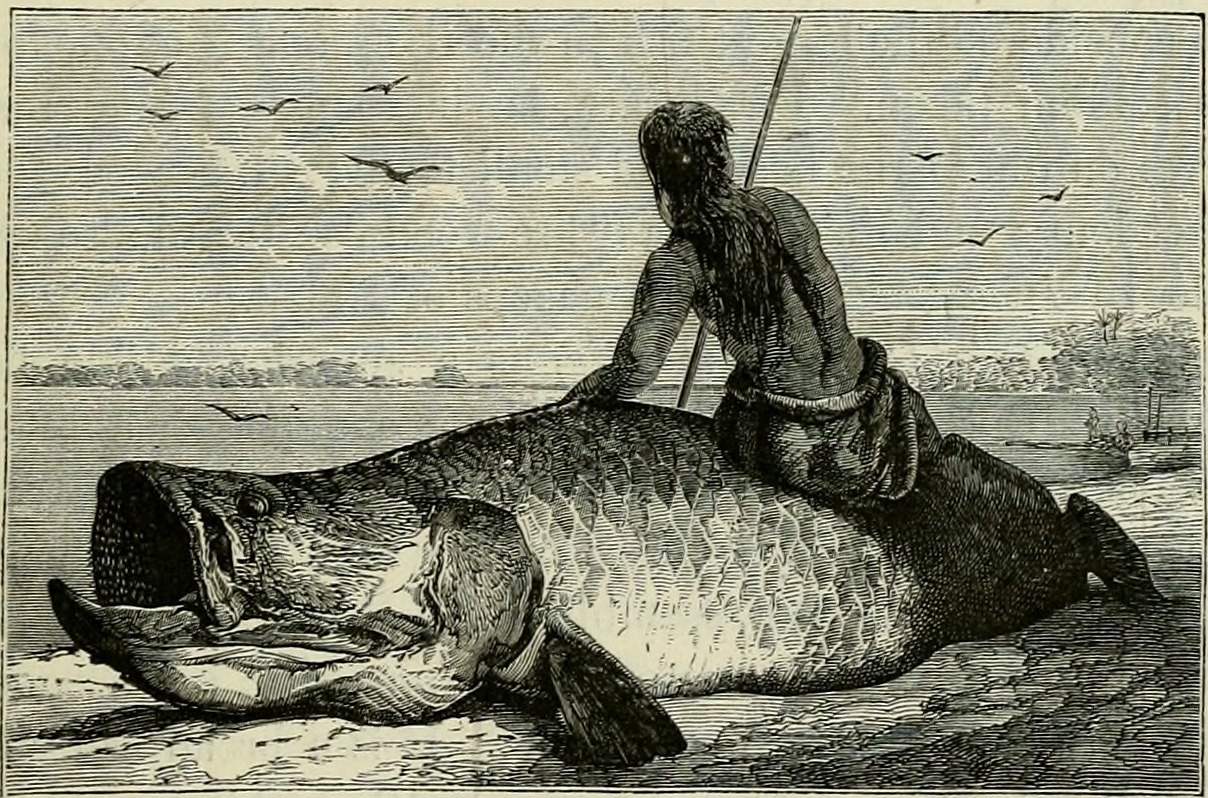
Image from page 480 of “The Andes and the Amazon :|bor across the continent of South America” (1876)

Image from page 480 of “The Andes and the Amazon :|bor across the continent of South America” (1876) Image by Internet Archive Book Images Identifier: andesamazonborac76orto Title: The Andes and the Amazon :|bor across the continent of South America Year: 1876 (1870s) Authors: Orton, James Subjects: Publisher: New York: Harper Contributing Library: Natural History Museum …

Image from page 480 of “The Andes and the Amazon :|bor across the continent of South America” (1876)
The Great Fish River museum
Image by Internet Archive Book Images
Identifier: andesamazonborac76orto
Title: The Andes and the Amazon :|bor across the continent of South America
Year: 1876 (1870s)
Authors: Orton, James
Subjects:
Publisher: New York: Harper
Contributing Library: Natural History Museum Library, London
Digitizing Sponsor: Natural History Museum Library, London

View Book Page: Book Viewer
About This Book: Catalog Entry
View All Images: All Images From Book

Click here to view book online to see this illustration in context in a browseable online version of this book.

Text Appearing Before Image:
variety. The great majority * Alligators are better travelers, being found .nbove the Falls of the Ma-deira, far up the Mamore and Beni. t Consequently the females almost exclusively are taken. The males aresmaller, and go by different names. Thus, the male of the large turtle iscalled Capitari; of the Tracaja, Anaiurt, or Taricaia, in Peru. (See p. 297.) Amazonian Fishes. 479 belong to the Cat-fish family (Siluridce), naked with bar-bels, and mainly to the group Pimelodina. The Lorica-7-ias, or cuirassed Silurids, are also comparatively numer-ous. Scale-fish seem tobe most abundant above the fallson the tributaries, and the skin-fish below. They are usu-ally captured by poisoning the water (as with baibasco ),and by means of spears, arrows, and hooks. A novel meth-od I witnessed on the Tapajos: two Indians di-agged a ca-noe lengthwise down stream, while a third followed afterwith a long palm-branch which provoked the fishes to leapout of the water, most of which fell into the canoe.

Text Appearing After Image:
The Pira-rucd. Pii-a-rucii, Payshi, or Anatto {Arapaima gigas), the Cod-fish of the Amazons, is the unixersal diet on the river, and,after rubber and cacao, the most important article of trade.It is sometimes found, but rarely, ten feet long, weighing300 pounds. It is covered with large, hard, red scales;has a smooth head, wide mouth, no barbels, and bands ofrasp-like teeth in various parts of the mouth. It aboundsin iagunes and clear water. Places, usually dry sand-banks. 480 The Andes and the Amazons. where salting this fish for the market is made a business,are called feitorias—about the only factories on the river.The fish is coarse, and not relished by foreigners. Pescada, a scaly, silvery fish, attaining six pounds, hasa delicious, white, flaky flesh, resembling fresh Cod-fish;abounds in the Solimoens and Tapajos. Tambaqui, calledGamitana on the Maranon {Myletes, one of the Gharaci-nidoB), is a very fine, large fish, found from the Negro tothe Ucayali. It is often a yard long,

Note About Images
Please note that these images are extracted from scanned page images that may have been digitally enhanced for readability – coloration and appearance of these illustrations may not perfectly resemble the original work.

This The Great Fish River museum image was automatically curated and published with WP Robot plugin – CLICK HERE to learn more about WP Robot for Wordpress – a massive time and money saver.

Category: ImagesTag: 1876, across, Amazon, America, Andes, continent, from, image, page, South, |bor
WE LOVE CRADOCK.

COPYRIGHT MyCradock · DESIGN BY REACH TRUST
All Rights Reserved · Powered by Straton Solar