• Skip to main content
  • Skip to header right navigation
  • Skip to site footer

My Cradock

My Cradock

Cradock News Classifieds and Directory

  • Home
  • About
  • Accommodation
  • Business
  • Events
  • Free Business Advert
  • Submit News
You are here: Home / Archives for cradock

cradock

29 November 2020 by Guest

Taverns warned not to ‘push government into a corner’ over Covid-19 safety

People out drinking in Port Elizabeth’s Walmer Township. (Picture: Donna van der Watt) As health officials revealed their latest statistics that one in four patients being treated at hospitals in Nelson Mandela Bay for Covid-19 does not make it out alive, tavern owners in the metro have been warned not to ‘push government into a …


People out drinking in Port Elizabeth’s Walmer Township. (Picture: Donna van der Watt)

As health officials revealed their latest statistics that one in four patients being treated at hospitals in Nelson Mandela Bay for Covid-19 does not make it out alive, tavern owners in the metro have been warned not to ‘push government into a corner’. Compliance investigators again discovered hundreds of revellers over the weekend partying the night away without masks, social distancing or hand sanitiser.

With 941 new cases of coronavirus infections recorded on Sunday, Nelson Mandela Bay accounted for 42% of the country’s new cases and according to the latest epidemiological report from the Department of Health, the virus is claiming the lives of more than one in four patients being treated for Covid-19 in hospital.

The report adds that 75% of these deaths occur in the public hospital sector. 

The latest incidence risk for the metro is at 499.3/100,000. This is slightly lower than 565/100,000 recorded last week. 

The number of active cases in the Eastern Cape was 9,125 with 6,045 identified within the Nelson Mandela Bay metro.

At the main Covid-19 hospital in the metro, Livingstone Hospital, a 73-bed ward created five months ago in its basement, is still not in use. Each bed has an oxygen access point.

The ward was shown to the Minister of Health Dr Zweli Mkhize last week, when two senior officials said it will “soon” be in use. 

Eastern Cape Department of Health spokesperson Sizwe Kupelo said the ward was “being commissioned”. He said the hospital still had bed capacity.

“The provincial Covid-19 strategy has [as] one of its pillars… access to oxygen medical beds. A lot has been done across the province to increase the availability of this facility. In Nelson Mandela Bay hospitals more beds have been established and are now being commissioned to action,” said Kupelo. 

“Livingstone Hospital has added 73 more beds to its existing capacity. These beds were planned from five months ago in anticipation of a sustained pandemic or harsher second wave. Nurses and doctors have been appointed as part of this commission exercise. 

“The basement beds are ready to be occupied as part of our Covid-19 plan,” said Kupelo.

The report also cautioned that the incidence of coronavirus infections in other parts of the province, and specifically in the Buffalo City Metro (East London), Chris Hani District Municipality (a large health district that includes Queenstown, Cradock and Middelburg), and Amathole (stretching along the Sunshine Coast to Hole in the Wall) were increasing and districts with low transmission were also at risk.

After a lack of safety measure compliance, including the wearing of masks, sanitising of hands and maintaining social distancing, was raised by investigators looking into the origins of the current outbreak, several taverns were visited by law enforcement officials this past weekend.

The social accountability manager for the Eastern Cape Liquor Board, Mgwebi Msiya, said they carried out an operation at taverns and drinking spots in the Nelson Mandela Bay metro over the weekend. 

“Some taverns were found not to be compliant. I must add that some taverns are following the rules to the letter. They have sanitisers, they adhere to the curfew for closing times, they only allow a certain number of people… but others… They are really, really, really breaking the rules,” Msiya said.

He said they had found large crowds, some drinking outside of demarcated areas, no mask-wearing and no hand sanitiser at the non-compliant taverns. 

“There is also no social distancing,” he said. “We have issued them with compliance notices and we will return within 30 days to see if they have changed their ways,” Msiya said. “We can suspend their licenses,” Msiya said.

Police were conducting their own raids, Msiya said.

“We warn the tavern owners that they are pushing the government too far. We tell them that we can revoke their licenses. We are also doing education. 

“The problem goes a bit further than just the tavern owners. There is a huge problem with the young people who are heavy drinkers. It is a growing problem, not only in Nelson Mandela Bay, but elsewhere in the province as well,” Msiya said. 

The ban on liquor sales had a heavy impact on the liquor industry in the province, he said. “Some taverns had to close because they did not qualify for the small business relief that was offered by the government. 

“This is part of our message to the ones who are still open. They must start behaving now to avoid another ban. We tell them that the government can close them all down again. We say: We don’t want to push the government into a corner. It will be a very heavy blow if this happens again,” Msiya said. MC/DM 

Gallery


Comments – share your knowledge and experience

Please note you must be a Maverick Insider to comment. Sign up here or sign in if you are already an Insider.

Everybody has an opinion but not everyone has the knowledge and the experience to contribute meaningfully to a discussion. That’s what we want from our members. Help us learn with your expertise and insights on articles that we publish. We encourage different, respectful viewpoints to further our understanding of the world. View our comments policy here.

No Comments, yet

Category: NewsTag: cradock, news, online, south africa
29 November 2020 by Guest

South Africa: No End in Sight to Seven Years of Drought

Thousands of residents of a small Karoo town in the Eastern Cape draw their water from boreholes while emerging farmers have no water supply. Covid-19 job losses, a seven-year drought and an unreliable municipal water supply have left the residents of Klipplaat in the Karoo in a desperate situation. Without food, toilets or clean running …

Thousands of residents of a small Karoo town in the Eastern Cape draw their water from boreholes while emerging farmers have no water supply.

Covid-19 job losses, a seven-year drought and an unreliable municipal water supply have left the residents of Klipplaat in the Karoo in a desperate situation.

Without food, toilets or clean running water, some residents say they are grateful to be able to line up at a borehole and carry water home in buckets.

The town, which the 2011 census numbered at 3 000 residents, is now estimated to have 9 000 residents. The dam ran dry about two years ago. Until last month, the community relied on one malfunctioning borehole and a limited supply of municipal water that was trucked in daily to a 5 000-litre tank on a dusty square of land in one part of town.

When the Seekoei and Jacobs families of Prins Vale Street in Klipplaat turn on the tap in their yard, it releases a trickle of smelly water that they say is undrinkable. The Seekoeis use it to water a beautiful flower garden at their home instead, the only one in the street.

“Life is really not nice here,” says Kowa Seekoei. “Our water stinks like drain water, and it makes us sick. We get diarrhoea. And if you go to the clinic, dan kry jy mos niks (you get nothing),” she says.

Klipplaat residents survive on social grants and casual work on commercial farms. There is no “rich” part of town and some of the working-class residents who have casual work occasionally pay unemployed residents R10 or R20 to wash a basket of laundry. But many of the commercial farms in the area closed their doors to casual workers at the start of lockdown to keep Covid-19 away.

Those workers no longer have the funds to hire other residents to do their laundry. Residents survived on social grants and two food aid drops from disaster relief organisation Gift of the Givers during the government’s Covid-19 lockdown.

There are no shops apart from spazas in Klipplaat, and even if the residents had money they would not be able to buy drinking water.

Clean water, at last

The Seekoei and Jacobs families live about a kilometre from Klipplaat’s Brandovale Primary School, where the Gift of the Givers’ hydrology team repaired a broken borehole.

Jan Seekoei says they will be glad to bring buckets of clean groundwater home from the borehole, even though carrying a heavy load several times a day is tedious, difficult work.

The borehole at Brandovale Primary School was one of three in the town that was either drilled or repaired by the disaster relief organisation, with the hydrology team driving 12 hours from Bethlehem in the Free State.

Gift of the Givers founder Imtiaz Sooliman says the organisation came to Klipplaat after expanding its work in the Eastern Cape because the provincial government shows “downright disregard” for the people here.

“We hear cries of desperation, the stories of material, physical, emotional trauma, a state of hopelessness and helplessness, unbridled hunger, drought with not a drop to drink, animals dying in their hundreds, unemployment, job losses and Covid-19,” says Sooliman.

“People have resorted to catching tortoises and eating them. Children are starving and people are eating cats and dogs. People call us saying they haven’t eaten for days,” he adds. “How much more will it take for someone in authority not just to take notice but to intervene decisively without months of meetings, discussion, procedures and everything else that takes years and still achieves nothing?” asks Sooliman.

Long-term benefits

The Gift of the Givers’ food aid is meant only as disaster relief, but water projects bring long-term benefits.

Gift of the Givers hydrologist Gideon Groenewald and his team have a good reputation in the Eastern Cape since drilling boreholes in Makhanda two years ago that yield 800 000 litres of water per day for residents.

In Klipplaat, they installed new water pressure pumps, a filter that Groenewald designed to remove sulphur from water and purify it, and 15 tanks with a capacity of 5 000 litres each. The borehole at the school yields 60 000 litres of clean, drinkable water per day, enough to supply piped water into all the school bathrooms and a tap outside the school that Groenewald says the community will use as drinking water and to establish vegetable gardens.

Once the organisation installs boreholes, it also maintains them permanently, ensuring that the water does not run dry for lack of maintenance.

Brandovale principal Cedric Jacobs says he had to close the school in the past because it’s 419 pupils could not flush the toilets or wash their hands. “We really try to cope. We harvest rainwater in tanks but it hardly rains. Our challenge is that community members drain this water because they are really struggling. It becomes a serious health issue.”

The hydrology team is committed to resolving such problems. “Truly, we are doing a wonderful job. We are really helping a lot of people. I have been to all nine provinces assisting people who have no water,” says hydrological technician Justice Tsotetsi.

His colleague, Mphiyakhe Mofokeng, operates the power sources on the drilling rig and controls the hydraulic engines. “I am a third-generation water finder. I travel the country looking for water. Drilling for water is in my family,” he says.

Borehole water is a potentially viable way to supply people living in dry Karoo towns, Groenewald adds. If boreholes are drilled correctly, based on geomagnetic surveys and aerial surveys done by drones, they do not drain the water table.

Intersecting fractures

Groenewald says he spends days before drilling a borehole searching for intersecting fractures in underground rock where water has collected, and which are constantly replenished by each other. He doesn’t only measure the water available in one fracture, but the amount of water that flows into that water from the intersecting fractures.

“Underground fractures that are filled with water were caused by the collisions of continents 250 million years ago. They are less than 3cm wide, but 20km long and 140km deep. There are millions of these fractures,” Groenewald says.

The key to establishing a long-lasting water supply in the Karoo is to space boreholes far apart so that they never “overutilise” the water in a fracture. Some of Groenewald’s boreholes have been yielding water for eight years now, with no signs of depletion.

When asked why the municipalities do not drill more boreholes, Groenewald explains that after putting the job out to tender and paying commercial hydrologists and engineers, it can cost a municipality R1.4 million to establish a borehole capable of supplying a whole town with water. For the same job, it costs Gift of the Givers R90 000 to rehabilitate an old commercial borehole and R450 000 for a new one because they do not pay commercial rates.

Emerging farms suffer

While the newly repaired boreholes mean that Klipplaat residents have clean water, albeit water that must be carried home from a tap, Black emerging farmers in the area are battling to water their crops.

Sign up for free AllAfrica Newsletters

Get the latest in African news delivered straight to your inbox

By submitting above, you agree to our privacy policy.


Success!

Almost finished…

We need to confirm your email address.

To complete the process, please follow the instructions in the email we just sent you.


Error!

There was a problem processing your submission. Please try again later.

“We had boreholes at first but they are running dry. Apart from receiving some donated fodder, we hope for food for our families because we are also hungry and need to feed our own stomachs,” says Armanus Dolph, 61, a former farm worker who became an emerging farmer in his 50s under a land reform programme.

Klaas Brandes, 60, also a former farm worker who became the owner of a 3 000-hectare farm with 300 goats, 250 sheep and 50 cattle, says: “We lost a lot of goats and cattle because as you can see, there is no food or water here.”

In late October, 127 farms in the area were also affected by an outbreak of brown locusts. These are “agricultural pests” that attack crops, according to Eastern Cape Agriculture, Land Reform and Rural Development entomologist Nolitha Skenjana. But Brandes and Dolph are certain that their farms will survive the drought even though some commercial farms in the area have collapsed. This is partly owing to their decades of experience as farmers and partly because “when there is something wrong, we come together as small farmers”, says Dolph.

“We can survive this drought if we can get our boreholes working again, get some solar panels to power our pumps and use that water to grow lucerne grass, sunflowers and mielies,” adds Brandes. However, he says this will cost tens of thousands of rands, which is money they do not have.

Government relief has tended to come in the form of fodder, a bale of dried grass that lasts less than a week on farms with as many animals as Brandes and Dolph’s. There appears to be no long-term government plan to support these farms to buy the green energy needed for them to survive droughts and climate change.

Category: NewsTag: cradock, graaff reinet, hofmeyer, karoo, news
29 November 2020 by Guest

Pan African Resources : Result of AGM

Pan African Resources PLC (Incorporated and registered in England and Wales under Companies Act 1985 with registered number 3937466 on 25 February 2000) Share code on AIM: PAF Share code on JSE: PAN ADR ticker code: PAFRY ISIN: GB0004300496 ADR ticker code: PAFRY (“Pan African” or the “Company” or the “Group”) RESULTS OF ANNUAL GENERAL …

Pan African Resources PLC
(Incorporated and registered in England and Wales under Companies Act 1985 with registered number 3937466 on 25 February 2000)
Share code on AIM: PAF
Share code on JSE: PAN

ADR ticker code: PAFRY
ISIN: GB0004300496

ADR ticker code: PAFRY
(“Pan African” or the “Company” or the “Group”)

RESULTS OF ANNUAL GENERAL MEETING AND SALIENT DIVIDEND DATES

1. RESULTS OF ANNUAL GENERAL MEETING

Pan African shareholders (“Shareholders”) are advised that at the annual general meeting (“AGM”) of Shareholders held on Thursday, 26 November 2020, all the ordinary and special resolutions, save for ordinary resolution number 11, as set out in the notice of AGM dated 28 October 2020, were approved by the requisite majority of Shareholders present or represented by proxy.

The total number of Pan African ordinary shares (“Shares”) eligible to vote at the AGM is 2,234,687,537.

All resolutions proposed at the AGM, together with the percentage of shares abstained, as well as the percentage of votes carried for and against each resolution, are as follows:

Ordinary resolution number 1: To receive and adopt the directors’ report, the audited statement of accounts and the auditor’s report for the year ended 30 June 2020

Ordinary resolution number 2: To approve the final dividend of 14.00000 ZA cents per share

Ordinary resolution number 3: To re-elect Mr KC Spencer as a director of the Company

Ordinary resolution number 4: To re-elect Mr JAJ Loots as a director of the Company

Ordinary resolution number 5: To re-elect Mrs HH Hickey as a member of the audit and risk committee

Ordinary resolution number 6: To re-elect Mr CDS Needham as a member of the audit and risk committee

Ordinary resolution number 7: To re-elect Mr TF Mosololi as a member of the audit and risk committee

Ordinary resolution number 8: To endorse the Company’s Remuneration Policy

Ordinary resolution number 9: To endorse the Company’s Remuneration Implementation Report (Notes 1 and 2)

Ordinary resolution number 10: To reappoint PricewaterhouseCoopers LLP as auditor of the Company and to authorise the directors to determine their remuneration

Ordinary resolution number 11: To authorise the directors to allot equity securities (Note1)

Special resolution number 12: To authorise the amendment to the Articles of Association of Article 97

Special resolution number 13: To approve market purchases of ordinary shares

Notes

  • Percentages of shares voted are calculated in relation to the total issued ordinary share capital of Pan African.
  • Percentages of shares voted for and against each resolution are calculated in relation to the total number of shares voted in respect of each resolution.
  • Abstentions are calculated as a percentage in relation to the total issued ordinary share capital of Pan African.
  1. In accordance with the UK Corporate Governance Code, when 20% or more of the votes have been cast against the board recommendation for a resolution, the Company will consult with those shareholders who voted against ordinary resolution numbers 8 and 9 (“Resolutions”), (“Dissenting Shareholders”) in order to ascertain the reasons for doing so, following which an update on the views expressed by such Dissenting Shareholders and the subsequent actions taken by the Company will be issued.
  2. Furthermore, as required in terms of the King IV Report on Corporate Governance for South Africa, 2016 and paragraph 3.84(j) of the JSE Limited Listings Requirements, Pan African invites those Dissenting Shareholders who voted against ordinary resolution number 8 and/or ordinary resolution 9 to engage with the Company regarding their views on the Company’s remuneration policy and/or implementation report.

Dissenting Shareholders may forward their concerns / questions pertaining to the Resolutions to the Company Secretary via email at general@corpserv.co.uk by close of business on 11 December 2020. The Company will then respond in writing to these Dissenting Shareholders, and if required, engage further with the Dissenting Shareholders in this regard.

2. SALIENT DIVIDEND DATES

Shareholders are referred to the Group’s provisional summarised audited results that were released on 16 September 2020, wherein an exchange rate of South African Rand (“ZAR”) to the British Pound (“GBP”) of GBP/ZAR:21.39 and an exchange rate of ZAR to the US Dollar (“USD”) of US$/ZAR:16.75 were used for illustrative purposes to convert the proposed ZAR dividend of 14.00000 ZA cents per share into GBP and USD.

Shareholders are advised that, following the approval of the final dividend at the AGM, the exchange rate for conversion of the final ZAR dividend into GBP has been fixed at an exchange rate of GBP/ZAR:20.3320 which translates to a final GBP dividend of 0.68857 pence per share and the exchange rate for conversion of the final ZAR dividend into USD has been fixed at an exchange rate of US$/ZAR:15.20 which translates to a final USD dividend of US 0.92105 cents per share.

The following salient dates apply:

Notes

  • No transfers between the Johannesburg and London registers between the commencement of trading on Wednesday 2 December 2020 and close of business on Friday, 4 December 2020 will be permitted.
  • No shares may be dematerialised or rematerialised between Wednesday 2 December 2020 and Friday, 4 December 2020, both days inclusive.
  • The final dividend per share was calculated on 2,234,687,537 total shares in issue equating to 14.00000 ZA cents per share or 0.68857 pence or 0.92105 US cents per share.
  • The South African dividends tax rate is 20% per ordinary share for shareholders who are liable to pay the dividends tax, resulting in a net dividend of 11.20000 ZA cents per share 0.55086 pence per share and US 0.73684 cents per share for these shareholders. Foreign investors may qualify for a lower dividend tax rate, subject to completing a dividend tax declaration and submitting it to Computershare Investor Services Proprietary Limited or Link Asset Services who manage the SA and UK register, respectively. The Company’s South African income tax reference number is 9154588173. The dividend will be distributed from South African income reserves. The proposed dividend will be paid out of the company’s retained earnings, without drawing on any other capital reserves.

Johannesburg

26 November 2020

Contact information

Category: NewsTag: cradock, news, online, south africa
29 November 2020 by Guest

Tech Track: Technology solutions thinking for Africa

By Opinion 16h ago Share this article: ShareTweetShareShareShareEmailShare Some years ago I was talking to some newspaper editor and I said that we need to develop African solutions for Africa. He rolled his eyes and said; “Oh no, not that story again.” I instantly realised that he thought that I meant: lower the standards. That …

By Opinion 16h ago

Share this article:

Some years ago I was talking to some newspaper editor and I said that we need to develop African solutions for Africa. He rolled his eyes and said; “Oh no, not that story again.”

I instantly realised that he thought that I meant: lower the standards. That was not at all what I meant. If anything I meant: increase the standards. I forget now which newspaper it was, and which editor, but I realised that the perception which he had about the phrase was rather universal.

So let me know explain what I meant. This is particularly important in considerations about technology development, and the implementation of technology–based systems, which means essentially everything. Now for a few surprising thoughts… The size of Africa is misrepresented on the standard map projection, is it far bigger than it appears. Africa is larger than China, the US, India, Japan, and Europe added together. Madagascar is larger than Great Britain.

To emphasise this; another reality is that the distance from Pretoria to Cape Town is about the same as Rome to London. Bear in mind that most of South Africa’s electricity comes from coal, and that the coalfields and large power stations are effectively north-east of Pretoria. About half of the electricity of the Western Cape comes from Koeberg Nuclear Power Station, but the other half comes from the coalfields. Imagine powering half of London with electricity from Rome.

So, ‘African solutions for Africa’ means; face our realities and find solutions which work here.

We are far too used to looking to Europe or the First World in general, and assuming that they know best. But they don’t, particularly when it comes to our conditions. We have to think ‘Outside the Boxes’ and have confidence in our own abilities to come up with the best solutions.

The Karoo is larger than Germany. Imagine if in the middle of Germany a large delivery truck broke down, and they had to call repair mechanics from France. Our electricity distribution network; cell phone network; railway lines; petrol transport; and many more are on a completely different scale to those in countries that we often look to for answers and advice.

There are numbers of technological solutions for which we have to come up with a more advanced system than the standard first world answer, because we can’t just call a mechanic to rush to a repair job in the middle of the Karoo.

Bear in mind that a technology is not just the gear wheels and transistors, it is the entire system of how a repairman responds; how quality testing is carried out; how the job is logged; and so on. A technology solution is an intellectual exercise of the highest order. Many people do not realise just what it really takes to get even some apparently simple system to work.

In East Africa and Southern Africa cellphone banking took off, and advanced faster than in the First World. There were good reasons for this.

After South Africa had had cellphone text messaging for about a year, I myself demonstrated how it worked in the US Senate. They had never seen it. I was waiting to give a Senate briefing and some fellow saw me sending a message to my office in Pretoria, and asked me what I was doing. A few minutes later I had an amazed crowd around me watching how you could send a text message to Africa on the cell phone, and get an instant reply. I later demonstrated it a few more times elsewhere in the US.

So we need to look for home-grown systems solutions which work here. We need to examine whatever the world has to offer, select that which is appropriate, and then integrate it into some system designed and implemented by South Africans. The scientists and engineers who do this type of thing are very under-appreciated.

Dr Kelvin Kemm is a nuclear physicist and is the chief executive of Stratek Business Strategy Consultants.

BUSINESS REPORT

Category: NewsTag: cradock, graaff reinet, hofmeyer, karoo, news
27 November 2020 by Guest

Karoo Digital Marketing Lead Generation Content Service Launched

3 Stocks Top Analysts Say Will Soar in 2021 Sentiment is on the rise as the annus horribilis 2020 winds to an end. There’s a feeling, after all we have been through over the past ten months, that things just can not get worse. And so, investors are looking forward to 2021.Two big factors in …

3 Stocks Top Analysts Say Will Soar in 2021

Sentiment is on the rise as the annus horribilis 2020 winds to an end. There’s a feeling, after all we have been through over the past ten months, that things just can not get worse. And so, investors are looking forward to 2021.Two big factors in market uncertainty are on their way to resolving themselves. First, COVID-19 vaccines are in the works, and two major drug companies have announced that vaccines will be available in a matter of months. And second, Democrat Joe Biden will take office in the White House, with a strengthened GOP opposition in Congress. The prospect of relief from the coronavirus and a divided government unable to enact extreme or controversial measures promises us a degree of stability that will be welcome.A feeling of optimism and a perception that there are opportunities available, have Wall Street’s analysts tagging stocks for success. We’ve pulled up the TipRanks data on three stocks that high-rated analysts have tagged as potentially strong investments. These are buy-rated equities, with double-digit upside potential for the coming year.LendingTree, Inc. (TREE)First up is LendingTree, the online marketplace that connects borrowers and lenders. The company offers borrowers options to shop for competitive rates, loan terms, and various financing products. Among the offerings, from multiple financing sources, are credit cards, deposit accounts, and insurance products. LendingTree is based in North Carolina, with offices in New York, Chicago, and Seattle.In the third quarter, the company showed mixed fiscal results. Revenues were up sequentially, gaining 19% to reach $220 million – but earnings were down, both sequentially and year-over-year. At minus $1.33, the EPS was net-negative, and far below the year-ago quarter’s $1.70.Covering this stock for Needham, 5-star analyst Mayank Tandon – rated 66 overall out of more than 7,100 stock pros – is upbeat despite the recent turndown after the Q3 results. Tandon noted, “[We] remain positive on the shares of TREE LT as we believe that the company is well-positioned to generate strong and consistent revenue… Consumer revenue dropped 68% Y/Y as the pandemic constrained consumer credit originations, but trends improved on a sequential basis due to better personal loan volumes and a seasonal boost from the student loan business…””TREE’s diversified portfolio of personal finance products and the strong secular trends driving the shift of personal finance advertising and shopping to digital channels will help the company achieve its LT growth targets,” the analyst concluded. To this end, Tandon rates TREE a Buy, and sets a $375 price target. At current levels, his target suggests a 44% upside for the stock in 2021. (To watch Tandon’s track record, click here)LendingTree has a unanimous Strong Buy analyst consensus rating, based on 6 Buy reviews set in recent week. The stock’s average price target, $362, implies it has room for 39% growth from the current share price of $260.09. (See TREE stock analysis on TipRanks)Allegro MicroSystems (ALGM)Allegro MicroSystems is a semiconductor company and fabless manufacturer of integrated circuits for sensor systems and analyst power technologies. The company’s products are used in the automotive and industrial sectors, and include solutions for developing electric vehicle control systems. Allegro’s circuit chips can also be found in data centers and green energy applications.Allegro is new to the stock markets, having held its IPO just this past October. The stock debuted at $14 per share, and the company put 25 million shares up for offer. In its first day of trading, it closed at more than $17 per share, grossing over $440 million for the IPO. Since then, ALGM has gained 35% in less than four weeks of trading.Vijay Rakesh, 5-star analyst with Mizuho, is clearly bullish on this newly public company.“We believe Allegro is leading the early stages of a multi-decade transformation in sensing, automotive electrification, and power distribution, with substantial upside from its industry leadership in magnetic sensors, a differentiated Power IC roadmap, and fabless operating model. Allegro’s xMR sensors and power ICs drive technology platform leadership and enable better performance, accuracy, and control for the growing EV market and Industry 4.0 – key for next-generation electrified automotive powertrains, data centers, and factory automation,” Rakesh wrote.Along with his upbeat comments, Rakesh gives this stock a Buy rating and a $28 price target. His target implies an upside potential of ~17% for the next 12 months. (To watch Rakesh’s track record, click here)Overall, this chip maker is a Wall Street favorite. Out of 6 analysts polled in the last 3 months, all 6 are bullish on ALGM. With a return potential of ~18%, the stock’s consensus target price stands at $28.29. (See ALGM stock analysis on TipRanks)American Well (AMWL)American Well, also called AmWell, connects patients, health care providers, and insurers to promote quality care outcomes in a digital world. The company boasts over 55 major insurers and more than 62,000 providers incorporating its service into their networks, giving access to more than 80 million potential patients.AmWell is another newcomer to the markets. This past September, the company held its IPO and raised more than $742 million. Over 41.2 million shares were sold, with the initial price of $18. This compared well to the 35 million shares and $14 to $16 price expected prior to the event. In its first quarter trading as a public company, AmWell reported several gains in key metrics. Revenue was up year-over-year, rising 80% to reach $62.6 million. The active provider total – more than 62,000 – represents a 930% increase in the past year, and shows strong growth for the company. And the company registered over 1.4 million patient visits during the quarter, a 450% increase from the year-ago quarter.Piper Sandler’s 5-star analyst Sean Wieland notes the importance of network growth for AMWL, writing in his note on the stock: “62K providers are using the AMWL Network, up almost 10x from a year ago. The increase was driven primarily by providers employed by, or affiliated with, AMWL’s health systems and payor clients… As the number of providers on the network grows, so does the value of the network; network expansion makes it easier for patients to find the right provider and for providers to find the right patient.”Wieland rates AMWL an Overweight (i.e. Buy), and his $44 price target indicates his confidence in an upside of 78% for the next 12 months. (To watch Wieland’s track record, click here)All in all, AMWL’s Moderate Buy consensus rating is based on 8 reviews, including 5 Buys and 3 Holds. The shares are selling for $24.71 and their average price target, at $35.86, represents a 45% upside potential. (See AMWL stock analysis at TipRanks)To find good ideas for stocks trading at attractive valuations, visit TipRanks’ Best Stocks to Buy, a newly launched tool that unites all of TipRanks’ equity insights.Disclaimer: The opinions expressed in this article are solely those of the featured analysts. The content is intended to be used for informational purposes only. It is very important to do your own analysis before making any investment.

Category: NewsTag: cradock, news, online, south africa
27 November 2020 by Guest

Western Cape mulls tighter lockdown, as Cape Town declared ‘virus hot-spot’

Our offices are for administrative purposes only, no visitors will be accepted without an appointment. South Africa– Blue Sky Publications (Pty) Ltd T/A TheSouthAfrican Number: 2005/028472/07. Address: Regus Business Centre 1st Floor, Block B, North Park, Black River Park, 2 Fir Street, Observatory, Cape Town, 7925, South Africa Postal: Blue Sky Publications (Pty) Ltd T/A …

Our offices are for administrative purposes only, no visitors will be accepted without an appointment.

South Africa– Blue Sky Publications (Pty) Ltd T/A TheSouthAfrican Number: 2005/028472/07.
Address: Regus Business Centre
1st Floor, Block B, North Park, Black River Park, 2 Fir Street, Observatory, Cape Town, 7925, South Africa
Postal: Blue Sky Publications (Pty) Ltd T/A TheSouthAfrican, PO Box 44354, Claremont, 7735, South Africa

United Kingdom– Blue Sky Publications Ltd – Company Registration Number: 04683692.
Address: Riverbank House, 1 Putney Bridge Approach, London, SW6 4TJ

Category: NewsTag: cradock, graaff reinet, hofmeyer, karoo, news
26 November 2020 by Guest

Relief as court confirms conviction of notorious rhino poaching gang

Protesters gather at the Makhanda High Court as a Full Bench of judges hears the appeal of the Ndlovu Gang, which has been sentenced to 25 years’ imprisonment for rhino poaching. (Photo: Sue Maclennan / Grocott’s Mail) More than four years after their arrest, a Full Bench of the Makhanda High Court this week confirmed …


Protesters gather at the Makhanda High Court as a Full Bench of judges hears the appeal of the Ndlovu Gang, which has been sentenced to 25 years’ imprisonment for rhino poaching. (Photo: Sue Maclennan / Grocott’s Mail)

More than four years after their arrest, a Full Bench of the Makhanda High Court this week confirmed the conviction and 25-year sentence of the notorious Ndlovu gang, believed to be responsible for the death of several rhino over a number of years.

“Relief is probably the best word to describe it,” Dr William Fowlds said this week after an appeal brought against their conviction by a highly successful rhino poaching syndicate, known as the Ndlovu gang, was dismissed by a Full Bench of the Makhanda High Court.

The ruling, handed down on Tuesday, was met by wild applause from rhino owners and conservationists who had attended court.

It has been four-and-a-half years since the arrest of Jabulani Ndlovu, Forget Ndlovu and Sibusiso Ndlovu, who after a lengthy trial were convicted on charges relating to 10 incidents of rhino poaching in the Eastern Cape — specifically in Albany, Jansenville, Graaff-Reinet and Cradock.

“They were so successful,” Fowlds said, “that we thought there must be a number of syndicates using the same modus operandi.”

Their last rhino, Campbell, was killed on Bucklands Farm in Albany in 2016. Four rhinos were killed on Koffielaagte in Jansenville in 2013, six were killed in three incidents between 2014 and 2015 on Mount Camdeboo, two were killed on the farm Klein Doornberg near Cradock and another three on Spekboomberg in the same district.

The men were each sentenced to an effective 25 years’ imprisonment.

Most of the rhinos died from the high dosage of tranquillisers used to dart them.

The men were arrested as part of a police operation dubbed Operation Full Moon on 17 June 2016 inside a chalet at the Makana Resort in Makhanda. During their arrest, the police found a horn that had been freshly removed, a dart gun, darts, tranquilliser, a saw, .22 blank ammunition, knives, a set of pliers, a drill, six cellphones and a SIM card.

The horn belonged to Campbell, whose DNA was found on the saw.

Despite having the same surname, the three men are not related.

Jabulani, 41, is married with five children. He lived in Edenvale, Johannesburg. He ran a business exporting goods to Zimbabwe. Born in Zimbabwe, he has been living in South Africa since 1997.

Forget, 39, lived in Pacaltsdorp in George and was raising and selling chickens when he was arrested.

Sibusiso, who lived in Motherwell in Port Elizabeth, was a taxi driver and installed aluminium windows.

Summarising the cellphone tracking evidence against them, Judge Jeremy Pickering wrote in his judgment as follows:

“It is relevant in this regard that [Jabulani] lives in Port Elizabeth; [Forget] lives in Pacaltsdorp, George; and [Sibusiso] lives in a shack in Motherwell, Port Elizabeth. They have no overt connection to Grahamstown/Makhanda, Cradock, Graaff Reinet or Jansenville. They were portrayed… as not being possessed of any appreciable assets although it was common cause that each owned or had access to a motor vehicle, a GTI Golf, a Toyota and an Audi.

“Despite this, the accused felt compelled every few months, when the moon was waxing full, to hire motor vehicles, including expensive models such as a Mercedes or an Audi, and to travel many kilometres from their homes in Port Elizabeth and George into the Eastern Cape hinterland, seemingly for no ostensible reason other than to drive around the Karoo and to SMS and phone each other at extremely odd hours of the day, night and early hours of the morning such as 1am or 3am in the vicinity of scenes and at times where rhino happened to be poached. The accused gave no explanation for their highly suspicious conduct in this regard and it is difficult to conceive what innocent explanation for such conduct might be.”

Fowlds said the case was ground-breaking in many respects. “We had a lot of firsts.”

He said it was the first time that cellphone tracking evidence was used in a poaching case to place the three men close to the crime scenes. He said it was also a first as they got to present very detailed evidence on dart gun ballistics. 

Fowlds said that many in conservation circles were convinced that the men were involved in a number of other rhino poaching incidents, but as these were too long ago they did not have the evidence to charge them for it.

The men’s legal team asked a Full Bench of the Makhanda High Court to overturn their conviction on a technicality, claiming that the search and seizure by the police had been conducted without a warrant.

But Judges David Viljoen, Judith Roberson and Rob Griffiths dismissed their appeal.

“I am not aware of a single darting incident that happened after they were arrested,” Fowlds said.

Fowlds said that the same investigation team and state advocate Buks Viljoen will on Monday start a new trial for a group of men who shot the rhinos they poached.

“We really hope that this will go equally well,” Fowlds said. DM

Gallery


Comments – share your knowledge and experience

Please note you must be a Maverick Insider to comment. Sign up here or sign in if you are already an Insider.

Everybody has an opinion but not everyone has the knowledge and the experience to contribute meaningfully to a discussion. That’s what we want from our members. Help us learn with your expertise and insights on articles that we publish. We encourage different, respectful viewpoints to further our understanding of the world. View our comments policy here.

No Comments, yet

Category: NewsTag: cradock, news, online, south africa
26 November 2020 by Guest

An organic South African ‘tequila’, made from agave in the Karoo, is now available around the world

Although it can’t be called tequila, this local equivalent is made using Karoo agave, and follows methods used for centuries in Mexico. The smooth smoky flavour makes this agave perfect for sipping. And with sales in excess of 10,000 bottles per year, and numerous awards, it’s starting to get noticed around the world. For more …

tequila

  • Although it can’t be called tequila, this local equivalent is made using Karoo agave, and follows methods used for centuries in Mexico.
  • The smooth smoky flavour makes this agave perfect for sipping.
  • And with sales in excess of 10,000 bottles per year, and numerous awards, it’s starting to get noticed around the world.
  • For more stories visit Business Insider South Africa.

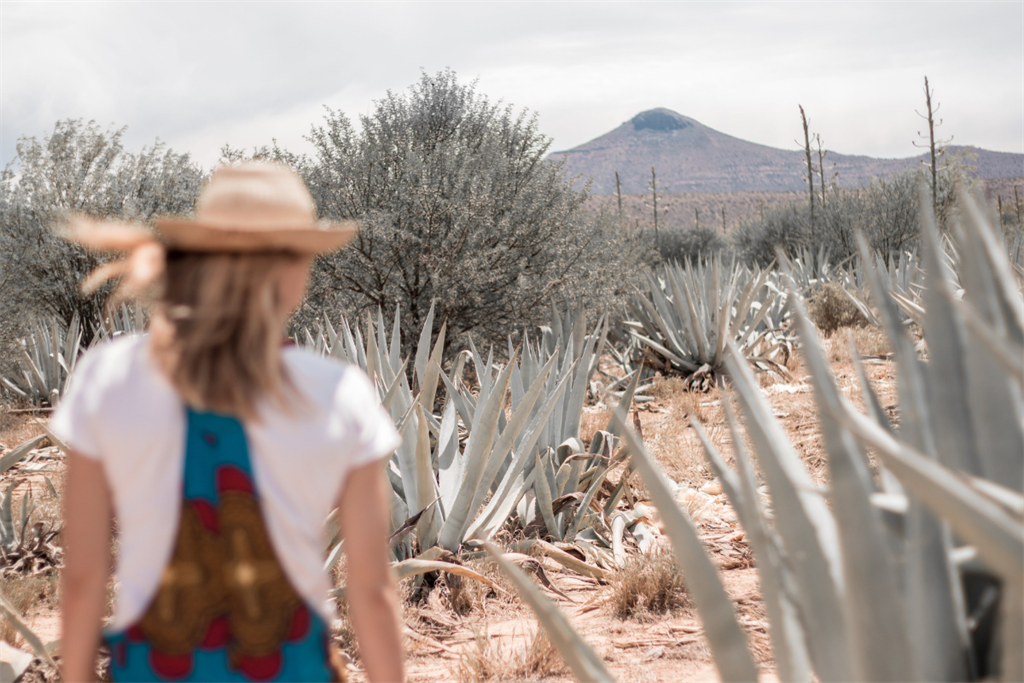
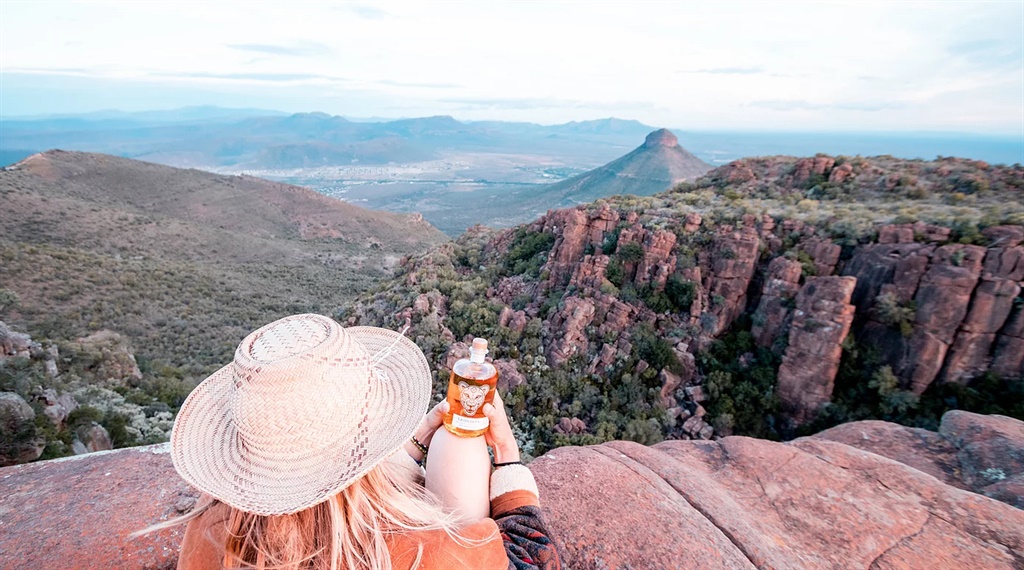
A local businesswoman has created a South African “tequila” from agave plants she’s growing in the Karoo. And although the finished product can’t legally be called tequila, Leonista’s 100% Karoo Agave, which has a smoky flavour profile similar to Mexican mezcal, has won fans and distribution deals around the world.

The product is the brainchild of South African businesswoman Sarah Kennan, who started Leonista after travelling to the birthplace of tequila in Mexico. While visiting the actual town called Tequila, Kennan was struck by how similar it was to South Africa’s Graaff-Reinet, in look, feel and climate, and decided to bring the concept home.

“I saw the culture and industry around the agave plant in Mexico, which I knew grew very well in the Karoo, and I wanted to replicate the industry, job creation and quality agave spirit production I saw on my travels,” says Keenan. “I was also tired of there being low quality tequila and mezcal in South Africa.”

Her solution was to create a certified organic product made only from the agave plant that follows the centuries-old traditions used in Mexico. As with products like champagne and port, appellation of origin laws prevent anyone outside of Mexico from calling their spirit tequila or mezcal, but Kennan says Leonista follows processes that makes it as close as you can get to the original.

agave

Leonista is made from agave plants that take 12 years to mature. Once ready, they harvest the hearts of these plants and smoke them in a wood-fired furnace for at least two days, which gives the finished product its unique, smooth and smoky flavour. They then crush the caramelised plants under a stone wheel to extract it into a mash, allow it to ferment, and then distill this in large copper stills to create the spirit.

agave

Leonista’s production process makes for a compelling story, and along with its hands-on approach this enables it to be placed a shelf or two above much of the tequila South Africans are used to drinking. But Kennan says this approach also has a direct impact on the quality and complexity in the four variants that they produce.

agave

“In Mexico tequila and mezcal is sipped slowly and treated with respect. They give you a real buzz and increase your energy, with no hangover in the morning,” says Kennan. “Until now, South Africa has mostly been sold “mixtos” which are cut with cane spirit to make them cheap, which has created the shooter, lemon and salt rituals often used to mask the poor flavour.”

So instead of knocking back shots of cheap tequila with a thumbful of salt and a slice of lemon, Kennan suggests taking good quality agave a little slower – or combining it with more considered ingredients to create some of the popular tequila-based cocktails.

“I love drinking Leonista like a whisky over one block of ice, or making margaritas with fresh local ingredients,” she says.

Consumer education and market placement like this is a key element of any high-end consumable’s success. As coffee, beer, and gin have undergone their own craft revolutions in order to appeal to a more lucrative and seemingly more discerning market, so too is tequila – and it’s starting to pay off for brands like Leonista.

Leonista

The company now sells in excess of 10,000 bottles each year, and has won several local and international awards for its agave spirit – its most decorated, Leonista Blanco, recently won gold in the US-based SIP Awards.

The momentum has also led to national distribution deals with 500 clients, including stores like Pick n Pay, Spar, Checkers, and Norman Good Fellows, and they now export to Australia, Japan, Netherlands, Taiwan and Zimbabwe.

It’s also available online via Takealot and Yuppiechef, and this year’s Covid-19 lockdown and alcohol ban also prompted Leonista to create their own online store, where they sell all of their agave variants and a range of merchandise directly, which Kennan says allows them to build relationships with their consumers, and introduce deals not possible through traditional distribution channels.

Kennan’s plans for the future are big – although Leonista is just four years old, she’s already looking to new export markets. And Leonista is also expanding its own tequila-based story with a tequila masterclass and agave spirit AirBnb experience in Graaff-Reinet, and future plans include a destination distillery experience so that South Africans can experience what Kennan did on her own trip to Tequila.

Leonista

They’ve also introduced a strong ethical component to the Leonista story. Every bottle sold results in a percentage of revenue going towards African conservation, their packaging is fully recyclable, and they promote upcycling of their unique bottles after use, rather than throwing them away.

“As a company our vision is to create a more positive culture around agave spirit consumption, and to be a successful thriving company and have a positive impact on the world around us,” Kennan says.

Leonista is available as a Blanco, Reposado, Honey Reposado, and Reposado Black at various liquor stores, or directly on the Leonista website.

Receive a daily news update on your cellphone. Or get the best of our site emailed to you.

Go to the Business Insider front page for more stories.

Category: NewsTag: cradock, graaff reinet, hofmeyer, karoo, news
24 November 2020 by Guest

Charitable Mike Woolnough breaks 48 hours in Race to Cradock

Mike Woolnough achieved his objective of completing the Freedom Challenge Race to Cradock in under 48 hours. Photo; Reblex photography There was double satisfaction for endurance rider Mike Woolnough when he won the 580km Freedom Challenge Race to Cradock in 47 hours and four minutes. Not only did the 60-year-old for Joburg beat two days, …

Mike Woolnough

Mike Woolnough achieved his objective of completing the Freedom Challenge Race to Cradock in under 48 hours. Photo; Reblex photography

There was double satisfaction for endurance rider Mike Woolnough when he won the 580km Freedom Challenge Race to Cradock in 47 hours and four minutes.

Not only did the 60-year-old for Joburg beat two days, he also managed to raise enough funds to support two pupils from disadvantaged communities through the Freedom Challenge Scholarship Fund.

Woolnough was uncertain about entering the event, which started in the mountain town of Rhodes in the Eastern Cape, after completing the Freedom Challenge Race Across South Africa (2 150km) last month.

“I wondered if it would be possible to do two big races with only a two-week break between them. I only entered at the last minute but when I saw the starting field, I figured that I’d be able to win the race if I’d recovered sufficiently.”

For him, though, the Freedom Challenge is a concept that means more than simply getting line honours.

“Winning in Freedom terms is far richer than being first over the line,” he said.

“Riders need to decide what defines success for them. It might be to self-navigate through part of the route or better their previous time.

“There’s no right or wrong reason – it’s personal.

“I decided that I would like to ride with a purpose so I bullied and cajoled people into supporting the Freedom Challenge Scholarship Fund.

“In return I’d attempt to ride a sub-48-hour race, which has only ever been achieved by four riders (Alex Harris, Bruce Hughes, Jacques Tattersall and, two years ago, Woolnough).”

At the end, there was satisfaction all round, even though the conditions at this time of the year added to the challenge.

“The race was delayed due to the Covid shutdown,” explained Woolnough, “and the heat of this time of year was going to be the real test.

“As it worked out it was just one of several hurdles that had to be dealt with, but I managed to get in with almost an hour to spare.

“Through the generosity of race supporters, we raised sufficient funds to support two more scholars.”

He explained that the fund was established to provide educational opportunities for families along the Maluti section of the trail.

“Recipients receive a full scholarship for high school, including boarding, clothing and books.

“The Mariazell Mission High School in the area provides above average education and, so far, we have managed to support well over 50 students, with a number having gone on to university.”

Woolnough explained that he made it through last year’s race with minimal sleep. This time, however, he took that concept further and didn’t sleep at all.

“My race mantra is ‘keep moving’ and I managed to ride the entire distance without sleeping at all.

“Amazingly enough I was able to do it without the usual accompanying hallucinations. The lack of sleep has the downside that towards the end performance falls off and I get slower, but I’d factored that into my riding plan.

“To set aggressive time goals you need to be able to either ride fast or spend as much of each day riding with minimal time off the bike.

“I’m not sluggish but I don’t have the speed necessary to find time for a shower or to have a proper sleep, so I’m very conscious of how long I spend off the bike.”

With many endurance events under his belt, Woolnough said he had settled on a specific modus operandi where mental fortitude was as important as conditioning.

“You also need to have feel, which is the ability to self-assess things like tiredness versus speed, making sure you’re eating adequately and keeping your hydration under control.

“Feel takes experience and this experience is measured in years, not days and weeks.

“You also need the ability to adapt to the changing conditions as you face them. Panic serves no useful purpose.

“After a few hesitant starts I realised that I could do well in events of this nature.”

That doesn’t mean Woolnough wasn’t thrown any curveballs.

“On the last morning, midnight to be exact, I found myself on top of a mountain,” he recalled.

“I wear prescription glasses and the worst thing that can happen is to find yourself in a thick fog. Without my glasses I can’t see a thing, so navigating down a rock-strewn series of switchbacks wasn’t fun.

“To make matters worse, the entire valley was blanketed in fog and I spent the next two hours crawling along, all the while recalculating what the delay meant in terms of completing the race in under 48 hours.”

Exposure for your race: If you would like In the Bunch to promote your event through a series of articles, click here to ask us about our new PR product.

For subscribers-only content and partner deals, register your free account here. It takes less than a minute!

MORE RELATED ARTICLES

  • Mike Woolnough

    Race to Cradock results: Mike Woolnough takes the honours again

  • Mike Woolnough is gearing up to tackle the first edition of the Atlas Mountain Race

    Mike Woolnough faces the unknown in Atlas Mountain Race

  • Mike Woolnough finished 28th overall in his first Atlas Mountain Race

    Mike Woolnough finds adventure aplenty during Atlas Mountain Race

  • Mike Woolnough enjoying the beautiful scenery during the Race to Cradock

    Woolnough to fight off ‘sleep monsters’ in his fifth Munga

PARTNER CONTENT

Jan Frodeno

2021 Canyon Speedmax Disc: For next-level triathlon performance

Canyon Aeroad CFR

New Canyon Aeroad better in every way

Splitit: Canyon launches zero-interest payment plan

The Giant Group launched the 2021 Giant TCR earlier this week.

Watch: Giant launches all-new TCR

LATEST REVIEWS

Review: Luck MTB cycling shoes

Luck’s Ator

Review: Luck road cycling shoes

Westfalia BC 75 bike rack

Review: Westfalia bike rack

Category: NewsTag: cradock, news, online, south africa
24 November 2020 by Guest

Karoo locust plague adds to farmers’ woes

It has been a challenging year for farmers who have survived a global pandemic, stood up against farm murders, fought off wildfires in the Free State and now have to worry about the locust plague in the Karoo. Sina Luchen, regional agriculturalist for the United Nations Food and Agriculture Organisation, said they were aware of …

It has been a challenging year for farmers who have survived a global pandemic, stood up against farm murders, fought off wildfires in the Free State and now have to worry about the locust plague in the Karoo.

Sina Luchen, regional agriculturalist for the United Nations Food and Agriculture Organisation, said they were aware of the outbreak of brown locusts in the Karoo.

“We have sent a report to the government to confirm the outbreak in two districts in the Eastern Cape.”

Luchen said brown locusts posed a threat to maize and barley crops. Roger Price, a former specialist locust researcher and current research team manager at the Agricultural Research Council, said these locusts were all over Africa, with recent outbreaks in East Africa and Malawi.

“The wet conditions bring grass and allow the locusts to breed and feed.”

Price said a locust outbreak could cause great crop and economic loss.

“It is especially dangerous if they spread to other Free State areas and North West as they are difficult to control.”

The lockdown regulations also had damaged agricultural outcomes, with the wine sector nearly coming to a standstill due to the strict regulations on reopening the sector.

On Thursday, Wandile Sihlobo, chief economist of the Agricultural Business Chamber, said South Africa’s primary agricultural employment in the third quarter of the year improved 1% from the previous quarter to 807,882.

“This corresponds with the reopening of the economy and certain agricultural commodities during that period.”

Compared with the corresponding period last year, he said employment in this sector was down 8%.

“The Western and Northern Cape provinces, the major wine producers, saw employment fall by 31% and 15% quarter-on-quarter, respectively. On an annual basis, the Western and Northern Cape’s primary agriculture employment fell by 37% and 8%, respectively.”

He said had there not been a pandemic, agricultural employment would have risen notably this year on the back of a large harvest.

“Looking ahead, the agricultural sector is poised for another good year on the back of an expected La Nina. This means there will be increased activity in the sector, which would sustain employment, at least at levels above 750 000, in our view.”

For more news your way, download The Citizen’s app for iOS and Android.

Category: NewsTag: cradock, graaff reinet, hofmeyer, karoo, news
23 November 2020 by Guest

Weather forecast, alerts and UVB index for all South African provinces, 31 October 2020

Weather data provided by the South African Weather Service. For a detailed forecast of your province, click here. Severe Weather Alerts IMPACT-BASED WARNINGS: A Yellow level 2 warning for disruptive rain resulting in localized flooding to susceptible informal settlements and roads, low lying areas and bridges, as well as traffic disruptions due to slippery roads …

Weather data provided by the South African Weather Service. For a detailed forecast of your province, click here.

Severe Weather Alerts

IMPACT-BASED WARNINGS:

  1. A Yellow level 2 warning for disruptive rain resulting in localized flooding to susceptible informal settlements and roads, low lying areas and bridges, as well as traffic disruptions due to slippery roads in places in the eastern half of the Eastern Cape , Free State, southern parts of the North West, eastern parts of the Northern Cape and the central and the southern areas of Kwa-Zulu-Natal for tomorrow (31/10/2020).

FIRE DANGER WARNINGS:
Nil

ADVISORIES:
Nil

Gauteng:

Temperature: Partly cloudy and warm with isolated showers and thundershowers but scattered in the south from the afternoon.

The expected UVB Sunburn Index: Extreme.

Mpumalanga:

Temperature: Cloudy and warm, but cool over the Highveld. Isolated showers and thundershowers are possible except the Lowveld.

Limpopo:

Temperature: Partly cloudy and warm.

North-West Province:

Temperature: Partly cloudy and warm with scattered showers and thundershowers, but isolated in the north-east.

Free State:

Temperature: Warm in the north, otherwise partly cloudy and cool with scattered showers and thundershowers.

Northern Cape:

Temperature: Cool in the south-east, otherwise partly cloudy and warm with isolated showers and thundershowers in the east but scattered in the extreme.

Wind: The wind along the coast will be strong southerly to south-easterly reaching near gale in the afternoon.

Western Cape:

Temperature: Fine and cool to warm.

Wind: The wind along the coast will be moderate to fresh south-easterly but strong along the west coast.

The expected UVB Sunburn Index: Extreme.

Eastern Cape:

The Western half – Temperature: Cloudy and cool south of the escarpment with light showers east of Cradock and Woody Cape.

The Western Half – Wind: The wind along the coast will be moderate to fresh easterly to south-easterly.

The Eastern half – Temperature: Cloudy with rain and scattered showers.

The Eastern half – Wind: The wind along the coast will be moderate to fresh easterly to south-easterly.

Kwazulu-Natal:

Temperature: Cloudy and cool but cold in the south-west with scattered showers and thundershowers but widespread in the south. It will be isolated in the extreme north-east.

Wind: The wind along the coast will be moderate southerly to south-easterly.

The expected UVB Sunburn Index: Moderate.


DMCA.com Protection Status

Category: NewsTag: cradock, news, online, south africa
23 November 2020 by Guest

Deon Meyer And Coenie De Villiers’ KAROO SUITES Comes To Cape Town’s Drive-in Theatre

Deon Meyer and Coenie de Villiers’ popular Karoo Suite productions are described as the “most beautiful love letter to the Karoo”. Both shows, Karoo Suite and Karoo Suite 2: Karoonagte, will be performed on 10, 12 and 13 December at Cape Town’s Atlantic Studios drive-in theatre. Proceeds from the double feature, complete with a break …

Deon Meyer and Coenie de Villiers’ popular Karoo Suite productions are described as the “most beautiful love letter to the Karoo”. Both shows, Karoo Suite and Karoo Suite 2: Karoonagte, will be performed on 10, 12 and 13 December at Cape Town’s Atlantic Studios drive-in theatre. Proceeds from the double feature, complete with a break for burgers and milkshakes, will benefit the Suidoosterfees and the Jakes Gerwel Foundation’s lyric writing mentorship programme.

Deon Meyer will be on stage to narrate his stories from the Karoo, with music ccompaniment provided by De Villiers and a band. Breathtaking photos and video material of the Karoo landscape from photographers of National Geographic, NASA and Deon Meyer himself, will complement the shows. Animation by Diek Grobler will also feature.

Meyer and De Villiers are a formidable combination on stage. Since its sold-out debut at various festivals, Karoo Suite has captivated audiences nationwide. The productions consist of various movements that explore the Karoo landscape, its people, their joys and sorrows. Music is provided by some of the country’s best artists: Mauritz Lotz on guitar, Jaconell Mouton on keys, David Klassen on drums and percussion, and Coenie de Villiers himself at the piano.

For the Cape Town productions, Meyer and De Villiers joined hands with Atlantic Studios, Suidoosterfees, KKNK, the Jakes Gerwel Foundation and CTMA. The Suidoosterfees, postponed earlier this year due to the Covid-19 pandemic, recently started presenting an abridged program in a brand new format at Atlantic Studios’ drive-in theatre.

For the December performances, tickets can be purchased at Computicket at R400 per car (with up to four occupants). Fourty VIP tickets are also available per night, at R300 per person. VIP patrons will be seated inside Atlantic studios.

Deon Meyer and Coenie de Villiers support the development of young, upcoming artists who show great potential. With previous shows in collaboration with the Atterbury Trust, they have donated close to a million rand to benefit learners from the Karoo. Proceeds from the drive-in shows will be used to expand the Suidoosterfees and the Jakes Gerwel Foundation’s lyric writing mentorship programme, with future workshops being presented in the Karoo and the Mother City. The development programme enables lyricists to perform at the Suidoosterfees and KKNK.

For more information, visit www.suidoosterfees.co.za.

For media enquiries, please contact Themba Mzondi on 078 113 5216 or email Themba@sceproductions.co.za

More Hot Stories For You

Category: NewsTag: cradock, graaff reinet, hofmeyer, karoo, news
21 November 2020 by Guest

Janine Stewart raises the bar at Race to Cradock

Janine Stewart set bettered her own record in the recent Freedom Challenge Race to Cradock. Photo: Reblex photography Johannesburg’s Janine Stewart further underlined her credentials as a leading ultra-endurance mountain biker when she broke her own record in the Freedom Challenge Race to Cradock recently. The 43-year-old covered the 580km from Rhodes in the Eastern …

Janine Stewart

Janine Stewart set bettered her own record in the recent Freedom Challenge Race to Cradock. Photo: Reblex photography

Johannesburg’s Janine Stewart further underlined her credentials as a leading ultra-endurance mountain biker when she broke her own record in the Freedom Challenge Race to Cradock recently.

The 43-year-old covered the 580km from Rhodes in the Eastern Cape highlands to Cradock in two days, 12 hours and 10 minutes, bettering her previous mark by 70 minutes.

After injuring herself in last month’s Race Across South Africa, pulling out after seven days, Stewart said she had been unsure whether to enter.

“I only decided at the last minute to enter the Cradock race, joining my brother Mark and a group of friends,” she explained.

“So, having already held the record, to break that was not my specific intention. It was more a case of enjoying the ride and seeing how things turned out in the end.”

Having done the Race to Cradock on a handful of occasions, she said her familiarity with the course had made a difference.

“The more you know the race route, the better it is because strategically you know there are certain sections you don’t want to navigate in the dark, so you try to plan around some of those and pick where you are going to sleep.

“Normally if I was going for a record I would ride solo, but this time we worked with the group to make sure everyone was comfortable.

“For instance, on the first night we cycled until midnight and could possibly have pushed on to the next stop about four hours away, but we decided to call a halt.

“The more tired you get, the more inefficient you become on the bike, so I had two hours sleep that first night – when I don’t usually sleep at all.”

Stewart said she found motivation in seeing how far she could push herself.

“I think the endurance aspect appeals to me and it’s a case of driving myself harder each time, and also learning how to do things a bit better and more efficiently.

“Also, the Freedom Races are a lot about learning to navigate, so the more you do that, the better you become.”

She added that mental strength was a key element for success.

“You obviously need a certain level of fitness, but, particularly riding at night, it becomes a mental game,” said Stewart.

“Especially when you go through farming areas, where there are opportunities for a bed, great hospitality and a good meal, you need to be disciplined to go back out into the night.

“But I have found that even if you are battling on occasions, you can improve by sticking to your plan. Knowing you can work through those bad patches, even if you are slow, as long as you are going forward it’s a boost in the long run.

“To set the record was a great experience and I’m really chuffed with it. I have done a lot of endurance races and this one is always so good from a scenery point of view.”

Exposure for your race: If you would like In the Bunch to promote your event through a series of articles, click here to ask us about our new PR product.

For subscribers-only content and partner deals, register your free account here. It takes less than a minute!

MORE RELATED ARTICLES

  • Mike Woolnough

    Race to Cradock results: Mike Woolnough takes the honours again

  • Mike Woolnough

    Charitable Mike Woolnough breaks 48 hours in Race to Cradock

  • Mariske Mclean Smith claimed her debut win at the Barberton XCM MTB Challenge

    Mariske Mclean Smith achieves first win in ‘tough’ Barberton XCM race

  • Christoph Sauser

    Five-time Epic winner Christoph Sauser pulls out of 2020 race

PARTNER CONTENT

Jan Frodeno

2021 Canyon Speedmax Disc: For next-level triathlon performance

Canyon Aeroad CFR

New Canyon Aeroad better in every way

Splitit: Canyon launches zero-interest payment plan

The Giant Group launched the 2021 Giant TCR earlier this week.

Watch: Giant launches all-new TCR

LATEST REVIEWS

Review: Luck MTB cycling shoes

Luck’s Ator

Review: Luck road cycling shoes

Westfalia BC 75 bike rack

Review: Westfalia bike rack

Category: NewsTag: cradock, news, online, south africa
21 November 2020 by Guest

Two of South Africa’s most luxurious trains have reopened – with major discounts for the holidays

After months of downtime to lockdown travel restrictions, South Africa’s Blue Train has once again resumed operations in time for the festive season. The Blue Train is the country’s oldest luxury rail journey, running eight times a month between Pretoria and Cape Town. The train’s origins date back to the Union Limited and Union Express trains …

After months of downtime to lockdown travel restrictions, South Africa’s Blue Train has once again resumed operations in time for the festive season.

The Blue Train is the country’s oldest luxury rail journey, running eight times a month between Pretoria and Cape Town.

The train’s origins date back to the Union Limited and Union Express trains which began in 1923. The tour follows a 1,600km line to Cape Town and takes 27 hours to complete.

En route to Cape Town there is a stopover and excursion in Kimberley, and On the northbound journey, there is a stop at Matjiesfontein for an off-the-train excursion.

As part of its reopening special, the train service is offering tickets from R12,715 per person sharing on bookings between 1 November 2020 and 31 March 2021. More detailed booking plans can be found here.

“When confirming bookings, guests will submit their dietary requirements and complete a pre-screening questionnaire which includes a declaration of Covid-19 symptoms.

“Should guests meet all requirements, confirmation will proceed. Should guests not meet the pre-screening requirements, the booking will be deferred to a later date.”

Crew will render services with a face mask and latex gloves and each staff member will be issued with their own hand sanitiser. All suites will be stocked with additional soap as part of the amenities.

The air conditioning system will be cleaned and disinfected at every departure, to ensure good ventilation at all times.

There will be a medical practitioner on board The Blue Train and an isolation car with two suites made available for quarantine purposes.

Constant cleaning with steaming of all upholstery and surface disinfecting of all furniture, doors, handles, toilets, trash bins and toothbrush beakers will be done. All cleaning detergents will be in line with the World Health Organisation and South African Tourism guidelines.

You can read more about the Covid-19 protocols here.


Rovos Rail 

The Rovos Rail has also resumed trips after the lockdown prevented national travel.

The train service said it is offering residents of South Africa and neighbouring countries a special 50% reduced rate on board a two-night Cape Town journey this January.

The trips include:

The Rovos Rail was founded in 1986 when Rohan Vos received the first letter of permission to run a train on the national rail network.

In 1987 the first loco 2702 BIANCA was rebuilt along with the first seven carriages that were to depart on the first journey on 29 April 1989.

Rovos Rail follows a similar route to the Blue train, taking a 1,600 kilometre meander through the Highveld, the Great Karoo, through mountain ranges and the winelands of the Cape, ending the Mother City.

Highlights of the north- and southbound routes once again include a visit to the historic village of Matjiesfontein, and another stop in Kimberley.


Read: Emirates partners with FlySafair in fresh push into South Africa

Category: NewsTag: cradock, graaff reinet, hofmeyer, karoo, news
20 November 2020 by Guest

‘Strong suggestions’ that a tornado ripped through Mthatha – SA Weather Service

The weather phenomenon that hit Mthatha and surrounding areas was a multicell cluster storm. There are also strong suggestions of an EF2 or EF3 tornado in the evening. Three people, including a child, were reportedly killed and dozens were taken to hospital. The weather phenomenon that ripped through Mthatha on Tuesday night and left at …

  • The weather phenomenon that hit Mthatha and surrounding areas was a multicell cluster storm.
  • There are also strong suggestions of an EF2 or EF3 tornado in the evening.
  • Three people, including a child, were reportedly killed and dozens were taken to hospital.

The weather phenomenon that ripped through Mthatha on Tuesday night and left at least three people dead, dozens hospitalised and properties damaged, was a multicell cluster storm.

There are also strong suggestions that an EF2 or EF3 tornado touched down between 17:00 and 18:00.

This was revealed by a team from the SA Weather Service, which spent Wednesday studying what hit Mthatha and large parts of the OR Tambo District Municipality and surrounding areas.

According to DispatchLIVE, the storm killed three people, including an 8-year-old. The minor girl from Mhlontlo municipality was crushed to death when her home collapsed on her.

READ | KwaZulu-Natal hail storm: Woman missing, child struck by lightning

The same fate befell two women from Mthatha, the publication reported.

News24 reported on Wednesday that the storm left a trail of destruction as dozens of schools and homes were destroyed by winds of up to 140km/h.

Mthatha Airport’s glass doors were also damaged by the storm.

At the time, Garth Sampson from the Port Elizabeth office of the SAWS, said their national office was trying to establish whether it was a tornado or a storm that battered the area.

Residents on social media reported that hundreds of livestock died in torrential rain or drowned in floods.  

The disaster that befell Mthatha came after the SA Weather Service (SAWS) issued severe thunderstorm alert, warning of bad weather over eastern half of the Eastern Cape and most of KwaZulu-Natal.

The SAWS reported that it maintained this alert after reassessment on Tuesday morning, following early morning showers over central areas of the Eastern Cape.

Explaining what had happened, the SAWS team, Puseletso Mofokeng, Lehlohonolo Thobela, Lulama Pheme, Garth Sampson and Kevin Rae, reported: “After a period of daytime heating, a cluster of thunderclouds developed at around 14:00 South African Standard Time (SAST), ranging between Graaff-Reinet and Cradock in the Eastern Cape. An hour later, these storms coalesced into the relatively strong thunderstorms (multicell storms) just to the southeast of Cradock, while another notable storm was 100km to the north (to the southwest of Burgersdorp).”

They continued:

The multicell thunderstorms travelled to the east and during the following three hours, travelled almost 280km from Graaff-Reinet to Bofolo (nearly halfway from Queenstown to Mthatha), while an intensifying storm (located south of Burgersdorp) moved for about 78km to the southeast. 

At this stage, a secondary merger began to take place, further intensifying the storm.

The storm then changed its direction of movement, migrating towards the northeast, moving a further 68km to Mbolompo (northwest of Mthatha) but at a significantly lower speed of about 33km/h (compared to an earlier average of 94km/h).

Shortly after yet another change of storm movement, very high winds from the enhanced multicell storm resulted in damage to homes, vehicles and the nearby airport, while also uprooting trees and resulting in heavy downpours which led to localised flooding.

The impact, as evidenced by the photographs, and the short distance travelled between 17:00 and 18:00 SAST, strongly suggests that there was an EF3 tornado.

“The storm is rated as an EF2 to EF3 tornado because of the supporting damage: torn-off roofing sheets, peeling of roofs at the corners over a relatively large area as well as photographic evidence of a vehicle which appears to have been tossed into the air by the strong winds.”

Urgent call for support

In some images, roof sheeting had been torn back partially on two houses, but in opposite directions.

“It is evident that the clockwise spin associated with the tornadic vortex tube resulted in the damage of the property.”

Meanwhile, Gift of the Givers said it was on its way to Mthatha to help about 20 villages where homes, clinics, schools and places of worships were damaged, leaving thousands homeless.

The NGO called it the “biggest tornado in recorded history” for the region.

CEO Imtiaz Sooliman said:

“Gift of the Givers teams from Adelaide, the Free State, Graaff-Reinet and Pietermaritzburg are en route, carrying a range of supplies, including water purification sachets, given the drought and absence of clean water. PPEs (personal protective equipment) will be distributed at the two hospitals.”

“Given the scale of destruction, public support is welcome.”

For those wanting to donate to Gift of the Givers, they can reach Mandy at 0800 786 911 toll free. Donations are tax deductible.

Did you know you can comment on this article? Subscribe to News24 and add your voice to the conversation.

Category: NewsTag: cradock, news, online, south africa
20 November 2020 by Guest

Physics in South Africa

Developing countries, such as South Africa, must funnel money toward health and social development, so the research budget is small, and it got even smaller after the government cut its science budget by about 16% because of the pandemic-linked economic downturn. However, a bigger issue is the lack of students. According to the physicists I …

Developing countries, such as South Africa, must funnel money toward health and social development, so the research budget is small, and it got even smaller after the government cut its science budget by about 16% because of the pandemic-linked economic downturn. However, a bigger issue is the lack of students. According to the physicists I interviewed, the low numbers of students is the greatest obstacle to physics research in the country.

Radio astronomy’s Human Capital Development program is a success story in this context. Since its inception in 2005, the program has awarded over one thousand scholarships to students in the fields of science and engineering. But because these astronomy scholarships are substantially higher than those offered by funding agencies or by universities, they put other fields at a disadvantage. “[With] SKA scholarships, the students only study astrophysics. Quantum [physics], materials [science], and plasma physics—they struggle to find students,” Petruccione says.

Isaac Nape and Bienvenu Ndagano align laser beams in a quantum photonics lab at the University of the Witwatersrand.

×

The government is also trying to transform the country’s historically White academia, introducing quotas stating that 87% of students funded must be South African. Of those South African students, 80% must be Black, 55% female, and 4% disabled. While these quotas have improved academic diversity, they have posed barriers for students who wished to study physics but don’t belong to these categories. “When we look at demographics, we’re seeing an increase in women and Africans, but the bulk of the Africans [in physics] are not South Africans,” says Phil Mwjara, the director-general of the Department of Science and Innovation, a physicist who previously headed the country’s National Laser Centre.

The South African physics student shortage runs through the entire educational pipeline, starting in high school. The number of high-school students choosing physical science as a subject is declining and less than 50% of those students get grades that are good enough to attend university. “There is a systematic fundamental problem of poor physics education from the high-school level, which then impacts the whole physics value chain,” Chithambo says. It is also difficult to retain those who do make it through the system, as academic salaries are far lower than those in industry.

What’s more, African students coming from small villages often feel pressure to send money home to support their extended families. It’s like a “Black tax” says Azwinndini Muronga, a particle physicist and dean of science at Nelson Mandela University. Muronga wonders why one should choose a Ph.D. in physics over a government or industry job paying 10 times more. In 2015, South Africa produced 39 Ph.D.s, of which only nine were Black. Muronga hopes the situation will change after the second or third generation have gone into administrative jobs in government. “Their kids will have options,” he says.

Category: NewsTag: cradock, graaff reinet, hofmeyer, karoo, news
18 November 2020 by Guest

Eastern Cape acting municipal manager in court for stock theft

Inxuba Yethemba Local Municipality acting municipal manager Mkhululi Mbebe is juggling his court case and running a municipality. The case is one of the reasons why angry residents from Cradock and Middleburg are calling for Mbebe’s head. In October, the Hawks raided the offices of the municipality and seized documentation relating to alleged fraud and …

  • Inxuba Yethemba Local Municipality acting municipal manager Mkhululi Mbebe is juggling his court case and running a municipality.
  • The case is one of the reasons why angry residents from Cradock and Middleburg are calling for Mbebe’s head.
  • In October, the Hawks raided the offices of the municipality and seized documentation relating to alleged fraud and tender irregularities.

The acting municipal manager of the Inxuba Yethemba Local Municipality in Cradock and Middleburg, Mkhululi Mbebe, is facing stock theft charges.

Eastern Cape police and Mbebe confirmed this to News24 on Tuesday.

READ | Hawks seize documents connected to R26m fraud probe at municipality in Cradock

Eastern Cape police spokesperson Colonel Sibongile Soci said: “The case is currently on trial and the next court date is 24 November 2020 at the Cradock Magistrate’s Court. SAPS cannot provide any further information on the matter.”

Mbebe confirmed that he had been charged with stock theft but would not discuss the merits of the case, saying: “the case is sub judice, so I won’t be able to talk about it.”

The case is one of the reasons angry Cradock and Middleburg residents are calling for Mbebe’s head.

For more than a month, service delivery has been significantly hampered at the municipality due to a long-running protest which began in the first week of October.

The angry community wants Mayor Noncedo Zonke and Mbebe to be fired amid allegations of fraud and corruption and maladministration at the municipality.

Hawks raid

In October, the Hawks’ Serious Corruption Investigation Unit in East London swooped down on the municipality’s offices and seized documents relating to alleged fraud and corruption tender irregularities worth R26 million.   

During telephone interviews with News24, Zonke and Mbebe, confirmed the Hawks’ raid but maintained their innocence.

DA constituency leader for East Cape Midlands and MPL Retief Odendaal said while the unhappiness from the community stemmed from various allegations of corruption, maladministration and service delivery failures, the appointment of Mbebe as the acting municipal manager on 9 October further angered them.

“On 9 October 2020, Mr Mbebe, the Director for Corporate Services in the municipality, was appointed as acting municipal manager of the Inxuba Yethemba Municipality (IYM). This has further angered an irate community as Mbebe, who has allegedly been criminally charged for stock theft, now heads up this beleaguered administration,” said Odendaal.

Odendaal added that while the Eastern Cape Cogta MEC, Xolile Nqatha, sent a team to lead an investigation into the allegations made by the community, the residents were concerned that the investigation would be derailed by senior officials who were implicated in alleged maladministration and/or corruption.

“The people of IYM deserve better, and therefore the DA will continue to fight for a just, caring and competent administration,” Odendaal added.

Mbebe said he was not worried about the case and added that, in terms of the law, a person should be presumed innocent until proven guilty.

Mbebe and Zonke told News24 that the offences allegedly took place before their time at the municipality and that there was therefore no way they could have been involved.

Hawks Eastern Cape spokesperson Lwando Zenzile could not be reached for comment since Monday.

Did you know you can comment on this article? Subscribe to News24 and add your voice to the conversation.

Category: NewsTag: cradock, news, online, south africa
18 November 2020 by Guest

South Africa encourages nature protection with tax breaks

Very little land in South Africa is suitable for planting crops — most is too dry, hilly or rocky for tillage. Still, unique wildlife flourishes across the country, even in seemingly barren places like the Karoo, a vast semi-desert region in the interior of the country. With climate change decreasing rainfall and chronic underfunding of nature …

Very little land in South Africa is suitable for planting crops — most is too dry, hilly or rocky for tillage. Still, unique wildlife flourishes across the country, even in seemingly barren places like the Karoo, a vast semi-desert region in the interior of the country.

With climate change decreasing rainfall and chronic underfunding of nature conservation in the country, some, like Candice Stevens, are looking for alternatives to encourage farmers and others in Karoo and elsewhere to be better stewards of the land. Stevens works collaboratively with a range of partners including WWF Nedbank Green Trust, UNDP GEF 5 BLU Project,  SANBI and Birdlife South Africa.

She is head of innovative finance and policy at Wilderness Foundation Africa and is trying to convince landowners to dedicate their land to conservation. The incentive? A tax rebate from the South African government. 

Stevens and her team have won dozens of landowners to the biodiversity cause with the tax model, which has already seen some conservation success.

A film by Henner Frankenfeld and Joachim Eggers

Category: NewsTag: cradock, graaff reinet, hofmeyer, karoo, news
17 November 2020 by Guest

South Africa: Long Read | the Unfinished Business of the TRC

The ANC said it would hold those guilty of crimes against humanity to account – but is mum on those involved in political interference in Truth and Reconciliation Commission prosecutions. The ANC has broken its 17-year official silence on Truth and Reconciliation Commission (TRC) prosecutions and committed to getting justice for victims’ families. There also …

The ANC said it would hold those guilty of crimes against humanity to account – but is mum on those involved in political interference in Truth and Reconciliation Commission prosecutions.

The ANC has broken its 17-year official silence on Truth and Reconciliation Commission (TRC) prosecutions and committed to getting justice for victims’ families. There also have been calls for the government to address the often-ignored issue of reparations for victims of apartheid.

On 6 November 2020, the Supreme Court of Appeal heard the application of former apartheid security police clerk João Rodrigues to have the case of murder against him dismissed. Rodrigues is implicated in the death of activist and teacher Ahmed Timol in 1971.

In 2017, Judge Billy Mothle, who presided over the reopened inquest into Timol’s death, recommended the National Prosecuting Authority (NPA) prosecute Rodrigues. The decision was appealed and dismissed in 2019. This month, his lawyers argued that the 47 years between the death of Timol and the prosecution of their client in 2018 have prejudiced Rodrigues’ constitutional right to a fair trial. They also argued that the political interference into the prosecution of TRC cases has prejudiced the octogenarian.

His counsel suggested Rodrigues may have been granted amnesty without his knowledge through a “backdoor amnesty” process by the Thabo Mbeki administration in 2005. The courts struck down this process in 2008 because it favoured perpetrators over victims. Rodrigues had the opportunity to raise this suspicion at the reopened inquest in 2017 but did not.

The NPA and the high court in Johannesburg that dismissed Rodrigues’ appeal in 2019 acknowledged political interference in the amnesty process.

The Supreme Court of Appeal indicated that although it would have to consider the issue of political interference in light of Rodrigues’ arguments, it is unlikely the court will make a general ruling on the matter.

Judgment has been reserved, but whichever way the decision goes, the matter will almost certainly be taken to the Constitutional Court, meaning a further delay in Rodrigues’ prosecution. It could, however, set the stage for an important final pronouncement on political interference, which will serve as a precedent for the many TRC cases still to be pursued.

Two-decade delay

Delays still dog the TRC’s prosecuting process, worsened by hearings having to go online in recent months. The reopened inquests into the deaths of activists Neil Aggett and Hoosen Haffejee have both been interrupted by the pandemic.

After almost five years of bureaucratic delays, the prosecution of former security branch members responsible for the death of activist Nokuthula Simelane was set to begin in October. It has yet again been postponed.

Similarly, the families of the Cradock Four are still waiting for the NPA to make a decision on whether it will prosecute members of the security police involved in the 1985 murders of Matthew Goniwe, Fort Calata, Sparrow Mkonto and Sicelo Mhlauli.

Lukhanyo Calata, Fort’s son, asked that the issue of political interference into TRC cases form part of Judge Raymond Zondo’s inquiries at the Zondo Commission of Inquiry into State Capture. The appeal is yet to be answered.

Likewise, President Cyril Ramaphosa has not responded to two letters written by victims’ families, non-profit organisations and former TRC commissioners asking for action on the prosecution of TRC cases and an investigation into those implicated in political interference.

The ANC responds

But there has been some movement from the ANC, which may have a significant effect on the speed and efficiency of TRC prosecutions.

On 27 October, the 49th anniversary of Timol’s death from his fall from the 10th floor of the John Vorster Square police station and on what would have been the 103rd birthday of ANC leader Oliver Tambo, the ANC released a statement.

It is its first public pronouncement in almost two decades on the fate of TRC cases: “The ANC rejects with contempt the machinations by Rodrigues and others to try and escape accountability for their heinous deeds, trying to gain blanket amnesty for their crimes against humanity.

“We remain resolute that justice for Timol and others must be done. It is for this reason that the ANC joined hands with the Foundation for Human Rights and families of apartheid-era victims like the Timol, Stanza Bopape, Nokuthula Simelane and the Cradock Four families – who are still yearning for justice and closure.”

The party has now formed a joint committee chaired by ANC deputy secretary Jessie Duarte “to investigate and develop a plan of action – working with the Minister of Justice – to ensure justice for the families of the victims of apartheid-era crimes, including crimes against humanity, which are still unresolved”.

Right now the government is legally obliged to pay the legal costs of former members of the apartheid regime, while victims’ families have to rely on the assistance of organisations such as the Foundation for Human Rights (FHR) and the pro bono departments of legal firms to fund their prosecutions.

To make this fairer, the ANC has also committed to petitioning the National Democratic Lawyers Association, Advocates for Transformation, the Pan African Bar Association and the Black Lawyers Association “to make their members available to help with investigations and prosecutions of these 350 cases expeditiously in order to give families justice and closure”.

As Timol’s nephew Imtiaz Cajee points out, in the Rodrigues matter “the state has spent more than R3.5 million … Somebody like me [who is] going to the [Supreme Court of Appeal] totally depends on the FHR and Webber Wentzel who do pro bono work to represent me.”

Calata believes Rodrigues “is trying to delay his day in court for as long as he possibly can … because he’s not paying for it. He’s using every legal avenue that’s available to him.”

Why justice now?

For observers of the Sisyphean struggle for justice by apartheid-era victims’ families, the statement from the ANC is unexpected. After so many appeals by families and so many unheeded calls for something to be done, why has the ruling party decided now is the time for it to break its silence? Have the constant demands for action finally worked? Or is this part of Ramaphosa’s plan to root out the corruption that became endemic under Jacob Zuma?

FHR director Yasmin Sooka says the ANC statement is the result of a series of meetings that began after an event in Cape Town last year to commemorate the 50th anniversary of the death in detention of activist Imam Abdullah Haron.

The speakers included Sooka, Calata, Cajee and Nkosinathi Biko. Sooka was approached by Duarte, who asked why the FHR and victims’ families had not come to the ANC directly for assistance. A series of meetings then began with Duarte and other ANC members, including Krish Naidoo and Febe Potgieter-Gqubule, to develop a plan of action.

At one of these meetings, Sooka recalls saying: “In your capacity as the ANC with members who have died for your cause, you’ve said nothing … You’re going to be dreadfully exposed if the Zondo Commission deals with this issue and also when the [Supreme Court of Appeal] begins to unpack Rodrigues’ argument, so you guys need to get your act together.”

Sooka points out that the committee mentioned in the ANC statement will include representatives of the FHR and others as yet unnamed stakeholders and that the party should not be seen to be directing or influencing the prosecution of TRC cases.

“The ANC is quite clear that they want to be quite careful that they’re not seen to interfere with the independence of the NPA or the Hawks, but they’re also clear that they have the advocacy and the lobbying power to raise these issues with different ministries. From that perspective, even the committee’s review of these cases cannot substitute for a proper investigation by the NPA.”

Calata believes the announcement is a result of families having “made enough of a noise as a collective to eventually make it on to their radar”. He realises that “the ANC is a political party and they are … going to use this opportunity to try and paint themselves in glory”. But he thinks the statement “is an admission from their side that they could no longer … turn a blind eye to our suffering, to our pain. We’re … pleased … the ANC is now [going to] help us to make strides towards getting justice for people [who] actually died advancing the interests of the ANC in the first place.” He is also careful to add that this “doesn’t make up for anything. They have to make up for the last 20 years of their governance.”

Politicians should be held to account

There is no mention in the statement of the allegations of political interference and its role in delaying justice. This is perhaps unsurprising, given that many of those implicated are former high-level members of the ANC.

But the attempt to stall these cases for so long has created a separate problem in the TRC prosecution saga. Families are not going to ignore or gloss over the issue, regardless of the ruling party’s commitment to overcome prosecutorial problems.

As Cajee sees it, “the issue of political interference must be gotten to the bottom of and those responsible must be called to answer. It’s significant because in the 14 years between 2003 and 2017 [the year the Timol inquest was reopened], how many perpetrators have passed on? How many witnesses? How many family members?”

Calata echoes this, arguing that even if “the ANC sticks to its word and fulfils the intent set out in that statement, that’s a completely separate matter from the fact that we know that there was political interference in these issues and that the people who were behind that political interference still need to be held accountable.

“We need to get to the bottom of this, and if someone as high up as the former president of the ANC needs to be held to account … then he must answer.”

Sooka says that the ANC’s announcement is a step in the right direction but that it should “be positive in the sense that it leads to justice for the victims”.

She hopes the committee will finalise a draft agreement by January and make appointments for investigative capacity in the NPA by March so that actual progress on TRC cases can begin.

Cajee hopes the planned committee will lead to “some kind of national call to say in the next five years we want to bring an end to the decades of having no answers. Whatever those cases are, my view is that we have to have a sort of national coalition on the table where more people come forward to help address the lack of capacity in the NPA. It’s about political will. We need legal experts, investigative journalists and even psychologists specialising in [post-traumatic stress disorder] to all work together to help this process.”

The ANC did not respond to requests for comment, and the Zondo Commission has yet to publicly announce whether it will allow testimony into allegations of political interference in TRC cases.

For the moment, the ruling party’s announcement must at best be seen as an acknowledgment that it has heard families’ increasingly frustrated calls for something to be done. Whether or not this translates into significant action remains to be seen.

Victims demand reparations

Meanwhile, on 28 October, the day after the ANC released its statement, another burning TRC-related issue came into the spotlight.

One hundred and twelve members of the Khulumani Support Group staged a sleep-in on the lawns of the Union Buildings in Pretoria to demand “reparations now!” for survivors of human rights violations during apartheid. As Khulumani board member Judy Seidman wrote in a recent op-ed for The Daily Maverick, more than two decades since Nelson Mandela pledged to compensate victims, “government has paid out little or nothing in reparation. Those who were promised redress remain in desperate need; many are dying in poverty and despair. Many still live with physical damage from torture and bullets; without promised houses, medical care, education for their children or financial assistance. Their distress indeed has worsened, driven by continued inequality, corruption and now Covid-19.”

Sign up for free AllAfrica Newsletters

Get the latest in African news delivered straight to your inbox

By submitting above, you agree to our privacy policy.


Success!

Almost finished…

We need to confirm your email address.

To complete the process, please follow the instructions in the email we just sent you.


Error!

There was a problem processing your submission. Please try again later.

The issue of reparations has been a hotly contested and complicated affair. The final TRC report officially recognised 22 000 victims of apartheid-era human rights violations, and recommended that they be given reparations of R126 000 over a six-year period. Mbeki reduced this to a one-off payment of R30 000 each. Fewer than 16 000 people on the TRC’s list received the reduced amount.

Reparations have been further complicated by the fine print governing the mandate of the TRC process, which only recognised victims whose statements were recorded by the commission before the end of 1997. Those who did not get to the TRC in time or whose statements were not recorded or whose records were lost were not included in the commission’s final “closed list” of victims.

Importantly, as Seidman observes, “[that list] excluded thousands of women who were raped by apartheid forces – as the TRC did not include rape as a political crime that could qualify for amnesty”. In the 17 years since the TRC’s final report, Khulumani’s efforts to get the Department of Justice and Constitutional Development to add to the commission’s list have been met with indifference. The department continues to assert that the regulations governing the drawing up of the closed list cannot be changed. But, as Seidman notes, “the TRC Act itself prescribes mechanisms to add to the list, and also provides for adjusting and changing regulations developed under the act by the Presidency and the Minister of Justice”.

Khulumani has a database of close to 100 000 people the organisation believes meet the requirements to be deemed victims of apartheid human rights violations and who therefore qualify for reparations.

For those victims, the fact that the government is paying millions of rands in legal fees for former apartheid perpetrators is a bitter pill to swallow. Other reparations proposed by the TRC and accepted by Parliament, such as health benefits, education and housing, have also not been forthcoming. The R1.68 billion set aside in the President’s Fund for victim reparations is part of government’s investment in the Public Investment Corporation.

The justice department has maintained that government has already paid out all monies owed for individual reparations and that the remaining funds are to be allocated to “community rehabilitation projects”. The draft regulations for the allocation of these funds have raised red flags with Khulumani and other organisations. Seidman is concerned they will allow “[justice department] officials to handpick communities to receive these funds [and] to work with municipal officials to design projects, with minimal consultation with beneficiaries.”

“At best, government officials will use reparations money to bail out bankrupt municipalities; at worst, they will open the door to corruption,” Seidman says.

After their sleep-in, Khulumani protesters were told by the Presidency that they need to meet with Minister of Justice and Constitutional Development Ronald Lamola to discuss reparations. They were assured that the Presidency would direct Lamola to meet with them within seven days. That time is now up. Like so many problems arising from the failure to address the unfinished business of the TRC, the ball is now in government’s court.

Category: NewsTag: cradock, news, online, south africa
17 November 2020 by Guest

Everything you need to know about free entry to national parks from Monday

Free Access Week is from 16-20 November. SANParks has added bonus days to include the weekend at some Cape national parks. South African National Parks Week takes place from 16-20 November. Free entry applies to just about all the national parks managed by SANParks from Monday to Friday. You will need to produce a valid …

Free Access Week is from 16-20 November. SANParks has added bonus days to include the weekend at some Cape national parks.

South African National Parks Week takes place from 16-20 November.

Free entry applies to just about all the national parks managed by SANParks from Monday to Friday.

You will need to produce a valid South African identity document.

A view of the Langebaan lagoon from Kraalbaai in the West Coast National Park. Picture: Zunaid Ismael/EWN

The following are excluded:

– Namaqua National Park

– Boulders Penguin Colony

– Table Mountain Aerial Cableway

As a bonus this year, two extra days of free entry have been added at specific parks in the Cape region.

Free entry has been extended until Sunday 22 November at the following national parks:

– Agulhas

– Bontebok

– Table Mountain

– Tankwa Karoo

– West Coast National Park

As an added bonus parks in the Cape Region i.e. Agulhas, Bontebok, Table Mountain, Tankwa Karoo, and West Coast National Park will be extending South African National Parks Week until Sunday, 22 November 2020.

— SANParks TMNP (@TableMountainNP) November 4, 2020

SANParks has announced that some national parks will implement daily quotas throughout the week.


More from Local

maths-lesson-teacherpng


Video Screengrab https://www.facebook.com/billy.cowley.96


Shacks in informal settlement in Khayelitsha township, Cape Town 123rf


200206-john-hlophe-edjpg


wind-turbine-power-solar-electricity-clean-energy-renewable-resources-123rf


ubuntucarepng


201104-bushiri-court-edjpg


lester-3jpeg


DHL Newlands Rugby Stadium Wikimedia Commons


Yoshi the Loggerhead Turtle


More from Lifestyle

school-classroom-class-desk-education-learning-pupils-teachers-teaching-123rf


Video Screengrab https://www.facebook.com/billy.cowley.96


Screengrab of Bayer nappy advert


lester-3jpeg


Pneumonia caused by Covid-19 123rf


Yoshi the Loggerhead Turtle


VA Waterfront Marina Cape Town tourism 123rf 123rflifestyle


vegan millet black bean pumpkin burgers 123rf


Baby babies 3D Glasses Watching TV television Eating Popcorn 123rf


Poor elderly woman counting money retirement 123rfpersonalfinance 123rf


Category: NewsTag: cradock, graaff reinet, hofmeyer, karoo, news
  • Previous
  • Page 1
  • Interim pages omitted …
  • Page 5
  • Page 6
  • Page 7
  • Page 8
  • Page 9
  • Interim pages omitted …
  • Page 152
  • Next
WE LOVE CRADOCK.

COPYRIGHT MyCradock · DESIGN BY REACH TRUST
All Rights Reserved · Powered by Straton Solar