• Skip to main content
  • Skip to header right navigation
  • Skip to site footer

My Cradock

My Cradock

Cradock News Classifieds and Directory

  • Home
  • About
  • Accommodation
  • Business
  • Events
  • Free Business Advert
  • Submit News
You are here: Home / Archives for graaff reinet

graaff reinet

5 December 2020 by Guest

Covid-19 hotspot alert for Cape Town as virus resurges

The Western Cape Government said it is deeply concerned about the growing number of Covid-19 infections and hospitalisations in the province, which can now be considered as an established resurgence. The provincial government said that a ‘resurgence’ is when the number of active cases increase, week-on-week, by more than 20%. Over the last week alone, …

The Western Cape Government said it is deeply concerned about the growing number of Covid-19 infections and hospitalisations in the province, which can now be considered as an established resurgence.

The provincial government said that a ‘resurgence’ is when the number of active cases increase, week-on-week, by more than 20%.

Over the last week alone, the province has witnessed a 52.1% jump in new cases, with an established pattern over time, it said.

“There is also now established community transmission of the virus again in this province, which means that it is spreading within communities at a faster rate.”

This growth is primarily driven by two districts in the Western Cape: the Garden Route and the Cape Metro.

“Last week, we issued a hotspot alert for the Garden Route, following an alarming growth of cases in the area. This surge has continued to gain momentum and there are now more active cases in George and Knysna sub-districts than at any point in the pandemic to date. ”

The City of Cape Town is following a similar trajectory to this region and looks to be about 10-14 days behind. The Western Cape government is therefore also issuing a hotspot alert for the metro.

“It is important to highlight that the growth in cases in the city is being recorded in every sub-district and is not being driven by any one area. This is verified by waste-water treatment testing.

“While the growth in cases province-wide has mainly been driven by these two districts, we are also worried about the Cape Winelands, which is starting to record a concerning number of new cases.

“The Overberg District, Central Karoo District and West Coast District are being closely monitored given their proximity to these hotspots.”

Increase in positive tests 

The established Covid-19 resurgence in the Western Cape is also reflected in the proportion of positive tests, which has now grown to 16%. This is comparable to the test positivity rate experienced in the Western Cape in early May 2020.

“My biggest concern is for our health platform, which is under growing pressure. We need to ensure that every person gets healthcare when they need it,” said premier Alan Winde.

“Hospitalisations reached a low of under 500 in September, and they have now reached 904 as of yesterday. There are currently 431 people in public hospitals and 473 in private hospitals in the Western Cape.”

In the last 24-hour reporting period alone, Winde said that the number of people being hospitalised for Covid-19 increased by a staggering 54 people.

“Our Brackengate Hospital of Hope, went from having just a few patients in September, to 109 as of today.

“In fact, since the start of November, Covid-19 hospitalisations across the province have increased by 63%. The private sector has increased by 94%, while the public sector has increased by 39%. ”

Critical care admissions have increased by 75% since the start of November. This is particularly concerning as an admission to a critical care unit is an indication of severe illness that might lead to death.

“We need every person in the Western Cape to help prevent a Lockdown and to ensure that there are enough empty beds in our hospitals for those who need them,” said Winde.

“We must be under no illusion as to how serious the situation is, and how quickly it can deteriorate further. ”

Fuller hospitals 

The Western Cape Government has intentionally reintroduced key healthcare services to facilities because we need to provide comprehensive care to everyone who needs it, not just those with Covid-19.

This means the province’s hospitals are already fuller than they were earlier this year, during the first wave of hospitalizations.

“We want to avoid at all costs having to once again de-escalate these essential services because this will have a detrimental impact on the health of our people. We have to save all lives, including those who don’t have Covid-19,” said Winde.

“We also cannot afford a Lockdown again, as is being witnessed in many European countries right now. Our economy simply cannot afford it. A lockdown would kill jobs and cause our humanitarian disaster to worsen. This will also cost lives in the future. ”

This means that the only option available is to bring the situation under control through individual actions.

“We have to do everything possible to ensure that we do not get infected by Covid-19 and that we do not spread Covid-19,” he said.

National cases 

South Africa’s national Covid-19 death toll reached the 21,000 mark after 115 more people lost their lives on Tuesday (24 November).

Of the additional deaths, 45 were recorded in the Eastern Cape, 20 in Free State, 19 in Gauteng, 16 in the Western Cape, 10 in Kwa-Zulu-Natal and five in the Northern Cape.

This brings the total number of fatalities to 21,083 since the Covid-19 pandemic started in March.

A total of 2,493 daily cases were reported, taking the total reported to 772,252. Recoveries have climbed to 716,444, leaving the country with a balance of 34,725 active cases.

According to the Health minister’s latest statistics, the Eastern Cape has the highest number of active cases at 8,512, followed by the Western Cape 7,880 and Free State 7,280.

KwaZulu-Natal has 5,645 active cases, Northern Cape 3,269, North West 1,230, Mpumalanga 373, Limpopo 373 and Gauteng 243.

“The cumulative number of tests conducted to date is 5,325,631 with 20,288 new tests conducted since the last report,” said Health minister Zweli Mkhize.

The World Health Organisation (WHO) is reporting 58,900,547 global confirmed cases of Covid-19, including 1,393,305 deaths.


Read: South Africa has moved from ICU to high-care: economist

Category: NewsTag: cradock, graaff reinet, hofmeyer, karoo, news
3 December 2020 by Guest

Meyer and De Villiers’ KAROO SUITES At Cape Town Drive-in Theatre Postponed Until Early 2021

Deon Meyer and Coenie de Villiers’ popular Karoo Suite shows, scheduled at the Atlantic Studios drive-in theatre for 10, 12 and 13 December 2020, will be moved out to early 2021. The decision to postpone was taken within the context of the sharp rise in Covid-19 infections in the Western Cape. De Villiers says, “The …

Deon Meyer and Coenie de Villiers’ popular Karoo Suite shows, scheduled at the Atlantic Studios drive-in theatre for 10, 12 and 13 December 2020, will be moved out to early 2021. The decision to postpone was taken within the context of the sharp rise in Covid-19 infections in the Western Cape.

De Villiers says, “The severity of the pandemic’s impact cannot be emphasised enough. It is our civil duty to do everything in our power to curb the pandemic. New performance dates will be announced in the media as soon as possible.”

According to Prof. Brian Figaji, chair of the Suidoosterfees board, all good things are worth waiting for. “Given the current situation in the Western Cape and the reinstatement of a curfew, we have no choice but to postpone the productions. The Suidoosterfees and its partners – the Jakes Gerwel Foundation, KKNK, CTMA and Atlantic Studios – remain as committed as ever to the project. We would like to emphasise that the performances are postponed, not cancelled.”

People who have purchased tickets for the shows, can contact Computicket directly for refunds, or they can email the Suidoosterfees at Francois.Abrahams@media24.com to have tickets reallocated for 2021. Current ticketholders will be notified of new dates as soon as they become available. New dates will also be announced in the media and on social media platforms of the shows’ project partners.

Cape Town’s executive mayor, Dan Plato, reassures residents and visitors that shows will continue once the pandemic has been contained. “We are aware of the enormous pressures on the arts industry, and we remain committed with the Suidoosterfees to continue delivering ground-breaking work.”

Deon Meyer and Coenie de Villiers have long been devoted to the development of young people with talent. Proceeds from ticket sales will be invested in the expansion of the Suidoosterfees and the Jakes Gerwel Foundation’s songwriting mentorship programme, with future workshops extended to the Karoo and Cape Town. Participants of the development programme will have the opportunity to perform at the Suidoosterfees and KKNK.

For more information, contact Themba Mzondi at the 078 113 5216/ themba@sceproductions.co.za

More Hot Stories For You

Category: NewsTag: cradock, graaff reinet, hofmeyer, karoo, news
2 December 2020 by Guest

South Africa’s Karoo ‘tequila’ takes the world by storm

In the global village of today nothing is sacred, so it’s not surprising that the world’s best scotch comes from Japan or that ‘tequila’ is being distilled in the Karoo. A Scotsman is sitting on a bank of the River Spey in the Highlands of Scotland. He is weeping as he reads the 2020 World …

In the global village of today nothing is sacred, so it’s not surprising that the world’s best scotch comes from Japan or that ‘tequila’ is being distilled in the Karoo.

A Scotsman is sitting on a bank of the River Spey in the Highlands of Scotland. He is weeping as he reads the 2020 World Whisky Awards and learns that  Hakushu, a Japanese whiskey, has been named the world’s best single malt.

Quality spirits that taste like the real thing

Leonista
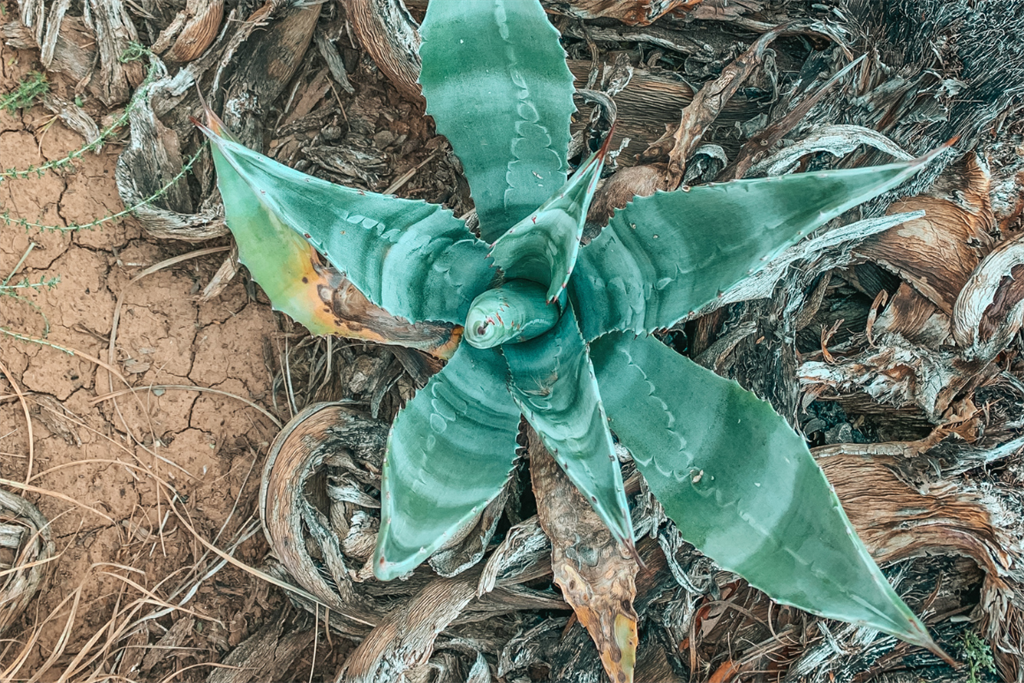
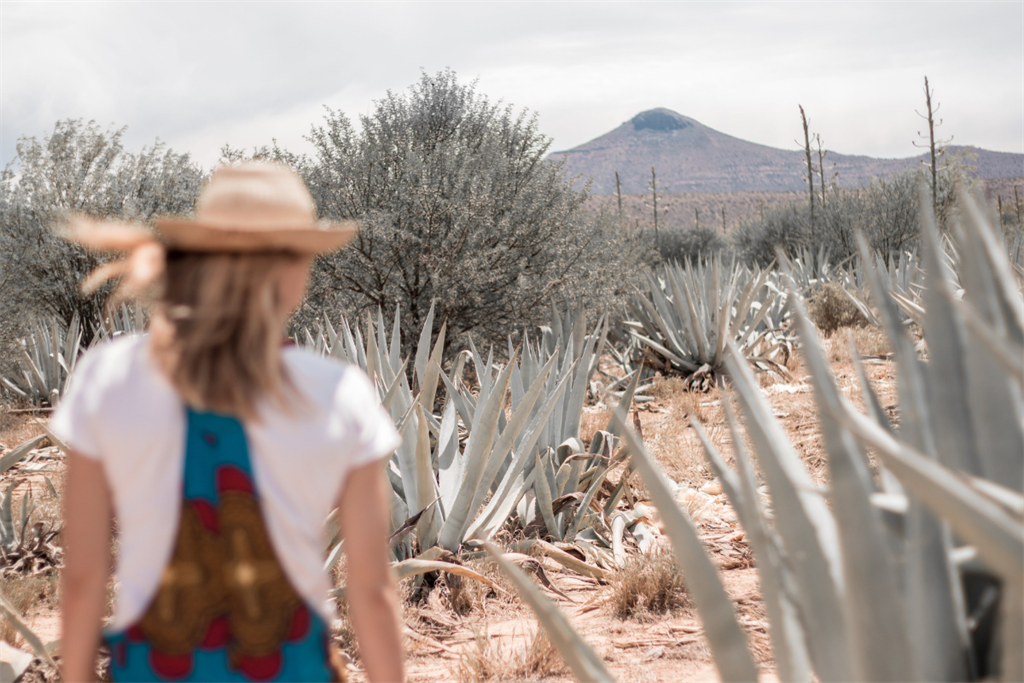
Leonista is made from the agave which grows in abundance in the Karoo. Image: Supplied

As he reaches into his sporran for a tissue, a sympathetic tourist asks why he is so mournful. He explains that Scotland’s leading distilleries and the magical waters of the Spey had failed Scotland. A Japanese amber liquid was now the world’s best single malt. 

“Agh,” says the tourist (who happens to be from Bloemfontein).” Don’t let it worry you too much. Imagine being Mexican and finding out that a woman in the Karoo has begun exporting tequila. Whisky is whisky and cactus are cactus, ou maat.”

And there you have it. A global village in which scotch is no longer scotch and champagne doesn’t come from just 76,000 acres in the north-eastern corner of France. Worst of all, port needn’t be Portuguese and sherry doesn’t have to come from Jerez in Andalusia, Spain.

Why you can’t call SA ‘tequila’ by that name

agave
Agave spirit from the Karoo is made similarly to how tequila is in Mexico. Image: Supplied

But, thanks to the politicians and marketers, who cling to the belief that national interest trumps  ‘local is better’, nobody these days can produce tipple and call it scotch, sherry, port or champagne.  This does save some dented national pride even though the imitator’s product tastes identical (or in the case of many brands of SA booze, better than the original) to the educated palate.      

But, as the tourist says, “cactus is cactus” so why shouldn’t tequila come from the Karoo for that matter? The common denominator is agave cactus, and whether it is grown in the Jalisco region of Mexico or the arid areas around Graaff-Reinet makes no difference.

So, because local ‘tequila’ can’t be called tequila, it is called Leonista and instead of Mayan-like decals and designs, it has a modern leopard artwork as a label. 

SA’s version of tequila a quality organic product

agave
A closeup of the Karoo agave. Image: Supplied

The major difference is that the distiller is not your archetype moustachioed, blanket-wrapped Mexican, but businesswoman Sarah Kennan who decided while visiting Mexico that anything done there could be done here.  

Before you could say “hairless chihuahua”, people were running around tapping the Karoo’s agave cactus and South Africa had a quality, certified organic product. 

All that is needed now is for South Africans to learn how to drink it properly. I am sure many of us have shuddered at the wannabee single malt drinker who ostentatiously orders a single malt and then splashes in some Coke. 

Best way to drink tequila

Leonista
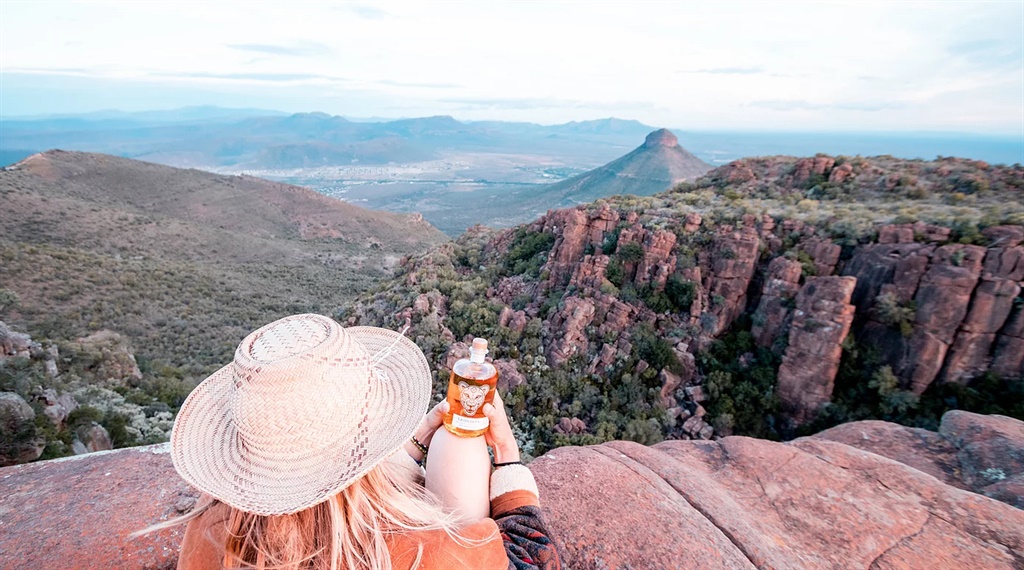
Three versions of Leonista’s pure agave spirit. Image: Supplied

It’s the same with quality tequila. It should be sipped over a block of ice or in a margarita or used as a base for a cocktail, Kennan said, and she should know.

Despite the word tequila being taboo, Leonista is selling up a storm and its Leonista Blanco recently took gold in the US-based SIP Awards. Around the world fans now include the Japanese, Dutch, Taiwanese, Zimbabweans (who need the distraction) and Australians. 

Leonista is available as a Blanco, Reposado, Honey Reposado and Reposado Black at various liquor stores or directly from the Leonista website.

DMCA.com Protection Status

Category: NewsTag: cradock, graaff reinet, hofmeyer, karoo, news
30 November 2020 by Guest

South Africa: Gift of the Givers’ Imtiaz Sooliman – the Eastern Cape Is in Deep Crisis

The province was in serious trouble following a huge outbreak of coronavirus infections in Nelson Mandela Bay and the Karoo, with the wave rapidly spreading to other parts of the province. On Wednesday and Thursday, accompanied by his team and truckloads of personal protective equipment (PPE), Dr Imtiaz Sooliman arrived in Nelson Mandela Bay with …

The province was in serious trouble following a huge outbreak of coronavirus infections in Nelson Mandela Bay and the Karoo, with the wave rapidly spreading to other parts of the province.

On Wednesday and Thursday, accompanied by his team and truckloads of personal protective equipment (PPE), Dr Imtiaz Sooliman arrived in Nelson Mandela Bay with a blank cheque for the metro’s frontline workers, a plan and a message to the government: Just give me 24 hours.

“I said to the doctors and nurses at the frontline: Give me your list. Tell me what you need. Add coffee. Add tea. Add Milo. Add cookies. You are treasured and we see you. The Eastern Cape is in very serious trouble. The statistics are not telling the full picture. This is much worse than the first wave. Tell us what you need. I will get everything… “

Three hours later he sent them shopping. “I said everything was approved. Go and buy exactly the right things that you need.”

The list he received clearly showed the lack of support the Nelson Mandela Bay hospitals were receiving. The teams needed coveralls, disposable gowns, shoes and…

Category: NewsTag: cradock, graaff reinet, hofmeyer, karoo, news
29 November 2020 by Guest

South Africa: No End in Sight to Seven Years of Drought

Thousands of residents of a small Karoo town in the Eastern Cape draw their water from boreholes while emerging farmers have no water supply. Covid-19 job losses, a seven-year drought and an unreliable municipal water supply have left the residents of Klipplaat in the Karoo in a desperate situation. Without food, toilets or clean running …

Thousands of residents of a small Karoo town in the Eastern Cape draw their water from boreholes while emerging farmers have no water supply.

Covid-19 job losses, a seven-year drought and an unreliable municipal water supply have left the residents of Klipplaat in the Karoo in a desperate situation.

Without food, toilets or clean running water, some residents say they are grateful to be able to line up at a borehole and carry water home in buckets.

The town, which the 2011 census numbered at 3 000 residents, is now estimated to have 9 000 residents. The dam ran dry about two years ago. Until last month, the community relied on one malfunctioning borehole and a limited supply of municipal water that was trucked in daily to a 5 000-litre tank on a dusty square of land in one part of town.

When the Seekoei and Jacobs families of Prins Vale Street in Klipplaat turn on the tap in their yard, it releases a trickle of smelly water that they say is undrinkable. The Seekoeis use it to water a beautiful flower garden at their home instead, the only one in the street.

“Life is really not nice here,” says Kowa Seekoei. “Our water stinks like drain water, and it makes us sick. We get diarrhoea. And if you go to the clinic, dan kry jy mos niks (you get nothing),” she says.

Klipplaat residents survive on social grants and casual work on commercial farms. There is no “rich” part of town and some of the working-class residents who have casual work occasionally pay unemployed residents R10 or R20 to wash a basket of laundry. But many of the commercial farms in the area closed their doors to casual workers at the start of lockdown to keep Covid-19 away.

Those workers no longer have the funds to hire other residents to do their laundry. Residents survived on social grants and two food aid drops from disaster relief organisation Gift of the Givers during the government’s Covid-19 lockdown.

There are no shops apart from spazas in Klipplaat, and even if the residents had money they would not be able to buy drinking water.

Clean water, at last

The Seekoei and Jacobs families live about a kilometre from Klipplaat’s Brandovale Primary School, where the Gift of the Givers’ hydrology team repaired a broken borehole.

Jan Seekoei says they will be glad to bring buckets of clean groundwater home from the borehole, even though carrying a heavy load several times a day is tedious, difficult work.

The borehole at Brandovale Primary School was one of three in the town that was either drilled or repaired by the disaster relief organisation, with the hydrology team driving 12 hours from Bethlehem in the Free State.

Gift of the Givers founder Imtiaz Sooliman says the organisation came to Klipplaat after expanding its work in the Eastern Cape because the provincial government shows “downright disregard” for the people here.

“We hear cries of desperation, the stories of material, physical, emotional trauma, a state of hopelessness and helplessness, unbridled hunger, drought with not a drop to drink, animals dying in their hundreds, unemployment, job losses and Covid-19,” says Sooliman.

“People have resorted to catching tortoises and eating them. Children are starving and people are eating cats and dogs. People call us saying they haven’t eaten for days,” he adds. “How much more will it take for someone in authority not just to take notice but to intervene decisively without months of meetings, discussion, procedures and everything else that takes years and still achieves nothing?” asks Sooliman.

Long-term benefits

The Gift of the Givers’ food aid is meant only as disaster relief, but water projects bring long-term benefits.

Gift of the Givers hydrologist Gideon Groenewald and his team have a good reputation in the Eastern Cape since drilling boreholes in Makhanda two years ago that yield 800 000 litres of water per day for residents.

In Klipplaat, they installed new water pressure pumps, a filter that Groenewald designed to remove sulphur from water and purify it, and 15 tanks with a capacity of 5 000 litres each. The borehole at the school yields 60 000 litres of clean, drinkable water per day, enough to supply piped water into all the school bathrooms and a tap outside the school that Groenewald says the community will use as drinking water and to establish vegetable gardens.

Once the organisation installs boreholes, it also maintains them permanently, ensuring that the water does not run dry for lack of maintenance.

Brandovale principal Cedric Jacobs says he had to close the school in the past because it’s 419 pupils could not flush the toilets or wash their hands. “We really try to cope. We harvest rainwater in tanks but it hardly rains. Our challenge is that community members drain this water because they are really struggling. It becomes a serious health issue.”

The hydrology team is committed to resolving such problems. “Truly, we are doing a wonderful job. We are really helping a lot of people. I have been to all nine provinces assisting people who have no water,” says hydrological technician Justice Tsotetsi.

His colleague, Mphiyakhe Mofokeng, operates the power sources on the drilling rig and controls the hydraulic engines. “I am a third-generation water finder. I travel the country looking for water. Drilling for water is in my family,” he says.

Borehole water is a potentially viable way to supply people living in dry Karoo towns, Groenewald adds. If boreholes are drilled correctly, based on geomagnetic surveys and aerial surveys done by drones, they do not drain the water table.

Intersecting fractures

Groenewald says he spends days before drilling a borehole searching for intersecting fractures in underground rock where water has collected, and which are constantly replenished by each other. He doesn’t only measure the water available in one fracture, but the amount of water that flows into that water from the intersecting fractures.

“Underground fractures that are filled with water were caused by the collisions of continents 250 million years ago. They are less than 3cm wide, but 20km long and 140km deep. There are millions of these fractures,” Groenewald says.

The key to establishing a long-lasting water supply in the Karoo is to space boreholes far apart so that they never “overutilise” the water in a fracture. Some of Groenewald’s boreholes have been yielding water for eight years now, with no signs of depletion.

When asked why the municipalities do not drill more boreholes, Groenewald explains that after putting the job out to tender and paying commercial hydrologists and engineers, it can cost a municipality R1.4 million to establish a borehole capable of supplying a whole town with water. For the same job, it costs Gift of the Givers R90 000 to rehabilitate an old commercial borehole and R450 000 for a new one because they do not pay commercial rates.

Emerging farms suffer

While the newly repaired boreholes mean that Klipplaat residents have clean water, albeit water that must be carried home from a tap, Black emerging farmers in the area are battling to water their crops.

Sign up for free AllAfrica Newsletters

Get the latest in African news delivered straight to your inbox

By submitting above, you agree to our privacy policy.


Success!

Almost finished…

We need to confirm your email address.

To complete the process, please follow the instructions in the email we just sent you.


Error!

There was a problem processing your submission. Please try again later.

“We had boreholes at first but they are running dry. Apart from receiving some donated fodder, we hope for food for our families because we are also hungry and need to feed our own stomachs,” says Armanus Dolph, 61, a former farm worker who became an emerging farmer in his 50s under a land reform programme.

Klaas Brandes, 60, also a former farm worker who became the owner of a 3 000-hectare farm with 300 goats, 250 sheep and 50 cattle, says: “We lost a lot of goats and cattle because as you can see, there is no food or water here.”

In late October, 127 farms in the area were also affected by an outbreak of brown locusts. These are “agricultural pests” that attack crops, according to Eastern Cape Agriculture, Land Reform and Rural Development entomologist Nolitha Skenjana. But Brandes and Dolph are certain that their farms will survive the drought even though some commercial farms in the area have collapsed. This is partly owing to their decades of experience as farmers and partly because “when there is something wrong, we come together as small farmers”, says Dolph.

“We can survive this drought if we can get our boreholes working again, get some solar panels to power our pumps and use that water to grow lucerne grass, sunflowers and mielies,” adds Brandes. However, he says this will cost tens of thousands of rands, which is money they do not have.

Government relief has tended to come in the form of fodder, a bale of dried grass that lasts less than a week on farms with as many animals as Brandes and Dolph’s. There appears to be no long-term government plan to support these farms to buy the green energy needed for them to survive droughts and climate change.

Category: NewsTag: cradock, graaff reinet, hofmeyer, karoo, news
29 November 2020 by Guest

Tech Track: Technology solutions thinking for Africa

By Opinion 16h ago Share this article: ShareTweetShareShareShareEmailShare Some years ago I was talking to some newspaper editor and I said that we need to develop African solutions for Africa. He rolled his eyes and said; “Oh no, not that story again.” I instantly realised that he thought that I meant: lower the standards. That …

By Opinion 16h ago

Share this article:

Some years ago I was talking to some newspaper editor and I said that we need to develop African solutions for Africa. He rolled his eyes and said; “Oh no, not that story again.”

I instantly realised that he thought that I meant: lower the standards. That was not at all what I meant. If anything I meant: increase the standards. I forget now which newspaper it was, and which editor, but I realised that the perception which he had about the phrase was rather universal.

So let me know explain what I meant. This is particularly important in considerations about technology development, and the implementation of technology–based systems, which means essentially everything. Now for a few surprising thoughts… The size of Africa is misrepresented on the standard map projection, is it far bigger than it appears. Africa is larger than China, the US, India, Japan, and Europe added together. Madagascar is larger than Great Britain.

To emphasise this; another reality is that the distance from Pretoria to Cape Town is about the same as Rome to London. Bear in mind that most of South Africa’s electricity comes from coal, and that the coalfields and large power stations are effectively north-east of Pretoria. About half of the electricity of the Western Cape comes from Koeberg Nuclear Power Station, but the other half comes from the coalfields. Imagine powering half of London with electricity from Rome.

So, ‘African solutions for Africa’ means; face our realities and find solutions which work here.

We are far too used to looking to Europe or the First World in general, and assuming that they know best. But they don’t, particularly when it comes to our conditions. We have to think ‘Outside the Boxes’ and have confidence in our own abilities to come up with the best solutions.

The Karoo is larger than Germany. Imagine if in the middle of Germany a large delivery truck broke down, and they had to call repair mechanics from France. Our electricity distribution network; cell phone network; railway lines; petrol transport; and many more are on a completely different scale to those in countries that we often look to for answers and advice.

There are numbers of technological solutions for which we have to come up with a more advanced system than the standard first world answer, because we can’t just call a mechanic to rush to a repair job in the middle of the Karoo.

Bear in mind that a technology is not just the gear wheels and transistors, it is the entire system of how a repairman responds; how quality testing is carried out; how the job is logged; and so on. A technology solution is an intellectual exercise of the highest order. Many people do not realise just what it really takes to get even some apparently simple system to work.

In East Africa and Southern Africa cellphone banking took off, and advanced faster than in the First World. There were good reasons for this.

After South Africa had had cellphone text messaging for about a year, I myself demonstrated how it worked in the US Senate. They had never seen it. I was waiting to give a Senate briefing and some fellow saw me sending a message to my office in Pretoria, and asked me what I was doing. A few minutes later I had an amazed crowd around me watching how you could send a text message to Africa on the cell phone, and get an instant reply. I later demonstrated it a few more times elsewhere in the US.

So we need to look for home-grown systems solutions which work here. We need to examine whatever the world has to offer, select that which is appropriate, and then integrate it into some system designed and implemented by South Africans. The scientists and engineers who do this type of thing are very under-appreciated.

Dr Kelvin Kemm is a nuclear physicist and is the chief executive of Stratek Business Strategy Consultants.

BUSINESS REPORT

Category: NewsTag: cradock, graaff reinet, hofmeyer, karoo, news
27 November 2020 by Guest

Western Cape mulls tighter lockdown, as Cape Town declared ‘virus hot-spot’

Our offices are for administrative purposes only, no visitors will be accepted without an appointment. South Africa– Blue Sky Publications (Pty) Ltd T/A TheSouthAfrican Number: 2005/028472/07. Address: Regus Business Centre 1st Floor, Block B, North Park, Black River Park, 2 Fir Street, Observatory, Cape Town, 7925, South Africa Postal: Blue Sky Publications (Pty) Ltd T/A …

Our offices are for administrative purposes only, no visitors will be accepted without an appointment.

South Africa– Blue Sky Publications (Pty) Ltd T/A TheSouthAfrican Number: 2005/028472/07.
Address: Regus Business Centre
1st Floor, Block B, North Park, Black River Park, 2 Fir Street, Observatory, Cape Town, 7925, South Africa
Postal: Blue Sky Publications (Pty) Ltd T/A TheSouthAfrican, PO Box 44354, Claremont, 7735, South Africa

United Kingdom– Blue Sky Publications Ltd – Company Registration Number: 04683692.
Address: Riverbank House, 1 Putney Bridge Approach, London, SW6 4TJ

Category: NewsTag: cradock, graaff reinet, hofmeyer, karoo, news
26 November 2020 by Guest

An organic South African ‘tequila’, made from agave in the Karoo, is now available around the world

Although it can’t be called tequila, this local equivalent is made using Karoo agave, and follows methods used for centuries in Mexico. The smooth smoky flavour makes this agave perfect for sipping. And with sales in excess of 10,000 bottles per year, and numerous awards, it’s starting to get noticed around the world. For more …

tequila

  • Although it can’t be called tequila, this local equivalent is made using Karoo agave, and follows methods used for centuries in Mexico.
  • The smooth smoky flavour makes this agave perfect for sipping.
  • And with sales in excess of 10,000 bottles per year, and numerous awards, it’s starting to get noticed around the world.
  • For more stories visit Business Insider South Africa.

A local businesswoman has created a South African “tequila” from agave plants she’s growing in the Karoo. And although the finished product can’t legally be called tequila, Leonista’s 100% Karoo Agave, which has a smoky flavour profile similar to Mexican mezcal, has won fans and distribution deals around the world.

The product is the brainchild of South African businesswoman Sarah Kennan, who started Leonista after travelling to the birthplace of tequila in Mexico. While visiting the actual town called Tequila, Kennan was struck by how similar it was to South Africa’s Graaff-Reinet, in look, feel and climate, and decided to bring the concept home.

“I saw the culture and industry around the agave plant in Mexico, which I knew grew very well in the Karoo, and I wanted to replicate the industry, job creation and quality agave spirit production I saw on my travels,” says Keenan. “I was also tired of there being low quality tequila and mezcal in South Africa.”

Her solution was to create a certified organic product made only from the agave plant that follows the centuries-old traditions used in Mexico. As with products like champagne and port, appellation of origin laws prevent anyone outside of Mexico from calling their spirit tequila or mezcal, but Kennan says Leonista follows processes that makes it as close as you can get to the original.

agave

Leonista is made from agave plants that take 12 years to mature. Once ready, they harvest the hearts of these plants and smoke them in a wood-fired furnace for at least two days, which gives the finished product its unique, smooth and smoky flavour. They then crush the caramelised plants under a stone wheel to extract it into a mash, allow it to ferment, and then distill this in large copper stills to create the spirit.

agave

Leonista’s production process makes for a compelling story, and along with its hands-on approach this enables it to be placed a shelf or two above much of the tequila South Africans are used to drinking. But Kennan says this approach also has a direct impact on the quality and complexity in the four variants that they produce.

agave

“In Mexico tequila and mezcal is sipped slowly and treated with respect. They give you a real buzz and increase your energy, with no hangover in the morning,” says Kennan. “Until now, South Africa has mostly been sold “mixtos” which are cut with cane spirit to make them cheap, which has created the shooter, lemon and salt rituals often used to mask the poor flavour.”

So instead of knocking back shots of cheap tequila with a thumbful of salt and a slice of lemon, Kennan suggests taking good quality agave a little slower – or combining it with more considered ingredients to create some of the popular tequila-based cocktails.

“I love drinking Leonista like a whisky over one block of ice, or making margaritas with fresh local ingredients,” she says.

Consumer education and market placement like this is a key element of any high-end consumable’s success. As coffee, beer, and gin have undergone their own craft revolutions in order to appeal to a more lucrative and seemingly more discerning market, so too is tequila – and it’s starting to pay off for brands like Leonista.

Leonista

The company now sells in excess of 10,000 bottles each year, and has won several local and international awards for its agave spirit – its most decorated, Leonista Blanco, recently won gold in the US-based SIP Awards.

The momentum has also led to national distribution deals with 500 clients, including stores like Pick n Pay, Spar, Checkers, and Norman Good Fellows, and they now export to Australia, Japan, Netherlands, Taiwan and Zimbabwe.

It’s also available online via Takealot and Yuppiechef, and this year’s Covid-19 lockdown and alcohol ban also prompted Leonista to create their own online store, where they sell all of their agave variants and a range of merchandise directly, which Kennan says allows them to build relationships with their consumers, and introduce deals not possible through traditional distribution channels.

Kennan’s plans for the future are big – although Leonista is just four years old, she’s already looking to new export markets. And Leonista is also expanding its own tequila-based story with a tequila masterclass and agave spirit AirBnb experience in Graaff-Reinet, and future plans include a destination distillery experience so that South Africans can experience what Kennan did on her own trip to Tequila.

Leonista

They’ve also introduced a strong ethical component to the Leonista story. Every bottle sold results in a percentage of revenue going towards African conservation, their packaging is fully recyclable, and they promote upcycling of their unique bottles after use, rather than throwing them away.

“As a company our vision is to create a more positive culture around agave spirit consumption, and to be a successful thriving company and have a positive impact on the world around us,” Kennan says.

Leonista is available as a Blanco, Reposado, Honey Reposado, and Reposado Black at various liquor stores, or directly on the Leonista website.

Receive a daily news update on your cellphone. Or get the best of our site emailed to you.

Go to the Business Insider front page for more stories.

Category: NewsTag: cradock, graaff reinet, hofmeyer, karoo, news
24 November 2020 by Guest

Karoo locust plague adds to farmers’ woes

It has been a challenging year for farmers who have survived a global pandemic, stood up against farm murders, fought off wildfires in the Free State and now have to worry about the locust plague in the Karoo. Sina Luchen, regional agriculturalist for the United Nations Food and Agriculture Organisation, said they were aware of …

It has been a challenging year for farmers who have survived a global pandemic, stood up against farm murders, fought off wildfires in the Free State and now have to worry about the locust plague in the Karoo.

Sina Luchen, regional agriculturalist for the United Nations Food and Agriculture Organisation, said they were aware of the outbreak of brown locusts in the Karoo.

“We have sent a report to the government to confirm the outbreak in two districts in the Eastern Cape.”

Luchen said brown locusts posed a threat to maize and barley crops. Roger Price, a former specialist locust researcher and current research team manager at the Agricultural Research Council, said these locusts were all over Africa, with recent outbreaks in East Africa and Malawi.

“The wet conditions bring grass and allow the locusts to breed and feed.”

Price said a locust outbreak could cause great crop and economic loss.

“It is especially dangerous if they spread to other Free State areas and North West as they are difficult to control.”

The lockdown regulations also had damaged agricultural outcomes, with the wine sector nearly coming to a standstill due to the strict regulations on reopening the sector.

On Thursday, Wandile Sihlobo, chief economist of the Agricultural Business Chamber, said South Africa’s primary agricultural employment in the third quarter of the year improved 1% from the previous quarter to 807,882.

“This corresponds with the reopening of the economy and certain agricultural commodities during that period.”

Compared with the corresponding period last year, he said employment in this sector was down 8%.

“The Western and Northern Cape provinces, the major wine producers, saw employment fall by 31% and 15% quarter-on-quarter, respectively. On an annual basis, the Western and Northern Cape’s primary agriculture employment fell by 37% and 8%, respectively.”

He said had there not been a pandemic, agricultural employment would have risen notably this year on the back of a large harvest.

“Looking ahead, the agricultural sector is poised for another good year on the back of an expected La Nina. This means there will be increased activity in the sector, which would sustain employment, at least at levels above 750 000, in our view.”

For more news your way, download The Citizen’s app for iOS and Android.

Category: NewsTag: cradock, graaff reinet, hofmeyer, karoo, news
23 November 2020 by Guest

Deon Meyer And Coenie De Villiers’ KAROO SUITES Comes To Cape Town’s Drive-in Theatre

Deon Meyer and Coenie de Villiers’ popular Karoo Suite productions are described as the “most beautiful love letter to the Karoo”. Both shows, Karoo Suite and Karoo Suite 2: Karoonagte, will be performed on 10, 12 and 13 December at Cape Town’s Atlantic Studios drive-in theatre. Proceeds from the double feature, complete with a break …

Deon Meyer and Coenie de Villiers’ popular Karoo Suite productions are described as the “most beautiful love letter to the Karoo”. Both shows, Karoo Suite and Karoo Suite 2: Karoonagte, will be performed on 10, 12 and 13 December at Cape Town’s Atlantic Studios drive-in theatre. Proceeds from the double feature, complete with a break for burgers and milkshakes, will benefit the Suidoosterfees and the Jakes Gerwel Foundation’s lyric writing mentorship programme.

Deon Meyer will be on stage to narrate his stories from the Karoo, with music ccompaniment provided by De Villiers and a band. Breathtaking photos and video material of the Karoo landscape from photographers of National Geographic, NASA and Deon Meyer himself, will complement the shows. Animation by Diek Grobler will also feature.

Meyer and De Villiers are a formidable combination on stage. Since its sold-out debut at various festivals, Karoo Suite has captivated audiences nationwide. The productions consist of various movements that explore the Karoo landscape, its people, their joys and sorrows. Music is provided by some of the country’s best artists: Mauritz Lotz on guitar, Jaconell Mouton on keys, David Klassen on drums and percussion, and Coenie de Villiers himself at the piano.

For the Cape Town productions, Meyer and De Villiers joined hands with Atlantic Studios, Suidoosterfees, KKNK, the Jakes Gerwel Foundation and CTMA. The Suidoosterfees, postponed earlier this year due to the Covid-19 pandemic, recently started presenting an abridged program in a brand new format at Atlantic Studios’ drive-in theatre.

For the December performances, tickets can be purchased at Computicket at R400 per car (with up to four occupants). Fourty VIP tickets are also available per night, at R300 per person. VIP patrons will be seated inside Atlantic studios.

Deon Meyer and Coenie de Villiers support the development of young, upcoming artists who show great potential. With previous shows in collaboration with the Atterbury Trust, they have donated close to a million rand to benefit learners from the Karoo. Proceeds from the drive-in shows will be used to expand the Suidoosterfees and the Jakes Gerwel Foundation’s lyric writing mentorship programme, with future workshops being presented in the Karoo and the Mother City. The development programme enables lyricists to perform at the Suidoosterfees and KKNK.

For more information, visit www.suidoosterfees.co.za.

For media enquiries, please contact Themba Mzondi on 078 113 5216 or email Themba@sceproductions.co.za

More Hot Stories For You

Category: NewsTag: cradock, graaff reinet, hofmeyer, karoo, news
21 November 2020 by Guest

Two of South Africa’s most luxurious trains have reopened – with major discounts for the holidays

After months of downtime to lockdown travel restrictions, South Africa’s Blue Train has once again resumed operations in time for the festive season. The Blue Train is the country’s oldest luxury rail journey, running eight times a month between Pretoria and Cape Town. The train’s origins date back to the Union Limited and Union Express trains …

After months of downtime to lockdown travel restrictions, South Africa’s Blue Train has once again resumed operations in time for the festive season.

The Blue Train is the country’s oldest luxury rail journey, running eight times a month between Pretoria and Cape Town.

The train’s origins date back to the Union Limited and Union Express trains which began in 1923. The tour follows a 1,600km line to Cape Town and takes 27 hours to complete.

En route to Cape Town there is a stopover and excursion in Kimberley, and On the northbound journey, there is a stop at Matjiesfontein for an off-the-train excursion.

As part of its reopening special, the train service is offering tickets from R12,715 per person sharing on bookings between 1 November 2020 and 31 March 2021. More detailed booking plans can be found here.

“When confirming bookings, guests will submit their dietary requirements and complete a pre-screening questionnaire which includes a declaration of Covid-19 symptoms.

“Should guests meet all requirements, confirmation will proceed. Should guests not meet the pre-screening requirements, the booking will be deferred to a later date.”

Crew will render services with a face mask and latex gloves and each staff member will be issued with their own hand sanitiser. All suites will be stocked with additional soap as part of the amenities.

The air conditioning system will be cleaned and disinfected at every departure, to ensure good ventilation at all times.

There will be a medical practitioner on board The Blue Train and an isolation car with two suites made available for quarantine purposes.

Constant cleaning with steaming of all upholstery and surface disinfecting of all furniture, doors, handles, toilets, trash bins and toothbrush beakers will be done. All cleaning detergents will be in line with the World Health Organisation and South African Tourism guidelines.

You can read more about the Covid-19 protocols here.


Rovos Rail 

The Rovos Rail has also resumed trips after the lockdown prevented national travel.

The train service said it is offering residents of South Africa and neighbouring countries a special 50% reduced rate on board a two-night Cape Town journey this January.

The trips include:

The Rovos Rail was founded in 1986 when Rohan Vos received the first letter of permission to run a train on the national rail network.

In 1987 the first loco 2702 BIANCA was rebuilt along with the first seven carriages that were to depart on the first journey on 29 April 1989.

Rovos Rail follows a similar route to the Blue train, taking a 1,600 kilometre meander through the Highveld, the Great Karoo, through mountain ranges and the winelands of the Cape, ending the Mother City.

Highlights of the north- and southbound routes once again include a visit to the historic village of Matjiesfontein, and another stop in Kimberley.


Read: Emirates partners with FlySafair in fresh push into South Africa

Category: NewsTag: cradock, graaff reinet, hofmeyer, karoo, news
20 November 2020 by Guest

Physics in South Africa

Developing countries, such as South Africa, must funnel money toward health and social development, so the research budget is small, and it got even smaller after the government cut its science budget by about 16% because of the pandemic-linked economic downturn. However, a bigger issue is the lack of students. According to the physicists I …

Developing countries, such as South Africa, must funnel money toward health and social development, so the research budget is small, and it got even smaller after the government cut its science budget by about 16% because of the pandemic-linked economic downturn. However, a bigger issue is the lack of students. According to the physicists I interviewed, the low numbers of students is the greatest obstacle to physics research in the country.

Radio astronomy’s Human Capital Development program is a success story in this context. Since its inception in 2005, the program has awarded over one thousand scholarships to students in the fields of science and engineering. But because these astronomy scholarships are substantially higher than those offered by funding agencies or by universities, they put other fields at a disadvantage. “[With] SKA scholarships, the students only study astrophysics. Quantum [physics], materials [science], and plasma physics—they struggle to find students,” Petruccione says.

Isaac Nape and Bienvenu Ndagano align laser beams in a quantum photonics lab at the University of the Witwatersrand.

×

The government is also trying to transform the country’s historically White academia, introducing quotas stating that 87% of students funded must be South African. Of those South African students, 80% must be Black, 55% female, and 4% disabled. While these quotas have improved academic diversity, they have posed barriers for students who wished to study physics but don’t belong to these categories. “When we look at demographics, we’re seeing an increase in women and Africans, but the bulk of the Africans [in physics] are not South Africans,” says Phil Mwjara, the director-general of the Department of Science and Innovation, a physicist who previously headed the country’s National Laser Centre.

The South African physics student shortage runs through the entire educational pipeline, starting in high school. The number of high-school students choosing physical science as a subject is declining and less than 50% of those students get grades that are good enough to attend university. “There is a systematic fundamental problem of poor physics education from the high-school level, which then impacts the whole physics value chain,” Chithambo says. It is also difficult to retain those who do make it through the system, as academic salaries are far lower than those in industry.

What’s more, African students coming from small villages often feel pressure to send money home to support their extended families. It’s like a “Black tax” says Azwinndini Muronga, a particle physicist and dean of science at Nelson Mandela University. Muronga wonders why one should choose a Ph.D. in physics over a government or industry job paying 10 times more. In 2015, South Africa produced 39 Ph.D.s, of which only nine were Black. Muronga hopes the situation will change after the second or third generation have gone into administrative jobs in government. “Their kids will have options,” he says.

Category: NewsTag: cradock, graaff reinet, hofmeyer, karoo, news
18 November 2020 by Guest

South Africa encourages nature protection with tax breaks

Very little land in South Africa is suitable for planting crops — most is too dry, hilly or rocky for tillage. Still, unique wildlife flourishes across the country, even in seemingly barren places like the Karoo, a vast semi-desert region in the interior of the country. With climate change decreasing rainfall and chronic underfunding of nature …

Very little land in South Africa is suitable for planting crops — most is too dry, hilly or rocky for tillage. Still, unique wildlife flourishes across the country, even in seemingly barren places like the Karoo, a vast semi-desert region in the interior of the country.

With climate change decreasing rainfall and chronic underfunding of nature conservation in the country, some, like Candice Stevens, are looking for alternatives to encourage farmers and others in Karoo and elsewhere to be better stewards of the land. Stevens works collaboratively with a range of partners including WWF Nedbank Green Trust, UNDP GEF 5 BLU Project,  SANBI and Birdlife South Africa.

She is head of innovative finance and policy at Wilderness Foundation Africa and is trying to convince landowners to dedicate their land to conservation. The incentive? A tax rebate from the South African government. 

Stevens and her team have won dozens of landowners to the biodiversity cause with the tax model, which has already seen some conservation success.

A film by Henner Frankenfeld and Joachim Eggers

Category: NewsTag: cradock, graaff reinet, hofmeyer, karoo, news
17 November 2020 by Guest

Everything you need to know about free entry to national parks from Monday

Free Access Week is from 16-20 November. SANParks has added bonus days to include the weekend at some Cape national parks. South African National Parks Week takes place from 16-20 November. Free entry applies to just about all the national parks managed by SANParks from Monday to Friday. You will need to produce a valid …

Free Access Week is from 16-20 November. SANParks has added bonus days to include the weekend at some Cape national parks.

South African National Parks Week takes place from 16-20 November.

Free entry applies to just about all the national parks managed by SANParks from Monday to Friday.

You will need to produce a valid South African identity document.

A view of the Langebaan lagoon from Kraalbaai in the West Coast National Park. Picture: Zunaid Ismael/EWN

The following are excluded:

– Namaqua National Park

– Boulders Penguin Colony

– Table Mountain Aerial Cableway

As a bonus this year, two extra days of free entry have been added at specific parks in the Cape region.

Free entry has been extended until Sunday 22 November at the following national parks:

– Agulhas

– Bontebok

– Table Mountain

– Tankwa Karoo

– West Coast National Park

As an added bonus parks in the Cape Region i.e. Agulhas, Bontebok, Table Mountain, Tankwa Karoo, and West Coast National Park will be extending South African National Parks Week until Sunday, 22 November 2020.

— SANParks TMNP (@TableMountainNP) November 4, 2020

SANParks has announced that some national parks will implement daily quotas throughout the week.


More from Local

maths-lesson-teacherpng


Video Screengrab https://www.facebook.com/billy.cowley.96


Shacks in informal settlement in Khayelitsha township, Cape Town 123rf


200206-john-hlophe-edjpg


wind-turbine-power-solar-electricity-clean-energy-renewable-resources-123rf


ubuntucarepng


201104-bushiri-court-edjpg


lester-3jpeg


DHL Newlands Rugby Stadium Wikimedia Commons


Yoshi the Loggerhead Turtle


More from Lifestyle

school-classroom-class-desk-education-learning-pupils-teachers-teaching-123rf


Video Screengrab https://www.facebook.com/billy.cowley.96


Screengrab of Bayer nappy advert


lester-3jpeg


Pneumonia caused by Covid-19 123rf


Yoshi the Loggerhead Turtle


VA Waterfront Marina Cape Town tourism 123rf 123rflifestyle


vegan millet black bean pumpkin burgers 123rf


Baby babies 3D Glasses Watching TV television Eating Popcorn 123rf


Poor elderly woman counting money retirement 123rfpersonalfinance 123rf


Category: NewsTag: cradock, graaff reinet, hofmeyer, karoo, news
15 November 2020 by Guest

Coronavirus – South Africa: Premier Alan Winde update on Coronavirus COVID-19 on 12 November

Total confirmed COVID-19 cases 119 141 Total recoveries 111 087 Total deaths 4430 Total active cases (currently infected patients) 3624 Tests conducted 707 402 Hospitalisations 634 of which 130 are in ICU or high care Cape Metro Sub-districts: Sub-district Cases Recoveries Western 11 076 10 299 Southern 10 745 10003 Northern 7352 6927 Tygerberg 13741 …

Total confirmed COVID-19 cases 119 141 Total recoveries 111 087 Total deaths 4430 Total active cases (currently infected patients) 3624 Tests conducted 707 402 Hospitalisations 634 of which 130 are in ICU or high care

Cape Metro Sub-districts:

Sub-district Cases Recoveries Western 11 076 10 299 Southern 10 745 10003 Northern 7352 6927 Tygerberg 13741 12997 Eastern 11 497 10 755 Klipfontein 9748 9042 Mitchells Plain 9319 8755 Khayelitsha 8616 8089 Total 82 094 76 867

Sub-districts:

District Sub-district Cases Recoveries Garden Route Bitou 825 688 Garden Route Knysna 1788 1585 Garden Route George 4371 3775 Garden Route Hessequa 389 351 Garden Route Kannaland 148 144 Garden Route Mossel Bay 2672 2492 Garden Route Oudsthoorn 1658 1493 Cape Winelands Stellenbosch 2274 2132 Cape Winelands Drakenstein 4637 4391 Cape Winelands Breede Valley 3612 3415 Cape Winelands Langeberg 1211 1152 Cape Winelands Witzenberg 1705 1603 Overberg Overstrand 1802 1695 Overberg Cape Agulhas 356 325 Overberg Swellendam 377 354 Overberg Theewaterskloof 1268 1198 West Coast Bergrivier 530 491 West Coast Cederberg 183 175 West Coast Matzikama 774 684 West Coast Saldanha Bay Municipality 1527 1451 West Coast Swartland 1768 1644 Central Karoo Beaufort West 864 805 Central Karoo Laingsburg 143 135 Central Karoo Prince Albert 36 35

Unallocated: 2129(2007 recovered)

Data note: It is not always possible to check and verify that the address data supplied for each new recorded case is correct, within the time frames required to provide regular and timely updates. This means that in some instances, cases could be allocated to the wrong sub-districts. We are working with the sub-districts to clean and verify the data and where errors are picked up locally, cases will be re-allocated to the correct areas.

The Western Cape has recorded additional 15 deaths, bringing the total number of COVID-19 related deaths in the province to 4430 . We send our condolences to their loved ones at this time.

Garden Route bushfires:

Over the past seven days, the Western Cape has seen a 20% increase in the number of new COVID-19 cases-primarily driven by increases being recorded in the Garden Route District. We are particularly concerned about the increase in the number of cases in George, Knysna and Bitou, where the test positivity rate is around 32%.

Our hotspot teams are working closely with health teams, the municipalities, environmental health officers, law enforcement and SAPS in order to manage and contain the spread of infections. We have also targeted communication to the Garden Route- with SMS and social media messaging.

As with previous bushfires in other areas of the province, we are working hard to manage this flare up and ensure that it does not spread further.

I must appeal to residents in the Garden Route and across the Western Cape to make safe, smart choices to protect themselves and others at this time.

In the bushfires that we have responded to over the past few weeks- relaxed behaviours have played a part in increased spread of infections. We must still wear our masks in public, regularly and thoroughly wash our hands and keep a distance. We also appeal to residents to avoid the 3Cs: closed spaces, crowded places and close contact.

The Western Cape has also observed a slight increase in the number of hospitalisations in the province, and in the Garden Route. We currently have a total of 74 hospital admissions in the Garden Route (COVID-19 positive and persons under investigation), with15 of these in critical care.

Overall, our healthcare services platform is still managing well, even with increasing admissions for other healthcare concerns. Our rural hospitals are currently reporting 75% occupancy, and our metro hospitals have a 77% occupancy rate- of which only 4% are COVID-19 admissions.

The Hospital of Hope at Brackengate has 42 patients admitted, and Sonstraal has one COVID-19 admission, and 12 admissions for TB, as the Western Cape Government is focusing on ramping up TB care services in the province. Our oxygen usage in the province remains stable at 35% of total availability.

Testing update:

The Western Cape continues to use the expanded testing criteria for testing and lab turn-around times have remained stable. In the week between 2 and 8 November, a total of 9167 tests were conducted in the province.

I am also pleased to announce that rapid antigen testing is now available at the Cape Town International Airport for those travelers who have arrived without having had a COVID-19 test. This provides us with an additional surveillance tool and is well timed to coincide with the positive announcement last night that the international travel “red list” would be scrapped in favour of compliance with health protocols which include a negative COVID-19 test not older than 72 hours.

Our hotspot management system has proven to be effective in identifying and managing flare ups where they occur. We also continue to monitor and track infection data using a number of surveillance methods, including wastewater testing.

We call on residents and businesses to partner with us to ensure that we are able to effectively slow the spread of the virus in the province, in order for us to move forward, and focus on important aspects of our recovery such as jobs, safety and dignity and wellbeing.

Issued by: Western Cape Office of the Premier

Distributed by APO Group on behalf of South African Government.

Category: NewsTag: cradock, graaff reinet, hofmeyer, karoo, news
14 November 2020 by Guest

Friday’s weather: Warm, hot conditions expected across the country

A warm to hot Friday is expected across the country, according to the South African Weather Service. Upington will see a maximum temperature of 38°C. Fire based warning Extremely high fire danger conditions are expected over the eastern parts of Namakwa District (Northern Cape), the Central and Little Karoo Districts, as well as Langeberg Municipality …

A warm to hot Friday is expected across the country, according to the South African Weather Service. Upington will see a maximum temperature of 38°C.

Fire based warning

Extremely high fire danger conditions are expected over the eastern parts of Namakwa District (Northern Cape), the Central and Little Karoo Districts, as well as Langeberg Municipality (Western Cape) and the western and central regions of the Eastern Cape.

Advisory

Extremely hot conditions are expected over the Sarah Baartman District of the Eastern Cape and the Little Karoo of the Western Cape.

The weather in your province

Gauteng will be partly cloudy and warm.

The expected UVB sunburn index is extreme.

It will be cloudy in Mpumalanga, with morning fog patches along the escarpment, otherwise partly cloudy and cool to warm, but hot in the Lowveld.

Limpopo will be cloudy with morning fog patches along the escarpment, otherwise partly cloudy and warm becoming fine from the afternoon.

The North West will be fine and warm, becoming partly cloudy with isolated thundershowers in the west.

In the Free State, it will be fine and warm, becoming partly cloudy with isolated thundershowers.

The Northern Cape will be fine and hot, becoming partly cloudy in the east and the north with isolated thundershowers.

The wind along the coast will be light to moderate south-easterly, becoming light to moderate north-westerly north of Port Nolloth by the afternoon, and spreading to the south by the evening.

The Western Cape will be cloudy to partly cloudy along the south coast and Central Karoo in the morning, otherwise fine and hot to very hot, but warm along the south coast.

The wind along the coast will be moderate southerly to south easterly, becoming fresh to strong between Table Bay and Cape Agulhas in the morning.

The expected UVB sunburn index is very high.

The western half of the Eastern Cape can expect morning fog over Addo and Grahamstown, otherwise fine and hot, but extremely hot in places south of the escarpment, becoming partly cloudy from the north in the evening.

The wind along the coast will be fresh north-easterly, becoming south-westerly from the west in the evening.

In the eastern half of the Eastern Cape, there will be morning fog in the south, otherwise fine and warm, but hot in places south of the escarpment, becoming partly cloudy with isolated showers and thundershowers from the north in the afternoon.

The wind along the coast will be fresh to strong north-easterly.

KwaZulu-Natal can expect morning fog over the interior, otherwise partly cloudy and warm with isolated showers and thundershowers in the west.

The wind along the coast will be moderate to fresh north-easterly.

The expected UVB sunburn index is very high. 

Click here to see the specific forecast for your city over the next few days.

– Compiled by Kamva Somdyala

Category: NewsTag: cradock, graaff reinet, hofmeyer, karoo, news
12 November 2020 by Guest

Massive demand for rare Karoo succulents has spiked on the black market

People don’t realise how special biome areas such as the Karoo are, and how restricted the species, says Sanbi’s Ismail Ebrahim. Suspects have been arrested at the West Coast town of Vanrhynsdorp for allegedly dealing in protected succulents without a permit. The four men will appear in court. CFR Node Manager for Custodians of Rare …

People don’t realise how special biome areas such as the Karoo are, and how restricted the species, says Sanbi’s Ismail Ebrahim.

Suspects have been arrested at the West Coast town of Vanrhynsdorp for allegedly dealing in protected succulents without a permit. The four men will appear in court.

CFR Node Manager for Custodians of Rare and Endangered Wildflowers (CREW) at Sanbi (Kirstenbosch) Ismail Ebrahim talks to Lester Kiewit .

There has somehow been a massive increase in demand for succulent plant species from South Africa and especially from the succulent Karoo which is one of the special biomes that occur in South Africa.

Ismail Ebrahim, CFR Node Manager for Custodians of Rare and Endangered Wildflowers (CREW) – Sanbi (Kirstenbosch)

People do not realise how special those areas are and how restricted the species are that grow in those areas.

Ismail Ebrahim, CFR Node Manager for Custodians of Rare and Endangered Wildflowers (CREW) – Sanbi (Kirstenbosch)

Ebrahim says the dwarf succulents, in particular, are very rare and much sought after.

We have thought maybe it is that they are so small it is easy to pack them into a box, and they are novelty succulents.

Ismail Ebrahim, CFR Node Manager for Custodians of Rare and Endangered Wildflowers (CREW) – Sanbi (Kirstenbosch)

He says in the Karoo succulent landscape, these dwarf succulents spread out at ground level with an enormous variety of species and colours.

Listen to the interview below:

Category: NewsTag: cradock, graaff reinet, hofmeyer, karoo, news
11 November 2020 by Guest

South Africa: Northern Cape Preview – Big By-Election Showdown in Renosterberg, Zamani Saul’s Hometown

This small municipality is the home of the second largest dam in South Africa, the Vanderkloof Dam. It is also the home municipality of Northern Cape Premier Zamani Saul, who hails from the town of Petrusville. Philipstown and Petrusville are known for their unique Karoo architecture as many of the homes in these two towns …

This small municipality is the home of the second largest dam in South Africa, the Vanderkloof Dam. It is also the home municipality of Northern Cape Premier Zamani Saul, who hails from the town of Petrusville. Philipstown and Petrusville are known for their unique Karoo architecture as many of the homes in these two towns are still in their original state.

The political architecture of Renosterberg has also been left somewhat unchanged. In 2016 only two parties made it to council, the ANC and the DA, with the ANC getting four seats and the DA three. When one looks at the 2019 provincial results, this same result would have played itself out, the ANC would have “won” four seats here and the DA three.

The municipality was dissolved by the Northern Cape MEC for Cooperative Governance, Human Settlements and Traditional Affairs, Bentley Vass because of its continued dysfunctionality and lack of clear leadership. The DA saw the dissolution as an expedient cover up of corruption aimed at silencing ANC councillors who were willing to work with DA councillors to help uncover wrongdoing in the municipality.

Ward 1 (Philipstown) DA (57%) ANC (38%) EFF (4%)

Philipstown sits on the…

Category: NewsTag: cradock, graaff reinet, hofmeyer, karoo, news
9 November 2020 by Guest

Locust pot is stirring in the Karoo

To Dr Roger Price, the swarms of brown locusts he has seen in the Karoo look like clouds of smoke billowing on the horizon, turning darker and lighter as the insects sweep over the land.  “When a brown locust swarm is spread out, it can easily be 30km long,” says Price, the research team manager …

To Dr Roger Price, the swarms of brown locusts he has seen in the Karoo look like clouds of smoke billowing on the horizon, turning darker and lighter as the insects sweep over the land. 

“When a brown locust swarm is spread out, it can easily be 30km long,” says Price, the research team manager for plant health and protection at the Agricultural Research Council. “They can fly over 100km a day. They just go on for hours.”

The locust pot is stirring in South Africa, he says. 

“Our main concern is the brown locust, which is endemic, and only found in the Karoo area and southern Namibia — and it’s a very serious pest once it gets going. It costs the country millions to keep it in the Karoo, to control it and to prevent it from escaping and invading crops in the Free State.”

Price explains the conditions for a large-scale outbreak are favourable after good rains ended a long dry spell in the drought-stricken Karoo, prompting long-dormant egg populations in the soil to hatch into marauding hopper bands.

About 130 farms in the eastern Karoo are already infested. 

“This year’s outbreak seems to be early and I’ve noticed that the rainfall predicted for the Northern Cape is unusually heavy for this time of year so the conditions are good.”

The Karoo is the scene of an immense locust problem, he says, but it’s hidden. 

“Nobody really knows about it in the cities until the locusts occasionally fly out of the Karoo once every 10 years over Bloemfontein or Kimberley. We have to spray pesticides, which are not healthy for the environment and it just costs an awful lot of money.” 

A resurgence in East Africa

At first, to a farmer, it looks like a promise on the horizon: a dark rain cloud, sometimes so big it can block out part of the sun.  

Then the penny drops. 

Keith Cressman, senior locust forecasting officer at the Food and Agriculture Organisation (FAO) of the United Nations says it’s a moment of pure horror when the farmers realise what those clouds really are. 

“You see it’s not a rain cloud but a cloud of insects and realise this is a desert locust swarm. They will eat absolutely everything. By midday, you’ve lost your entire crop for the year and maybe for the next year. It’s devastating.”

This year, destructive, desert locusts have swarmed in gigantic numbers in countries including Kenya, Somalia, Ethiopia, Uganda, Somalia and Eritrea, gobbling valuable cropland and decimating livelihoods. 

In January locust swarms that invaded northern Kenya were as big as the country of Luxembourg. 

But while aerial and ground operations have exterminated an estimated 500-billion locusts in the past 10 months, there are worrying signs of resurgence. 

Early, ongoing rains have led to a new cycle of breeding with fresh swarms forming in Ethiopia, Somalia and Yemen, warns the FAO. 

In good conditions, desert locusts reproduce like wildfire — their numbers surging by a factor of 20 with each three-month reproductive cycle. 

The new wave wasn’t unexpected, says Cressman, who describes desert locusts as “professional survivalists. When there’s really good rain, the locusts respond.”

Winds over the northern portion of the Horn of Africa now starting to blow southwards again could trigger a re-invasion in Kenya later this year. 

But with almost a year of locust-fighting experience under their belts, affected countries are in a far stronger position to manage and contain the infestations, says Cressman.

“Last year this time, countries such as Somalia, Ethiopia and Kenya weren’t very well prepared. Now, they’re well-equipped to manage and respond to this type of breeding and any kind of invasion that might occur by the end of the year.”

Somalia, he adds, has not used one drop of chemical pesticides, wiping out its locusts with bio­pesticides made from a natural fungus, which only attacks locusts and grasshoppers.

Unusual weather a factor  

The desert locust outbreak, says Cressman, started with two cyclones that brought heavy rains to the same region of the Arabian Peninsula last year. 

“That’s already kind of strange. In 2019, there were something like eight cyclones in the western Indian Ocean. Normally there’s zero or one. Then we had a cyclone in December — in the beginning of winter, which is very unusual. 

“It could just be a temporary anomaly. What I worry about is if we continue to see this trend — increased cyclones in the western Indian Ocean — that will have impacts on locust infestations in the Horn of Africa that can lead to more emergencies and upsurges that we’ve seen this year.”

In the future, with more unpredictable weather, more opportunities for pest outbreaks will emerge, says Price. “Not just locusts but every­thing from mosquitoes to army worms. They respond very quickly to dramatic, unusual weather patterns. So it’s going to get worse and is not going to be easy to predict.

“The problem is that for many years migratory pests are at a low ebb. So, the ability to predict them and combat them is weakened because there isn’t any investment in technologies and stocks of pesticides. When they do arrive, it’s a surprise and we can’t cope. Boom-and-bust funding is the typical response.”

Professor Frances Duncan of the school of animal, plant and environmental studies at the University of the Witwatersrand, agrees. She explains how unusual climatic conditions are driving outbreaks of African migratory locusts in Botswana, Namibia, Zambia and Zimbabwe, through unusually high rainfall and flooding, as with desert locusts. 

The FAO, which launched an emergency response in September, has warned seven million people are at risk from the outbreaks in southern Africa, facing threats to their food security and livelihoods. 

“What’s really coming home is that there’s not enough surveillance. Unfortunately governments forget that the locusts are around. But we must remember swarms are part of the ecology. Swarms of locusts were mentioned in the Bible so they’re not a new phenomenon.” 

Rise of the grim reapers

More than 860 000 hectares of land in 10 countries have been surveyed and treated for locust infestation since January to counter the desert locust outbreak. Control operations have prevented the loss of 1.7-million tons of cereal — enough to feed more than 10-million people a year — in countries already hard hit by acute food insecurity and poverty. Kenya has contained the locust to just two northern counties. West Africa is no longer at risk of invasion. — Food and Agriculture Organisation of the United Nations.

Category: NewsTag: cradock, graaff reinet, hofmeyer, karoo, news
8 November 2020 by Guest

UFS, CBSS partner to design groundwater monitoring network for Central Karoo

Independent specialists and researchers from the Institute for Groundwater Studies (IGS) at the University of the Free State (UFS), in partnership with specialists from Carin Bosman Sustainable Solutions (CBSS), have been appointed by the Petroleum Agency of South Africa (PASA) to design a regional groundwater monitoring network for the Central Karoo. A 2016 report by …

Independent specialists and researchers from the Institute for Groundwater Studies (IGS) at the University of the Free State (UFS), in partnership with specialists from Carin Bosman Sustainable Solutions (CBSS), have been appointed by the Petroleum Agency of South Africa (PASA) to design a regional groundwater monitoring network for the Central Karoo.

A 2016 report by the Council for Scientific and Industrial Research (CSIR) titled ‘Shale Gas Development in the Central Karoo: A Scientific Assessment of the Opportunities and Risks’, recommended that “a comprehensive understanding of groundwater conditions is required prior to the commencement of exploration to ensure proper interpretation of changes in groundwater over time. Monitoring data would also be used for calibration and verification of prediction and assessment models, for evaluating and auditing the success of management plans, and for assessing the extent of compliance with prescribed standards and regulations.”

Such a monitoring network therefore needs to be established and implemented to ensure an understanding of baseline groundwater conditions in the Central Karoo.

This project aims to establish a groundwater monitoring network that will cover an area of more than 180 000 km2 and will be undertaken over a period of 24 months.

It will culminate in the publication of a regional groundwater monitoring network design for the Central Karoo, which will be subjected to local and international peer reviews.

Once established, it will inform decision-making in the adjudication of applications for potential shale gas exploration activities received by PASA, and will also be used for future monitoring of groundwater in this area, irrespective of whether such applications are approved or not.

The specialists employed by the IGS and CBSS to undertake the project include South African Council for Natural Scientific Professions-registered scientists who have expertise and experience in geohydrology and the geology of the Karoo basin, as well as experts in water governance (including the design and development of water monitoring programmes and the evaluation, interpretation and visualisation of water quality data) and software developers who can handle large volumes of water monitoring data.

A groundwater monitoring network needs to generate monitoring results that can provide answers to specific management and/or governance questions asked by relevant decision-makers (including landowners and those involved in national, provincial and local government) and other stakeholders.

Communication of monitoring results to these decision-makers should be understandable, without being too technical, so that the outcome of any monitoring activity will lead to improved decision-making with regard to groundwater management in the Central Karoo.

These management questions will, therefore, be contingent on the needs of the decision-makers, which could relate to one or more aspects of groundwater resources and/or potential activities that could pose a risk of harm to a groundwater resource.

To ensure the monitoring network is designed in a manner that will address the expectations of all stakeholders, the project team has called on all relevant decision-makers and other interested stakeholders to contact them with management questions that they need to be answered by this monitoring network.

Participation in the project is voluntary and there will be no cost implications for participants.

The selection of locations that will form part of the groundwater monitoring network will, to a large extent, rest upon the management questions that need to be addressed by the network.

Therefore, once these management questions have been collected from stakeholders, the project team will undertake geohydrological, geophysical and water-quality assessments to determine the suitability of existing boreholes to provide answers to prioritised management questions.

Where no suitable boreholes can be found to address management questions, recommendations relating to the drilling of additional boreholes for future monitoring purposes will be made. 

For this reason, the project team says it would appreciate and welcome any suggestions from relevant decision-makers and interested stakeholders who may be aware of any existing boreholes or networks of boreholes in the Central Karoo.

The more management questions and information about existing boreholes the project team receives, the more beneficial the final monitoring network design will be to decision-makers and landowners in the Central Karoo, the project team says.

Those looking to share ideas, discuss specific management questions for the monitoring network, or to inform about boreholes that should be included and investigated for this project are advised to contact Dr Fanie de Lange (DeLangeSS@ufs.ac.za) or Carin Bosman (info@cbss.co.za).

Category: NewsTag: cradock, graaff reinet, hofmeyer, karoo, news
  • Previous
  • Page 1
  • Page 2
  • Page 3
  • Page 4
  • Page 5
  • Interim pages omitted …
  • Page 93
  • Next
WE LOVE CRADOCK.

COPYRIGHT MyCradock · DESIGN BY REACH TRUST
All Rights Reserved · Powered by Straton Solar